Building Blocks
Subcategories of "Building Blocks"
- Boronic Acids & Boronic Acid Derivatives(5,778 products)
- Chiral Building Blocks(1,243 products)
- Hydrocarbon Building Blocks(6,099 products)
- Organic Building Blocks(61,038 products)
Found 205376 products of "Building Blocks"
3-(4-Ethylphenyl)butanoic acid
CAS:Versatile small molecule scaffold
Formula:C12H16O2Purity:Min. 95%Molecular weight:192.25 g/molRef: 3D-DCA08649
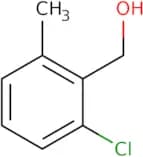
Discontinued product(2-Chloro-6-methylphenyl)methanol
CAS:Versatile small molecule scaffold
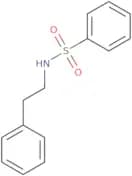
Formula:C8H9ClOPurity:Min. 95%Molecular weight:156.61 g/molN-(2-Phenylethyl)benzenesulfonamide
CAS:N-(2-Phenylethyl)benzenesulfonamide is a biodegradable and aerobic catalyst that is used in the production of nitrates. It can be recycled and has a high solubility, which allows for efficient extraction from wastewater effluents. The reactor system can be operated at an aerobic or anaerobic conditions. N-(2-Phenylethyl)benzenesulfonamide is soluble in water and can be hydrolyzed by acids or bases to release ammonia gas. The process can also be sustainable due to the use of renewable energy sources such as solar, wind, tidal, or biomass power.
Formula:C14H15NO2SPurity:Min. 95%Molecular weight:261.34 g/mol2-[Ethyl(propan-2-yl)amino]ethan-1-ol
CAS:Controlled ProductVersatile small molecule scaffold
Formula:C7H17NOPurity:Min. 95%Molecular weight:131.22 g/mol1-Oxaspiro[4.5]dec-2-en-4-one
CAS:Versatile small molecule scaffold
Formula:C9H12O2Purity:Min. 95%Molecular weight:152.19 g/molRef: 3D-BDA95195
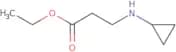
Discontinued productEthyl 3-(cyclopropylamino)propanoate
CAS:Versatile small molecule scaffold
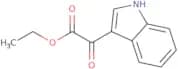
Formula:C8H15NO2Purity:Min. 95%Molecular weight:157.21 g/molEthyl 2-(indol-3-yl)-2-oxoacetate
CAS:Ethyl 2-(indol-3-yl)-2-oxoacetate is a hydroxy derivative of the amino acid tyrosine. It inhibits the enzyme tyrosine hydroxylase, which catalyzes the conversion of tyrosine to L-DOPA. This in turn affects dopamine synthesis and has an inhibitory effect on rat brain. Ethyl 2-(indol-3-yl)-2-oxoacetate also inhibits methylmagnesium borohydride in vitro, which is a reagent that breaks down esters, amides, and nitriles. Tyrosine hydroxylase is inhibited by the presence of two hydroxy groups on the ethyl side chain and one hydroxy group on the indole ring. It can be used as a structural analogue for other drugs that are used to treat Parkinson's disease or depression.
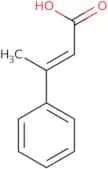
Formula:C12H11NO3Purity:Min. 95%Molecular weight:217.22 g/mol3-Phenylbut-2-enoic acid
CAS:3-Phenylbut-2-enoic acid is a prochiral, carbonyl compound that can be used in the synthesis of chiral pharmaceuticals. Mechanistic studies have shown that 3-phenylbut-2-enoic acid is a catalytic hydrogenation reagent that converts prochiral substrates to their corresponding chiral products. When combined with binap and butenoic acid, 3-phenylbut-2-enoic acid can catalyze the asymmetric synthesis of butenoate. The reaction yields high enantiomeric excesses and good yields.
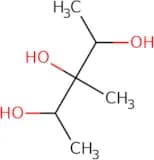
Formula:C10H10O2Purity:Min. 95%Molecular weight:162.19 g/mol3-Methylpentane-2,3,4-triol
CAS:Versatile small molecule scaffold
Formula:C6H14O3Purity:Min. 95%Molecular weight:134.17 g/molRef: 3D-BAA18510
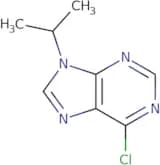
Discontinued product6-Chloro-9-(propan-2-yl)-9H-purine
CAS:6-Chloro-9-(propan-2-yl)-9H-purine is an intermediate in the synthesis of nucleoside analogues. It is obtained by the catalyzed reaction of acetonitrile and purines, which undergoes regioisomerization to form a mixture of 6-chloro-9-(propyl)- and 6-chloro-9-(butyl)purine. This intermediate can be used for the alkynylation of amino acids or peptides with alkynes. The selective formation of one regioisomer can be achieved by using a chiral catalyst or by reacting with an optically active reagent such as (+)-camphor sulfonic acid.
Formula:C8H9ClN4Purity:Min. 95%Molecular weight:196.64 g/molRef: 3D-AVA53908
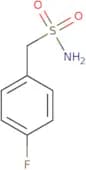
Discontinued product(4-Fluorophenyl)methanesulfonamide
CAS:Versatile small molecule scaffold
Formula:C7H8FNO2SPurity:Min. 95%Molecular weight:189.21 g/mol4-(Dimethyl-1,2-oxazol-4-yl)phenol
CAS:Versatile small molecule scaffold
Formula:C11H11NO2Purity:Min. 95%Molecular weight:189.21 g/molRef: 3D-AKB62875
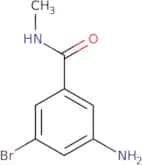
Discontinued product3-Amino-5-bromo-N-methylbenzamide
CAS:Versatile small molecule scaffold
Formula:C8H9BrN2OPurity:Min. 95%Molecular weight:229.07 g/molRef: 3D-AFC06914
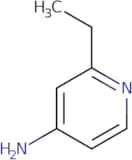
Discontinued product2-Ethylpyridin-4-amine
CAS:2-Ethylpyridin-4-amine is a pyridine that can be synthesized from the amination of 4-nitrophenol. It can also be synthesized by acylation of 2-ethylpyridine with ethyl chloroformate followed by cyclization. This compound has shown to have high yields in reactions involving pyridines and it is often used as a precursor for other compounds.
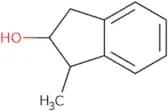
Formula:C7H10N2Purity:Min. 95%Molecular weight:122.17 g/mol1-Methyl-2,3-dihydro-1H-inden-2-ol
CAS:Versatile small molecule scaffold
Formula:C10H12OPurity:Min. 95%Molecular weight:148.2 g/molRef: 3D-ACA82313
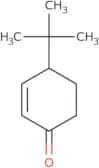
Discontinued product4-tert-Butylcyclohex-2-en-1-one
CAS:Versatile small molecule scaffold
Formula:C10H16OPurity:Min. 95%Molecular weight:152.23 g/molRef: 3D-AAA93707
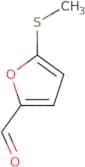
Discontinued product5-(Methylsulfanyl)furan-2-carbaldehyde
CAS:Versatile small molecule scaffold
Formula:C6H6O2SPurity:Min. 95%Molecular weight:142.18 g/molRef: 3D-AAA93294
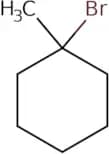
Discontinued product1-Bromo-1-methylcyclohexane
CAS:1-Bromo-1-methylcyclohexane is a monomolecular gas that is used as an intermediate in organic synthesis. It reacts with halides to form cyclopentyl derivatives. This reaction has been shown to be faster than the corresponding reaction of 1-bromocyclohexane with chlorides or bromides. The rate of this reaction may be due to the polarizability and conformational changes of the molecule upon substitution by a methyl group. 1-Bromo-1-methylcyclohexane is also an ionizing reagent, which means it can cause electrophilic reactions to occur on other molecules. It has been found that the solvent effect on this product can affect its reactivity, with solvents such as water having more of an effect than solvents such as benzene. 1-Bromo-1-methylcyclohexane has been shown to interact with other compounds in both transfer and complex
Formula:C7H13BrPurity:Min. 95%Molecular weight:177.08 g/molRef: 3D-AAA93177
Discontinued productN-[Carbamothioyl(phenyl)methyl]benzamide
CAS:Versatile small molecule scaffold
Formula:C15H14N2OSPurity:Min. 95%Molecular weight:270.3 g/molRef: 3D-AAA89278
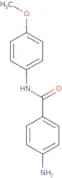
Discontinued product4-Amino-n-(4-methoxyphenyl)benzamide
CAS:4-Amino-N-(4-methoxyphenyl)benzamide is a catalytic sulfamate that has been optimized for use in the synthesis of benzimidazole derivatives. 4-Amino-N-(4-methoxyphenyl)benzamide is used as a reagent for the preparation of aldehydes from sulfamic acid and various types of carboxylic acids. The reaction mechanism involves nucleophilic attack by the hydroxyl group from the sulfamate on the carbonyl carbon atom to form an intermediate, which then reacts with water to release hydrogen sulfate and form a new double bond.
Formula:C14H14N2O2Purity:Min. 95%Molecular weight:242.27 g/molRef: 3D-AAA89135
Discontinued product


![2-[Ethyl(propan-2-yl)amino]ethan-1-ol](/_next/image/?url=https%3A%2Fstatic.cymitquimica.com%2Fproducts%2F3D%2Fthumb-webp%2FCAA89361.webp&w=3840&q=75)
![1-Oxaspiro[4.5]dec-2-en-4-one](/_next/image/?url=https%3A%2Fstatic.cymitquimica.com%2Fproducts%2F3D%2Fthumb-webp%2FBDA95195.webp&w=3840&q=75)

![N-[Carbamothioyl(phenyl)methyl]benzamide](/_next/image/?url=https%3A%2Fstatic.cymitquimica.com%2Fproducts%2F3D%2Fthumb-webp%2FAAA89278.webp&w=3840&q=75)