Building Blocks
Subcategories of "Building Blocks"
- Boronic Acids & Boronic Acid Derivatives(5,784 products)
- Chiral Building Blocks(1,244 products)
- Hydrocarbon Building Blocks(6,105 products)
- Organic Building Blocks(61,070 products)
Found 205437 products of "Building Blocks"
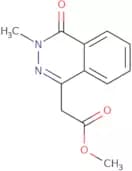
Methyl 2-(3-methyl-4-oxo-3,4-dihydrophthalazin-1-yl)acetate
CAS:Versatile small molecule scaffold
Formula:C12H12N2O3Purity:Min. 95%Molecular weight:232.23 g/mol2,3-Dihydro-benzo[1,4]dioxine-2-carboxylic acidmethyl ester
CAS:Versatile small molecule scaffoldFormula:C10H10O4Purity:Min. 95%Molecular weight:194.18 g/molRef: 3D-DAA66379
Discontinued product6-Ethyl-1H-1,2,3-benzotriazole
CAS:Versatile small molecule scaffold
Formula:C8H9N3Purity:Min. 95%Molecular weight:147.18 g/molRef: 3D-DAA66326
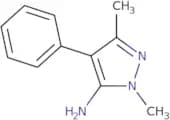
Discontinued product2,5-Dimethyl-4-phenylpyrazol-3-amine
CAS:Versatile small molecule scaffold
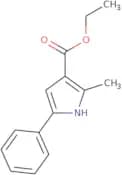
Formula:C11H13N3Purity:Min. 95%Molecular weight:187.25 g/molethyl 2-methyl-5-phenyl-1H-pyrrole-3-carboxylate
CAS:Ethyl 2-methyl-5-phenyl-1H-pyrrole-3-carboxylate is a serotonin analog. It has been shown to have antidepressant properties and inhibit the reuptake of serotonin by the neurotransmitter transporter. This leads to an increase in serotonin levels in the brain, which may be due to its ability to act on 5-HT2A and 5-HT2C receptors. The compound also acts as an antagonist at 5HT1A receptors, which may contribute to its antidepressant effects. In vivo activities of this drug have been confirmed using various animal models. Ethyl 2-methyl-5-phenyl-1H-pyrrole-3--carboxylate is a lead compound for other potential antidepressants with similar activity.
Formula:C14H15NO2Purity:Min. 95%Molecular weight:229.28 g/molRef: 3D-DAA65248
Discontinued productethyl 6-aminohexanoate,hydrochloride
CAS:Ethyl 6-aminohexanoate,hydrochloride is a monomer that can be polymerized with other ethyl 6-aminohexanoate,hydrochloride monomers to form polyelectrolytes. This compound has hydrophobic properties and reacts with functional groups. Ethyl 6-aminohexanoate,hydrochloride is fluorescent and has reactive properties. Polyelectrolytes are polymers that contain multiple charged groups which are able to form ionic bonds with other polymers or ions in solution. Ethyl 6-aminohexanoate,hydrochloride can be used as a crosslinker because it contains two methacrylate groups that react with the amino groups of proteins or polypeptides to form covalent bonds.
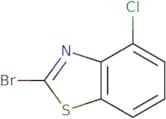
Formula:C8H18ClNO2Purity:Min. 95%Molecular weight:195.69 g/mol2-Bromo-4-chlorobenzothiazole
CAS:Versatile small molecule scaffold
Formula:C7H3BrClNSPurity:Min. 95%Molecular weight:248.53 g/molRef: 3D-DAA62240
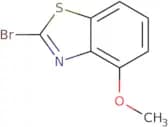
Discontinued product2-Bromo-4-methoxybenzothiazole
CAS:Versatile small molecule scaffold
Formula:C8H6BrNOSPurity:Min. 95%Molecular weight:244.11 g/molRef: 3D-DAA62239
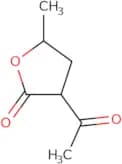
Discontinued product3-Acetyl-5-methyloxolan-2-one
CAS:Versatile small molecule scaffold
Formula:C7H10O3Purity:Min. 95%Molecular weight:142.15 g/mol1-Propyl-[1,4]diazepane
CAS:Versatile small molecule scaffold
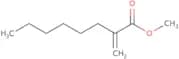
Formula:C8H18N2Purity:Min. 95%Molecular weight:142.25 g/molMethyl 2-methylideneoctanoate
CAS:Versatile small molecule scaffold
Formula:C10H18O2Purity:Min. 95%Molecular weight:170.25 g/molRef: 3D-DAA61840
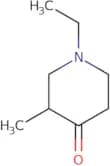
Discontinued product1-ethyl-3-methylpiperidin-4-one
CAS:Versatile small molecule scaffold
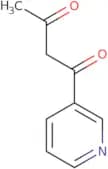
Formula:C8H15NOPurity:Min. 95%Molecular weight:141.21 g/mol1-(Pyridin-3-yl)butane-1,3-dione
CAS:1-(Pyridin-3-yl)butane-1,3-dione is an activating agent that can be used to treat a variety of disorders. It activates the insulin receptor and has been shown to activate the PPAR alpha and gamma heterodimers in vitro. 1-(Pyridin-3-yl)butane-1,3-dione may also have a proliferating effect on cells. This compound is a chelate ring that contains heterocyclic bonds, which are often found in compounds with profiles similar to those of 1-(pyridin-3-yl)butane-1,3-dione. The structural formula for this compound is shown below:
Formula:C9H9NO2Purity:Min. 95%Molecular weight:163.17 g/molRef: 3D-DAA59437
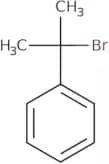
Discontinued product(2-Bromopropan-2-yl)benzene
CAS:2-Bromopropan-2-yl)benzene is an impurity in the production of polypropylene. It is a potential monomer that can be used for the synthesis of polymers. The compound has been shown to have copolymerization properties and can be used as a debrominating agent for poly(vinyl chloride). 2-Bromopropan-2-yl)benzene's reaction mechanism is based on the addition of bromine to the double bond of an organic compound. The product of this reaction is a halide, which is then hydrolyzed to release water and hydrogen bromide gas. 2-Bromopropan-2-yl)benzene also has antiinflammatory properties and has been shown to inhibit the production of chloride ions in immune cells. 2-Bromopropan-2-yl)benzene has also been shown to have peroxide decomposition properties, which may cause
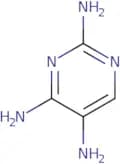
Formula:C9H11BrPurity:Min. 95%Molecular weight:199.09 g/molpyrimidine-2,4,5-triamine
CAS:Pyrimidine-2,4,5-triamine is a nucleotide derivative that is used to study the effects of extracellular Ca2+ on cell growth. It has anticancer activity and is used in the treatment of human immunodeficiency virus (HIV) infection and other inflammatory diseases. Pyrimidine-2,4,5-triamine has been shown to inhibit phosphatases, including malonic acid phosphatase and nitro phosphatase. This inhibition leads to an accumulation of malonic acid and nitro compounds which are cytotoxic. The drug also inhibits the production of hydrogen peroxide by inhibiting surface methodology enzymes such as peroxidase or catalase. Pyrimidine-2,4,5-triamine has been shown to be resistant to hydrolysis by hydrophobic effect enzymes such as esterases or glucuronidases. The drug also causes irreversible inhibition of DNA gyrase and topoisomerase
Formula:C4H7N5Purity:Min. 95%Molecular weight:125.13 g/molRef: 3D-DAA54650
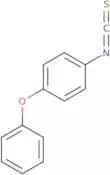
Discontinued product4-Phenoxyphenyl isothiocyanate
CAS:4-Phenoxyphenyl isothiocyanate is a potent anthelmintic drug that has been shown to produce mutations in the DNA of animals. It is a nitro compound that may cause mutagenicity, which is a heritable change in the genetic material. 4-Phenoxyphenyl isothiocyanate has been shown to be mutagenic and has hydroxylamine and thiourea as metabolites. The hydroxylamine metabolite has been shown to be an anthelmintic, whereas the thiourea metabolite was found to be mutagenic. 4-Phenoxyphenyl isothiocyanate is biotransformed into diphenyl ether, which also possesses antimicrobial properties.
Formula:C13H9NOSPurity:Min. 95%Molecular weight:227.28 g/mol6-Ethyltetrahydro-2H-pyran-2-one
CAS:6-Ethyltetrahydro-2H-pyran-2-one is a monatomic chemical in the diptera family. It is used as a detection method for host plants, and has been found to be present in fatty acids of coatings and analytical chemistry. 6-Ethyltetrahydro-2H-pyran-2-one can also be found in cuticular hydrocarbons and viscosity. The fluorescence of this compound is an analytical method that can be used to identify it. This chemical has also been shown to have antiviral properties, which are due to its ability to induce the expression of genes involved in the production of aldolases.
Formula:C7H12O2Purity:Min. 95%Molecular weight:128.17 g/mol9-Methylfluorene-9-carboxylic acid
CAS:9-Methylfluorene-9-carboxylic acid is an organic compound that has a benzyl group attached to the 9th carbon of the fluorene ring. It is a colorless solid with a melting point of -78.5 °C. The synthesis of this compound involves the reaction of 9-fluorenone with diethyl ether in the presence of formic acid and phosphorous pentoxide. This reaction results in the formation of 9-methylene-9-fluorene, which is then oxidized to form 9-methylanthracene. Finally, methanol is added to form 9-methylfluorene-9-carboxylic acid. The molecular weight for this compound is 152 g/mol and it has an mp at -78.5 °C and bp at 138 °C. This compound can be used as a fingerprinting agent due to its characteristic UV absorption spectrum, which peaks
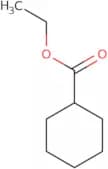
Formula:C15H12O2Purity:Min. 95%Molecular weight:224.25 g/molEthyl Cyclohexanecarboxylate
CAS:Ethyl cyclohexanecarboxylate is an anti-inflammatory drug that belongs to the class of hydroxylated glycol ethers. It has been shown to have a significant effect on autoimmune diseases, such as multiple sclerosis and rheumatoid arthritis. The active form of ethyl cyclohexanecarboxylate is metabolized through nitro reduction by cytochrome P450 enzymes, which are present in most mammalian tissues. This drug also has a high phase transition temperature and can be used as a catalyst for organic reactions at low temperatures. Ethyl cyclohexanecarboxylate has been shown to inhibit dpp-iv (dipeptidyl peptidase IV), which is an enzyme that cleaves the dipeptides from the N-terminal ends of proteins, leading to increased levels of fatty acids and other alkanoic acids in the blood.
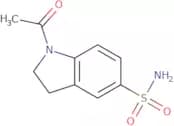
Formula:C9H16O2Purity:Min. 95%Molecular weight:156.22 g/mol1-Acetyl-5-indolinesulfonamide
CAS:Versatile small molecule scaffold
Formula:C10H12N2O3SPurity:Min. 95%Molecular weight:240.28 g/mol

![2,3-Dihydro-benzo[1,4]dioxine-2-carboxylic acidmethyl ester](/_next/image/?url=https%3A%2Fstatic.cymitquimica.com%2Fproducts%2F3D%2Fthumb-webp%2FDAA66379.webp&w=3840&q=75)

![1-Propyl-[1,4]diazepane](/_next/image/?url=https%3A%2Fstatic.cymitquimica.com%2Fproducts%2F3D%2Fthumb-webp%2FDAA61974.webp&w=3840&q=75)