Building Blocks
Subcategories of "Building Blocks"
- Boronic Acids & Boronic Acid Derivatives(5,784 products)
- Chiral Building Blocks(1,242 products)
- Hydrocarbon Building Blocks(6,105 products)
- Organic Building Blocks(61,061 products)
Found 205399 products of "Building Blocks"
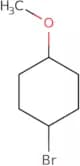
1-Bromo-4-methoxycyclohexane
CAS:Versatile small molecule scaffold
Formula:C7H13BrOPurity:Min. 95%Molecular weight:193.08 g/molRef: 3D-SMC05960
Discontinued product2-(4-Methoxyphenyl)-1H-pyrrolo[2,3-b]pyridine
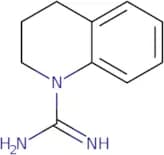
CAS:Versatile small molecule scaffoldFormula:C14H12N2OPurity:Min. 95%Molecular weight:224.26 g/mol1,2,3,4-Tetrahydroquinoline-1-carboximidamide
CAS:Versatile small molecule scaffold
Formula:C10H13N3Purity:Min. 95%Molecular weight:175.23 g/molRef: 3D-PFB59094
Discontinued productexo-8-Azabicyclo[3.2.1]octane-3-methanol HCl
CAS:Versatile small molecule scaffoldFormula:C8H16ClNOPurity:Min. 95%Molecular weight:177.21 g/mol[1-(4-Bromophenyl)ethyl]hydrazine hydrochloride
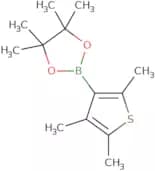
CAS:Versatile small molecule scaffoldFormula:C8H12BrClN2Purity:Min. 95%Molecular weight:251.55 g/mol4,4,5,5-Tetramethyl-2-(2,4,5-trimethylthiophen-3-yl)-1,3,2-dioxaborolane
CAS:Versatile small molecule scaffoldFormula:C13H21BO2SPurity:Min. 95%Molecular weight:252.2 g/molRef: 3D-PHD11797
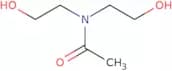
Discontinued productN,N-Bis(2-hydroxyethyl)acetamide
CAS:N,N-Bis(2-hydroxyethyl)acetamide is a nonionic surfactant which is used as an emulsifier and dispersing agent. It is often used in detergents, textile processing, papermaking, and for the production of cosmetics. N,N-Bis(2-hydroxyethyl)acetamide has been shown to suppress the growth of Candida parapsilosis and other microbial strains. It also inhibits the production of fluconazole by wild-type Candida albicans. N,N-Bis(2-hydroxyethyl)acetamide may be used in conjunction with benzyl alcohol as an antifungal agent for topical application.br>br>NMR spectra have shown that this molecule has acetal groups that can copolymerize with other molecules. These acetal groups are resistant to degradation by enzymes such as beta-glucosidase and alpha-amylase.
Formula:C6H13NO3Purity:Min. 95%Molecular weight:147.17 g/molRef: 3D-HAA43567
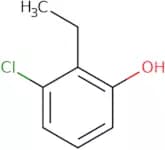
Discontinued product3-Chloro-2-ethylphenol
CAS:Versatile small molecule scaffold
Formula:C8H9ClOPurity:Min. 95%Molecular weight:156.61 g/molRef: 3D-CZB41788
Discontinued product1,1-dioxo-1-thiane-4-carbonitrile
CAS:Versatile small molecule scaffold
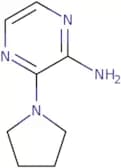
Formula:C6H9NO2SPurity:Min. 95%Molecular weight:159.2 g/mol3-(Pyrrolidin-1-yl)pyrazin-2-amine
CAS:Versatile small molecule scaffold
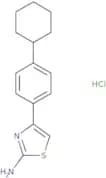
Formula:C8H12N4Purity:Min. 95%Molecular weight:164.21 g/mol4-(4-Cyclohexylphenyl)-1,3-thiazol-2-amine hydrochloride
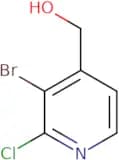
CAS:Versatile small molecule scaffoldFormula:C15H19ClN2SPurity:Min. 95%Molecular weight:294.8 g/mol(3-Bromo-2-chloropyridin-4-yl)methanol
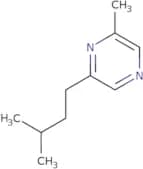
CAS:Versatile small molecule scaffoldFormula:C6H5BrClNOPurity:Min. 95%Molecular weight:222.47 g/mol2-Methyl-6-(3-methylbutyl)pyrazine
CAS:2-Methyl-6-(3-methylbutyl)pyrazine is a ketone that has been used as an active compound in the flavorings industry. It also has industrial applications and can be found in carboxylic acid mixtures, flavoring, and hydrocarbon mixtures. 2-Methyl-6-(3-methylbutyl)pyrazine is used to synthesize other compounds, such as trimethylphenol, which is used as a rubber antioxidant. Nephelium lappaceum (tree) extracts have been shown to contain high concentrations of this chemical.
Formula:C10H16N2Purity:Min. 95%Molecular weight:164.25 g/molRef: 3D-RDA01041
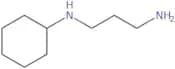
Discontinued productN1-Cyclohexylpropane-1,3-diamine
CAS:N1-Cyclohexylpropane-1,3-diamine is a potent compound that has been shown to inhibit cholesterol synthesis and mitochondrial membrane potential. This drug also has anti-cancer effects and can be used for the treatment of cancers in which nuclear DNA is affected by light emission. N1-Cyclohexylpropane-1,3-diamine has been shown to have physiological activities such as cell growth inhibition, matrix effect, and intracellular hydrogen release. The drug binds to the enzyme activity site with a coordination geometry that is similar to other inhibitors of cholesterol synthesis. N1-Cyclohexylpropane-1,3-diamine was crystallized from methanol at room temperature and its molecular structure was determined by X-ray diffraction techniques.
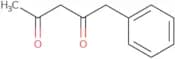
Formula:C9H20N2Purity:Min. 95%Molecular weight:156.27 g/mol1-Phenylpentane-2,4-dione
CAS:1-Phenylpentane-2,4-dione is a molecule that absorbs light. It has been shown to be an efficient absorber of solar radiation and has the potential to be used in photovoltaic devices. 1-Phenylpentane-2,4-dione can be used as an electron donor in polymer solar cells because it is able to act as both a chelate and a light absorber. 1-Phenylpentane-2,4-dione can also be used in acetone peroxide based solar cells because it is able to absorb light efficiently. In addition, 1-phenylpentane-2,4-dione may have use as an optical element for positioning systems such as telescopes or cameras.
Formula:C11H12O2Purity:Min. 95%Molecular weight:176.21 g/mol3-[(3-Methoxyphenyl)amino]propanoic acid
CAS:Versatile small molecule scaffold
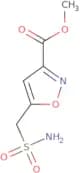
Formula:C10H13NO3Purity:Min. 95%Molecular weight:195.21 g/molMethyl 5-(sulfamoylmethyl)-1,2-oxazole-3-carboxylate
CAS:Versatile small molecule scaffold
Formula:C6H8N2O5SPurity:Min. 95%Molecular weight:220.2 g/molRef: 3D-MRD30255
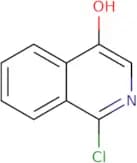
Discontinued product1-Chloroisoquinolin-4-ol
CAS:1-Chloroisoquinolin-4-ol is a phenylpyrimidine with anti-inflammatory properties. It is used in the treatment of sensitivity and mediated diseases, such as osteoarthritis, rheumatoid arthritis, and ankylosing spondylitis. 1-Chloroisoquinolin-4-ol inhibits the enzymatic activity of matrix metalloproteinases (MMPs), which are enzymes that break down collagen and other proteins in the body. The inhibition of MMPs by 1-chloroisoquinolin-4-ol leads to reduced inflammation and pain. This compound is also an effective inhibitor of the activities of chloride channels involved in acid secretion by cells in the stomach lining, thus inhibiting acid production. 1-Chloroisoquinolin-4-ol has been shown to have anticholesterolemic effects on liver cells due to its ability to inhibit cholesterol synthesis through inhibition of HMG CoA
Formula:C9H6ClNOPurity:Min. 95%Molecular weight:179.6 g/molRef: 3D-DAA33643
Discontinued product5-Methylquinoline-8-sulfonamide
CAS:Versatile small molecule scaffold
Formula:C10H10N2O2SPurity:Min. 95%Molecular weight:222.3 g/molRef: 3D-MRD31089
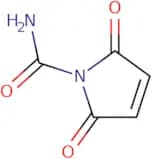
Discontinued productN-Carbamoylmaleimide
CAS:N-Carbamoylmaleimide is a maleimide that reacts with amides to form N-hydroxysuccinimidyl esters. It is used as an alternative to succinimidyl esters for the synthesis of cross-linked polymers. The reaction proceeds via a cyclic intermediate, and is catalyzed by metal ions such as iron. The product is stable at room temperature, but decomposes at elevated temperatures. N-Carbamoylmaleimide can be synthesized by the reaction of methylbenzene with ammonia in the presence of sodium hydroxide, followed by dehydration with sulfuric acid. This compound can also be synthesized using a solid phase synthesis technique, which involves reacting an amine with vinyl ether and dimethylformamide in the presence of a carbonylating agent such as dicyclohexylcarbodiimide (DCC).
Formula:C5H4N2O3Purity:Min. 95%Molecular weight:140.1 g/mol

![2-(4-Methoxyphenyl)-1H-pyrrolo[2,3-b]pyridine](/_next/image/?url=https%3A%2Fstatic.cymitquimica.com%2Fproducts%2F3D%2Fthumb-webp%2FPFA96268.webp&w=3840&q=75)
![exo-8-Azabicyclo[3.2.1]octane-3-methanol HCl](/_next/image/?url=https%3A%2Fstatic.cymitquimica.com%2Fproducts%2F3D%2Fthumb-webp%2FPFC26420.webp&w=3840&q=75)
![[1-(4-Bromophenyl)ethyl]hydrazine hydrochloride](/_next/image/?url=https%3A%2Fstatic.cymitquimica.com%2Fproducts%2F3D%2Fthumb-webp%2FPHC90827.webp&w=3840&q=75)

![3-[(3-Methoxyphenyl)amino]propanoic acid](/_next/image/?url=https%3A%2Fstatic.cymitquimica.com%2Fproducts%2F3D%2Fthumb-webp%2FDAA33467.webp&w=3840&q=75)