Building Blocks
Subcategories of "Building Blocks"
- Boronic Acids & Boronic Acid Derivatives(5,805 products)
- Chiral Building Blocks(1,248 products)
- Hydrocarbon Building Blocks(6,118 products)
- Organic Building Blocks(61,447 products)
Found 208423 products of "Building Blocks"
2-Hydroxyethyl octacosanoate
CAS:Please enquire for more information about 2-Hydroxyethyl octacosanoate including the price, delivery time and more detailed product information at the technical inquiry form on this page
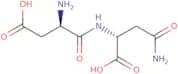
Purity:Min. 95%H-D-ASN-L-ASP-OH
Please enquire for more information about H-D-ASN-L-ASP-OH including the price, delivery time and more detailed product information at the technical inquiry form on this page
Purity:Min. 95%Color and Shape:Powder3-Amino-2,2-difluoropropan-1-ol
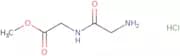
CAS:Versatile small molecule scaffoldFormula:C3H7F2NOPurity:Min. 95%Molecular weight:111.09 g/molGly-Gly-OMe·HCl
CAS:Gly-Gly-OMe·HCl is a diagnostic agent that can be used to diagnose atherosclerotic lesions. It is conjugated to an organic molecule and then radiolabeled. The conjugate can be detected by cyclopentadienyl, which emits gamma rays when it decays. This conjugate has been shown to selectively accumulate in atherosclerotic lesions of the coronary arteries, where it accumulates with a higher concentration than in the surrounding tissue. This product also has gastroprotective effects on the stomach and liver and can reduce lipid levels in hyperlipidaemic patients.Formula:C5H10N2O3•HClPurity:Min. 95 Area-%Color and Shape:Slightly Rose PowderMolecular weight:182.61 g/molGSK3008348 monohydrochloride
CAS:Please enquire for more information about GSK3008348 monohydrochloride including the price, delivery time and more detailed product information at the technical inquiry form on this pageFormula:C29H37N5O2•HClPurity:Min. 95%Molecular weight:524.1 g/molGlycine - EP
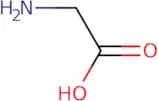
CAS:Glycine is a buffering agent that can be used in electrophoresis for protein samples. It has an optimal pH range of 2.2-3.6 and a pKa of 2.35.
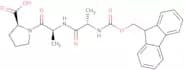
Formula:NH2CH2COOHPurity:Min. 95%Molecular weight:75.07 g/molFmoc-Ala-Ala-Pro-OH
CAS:Fmoc-Ala-Ala-Pro-OH is a building block that is used in organic synthesis as a reaction component or reagent. It can be used to synthesize a wide range of complex compounds with speciality chemical and fine chemical applications. Fmoc-Ala-Ala-Pro-OH is also a versatile building block that can be used to synthesize various useful scaffolds, such as the Fmoc amino acid sequence, which has been shown to bind heparin. This compound has high purity and can be used in research and development.Formula:C26H29N3O6Purity:Min. 95%Color and Shape:PowderMolecular weight:479.53 g/molFmoc-b-Ala-Phe-Pro-OH
Fmoc-b-Ala-Phe-Pro-OH is a chemical compound that is used as a reaction component, reagent, and useful scaffold. It reacts with various other chemicals to form complex compounds. This synthetic compound can be used as an intermediate in the synthesis of peptides, proteins, and other organic compounds. Fmoc-b-Ala-Phe-Pro-OH can also be used as a building block for the synthesis of speciality chemicals.
Formula:C32H33N3O6Purity:Min. 95%Color and Shape:PowderMolecular weight:555.62 g/molFmoc-Dap(Ac)-OH
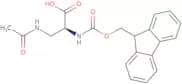
CAS:Fmoc-Dap(Ac)-OH is a fine chemical that is used as a building block in the synthesis of complex compounds. It reacts with various nucleophiles to form an amide bond, and has been shown to be useful for both research and industrial applications. Fmoc-Dap(Ac)-OH can also be used as a reagent to synthesize peptides, which are biologically active compounds that form the basis of many drugs. This versatile intermediate is also used as a scaffold in the construction of more complex molecules. Fmoc-Dap(Ac)-OH has CAS No. 181952-29-4 and is classified as a speciality chemical by the International Union of Pure and Applied Chemistry (IUPAC).Formula:C20H20N2O5Purity:Min. 95%Color and Shape:PowderMolecular weight:368.38 g/mol3-Fluoro-4-hydroxybenzonitrile
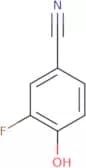
CAS:3-Fluoro-4-hydroxybenzonitrile is a compound with an acidic ph and a strain that is dispersive, desorptive, and polyacrylamide gel. It is a colorless liquid at room temperature. 3-Fluoro-4-hydroxybenzonitrile has been shown to react with dodecyl inorganic base and hydrochloric acid to produce 3-fluoroaniline. The localization of the reaction yield is on hydrotalcite activated by fluorine. This chemical has been shown to react at temperatures between 0°C and 140°C.Formula:C7H4FNOPurity:Min. 95%Color and Shape:White PowderMolecular weight:137.11 g/molFmoc-L-aspartic acid beta-allyl ester
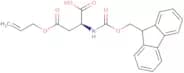
CAS:Fmoc-L-aspartic acid beta-allyl ester is a specific interaction between an amide and an enzyme target. It has been shown to have anti-inflammatory properties by inhibiting the activity of COX-2, which inhibits the production of prostaglandins. Fmoc-L-aspartic acid beta-allyl ester is a cyclic peptide with a lactam ring system that has been synthesized in a stepwise manner on a solid phase. This molecule interacts with cell line A549 and blocks the proliferation of cancer cells. Fmoc-L-aspartic acid beta-allyl ester also contains a disulfide bond that stabilizes its structure.Formula:C22H21NO6Purity:Min. 95%Molecular weight:395.41 g/molFmoc-N-methylglycine
CAS:Fmoc-N-methylglycine is a modified form of the amino acid glycine, which has been modified to include a reactive group that can be used to link other molecules. This molecule has gram-negative bacterial activity and exhibits potent antibacterial activity against many gram-positive bacteria. Fmoc-N-methylglycine is also an antimicrobial peptide with binding constants in the nanomolar range. It is also an agent that binds to serotonin, which may explain its effects on mood and sleep. Fmoc-N-methylglycine can be synthesized using stepwise solid phase synthesis methods or by conjugation with other molecules.Formula:C18H17NO4Purity:Min. 95%Molecular weight:311.33 g/mol4-Fluoro-2-methoxy-5-nitroaniline
CAS:Intermediate in the synthesis of osimertinib (AZD9291)Formula:C7H7FN2O3Purity:Min. 95%Molecular weight:186.14 g/mol2-Fluoropyridine-5-carboxaldehyde
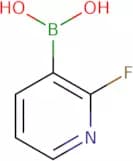
CAS:2-Fluoropyridine-5-carboxaldehyde is a reactive chemical that can be used as an acceptor in organic synthesis. It has been shown to have antibacterial properties, and is also a synthon for the production of prosthetic groups. 2-Fluoropyridine-5-carboxaldehyde reacts with dopamine to form diphenyl ethers, which are used as labels for immunoassays. This chemical can be catalysed and has been shown to be resistant to catalysis. 2-Fluoropyridine-5-carboxaldehyde can also be used in the synthesis of cycloalkanes.Formula:C6H4FNOPurity:Min. 95%Molecular weight:125.1 g/mol2-Fluoro-3-pyridineboronic acid
CAS:2-Fluoro-3-pyridineboronic acid is an amide that can be used as a catalyst for transfer reactions. It forms a complex with copper chloride and isohexane, which is then heated to produce the desired product. 2-Fluoro-3-pyridineboronic acid has been used in analytical methods such as constant pressure and methyl ethyl method. This compound also has high resistance to water vapor, hexane, and organic solvents. 2-Fluoro-3-pyridineboronic acid has been shown to inhibit the MCL-1 protein, which plays a role in regulating apoptosis. It can be used as a potential therapeutic agent against infectious diseases such as tuberculosis and HIV/AIDS due to its ability to inhibit MCL-1 protein expression.
Formula:C5H5NO2BFPurity:Min. 95%Color and Shape:White PowderMolecular weight:140.91 g/mol5-Boc-4H,5H,6H,7H,8H-pyrazolo[1,5-a][1,4]diazepine-2-carboxylic acid
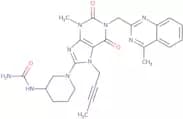
CAS:Versatile small molecule scaffoldFormula:C13H19N3O4Purity:Min. 95%Molecular weight:281.31 g/molN-Carbamoyl linagliptin
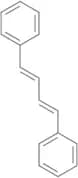
CAS:N-Carbamoyl linagliptin is a synthetic drug that is a selective, reversible inhibitor of dipeptidyl peptidase-4 (DPP-4), an enzyme that breaks down the incretin hormones GLP-1 and GIP. This drug has been shown to help control blood glucose levels in patients with type 2 diabetes. It binds to the active site of DPP-4 and prevents it from breaking down GLP-1 and GIP, which leads to increased levels of these hormones in the body. N-Carbamoyl linagliptin has a long half life, making it suitable for once daily administration. It also lacks any significant interactions with other drugs or foods.Formula:C26H29N9O3Purity:Min. 95%Molecular weight:515.6 g/moltrans,trans-1,4-Diphenyl-1,3-butadiene
CAS:Used in the preparation of metal-diene reagents (e.g. for carbocyclization)
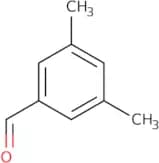
Formula:C16H14Purity:Min. 95%Molecular weight:206.28 g/mol3,5-Dimethylbenzaldehyde
CAS:3,5-Dimethylbenzaldehyde is an organic compound that is a colorless liquid. It has a chemical formula of C9H12O2 and is classified as an aldehyde. 3,5-Dimethylbenzaldehyde can be synthesized by the reaction of isopropyl palmitate with xylene in the presence of carbon as a source. The reaction time required for this synthesis is approximately one day. The major products of this reaction are 3,5-dimethylbenzaldehyde and 2-methylbutanal. This reaction mechanism can also be used to determine the concentration of urinary metabolites in human urine samples. Analysis of these samples requires an organic solvent such as hexane or dichloromethane. Kinetic data was collected from the rate at which zinc powder reacts with 3,5-dimethylbenzaldehyde over time at different concentrations. A kinetic experiment was conducted using c–h bond activation to produce 3,5-dimethoxy
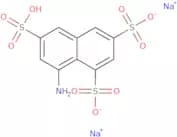
Formula:C9H10OPurity:Min. 95%Color and Shape:Colorless Clear LiquidMolecular weight:134.18 g/molDisodium 8-amino-1,3,6-naphthalenetrisulfonate
CAS:Disodium 8-amino-1,3,6-naphthalenetrisulfonate is a fluorescent sensor that can detect albumin in human serum. Disodium 8-amino-1,3,6-naphthalenetrisulfonate selectively detects the molecule albumin in blood with a sensitivity of approximately 1.5 nmol/L and a selectivity of nearly 100%. The fluorescent sensor consists of an immobilized nanometer sized molecule of 8-aminonaphthalene trisulfonic acid on hydrotalcite. The sensor has been shown to be selective for albumin and does not react with other serum proteins such as immunoglobulins or fibrinogen.Formula:C10H9NO9S3•Na2Purity:Min. 98 Area-%Color and Shape:White PowderMolecular weight:429.36 g/mol






![5-Boc-4H,5H,6H,7H,8H-pyrazolo[1,5-a][1,4]diazepine-2-carboxylic acid](/_next/image/?url=https%3A%2Fstatic.cymitquimica.com%2Fproducts%2F3D%2Fthumb-webp%2FFEC17097.webp&w=3840&q=75)