Building Blocks
This section contains fundamental products for the synthesis of organic and biological compounds. Building blocks are the essential starting materials used to construct complex molecules through various chemical reactions. They play a critical role in drug discovery, material science, and chemical research. At CymitQuimica, we offer a diverse range of high-quality building blocks to support your innovative research and industrial projects, ensuring you have the essential components for successful synthesis.
Subcategories of "Building Blocks"
- Boronic Acids & Boronic Acid Derivatives(5,756 products)
- Chiral Building Blocks(1,242 products)
- Hydrocarbon Building Blocks(6,095 products)
- Organic Building Blocks(61,038 products)
Found 196817 products of "Building Blocks"
Sort by
Purity (%)
0
100
|
0
|
50
|
90
|
95
|
100
Fmoc-D-glu-OtBu
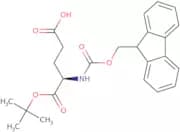
CAS:<p>Fmoc-D-glu-OtBu is an amide that can be used as a screening reagent for the detection of carbohydrate and periplasmic compounds. It has been shown to inhibit hepatitis in humans, which may be due to its ability to bind with muramyl dipeptide. Fmoc-D-glu-OtBu has also been shown to synergize with other vaccines, such as tetanus and escherichia coli surface antigen.</p>Formula:C24H27NO6Purity:Min. 95%Color and Shape:White PowderMolecular weight:425.47 g/mol4-(4-Fluorophenoxy)benzylamine hydrochloride
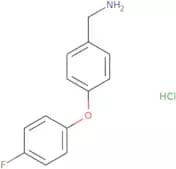
CAS:<p>4-(4-Fluorophenoxy)benzylamine hydrochloride is a metabolic agent that inhibits the metabolism of phenylpropionic acid and butanoic acid. It is used industrially as an oxime to protect other organic compounds from damage by peroxides, such as in polymerization reactions. 4-(4-Fluorophenoxy)benzylamine hydrochloride has been shown to be effective in treating metabolic diseases, such as phenylketonuria and urea cycle disorders.</p>Formula:C13H12FNO·HClPurity:Min. 95%Color and Shape:PowderMolecular weight:253.7 g/mol5-Ethenyl-2-methoxyphenol
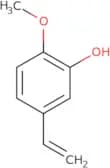
CAS:<p>5-Ethenyl-2-methoxyphenol is a volatile compound that has been isolated from the bark of the cinnamon tree. It has shown anticancer activities "in vitro" and "in vivo". 5-Ethenyl-2-methoxyphenol has been shown to be demethylated by cytochrome P450 enzymes, which may result in its antitumor activity. This active compound can also be detected in postharvested fruit and vegetables as well as processed foods such as apple juice, tomato sauce, and dried fruits. 5-Ethenyl-2-methoxyphenol is responsible for the characteristic flavor of cinnamon, so it is often used as a flavoring agent in food processing.</p>Formula:C9H10O2Purity:Min. 95%Color and Shape:PowderMolecular weight:150.17 g/mol3-Bromo-5-methylisoxazole-4-carboxylic acid
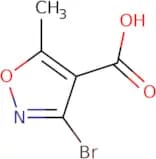
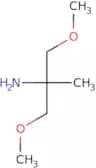
CAS:<p>Versatile small molecule scaffold</p>Formula:C5H4BrNO3Purity:Min. 95%Molecular weight:206 g/mol1,3-Dimethoxy-2-methylpropan-2-amine
CAS:<p>1,3-Dimethoxy-2-methylpropan-2-amine is a chemical compound that is an intermediate for the synthesis of other chemicals. It can be used as a reaction component in organic chemistry to form useful scaffolds and high quality research chemicals. This compound has many uses in bioorganic chemistry, such as being a versatile building block for complex compounds and a useful intermediate for the synthesis of other chemicals. 1,3-Dimethoxy-2-methylpropan-2-amine is also said to have potential applications in the treatment of diseases such as cancer.</p>Formula:C6H15NO2Purity:Min. 95%Color and Shape:PowderMolecular weight:133.19 g/molDichloroacetic anhydride
CAS:<p>Please enquire for more information about Dichloroacetic anhydride including the price, delivery time and more detailed product information at the technical inquiry form on this page</p>Formula:C4H2Cl4O3Purity:Min. 95%Color and Shape:Solidified MassMolecular weight:239.9 g/molL-Leucine, USP
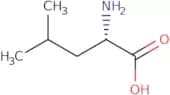
CAS:<p>Amino acid</p>Formula:C6H13NO2Purity:98.5 To 101.5%Color and Shape:White PowderMolecular weight:131.17 g/molLuteolin-4'-O-glucoside
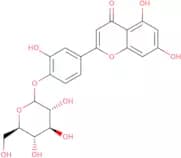
CAS:<p>Luteolin-4'-O-glucoside is a flavonol glycoside that is found in plants such as licorice, celery, and parsley. Luteolin-4'-O-glucoside has been shown to inhibit the growth of Coccidioides neoformans by binding to the cell membrane surface and blocking the synthesis of phospholipids. It also inhibits cancer cells in culture by reducing their viability. The structural analysis of luteolin-4'-O-glucoside revealed an hydroxyl group on its aromatic ring, which may be responsible for its anti-inflammatory effects. Luteolin-4'-O-glucoside has been shown to be effective against inflammatory diseases, such as rheumatoid arthritis and asthma, and may also have a protective effect against certain types of cancer, such as cervical cancer. Luteolin-4'-O-glucoside has also been shown to</p>Formula:C21H20O11Purity:Min. 95%Color and Shape:PowderMolecular weight:448.38 g/molH-Lys(Boc)-AMC
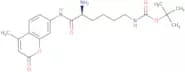
CAS:<p>H-Lys(Boc)-AMC is a useful building block for the synthesis of peptides, nucleic acids, and other complex molecules. It is a fine chemical that can be used as a reagent or speciality chemical in research laboratories. H-Lys(Boc)-AMC is also a versatile building block that can be used to synthesize complex compounds and scaffolds. This compound has been assigned CAS number 222037-62-9.</p>Formula:C21H29N3O5Purity:Min. 95%Color and Shape:PowderMolecular weight:403.47 g/molLinoleic acid - 60%min
CAS:<p>Linoleic acid is a polyunsaturated fatty acid that is an important component of the human diet. It has been shown to have inhibitory properties on liver cells, and may be related to body mass index. Linoleic acid is a precursor for gamma-aminobutyric acid (GABA), which functions as a neurotransmitter in the central nervous system. Linoleyl alcohol is a metabolite of linoleic acid and has been shown to inhibit the production of antimicrobial peptides, such as cathelicidin and beta-defensin. The inhibition of this peptide may be responsible for the observed reduction in inflammatory responses and infections.</p>Formula:C18H32O2Purity:Min. 95%Color and Shape:Yellow Clear LiquidMolecular weight:280.45 g/molLauroyl coenzyme A lithium
CAS:<p>Please enquire for more information about Lauroyl coenzyme A lithium including the price, delivery time and more detailed product information at the technical inquiry form on this page</p>Formula:C33H58N7O17P3S•LixPurity:90%Color and Shape:PowderLinalool glucoside
CAS:<p>Please enquire for more information about Linalool glucoside including the price, delivery time and more detailed product information at the technical inquiry form on this page</p>Formula:C16H28O6Purity:Min. 95%Color and Shape:Clear LiquidMolecular weight:316.39 g/mol1-[(2R)-2-(Hydroxymethyl)pyrrolidin-1-yl]ethan-1-one
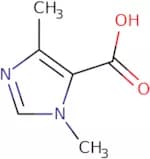
CAS:<p>Versatile small molecule scaffold</p>Formula:C7H13NO2Purity:Min. 95%Molecular weight:143.18 g/mol1,4-Dimethyl-1H-imidazole-5-carboxylic acid
CAS:<p>Versatile small molecule scaffold</p>Formula:C6H8N2O2Purity:Min. 90%Molecular weight:140.14 g/moltert-Butyl 7-oxo-4-azaspiro[2.4]heptane-4-carboxylate
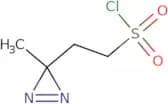
CAS:<p>Tert-Butyl 7-oxo-4-azaspiro[2.4]heptane-4-carboxylate is a versatile building block that is used in the synthesis of complex compounds, research chemicals, and reagents. It is a high quality and useful intermediate with a wide range of applications. Tert-butyl 7-oxo-4-azaspiro[2.4]heptane-4-carboxylate has been shown to be a useful scaffold for the synthesis of biologically active compounds.</p>Formula:C11H17NO3Purity:Min. 95%Color and Shape:Clear LiquidMolecular weight:211.26 g/mol2-(3-Methyl-3H-diazirin-3-yl)ethane-1-sulfonyl chloride
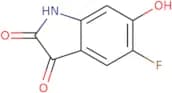
CAS:<p>Versatile small molecule scaffold</p>Formula:C4H7ClN2O2SPurity:Min. 95%Molecular weight:182.63 g/mol5-Fluoro-6-hydroxy-2,3-dihydro-1H-indole-2,3-dione
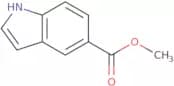
CAS:<p>5-Fluoro-6-hydroxy-2,3-dihydro-1H-indole-2,3-dione is a reagent and useful scaffold for the synthesis of complex compounds. It is a versatile building block that can be used as a precursor in the synthesis of a range of heterocyclic compounds. 5FHDI has been shown to be an excellent reaction component and useful intermediate in organic chemistry. This compound can be used to synthesize various speciality chemicals, such as pesticides and herbicides. 5FHDI is also used as a building block for the synthesis of drugs and pharmaceuticals.</p>Formula:C8H4FNO3Purity:Min. 95%Molecular weight:181.12 g/molMethyl indole-5-carboxylate
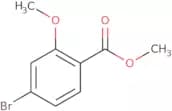
CAS:<p>Methyl indole-5-carboxylate is a hdac inhibitor that has been shown to have anticancer activity. It has been shown to inhibit the growth of hCT116 cells and xenograft tumors in mice. Methyl indole-5-carboxylate is also an active analog for other anticancer agents, such as 5-azacytidine and 5-aza-2'-deoxycytidine. The drug is cytotoxic to L6 cells and increases the expression of p21 protein, which inhibits tumor cell proliferation. This compound is metabolized by cytochrome P450 enzymes into methyl indole carboxylate, which can be further converted into a reactive intermediate that binds DNA.</p>Formula:C10H9NO2Color and Shape:PowderMolecular weight:175.18 g/molMethyl 4-bromo-2-methoxybenzoate
CAS:<p>Methyl 4-bromo-2-methoxybenzoate is a drug molecule that belongs to the amide class. It is a synthetic reagent and can be used as a potential precursor in the synthesis of other drugs. Methyl 4-bromo-2-methoxybenzoate has been shown to react with carboxylic acids to form methyl esters, which are functional groups that contain a carboxyl group (COOH) and an alcohol group (OH). This reaction is called methoxylation. The transformation of methyl 4-bromo-2-methoxybenzoate into methyl esters increases the solubility of the compound and allows for it to be transported in water.</p>Formula:C9H9BrO3Purity:Min. 98 Area-%Color and Shape:Yellow PowderMolecular weight:245.07 g/mol3-Methoxy-4-methylbenzonitrile
CAS:<p>3-Methoxy-4-methylbenzonitrile is a reagent that is used in the synthesis of complex compounds, such as pharmaceuticals and fine chemicals. It has been shown to be useful as an intermediate for the synthesis of various drugs, including antibiotics. 3-Methoxy-4-methylbenzonitrile has also been shown to be a useful scaffold for the synthesis of new drugs and other chemical compounds. This compound is listed on the Chemical Abstracts Service registry number 3556-60-3.</p>Formula:C9H9NOPurity:Min. 95%Color and Shape:PowderMolecular weight:147.17 g/mol




![1-[(2R)-2-(Hydroxymethyl)pyrrolidin-1-yl]ethan-1-one](/_next/image/?url=https%3A%2Fstatic.cymitquimica.com%2Fproducts%2F3D%2Fthumb-webp%2FYEA95887.webp&w=3840&q=75)
![tert-Butyl 7-oxo-4-azaspiro[2.4]heptane-4-carboxylate](/_next/image/?url=https%3A%2Fstatic.cymitquimica.com%2Fproducts%2F3D%2Fthumb-webp%2FRID73628.webp&w=3840&q=75)