Building Blocks
This section contains fundamental products for the synthesis of organic and biological compounds. Building blocks are the essential starting materials used to construct complex molecules through various chemical reactions. They play a critical role in drug discovery, material science, and chemical research. At CymitQuimica, we offer a diverse range of high-quality building blocks to support your innovative research and industrial projects, ensuring you have the essential components for successful synthesis.
Subcategories of "Building Blocks"
- Boronic Acids & Boronic Acid Derivatives(5,756 products)
- Chiral Building Blocks(1,242 products)
- Hydrocarbon Building Blocks(6,093 products)
- Organic Building Blocks(60,519 products)
Found 195533 products of "Building Blocks"
Sort by
Purity (%)
0
100
|
0
|
50
|
90
|
95
|
100
5,6,7,8-Tetrahydronaphthalene-2-carbaldehyde
CAS:<p>5,6,7,8-Tetrahydronaphthalene-2-carbaldehyde is an indole derivative that is used as a precursor to produce other compounds. It is an inducers of enzymes (e.g., hydroxylase) and has been shown to increase the production of toxic metabolites such as cyclized products. 5,6,7,8-Tetrahydronaphthalene-2-carbaldehyde can be synthesized from anthracene by reacting it with acetone and hydrochloric acid. This compound can be converted into a variety of derivatives including esters and zoxazolamine. 5,6,7,8-Tetrahydronaphthalene-2-carbaldehyde also has carcinogenic properties and has been shown to cause cancer in rats when injected or orally administered in high doses.</p>Formula:C11H12OPurity:Min. 95%Color and Shape:PowderMolecular weight:160.21 g/mol(2-Mercapto-4-methyl-5-thiazolyl)acetic Acid
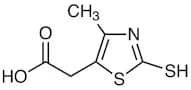
CAS:Formula:C6H7NO2S2Purity:>98.0%(T)(HPLC)Color and Shape:White to Light yellow powder to crystalMolecular weight:189.256-Nitroquinoline
CAS:<p>6-Nitroquinoline is a nucleophilic compound that reacts with nitroalkanes to form alkyl nitrites. It undergoes a bioreductive reaction, in which it is reduced to the corresponding amine by hydrogen peroxide and ammonia. 6-Nitroquinoline contains functional groups that can act as either electron donors or electron acceptors and is therefore reactive towards other compounds. The reaction mechanism involves nucleophilic attack at the carbon atom in the ring of the 6-nitroquinoline molecule, resulting in an addition product. 6-Nitroquinoline has been shown to react with fluorophores such as fluorescein, forming a fluorescent product that can be detected by spectroscopy. This chemical can also form hydrogen bonds with other molecules, which are important for its reactivity. The reaction products of this compound are nitrite and quinolines where one or more of the nitrogens have been oxidized to nitro groups.<br>END</p>Formula:C9H6N2O2Purity:Min. 95%Color and Shape:White PowderMolecular weight:174.16 g/mol1,2-Dibromo-2,4-dicyanobutane
CAS:<p>1,2-Dibromo-2,4-dicyanobutane is a chemical substance with antimicrobial properties. It is used as an ingredient in the production of health care products and preservatives for food. 1,2-Dibromo-2,4-dicyanobutane inhibits bacterial growth by preventing the synthesis of fatty acids and proteins. This compound has been shown to have synergistic effects when combined with benzalkonium chloride or potassium dichromate. 1,2-Dibromo-2,4-dicyanobutane has not been found to be carcinogenic in animal studies and does not cause allergic reactions.</p>Formula:C6H6Br2N2Purity:Min. 95%Color and Shape:White PowderMolecular weight:265.93 g/molPentadecane
CAS:Formula:C15H32Purity:>99.0%(GC)Color and Shape:Colorless clear liquidMolecular weight:212.422-Methyl-5-oxo-1-cyclopentenyl Butyrate
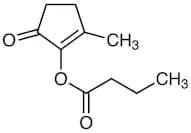
CAS:Formula:C10H14O3Purity:>98.0%(GC)Color and Shape:Colorless to Light yellow to Light orange clear liquidMolecular weight:182.22Pro-Gly-OH
CAS:<p>Pro-Gly-OH is a cyclic peptide that has been shown to have antimicrobial activity. Pro-Gly-OH has been shown to be an intramolecular hydrogen acceptor, which leads to the formation of a carbonyl group. This compound also has site specific interactions with the cell membrane and is taken up by cells. It is active at acidic pHs and can be activated by growth factors.<br>The conformational properties of Pro-Gly-OH are due to hydrogen bonding interactions and amide bond formation.</p>Formula:C7H12N2O3Purity:Min. 95%Color and Shape:PowderMolecular weight:172.18 g/mol2,5-Difluoro-4-methylbenzoic acid methyl ester
CAS:<p>2,5-Difluoro-4-methylbenzoic acid methyl ester is used as a reactive chemical in synthesis of pharmaceuticals and other chemicals. 2,5-Difluoro-4-methylbenzoic acid methyl ester reacts with amines to form the corresponding amides. It can also react with alcohols to form the corresponding ethers or it can be used as an intermediate for preparing other chemicals such as 4-(2,5-dichloro-4-methylphenyl)morpholine.</p>Formula:C9H8F2O2Purity:Min. 95%Molecular weight:186.16 g/mol3-Bromo-4-nitrobenzoic acid
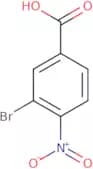
CAS:<p>3-Bromo-4-nitrobenzoic acid is a chemical compound with the molecular formula CHBrNO2. It is a versatile building block that can be used in the synthesis of many different compounds. 3-Bromo-4-nitrobenzoic acid is a white crystalline solid that is soluble in water, ethanol, and ether. It reacts with many substances to produce other useful compounds. It can also be used as a reagent for the detection of proteins or nucleic acids. This product has been shown to be an effective intermediate in organic reactions and has been used as a scaffold in the synthesis of complex molecules such as natural products, pharmaceuticals, and agrochemicals.</p>Formula:C7H4BrNO4Purity:Min. 95%Color and Shape:PowderMolecular weight:246.02 g/mol3-(2-Thienyl)pyridine
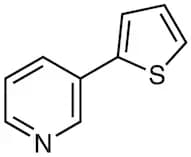
CAS:Formula:C9H7NSPurity:>98.0%(GC)Color and Shape:White to Yellow to Green clear liquidMolecular weight:161.22Methyl 3-cyano-1H-indole-7-carboxylate
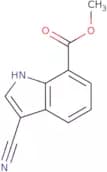
CAS:<p>Methyl 3-cyano-1H-indole-7-carboxylate is a fine chemical that belongs to the class of useful scaffolds, versatile building blocks, and useful intermediates. It is used as a research chemical and a reaction component. Methyl 3-cyano-1H-indole-7-carboxylate is also a speciality chemical with high quality and can be used as a reagent in the production of other compounds.</p>Formula:C11H8N2O2Purity:Min. 95%Color and Shape:White PowderMolecular weight:200.19 g/mol2-Chloro-6-methoxy-3-nitropyridine
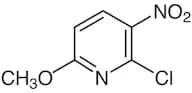
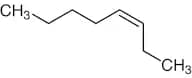
CAS:Formula:C6H5ClN2O3Purity:>98.0%(GC)Color and Shape:Light yellow to Yellow to Green powder to crystalMolecular weight:188.57cis-3-Octene
CAS:Formula:C8H16Purity:>98.0%(GC)Color and Shape:Colorless to Almost colorless clear liquidMolecular weight:112.224-Bromo-2-nitrobenzoic acid
CAS:<p>4-Bromo-2-nitrobenzoic acid is an anthranilic acid derivative that can be used as a radiolabel for the diagnosis of bladder cancer. The uptake of 4-Bromo-2-nitrobenzoic acid in the bladder is proportional to the number of cells, which are then detected by positron emission tomography (PET) scanning. The affinity of 4-Bromo-2-nitrobenzoic acid to human bladder tissue was determined by measuring its uptake in humans and rats. 4-Bromo-2-nitrobenzoic acid has been shown to be effective against cancer cells in vitro. Radiolabeling with this compound allows for more accurate diagnostic imaging than using other radiopharmaceuticals.</p>Formula:C7H4BrNO4Purity:Min. 95%Color and Shape:PowderMolecular weight:246.02 g/mol2-(2,6-Dichlorophenyl)ethylamine
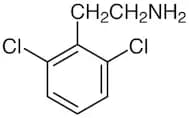
CAS:Formula:C8H9Cl2NPurity:>98.0%(GC)(T)Color and Shape:Colorless to Light orange to Yellow clear liquidMolecular weight:190.07p-Xylylene Dithiocyanate
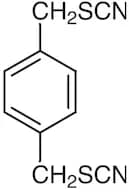
CAS:Formula:C10H8N2S2Purity:>98.0%(GC)Color and Shape:White to Almost white powder to crystalineMolecular weight:220.311-Methyl-1H-imidazole-4-carboxylic acid methyl ester
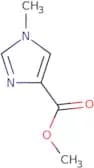
CAS:<p>1-Methyl-1H-imidazole-4-carboxylic acid methyl ester is a carboxylic acid that is aniline derivative with the chemical formula C6H5NCH2COOH. It is soluble in water, ethanol and acetone. 1-Methyl-1H-imidazole-4-carboxylic acid methyl ester hydrolyzes to form aniline and methanol. The reflux of 1-methyl imidazole can produce the same products as well as formaldehyde and hydrogen cyanide.</p>Formula:C6H8N2O2Purity:Min. 95%Color and Shape:PowderMolecular weight:140.14 g/molBenzo[b]furan-2-boronic acid
CAS:<p>Benzo[b]furan-2-boronic acid is a potent matrix metalloproteinase inhibitor that can be used in the treatment of cancer. It is synthesized from 2-aminobenzofuran by using a Suzuki coupling reaction with boronic acid. Benzo[b]furan-2-boronic acid has been shown to inhibit MMP-1, MMP-13, and MMP-14. This compound also inhibits the activity of other proteases such as cathepsin G, elastase, and chymase. The compound has been shown to be cytotoxic against human breast cancer cells and colon cancer cells. In addition, this compound is fluorescent and its fluorescence has been shown to increase when it binds to cancer cells.</p>Formula:C8H7BO3Purity:Min. 95%Color and Shape:White PowderMolecular weight:161.95 g/mol7-Aminoquinoline
CAS:<p>7-Aminoquinoline is a nucleophilic compound that is involved in the catalysis of bond cleavage. It has been shown to react with organic molecules and produce an oxygenative interaction. 7-Aminoquinoline has been shown to produce anti-inflammatory properties by inhibiting prostaglandin synthesis, which occurs through the inhibition of cyclooxygenase activity.</p>Formula:C9H8N2Purity:Min. 95%Color and Shape:Yellow PowderMolecular weight:144.17 g/molD-Allylglycine
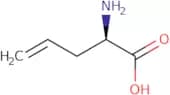
CAS:<p>D-Allylglycine is a l-amino acid with the chemical formula of CH2CH(CH3)COOH. D-Allylglycine binds to the N-methyl-D-aspartate (NMDA) receptor and has been shown in animal studies to have effects on blood pressure, although its clinical relevance remains unclear. It is an enantiopure compound and can be obtained as a trifluoroacetate salt or ethyl diazoacetate ester hydrochloride. D-Allylglycine is also an aminoglycoside and ester hydrochloride that can be used for the treatment of bacterial infections. The amino group in D-allylglycine binds to glutamate receptors, which are found on neurons, and inhibits the release of gamma-aminobutyric acid (GABA). This drug may also have potential as a serotonergic agent due to its ability to inhibit serotonin re</p>Formula:C5H9NO2Purity:Min. 95%Color and Shape:White PowderMolecular weight:115.13 g/mol







![Benzo[b]furan-2-boronic acid](/_next/image/?url=https%3A%2Fstatic.cymitquimica.com%2Fproducts%2F3D%2Fthumb-webp%2FFB40264.webp&w=3840&q=75)