Building Blocks
This section contains fundamental products for the synthesis of organic and biological compounds. Building blocks are the essential starting materials used to construct complex molecules through various chemical reactions. They play a critical role in drug discovery, material science, and chemical research. At CymitQuimica, we offer a diverse range of high-quality building blocks to support your innovative research and industrial projects, ensuring you have the essential components for successful synthesis.
Subcategories of "Building Blocks"
- Boronic Acids & Boronic Acid Derivatives(5,756 products)
- Chiral Building Blocks(1,242 products)
- Hydrocarbon Building Blocks(6,093 products)
- Organic Building Blocks(60,519 products)
Found 195533 products of "Building Blocks"
Sort by
Purity (%)
0
100
|
0
|
50
|
90
|
95
|
100
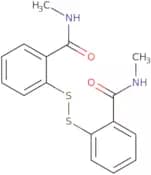
Dithio-2,2'-bis(N-methylbenzamide)
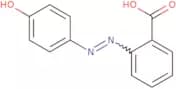
CAS:<p>Dithio-2,2'-bis(N-methylbenzamide) is a chlorphenesin and benzyl alcohol combination that also contains pyrithione, benzyl chloride and benzalkonium chloride. It is a microbicide that inhibits the growth of bacteria by reacting with their cell membranes. Dithio-2,2'-bis(N-methylbenzamide) is used in cosmetics as a preservative, and has been shown to have antimicrobial properties against the section Micrococcus luteus. This product also contains imidazolidinyl urea as an anti-fungal agent.</p>Formula:C16H16N2O2S2Purity:Min. 95%Color and Shape:White PowderMolecular weight:332.44 g/mol2-(4-Hydroxyphenylazo)benzoic acid
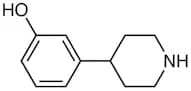
CAS:<p>2-(4-Hydroxyphenylazo)benzoic acid is a molecule that is used in the production of human immunoglobulin. It is activated with fatty acids and oligosaccharides to form a complex, which can be detected using confocal microscopy. The matrix-assisted laser ablation technique was used to determine the chemical structures and hydrogen bonding interactions of this molecule. 2-(4-Hydroxyphenylazo)benzoic acid has been shown to inhibit microbial infections by binding to the sodium salt form of Streptavidin, which inhibits bacterial growth. This molecule also has been used as an indicator for trifluoroacetic acid, which can be used as a sample preparation reagent.</p>Formula:C13H10N2O3Purity:Min. 95%Color and Shape:Yellow PowderMolecular weight:242.23 g/mol4-(3-Hydroxyphenyl)piperidine
CAS:Formula:C11H15NOPurity:>98.0%(GC)(T)Color and Shape:White to Orange to Green powder to crystalMolecular weight:177.253,5-Dimethoxy-4-hydroxybenzoic acid methyl ester
CAS:<p>3,5-Dimethoxy-4-hydroxybenzoic acid methyl ester (DMHBME) is a natural compound that has been shown to have high redox potential values and chemical stability. This compound is an inhibitor of p-hydroxylases and has been shown to inhibit human serum laccase activity. DMHBME also inhibits polymerase chain reactions in the presence of DNA templates, which may be due to its ability to bind to the enzyme at the active site. DMHBME is a potent antimicrobial agent that can be used as a fungicide or preservative in food products. It is also effective against bacteria such as Staphylococcus aureus, Clostridium perfringens, Escherichia coli, and Mycobacterium tuberculosis.</p>Formula:C10H12O5Purity:Min. 95%Color and Shape:White PowderMolecular weight:212.2 g/molTetrathiafulvalene
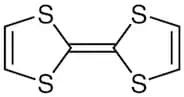
CAS:Formula:C6H4S4Purity:>98.0%(GC)Color and Shape:Orange to Brown powder to crystalMolecular weight:204.34Fmoc-L-Gln-OH
CAS:<p>Fmoc-L-Gln-OH is a vasoactive intestinal peptide (VIP) analog that has been shown to be a potent pressor agent. It binds to and activates the VIP receptors in the vascular endothelium, causing vasoconstriction of blood vessels. Fmoc-L-Gln-OH also inhibits mitochondrial superoxide production and colorectal adenocarcinoma growth in vitro. This compound can be synthesized using solid phase chemistry, which is a technique where the building blocks are attached sequentially to an insoluble support material. This process can be activated by trifluoroacetic acid or other activating agents and eliminates the need for protecting groups.<br>Fmoc-L-Gln-OH has been shown to inhibit the uptake of iron from transferrin into cells and to bind hippuric acid as well as many other organic compounds.</p>Formula:C20H20N2O5Purity:Min. 95%Color and Shape:PowderMolecular weight:368.38 g/mol3,7-Dibromodibenzo[b,d]thiophene
CAS:<p>3,7-Dibromodibenzo[b,d]thiophene is a polymerizable monomer that can be used for the synthesis of polymers with interesting optical properties. This material has been shown to undergo copolymerization with vinyl ethers and vinyl esters in the presence of sodium carbonate. The resulting copolymer has semiconducting properties and gel permeation chromatography showed a ring structure. Cross-coupling reactions have been used to synthesize 3,7-dibromodibenzo[b,d]thiophene from 2-bromo-1,3-dithiolane and 2-iodobenzene.</p>Formula:C12H6Br2SPurity:Min. 95%Color and Shape:White PowderMolecular weight:342.05 g/mol9-Fluorenemethanol
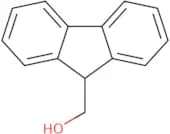
CAS:<p>9-Fluorenemethanol is a chemical compound that is used as a reagent in analytical chemistry. It reacts with zirconium oxide to form 9-fluorenylmethyl zirconium chloride, which can be used to detect the presence of ethyl formate by fluorescence resonance spectroscopy. The reaction solution is heated at 100°C for about 4 hours and then cooled to room temperature. The isolated yield of 9-fluorenylmethyl zirconium chloride is determined by the detection time and thermodynamic parameters. This compound can also be used in acylation reactions.</p>Formula:C14H12OPurity:Min. 95%Color and Shape:White PowderMolecular weight:196.24 g/molPolyethylene Glycol Stearylamine (n=approx. 10)
Purity:min. 90.0 %Color and Shape:Orange to Brown to Dark red clear liquidDibutyl Methylenebis(thioglycolate)
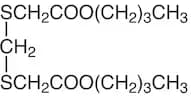
CAS:Formula:C13H24O4S2Purity:>95.0%(GC)Color and Shape:Colorless to Almost colorless clear liquidMolecular weight:308.452-Chloro-3-fluoropyridine
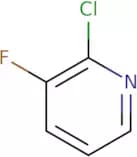
CAS:<p>2-Chloro-3-fluoropyridine is a chemical compound that is classified as an allosteric modulator. It has a profile of physicochemical and spectrometric properties, which includes a pyridine ring with two chloro substituents and one fluorine atom. 2-Chloro-3-fluoropyridine can be transported by organic solvents such as benzene or chloroform, but not by water. This chemical reacts with copper chloride to form a cross-coupling reaction, which may be useful for the synthesis of complex organic molecules. 2-Chloro-3-fluoropyridine also has biological properties that include being a ligand for some receptors in the brain and central nervous system, as well as having antioxidant activity.</p>Formula:C5H3ClFNPurity:Min. 95%Color and Shape:Clear LiquidMolecular weight:131.54 g/mol3-Methyl-2-heptene (cis- and trans- mixture)
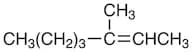
CAS:Formula:C8H16Purity:>95.0%(GC)Color and Shape:Colorless to Almost colorless clear liquidMolecular weight:112.222-(4-Methoxybenzoyl)thiophene
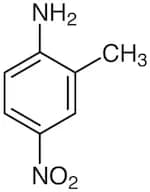
CAS:Formula:C12H10O2SPurity:>98.0%(GC)Color and Shape:White to Gray to Brown powder to crystalMolecular weight:218.272-Methyl-4-nitroaniline
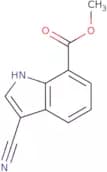
CAS:Formula:C7H8N2O2Purity:>98.0%(GC)Color and Shape:White to Yellow to Green powder to crystalMolecular weight:152.15Methyl 3-cyano-1H-indole-7-carboxylate
CAS:<p>Methyl 3-cyano-1H-indole-7-carboxylate is a fine chemical that belongs to the class of useful scaffolds, versatile building blocks, and useful intermediates. It is used as a research chemical and a reaction component. Methyl 3-cyano-1H-indole-7-carboxylate is also a speciality chemical with high quality and can be used as a reagent in the production of other compounds.</p>Formula:C11H8N2O2Purity:Min. 95%Color and Shape:White PowderMolecular weight:200.19 g/mol2-(4-Methoxyphenyl)ethanol
CAS:<p>2-(4-Methoxyphenyl)ethanol is a chemical compound that can be synthesized in an efficient method. It is a by-product of the reaction of fatty acids with hydroxyl compounds and has been shown to have synergistic effects when combined with chloride. 2-(4-Methoxyphenyl)ethanol is used as a synthetic intermediate for the production of methyl anthranilate, which is an important industrial chemical that is used as a flavor and fragrance additive. 2-(4-Methoxyphenyl)ethanol also has eugenol as one of its cleavage products, which can be found in plants such as clove oil, cinnamon bark, and nutmeg.</p>Formula:C9H12O2Purity:Min. 98%Color and Shape:White PowderMolecular weight:152.19 g/molOctafluorocyclopentene
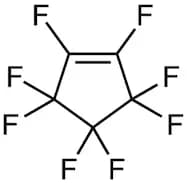
CAS:Formula:C5F8Purity:>98.0%(GC)Color and Shape:Colorless to Almost colorless clear liquidMolecular weight:212.04Methyl L-(S)-b-Hydroxyisobutanoate
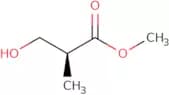
CAS:<p>Methyl L-(S)-b-hydroxyisobutanoate is a spiroketal that belongs to the class of methyl ketones. It has been found to inhibit the growth of cancer cells in vitro and in vivo. This effect is mediated by its ability to inhibit fatty acid synthesis and its ability to activate Bafilomycin A1, which inhibits ATP synthase. Methyl L-(S)-b-hydroxyisobutanoate also has an asymmetric carbon atom at position 4, which makes it possible to synthesize stereoisomers with different biological properties. The hydroxyl group on the side chain is important for its biological function because it facilitates the binding to biomolecules.</p>Formula:C5H10O3Purity:Min. 95%Color and Shape:PowderMolecular weight:118.13 g/mol3-Methyl-N-methylbenzylamine
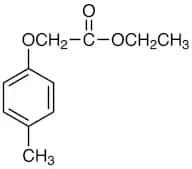
CAS:Formula:C9H13NPurity:>97.0%(GC)Color and Shape:Colorless to Light yellow to Light orange clear liquidMolecular weight:135.21Ethyl (4-Methylphenoxy)acetate
CAS:Formula:C11H14O3Purity:>97.0%(GC)Color and Shape:Colorless to Light yellow clear liquidMolecular weight:194.23




![3,7-Dibromodibenzo[b,d]thiophene](/_next/image/?url=https%3A%2Fstatic.cymitquimica.com%2Fproducts%2F3D%2Fthumb-webp%2FFD62242.webp&w=3840&q=75)