Building Blocks
This section contains fundamental products for the synthesis of organic and biological compounds. Building blocks are the essential starting materials used to construct complex molecules through various chemical reactions. They play a critical role in drug discovery, material science, and chemical research. At CymitQuimica, we offer a diverse range of high-quality building blocks to support your innovative research and industrial projects, ensuring you have the essential components for successful synthesis.
Subcategories of "Building Blocks"
- Boronic Acids & Boronic Acid Derivatives(5,756 products)
- Chiral Building Blocks(1,242 products)
- Hydrocarbon Building Blocks(6,095 products)
- Organic Building Blocks(61,038 products)
Found 196817 products of "Building Blocks"
Sort by
Purity (%)
0
100
|
0
|
50
|
90
|
95
|
100
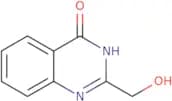
2-(Hydroxymethyl)-3,4-dihydroquinazolin-4-one
CAS:<p>2-(Hydroxymethyl)-3,4-dihydroquinazolin-4-one is an organic compound that belongs to the group of quinazolines. It is a fine chemical with CAS No. 34637-40-6. This product is a versatile building block for synthesis of complex compounds and can be used as a reaction component in organic chemistry. 2-(Hydroxymethyl)-3,4-dihydroquinazolin-4-one is a useful intermediate in the preparation of various pharmaceuticals, including antibiotics and antihypertensives. It is also used as a reagent in the laboratory or as a speciality chemical.</p>Formula:C9H8N2O2Purity:Min. 95%Color and Shape:PowderMolecular weight:176.17 g/mol4-[(3-Aminopropyl)amino]butanoic acid dihydrochloride
CAS:<p>Versatile small molecule scaffold</p>Formula:C7H16N2O2•2HClPurity:Min. 95%Color and Shape:PowderMolecular weight:233.13 g/mol2-Azaspiro[3.5]nonane hydrochloride
CAS:<p>2-Azaspiro[3.5]nonane hydrochloride is a high quality reagent that is used as an intermediate for the synthesis of complex organic compounds, such as fine chemicals and speciality chemicals. It has been shown to be useful in the synthesis of a variety of chemical compounds, including research chemicals and versatile building blocks. This compound has the CAS number 1303968-07-1.</p>Formula:C8H15N·HClPurity:Min. 95%Molecular weight:161.67 g/molSulfoxaflor
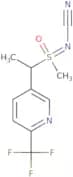
CAS:<p>Sulfoxaflor is a novel insecticide that belongs to the group of neonicotinoids. It has been shown to have synergic effects with other insecticides, such as piperonyl butoxide and pyrethrum, which are also neonicotinoids. Sulfoxaflor inhibits the enzyme acetylcholinesterase in insects, leading to paralysis and death. The analytical method for sulfoxaflor is based on the determination of terminal residues in honeybees using gas chromatography with mass spectrometry detection (GC-MS). This product is not toxic to mammals or birds at low doses, but has carcinogenic potential. Sulfoxaflor has been shown to cause high resistance levels in insects.</p>Formula:C10H10F3N3OSPurity:Min. 95%Color and Shape:PowderMolecular weight:277.27 g/mol1-Adamantanemethanol
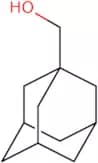
CAS:<p>Adamantanemethanol is a molecule used in the process of translation. It is structurally analyzed by trifluoromethanesulfonic acid, which is a cavity. The pharmacokinetic properties of adamantanemethanol are determined by its acyl chain. Adamantanemethanol has been studied in clinical trials, and the minimal inhibitory concentration for this drug is determined by chloride. This molecule also forms hydrogen bonds with hydroxyl groups and functional groups. Adamantanemethanol has been shown to be an effective antimicrobial agent against bacterial replication in cell culture and has optical properties that can be used to identify it.</p>Formula:C11H18OPurity:Min. 95%Color and Shape:White PowderMolecular weight:166.26 g/mol4-Acetoxystyrene Stabilized with TB
CAS:<p>Stabilised with TB</p>Formula:C10H10O2Molecular weight:162.19 g/molPivalonitrile
CAS:<p>Please enquire for more information about Pivalonitrile including the price, delivery time and more detailed product information at the technical inquiry form on this page</p>Formula:C5H9NMolecular weight:83.13 g/mol2-Chloroethyl isocyanate
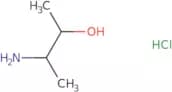
CAS:<p>Please enquire for more information about 2-Chloroethyl isocyanate including the price, delivery time and more detailed product information at the technical inquiry form on this page</p>Formula:C3H4ClNOPurity:Min. 99.0 Area-%Molecular weight:105.52 g/mol(2S,3S)-3-Aminobutan-2-ol hydrochloride
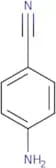
CAS:<p>(2S,3S)-3-Aminobutan-2-ol hydrochloride is a high quality chemical that is used as a reagent, intermediate in the production of fine chemicals, and building block for synthesis of other compounds. It is also an important building block in the preparation of speciality chemicals. This compound can be used as an intermediate for the synthesis of various pharmaceuticals, pesticides, dyes, and flavors. (2S,3S)-3-Aminobutan-2-ol hydrochloride can be used in research to prepare new compounds with different properties. It is also a versatile building block that can be used to synthesize many different types of products.</p>Formula:C4H12ClNOPurity:Min. 95%Color and Shape:Clear LiquidMolecular weight:125.6 g/mol4-Aminobenzonitrile
CAS:<p>4-Aminobenzonitrile is a chemical compound that has been shown to be an antimicrobial agent. It has been found to be active against bacteria and fungi, such as Candida albicans and Aspergillus niger. 4-Aminobenzonitrile binds with epidermal growth factor (EGF) by intramolecular hydrogen bonding, which leads to the disruption of the protein's tertiary structure. The nitrogen atoms in this compound have been shown to react with water vapor at high temperatures, which results in the release of hydrogen gas. This reaction can be used for phase transition temperature studies. 4-Aminobenzonitrile also shows intermolecular hydrogen bonding with fatty acids, which causes the molecule to change its shape and protonation state. These changes affect its frequency shift and molecular modeling study results.</p>Formula:C7H6N2Purity:Min. 95%Color and Shape:Off-White PowderMolecular weight:118.14 g/mol3-Methyl-4-(trifluoromethyl)benzaldehyde
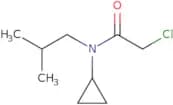
CAS:<p>3-Methyl-4-(trifluoromethyl)benzaldehyde is a high quality research chemical. It is a versatile building block that can be used in the synthesis of complex compounds, such as pharmaceuticals and pesticides. 3-Methyl-4-(trifluoromethyl)benzaldehyde can be used as a reagent to synthesize other chemicals and as a reaction component to produce new organic compounds. 3-Methyl-4-(trifluoromethyl)benzaldehyde has CAS No. 951232-01-2.</p>Formula:C9H7F3OPurity:Min. 95%Color and Shape:PowderMolecular weight:188.15 g/mol2-Chloro-N-cyclopropyl-N-(2-methylpropyl)acetamide
CAS:<p>Versatile small molecule scaffold</p>Formula:C9H16ClNOPurity:(%) Min. 85%Color and Shape:Clear LiquidMolecular weight:189.68 g/mol5-Aminopentane-1-thiol hydrochloride
CAS:<p>Versatile small molecule scaffold</p>Formula:C5H14ClNSPurity:Min. 95%Color and Shape:PowderMolecular weight:155.69 g/mol5,8-Dibromo-1,2,3,4-tetrahydroquinoline
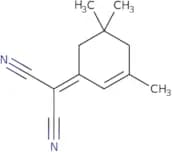
CAS:<p>5,8-Dibromo-1,2,3,4-tetrahydroquinoline is a fine chemical that can be used as a building block in the synthesis of various complex compounds. It is also a versatile intermediate for the production of various pharmaceuticals. 5,8-Dibromo-1,2,3,4-tetrahydroquinoline is an oxidant with high reactivity and has been shown to be useful in reactions where other reagents are not suitable. This compound can also be used as a scaffold for the synthesis of new molecules.</p>Formula:C9H9Br2NPurity:Min. 95%Color and Shape:PowderMolecular weight:290.98 g/mol(3,5,5-Trimethylcyclohex-2-enylidene)malononitrile
CAS:<p>(3,5,5-Trimethylcyclohex-2-enylidene)malononitrile is a versatile compound that has various applications in different fields. It is commonly used as a research chemical and has shown promising results in the development of new medicaments. Its unique structure and properties make it an ideal candidate for further exploration.</p>Formula:C12H14N2Purity:Min. 95%Molecular weight:186.25 g/mol7-Methoxy-2,3,4,5-tetrahydro-1H-1-benzazepine
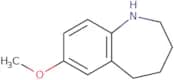
CAS:<p>7-Methoxy-2,3,4,5-tetrahydro-1H-1-benzazepine is a fine chemical with CAS No. 46180-98-7. It is a versatile building block and useful intermediate for the synthesis of complex compounds with various functions. 7-Methoxy-2,3,4,5-tetrahydro-1H-1-benzazepine is also a reagent that can be used in research chemicals and speciality chemicals. This compound has been shown to have high quality and is an excellent reaction component for reactions producing new synthetic intermediates.</p>Formula:C11H15NOPurity:Min. 95%Molecular weight:177.24 g/mol4-Aminobutylphosphonic acid
CAS:<p>4-Aminobutylphosphonic acid is a potent antagonist of the ganglion cell nicotinic acetylcholine receptors. It has been shown to produce irreversible oxidation of the ganglion cell membrane by inhibiting the enzyme catalase, which is responsible for the removal of hydrogen peroxide produced by cells. 4-Aminobutylphosphonic acid also inhibits gamma-aminobutyric acid (GABA) synthesis and increases locomotor activity in frogs. This drug also binds to functional groups on the frog’s muscle cells and stimulates a nerve impulse that causes muscle contraction. The molecule has been shown to be an effective inhibitor of x-ray diffraction data from calf thymus DNA, vinyl alcohol, and glass slides.</p>Formula:C4H12NO3PPurity:Min. 95%Color and Shape:PowderMolecular weight:153.12 g/mol2-(1-Ethyl-1H-pyrazol-4-yl)acetic acid
CAS:<p>Versatile small molecule scaffold</p>Formula:C7H10N2O2Purity:Min. 95%Color and Shape:PowderMolecular weight:154.17 g/mol8-(tert-Butoxycarbonyl)-1-oxa-8-azaspiro[4.5]decane-2-carboxylic acid
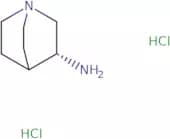
CAS:<p>8-(tert-Butoxycarbonyl)-1-oxa-8-azaspiro[4.5]decane-2-carboxylic acid is a useful scaffold for the preparation of new compounds. This compound is an intermediate in the synthesis of other compounds, and can be used as a building block in the synthesis of complex compounds. It has been used as a reagent for organic reactions and has shown high quality. 8-(tert-Butoxycarbonyl)-1-oxa-8-azaspiro[4.5]decane-2-carboxylic acid is also known by CAS No. 1160246-88-7 and has a variety of speciality uses, such as research chemicals or fine chemicals.</p>Formula:C14H23NO5Purity:Min. 95%Molecular weight:285.34 g/mol(R)-(+)-3-Aminoquinuclidine dihydrochloride
CAS:<p>A building block; used for synthesis tryptophan 2,?3-?dioxygenase inhibitors</p>Formula:C7H14N2•(HCl)2Purity:Min. 95%Color and Shape:PowderMolecular weight:199.12 g/mol

![4-[(3-Aminopropyl)amino]butanoic acid dihydrochloride](/_next/image/?url=https%3A%2Fstatic.cymitquimica.com%2Fproducts%2F3D%2Fthumb-webp%2FDCA18544.webp&w=3840&q=75)
![2-Azaspiro[3.5]nonane hydrochloride](/_next/image/?url=https%3A%2Fstatic.cymitquimica.com%2Fproducts%2F3D%2Fthumb-webp%2FDCC96807.webp&w=3840&q=75)





![8-(tert-Butoxycarbonyl)-1-oxa-8-azaspiro[4.5]decane-2-carboxylic acid](/_next/image/?url=https%3A%2Fstatic.cymitquimica.com%2Fproducts%2F3D%2Fthumb-webp%2FKWB24688.webp&w=3840&q=75)