Building Blocks
This section contains fundamental products for the synthesis of organic and biological compounds. Building blocks are the essential starting materials used to construct complex molecules through various chemical reactions. They play a critical role in drug discovery, material science, and chemical research. At CymitQuimica, we offer a diverse range of high-quality building blocks to support your innovative research and industrial projects, ensuring you have the essential components for successful synthesis.
Subcategories of "Building Blocks"
- Boronic Acids & Boronic Acid Derivatives(5,756 products)
- Chiral Building Blocks(1,242 products)
- Hydrocarbon Building Blocks(6,093 products)
- Organic Building Blocks(60,522 products)
Found 195533 products of "Building Blocks"
Sort by
Purity (%)
0
100
|
0
|
50
|
90
|
95
|
100
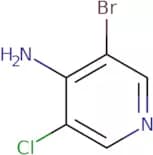
3-Bromo-5-chloropyridine-4-amine
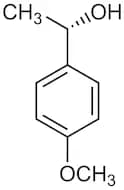
CAS:<p>3-Bromo-5-chloropyridine-4-amine is a versatile building block that can be used in many different chemical syntheses. It is a reagent and a useful scaffold for the synthesis of complex compounds. 3-Bromo-5-chloropyridine-4-amine has been used as a high quality, useful intermediate in the synthesis of other chemicals. It is also an effective reaction component for reactions involving amines and thiols.</p>Formula:C5H4BrClN2Purity:Min. 95%Color and Shape:White PowderMolecular weight:207.46 g/mol(S)-1-(4-Methoxyphenyl)ethanol
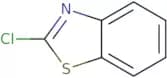
CAS:Formula:C9H12O2Purity:>95.0%(GC)Color and Shape:Colorless to Light yellow clear liquidMolecular weight:152.192-Chlorobenzothiazole
CAS:<p>2-Chlorobenzothiazole is an organic compound with the formula CHClS. It is a reactive and versatile chemical that can be used in both synthesis and as a reagent. The compound is a white solid, but samples are often yellow due to impurities. 2-Chlorobenzothiazole can be prepared by reaction of hydrochloric acid with benzotriazole, followed by reduction of the resulting salt with sodium hydroxide. This product has shown antiinflammatory activity in mice. It has also been shown to inhibit prostaglandin synthesis in vitro through its reaction with amines and carbodiimides, which are nucleophiles, or halides such as Cl or Br. 2-Chlorobenzothiazole was also found to have cytotoxic activity against human colon cancer cells in culture.</p>Formula:C7H4ClNPurity:Min. 95%Color and Shape:Yellow PowderMolecular weight:137.57 g/molOxamide
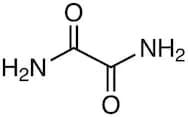
CAS:Formula:C2H4N2O2Purity:>98.0%(N)Color and Shape:White to Almost white powder to crystalMolecular weight:88.07Isopropyl benzenesulfonate
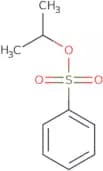
CAS:<p>Isopropyl benzenesulfonate is an ester compound that reacts with the chlorine atom to produce a sulfonic acid. It has antimicrobial properties and is used in the production of quinoline derivatives, which are aliphatic hydrocarbons that have been found to be effective in the treatment of cancer. Isopropyl benzenesulfonate also has potential as a cross-linking agent for ester compounds, due to its ability to react with both aromatic hydrocarbons and radiation. It can be synthesized by reacting a phase liquid chromatography solution with hydroxyl group or patterning with a solid catalyst. Isopropyl benzenesulfonate has carbonyl groups that are reactive with other chemicals and may be used as a reagent for storing reactive substances.</p>Formula:C9H12O3SPurity:Min. 95%Color and Shape:Colorless Clear LiquidMolecular weight:200.26 g/mol3-Methyl-1-butene (ca. 15% in Dichloromethane, ca. 2.5mol/L)
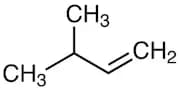
CAS:Formula:C5H10Color and Shape:Colorless to Almost colorless clear liquidMolecular weight:70.14Bourgeonal
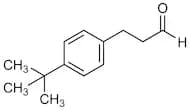
CAS:Formula:C13H18OPurity:>90.0%(GC)Color and Shape:Colorless to Yellow to Yellow green clear liquidMolecular weight:190.29Boc-Lys-OMe HCl
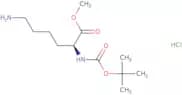
CAS:<p>Boc-Lys-OMe HCl is an ester hydrochloride of N-Boc-Lysine. It is a macrocyclic compound that has been used in the laboratory as an acidifying agent to convert sodium borohydride to methyl ester hydrochloride. Boc-Lys-OMe HCl is also used in the synthesis of macrocyclic compounds, such as n-boc-l-lysine and other polyamino compounds.</p>Formula:C12H24N2O4·HClPurity:Min. 95%Color and Shape:White PowderMolecular weight:296.79 g/molNeu5Ac[1Me,4789Ac]α(2-6)Gal[24Bz,3Bn]-β-MP
CAS:Formula:C54H59NO21Purity:>95.0%(HPLC)Color and Shape:White to Almost white powder to crystalMolecular weight:1,058.05D-Allylglycine
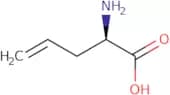
CAS:<p>D-Allylglycine is a l-amino acid with the chemical formula of CH2CH(CH3)COOH. D-Allylglycine binds to the N-methyl-D-aspartate (NMDA) receptor and has been shown in animal studies to have effects on blood pressure, although its clinical relevance remains unclear. It is an enantiopure compound and can be obtained as a trifluoroacetate salt or ethyl diazoacetate ester hydrochloride. D-Allylglycine is also an aminoglycoside and ester hydrochloride that can be used for the treatment of bacterial infections. The amino group in D-allylglycine binds to glutamate receptors, which are found on neurons, and inhibits the release of gamma-aminobutyric acid (GABA). This drug may also have potential as a serotonergic agent due to its ability to inhibit serotonin re</p>Formula:C5H9NO2Purity:Min. 95%Color and Shape:White PowderMolecular weight:115.13 g/mol9-Fluorenemethanol
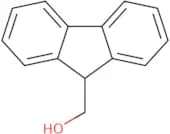
CAS:<p>9-Fluorenemethanol is a chemical compound that is used as a reagent in analytical chemistry. It reacts with zirconium oxide to form 9-fluorenylmethyl zirconium chloride, which can be used to detect the presence of ethyl formate by fluorescence resonance spectroscopy. The reaction solution is heated at 100°C for about 4 hours and then cooled to room temperature. The isolated yield of 9-fluorenylmethyl zirconium chloride is determined by the detection time and thermodynamic parameters. This compound can also be used in acylation reactions.</p>Formula:C14H12OPurity:Min. 95%Color and Shape:White PowderMolecular weight:196.24 g/mol2-(4-Hydroxyphenylazo)benzoic acid
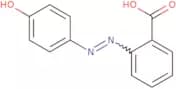
CAS:<p>2-(4-Hydroxyphenylazo)benzoic acid is a molecule that is used in the production of human immunoglobulin. It is activated with fatty acids and oligosaccharides to form a complex, which can be detected using confocal microscopy. The matrix-assisted laser ablation technique was used to determine the chemical structures and hydrogen bonding interactions of this molecule. 2-(4-Hydroxyphenylazo)benzoic acid has been shown to inhibit microbial infections by binding to the sodium salt form of Streptavidin, which inhibits bacterial growth. This molecule also has been used as an indicator for trifluoroacetic acid, which can be used as a sample preparation reagent.</p>Formula:C13H10N2O3Purity:Min. 95%Color and Shape:Yellow PowderMolecular weight:242.23 g/molDiphenyl Oxalate
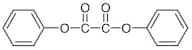
CAS:Formula:C14H10O4Purity:>98.0%(GC)Color and Shape:White to Light yellow to Light orange powder to crystalMolecular weight:242.234-Chloro-1-butene
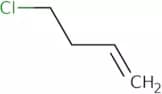
CAS:<p>4-Chloro-1-butene is an organic compound with the chemical formula CHCl. It is a colorless gas that has a sweet odor. It is a monomethylated ethane and can be produced by reacting ethylene with chlorine in the presence of a catalyst. The reaction requires high temperatures and pressures, but yields a constant amount of 4-chloro-1-butene per mole of ethylene. This compound exists as two stereoisomers, cis and trans, which are both present in significant amounts in the gas phase. Elimination reactions occur when trans 4-chloro-1-butene reacts with chloride to form 1,2-dichloroethane or chloroform. Functional groups on the molecule include chlorides and carbons. Covid®19 Pandemic is a polyatomic molecule consisting of four carbon atoms and one chlorine atom that has been shown to have low energy and thus may be able to penetrate protective surfaces such as</p>Formula:C4H7ClPurity:Min. 95%Color and Shape:Colorless Clear LiquidMolecular weight:90.55 g/molBoc-L-Histidine
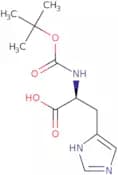
CAS:<p>Boc-L-histidine is a histidine derivative with a boronic acid group that can be used to synthesize imines. It is an organic solvent and can be used in magnetic resonance spectroscopy. Boc-L-histidine has been shown to inhibit the tyrosine activity of tyrosinase, which is involved in melanin synthesis. This compound also inhibits cancer cells by inhibiting the cellular process of protein synthesis and, as such, may be useful for the treatment of cancers.</p>Formula:C11H17N3O4Purity:Min. 98 Area-%Color and Shape:White PowderMolecular weight:255.27 g/mol3-Hydroxy-2-pyridine carboxylic acid
CAS:<p>3-Hydroxy-2-pyridine carboxylic acid is a picolinic acid derivative. It is a ligand for the P2 site of ATP synthase, which it binds to by hydrogen bonding interactions. 3-Hydroxy-2-pyridine carboxylic acid has been shown to be an inhibitor of human immunoglobulin production. 3-Hydroxy-2-pyridine carboxylic acid has also been shown to inhibit matrix metalloproteinases (MMPs) and collagenases, which are enzymes that degrade extracellular matrix proteins in the tumor microenvironment.</p>Formula:C6H5NO3Purity:Min. 95%Color and Shape:Off-White PowderMolecular weight:139.11 g/mol4-Phenyl-1-cyclohexene
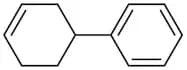
CAS:Formula:C12H14Purity:>96.0%(GC)Color and Shape:Colorless to Light yellow to Light orange clear liquidMolecular weight:158.241,1-Bis(morpholino)ethylene
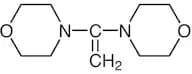
CAS:Formula:C10H18N2O2Purity:>97.0%(GC)(T)Color and Shape:White to Orange to Green powder to lumpMolecular weight:198.27Methyl 5-methoxy-2-methylindole-3-acetate
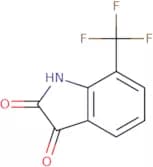
CAS:<p>Methyl 5-methoxy-2-methylindole-3-acetate is a versatile building block that can be used as a research chemical, reagent, or speciality chemical. It is also an intermediate in the synthesis of other compounds and has been shown to be useful in reactions involving nucleophilic substitution and electrophilic addition. This compound can be used as a scaffold for complex organic molecules. CAS No. 7588-36-5</p>Formula:C13H15NO3Purity:Min. 95%Color and Shape:Beige SolidMolecular weight:233.26 g/mol7-(Trifluoromethyl)1H-indole-2,3-dione
CAS:<p>Trifluoromethyl-substituted 7-(trifluoromethyl)1H-indole-2,3-dione is a trifluoromethyl analogue of indole-2,3-dione that has been shown to have antimalarial activity. It has been shown to be active against plasmodium and cancer cells in vitro. Trifluoromethyl group can be replaced by other substituents such as methoxy, ethoxy, or nitro groups. The compound has centrosymmetric structures and an elemental composition of C8H4F3N.</p>Formula:C9H4F3NO2Purity:Min. 95%Color and Shape:PowderMolecular weight:215.13 g/mol


![Neu5Ac[1Me,4789Ac]α(2-6)Gal[24Bz,3Bn]-β-MP](/_next/image/?url=https%3A%2Fstatic.cymitquimica.com%2Fproducts%2F3B%2Fthumb-webp%2FM1761.webp&w=3840&q=75)