Building Blocks
This section contains fundamental products for the synthesis of organic and biological compounds. Building blocks are the essential starting materials used to construct complex molecules through various chemical reactions. They play a critical role in drug discovery, material science, and chemical research. At CymitQuimica, we offer a diverse range of high-quality building blocks to support your innovative research and industrial projects, ensuring you have the essential components for successful synthesis.
Subcategories of "Building Blocks"
- Boronic Acids & Boronic Acid Derivatives(5,756 products)
- Chiral Building Blocks(1,242 products)
- Hydrocarbon Building Blocks(6,093 products)
- Organic Building Blocks(60,522 products)
Found 195533 products of "Building Blocks"
Sort by
Purity (%)
0
100
|
0
|
50
|
90
|
95
|
100
2-Naphthalenesulfonic acid sodium
CAS:<p>2-Naphthalenesulfonic acid sodium is a chemical compound that belongs to the class of naphthalene sulfonic acids. It is used in the production of medicines and as an industrial chemical. 2-Naphthalenesulfonic acid sodium has been shown to inhibit the viscosity of blood capillaries and has been proposed for use in the treatment of diabetic retinopathy. This compound also reduces the permeability of cell membranes by binding to fatty acids, which has led it to be studied for its potential effects on prostate cancer. 2-Naphthalenesulfonic acid sodium has been shown to have a Michaelis–Menten kinetics with respect to the enzyme ft-ir spectroscopy and can be used as a reagent for cationic surfactants. 2-Naphthalenesulfonic acid sodium is soluble in water, but insoluble in hydrochloric acid or solvents such as chloroform or acetone.</p>Formula:C10H7O3SNaPurity:Min. 98 Area-%Color and Shape:White Off-White PowderMolecular weight:230.22 g/mol3,3'-Diindolymethane (synthetic)
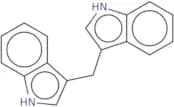
CAS:<p>3,3'-Diindolylmethane, also known as DIM, is natural compound derived from indole. In a recent study, DIM was evaluated as a potential agent for preventing biofilm formation by Streptococcus mutans, which is a major cause of dental caries. The researchers found that DIM significantly inhibited biofilm formation (by 92%) and reduced the production of extracellular polymeric substances (EPS), which are important for biofilm stability particularly under acidic conditions. The study suggests that 3,3'-diindolylmethane has anti-biofilm and anti-virulence properties against S. mutans, and it is a potential candidate for reducing biofilm formation and preventing dental caries.<br>It has been also reported that 3,3'-diindolymethane can act as a chemopreventive agent. DIM has estrogenic effects without interacting with the binding domain of the estrogen receptors. This study found that DIM could suppress cell growth and disrupt cell cycle progression of young adult mouse colonocytes (YAMCs) in vitro. Moreover, DIM altered gene expression associated with apoptosis and cell proliferation, and it induced transcriptional activity of the estrogen receptor (ER), which was inhibited by an ER antagonist.</p>Formula:C17H14N2Purity:Min. 95%Color and Shape:PowderMolecular weight:246.31 g/mol1-Benzhydrylazetidine-3-carboxylic Acid
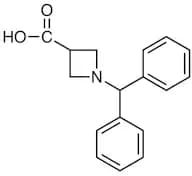
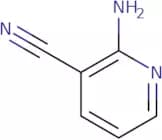
CAS:Formula:C17H17NO2Purity:>98.0%(T)(HPLC)Color and Shape:White to Light yellow to Light orange powder to crystalMolecular weight:267.332-Amino-3-pyridinecarbonitrile
CAS:<p>2-Amino-3-pyridinecarbonitrile is an analgesic that belongs to the group of nonsteroidal anti-inflammatory drugs. It is a member of the class of chemical compounds known as aminopyridines. 2-Amino-3-pyridinecarbonitrile has been shown to have a high affinity for binding to the water vapor in cells, and has physiological effects on tissues. 2APC binds to adenosine receptors in cell membranes and blocks their activation. As a result, it inhibits the release of substances such as prostaglandins and leukotrienes that are involved in inflammation. This drug also has an inhibitory effect on the growth of cancerous cells by interfering with cell proliferation.</p>Purity:Min. 95%Color and Shape:PowderMolecular weight:119.12 g/mol2,4,6-Tribromo-3-nitroaniline
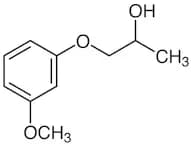
CAS:<p>2,4,6-Tribromo-3-nitroaniline is a brominating agent that can produce hydrogen peroxide. It is prepared by the reaction of hydrochloric acid with 2,4,6-tribromoaniline. The bromination of 2,4,6-tribromo-3-nitroaniline produces 4 equivalents of hydrogen peroxide.</p>Formula:C6H3Br3N2O2Purity:Min. 95%Color and Shape:Beige To Brown SolidMolecular weight:374.81 g/mol1-(3-Methoxyphenoxy)-2-propanol
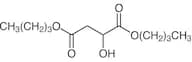
CAS:Formula:C10H14O3Purity:>90.0%(GC)Color and Shape:Colorless to Light yellow to Light orange clear liquidMolecular weight:182.22Dibutyl DL-Malate
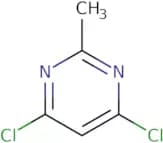
CAS:Formula:C12H22O5Purity:>95.0%(GC)Color and Shape:Colorless to Light yellow to Light orange clear liquidMolecular weight:246.304,6-Dichloro-2-methylpyrimidine
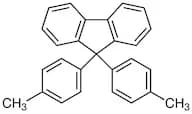
CAS:<p>2-Chloro-6-methylaniline is a synthetic compound that has been used in the synthesis of medicines, such as dasatinib. It is a nucleophile that binds to the receptor site on cells and blocks the binding of natural hormones. It is also an inhibitor of certain enzymes, including RNA polymerase and protein kinase. 2-Chloro-6-methylaniline is industrially produced by reacting sodium chloride with chlorosulfonic acid or hydrochloric acid in an autoclave at a temperature of 180 °C for three hours. The product can be purified by adding magnesium oxide and activated with hydrochloric acid to form 2-chloro-6-methylpyrimidine. The main impurities are 4,6-dichloro2 methylpyrimidine and 6,8 dichloro2 methylpyrimidine.</p>Formula:C5H4Cl2N2Purity:Min. 95%Color and Shape:White To Yellow SolidMolecular weight:163 g/mol9,9-Di(p-tolyl)fluorene
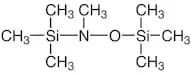
CAS:Formula:C27H22Purity:>98.0%(GC)Color and Shape:White to Almost white powder to crystalMolecular weight:346.47N-Methyl-N,O-bis(trimethylsilyl)hydroxylamine
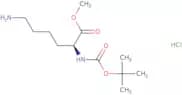
CAS:Formula:C7H21NOSi2Purity:>98.0%(T)Color and Shape:Colorless to Light yellow to Light orange clear liquidMolecular weight:191.42Boc-Lys-OMe HCl
CAS:<p>Boc-Lys-OMe HCl is an ester hydrochloride of N-Boc-Lysine. It is a macrocyclic compound that has been used in the laboratory as an acidifying agent to convert sodium borohydride to methyl ester hydrochloride. Boc-Lys-OMe HCl is also used in the synthesis of macrocyclic compounds, such as n-boc-l-lysine and other polyamino compounds.</p>Formula:C12H24N2O4·HClPurity:Min. 95%Color and Shape:White PowderMolecular weight:296.79 g/molNeu5Ac[1Me,4789Ac]α(2-6)Gal[24Bz,3Bn]-β-MP
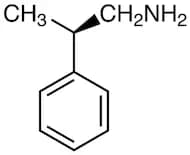
CAS:Formula:C54H59NO21Purity:>95.0%(HPLC)Color and Shape:White to Almost white powder to crystalMolecular weight:1,058.05(R)-(+)-β-Methylphenethylamine
CAS:Formula:C9H13NPurity:>98.0%(GC)(T)Color and Shape:Colorless to Almost colorless clear liquidMolecular weight:135.211-Methyl-3-[6-(methylsulfinyl)hexyl]imidazolium p-Toluenesulfonate
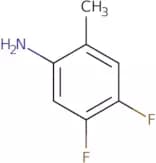
CAS:Formula:C18H28N2O4S2Purity:>97.0%(HPLC)(N)Color and Shape:Colorless to Light orange to Yellow clear liquidMolecular weight:400.554,5-Difluoro-2-methylaniline
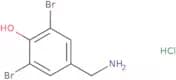
CAS:<p>4,5-Difluoro-2-methylaniline is a chemical intermediate that is used as a reaction component in the synthesis of organic compounds. It is a fine chemical with CAS No. 875664-57-6, and it can be used as a building block for the synthesis of complex organic molecules. This reagent is useful for the production of pharmaceuticals, agrochemicals, and other specialty chemicals. 4,5-Difluoro-2-methylaniline has been shown to act as an intermediate for the synthesis of many different types of compounds, including complex compounds such as imidazole derivatives and N-(4-fluorophenyl)benzo[d]oxazole derivatives.</p>Formula:C7H7F2NPurity:Min. 95%Color and Shape:Off-White PowderMolecular weight:143.13 g/mol3,5-Dibromo-4-hydroxybenzylamine hydrochloride
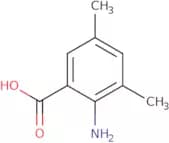
CAS:<p>3,5-Dibromo-4-hydroxybenzylamine hydrochloride is a high quality reagent that can be used as an intermediate in the production of fine chemicals and speciality chemicals. It is also a versatile building block for the synthesis of complex compounds. 3,5-Dibromo-4-hydroxybenzylamine hydrochloride has been shown to be useful in research due to its ability to react with other compounds in a variety of ways. The CAS number for this compound is 1134950-89-2.</p>Formula:C7H8Br2ClNOPurity:Min. 95%Color and Shape:PowderMolecular weight:317.41 g/mol3,5-Dimethylanthranilic acid
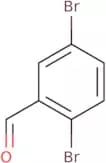
CAS:<p>3,5-Dimethylanthranilic acid is an acridone that has significant effects on the topoisomerase enzymes. It is a reactive compound and can cause sensitivity to light and heat, as well as irritation in the respiratory tract. 3,5-Dimethylanthranilic acid has been shown to have antitumour activity in mice. 3,5-Dimethylanthranilic acid also has cytotoxic potency against cancer cells and can be used to evaluate the sensitivity of tumours to anticancer drugs. This compound may also have mutagenic properties. The dehalogenation of 3,5-dimethylanthranilic acid is not yet fully understood.</p>Formula:C9H11NO2Purity:Min. 95%Color and Shape:Off-White PowderMolecular weight:165.19 g/mol2,5-Dibromobenzaldehyde
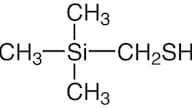
CAS:<p>2,5-Dibromobenzaldehyde is a synthetic compound that has been shown to have a red fluorescent emission. It is also thermally stable and can be used in the synthesis of quinoline derivatives. 2,5-Dibromobenzaldehyde may be used as a potential fluorescent label for viologen or amines. This compound can undergo an intermolecular Diels-Alder reaction with diacetate to form a bicyclic system, which is important to the understanding of its interactions with other compounds.</p>Formula:C7H4Br2OPurity:Min. 95%Color and Shape:PowderMolecular weight:263.91 g/molTrimethylsilylmethanethiol
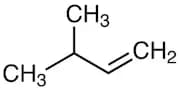
CAS:Formula:C4H12SSiPurity:>97.0%(GC)Color and Shape:Colorless to Almost colorless clear liquidMolecular weight:120.293-Methyl-1-butene (ca. 15% in Dichloromethane, ca. 2.5mol/L)
CAS:Formula:C5H10Color and Shape:Colorless to Almost colorless clear liquidMolecular weight:70.14




![Neu5Ac[1Me,4789Ac]α(2-6)Gal[24Bz,3Bn]-β-MP](/_next/image/?url=https%3A%2Fstatic.cymitquimica.com%2Fproducts%2F3B%2Fthumb-webp%2FM1761.webp&w=3840&q=75)
![1-Methyl-3-[6-(methylsulfinyl)hexyl]imidazolium p-Toluenesulfonate](/_next/image/?url=https%3A%2Fstatic.cymitquimica.com%2Fproducts%2F3B%2Fthumb-webp%2FM2274.webp&w=3840&q=75)