Building Blocks
This section contains fundamental products for the synthesis of organic and biological compounds. Building blocks are the essential starting materials used to construct complex molecules through various chemical reactions. They play a critical role in drug discovery, material science, and chemical research. At CymitQuimica, we offer a diverse range of high-quality building blocks to support your innovative research and industrial projects, ensuring you have the essential components for successful synthesis.
Subcategories of "Building Blocks"
- Boronic Acids & Boronic Acid Derivatives(5,756 products)
- Chiral Building Blocks(1,242 products)
- Hydrocarbon Building Blocks(6,093 products)
- Organic Building Blocks(60,522 products)
Found 195533 products of "Building Blocks"
Sort by
Purity (%)
0
100
|
0
|
50
|
90
|
95
|
100
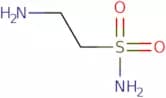
2-Aminoethanesulfonamide
CAS:<p>2-Aminoethanesulfonamide is a drug that has been shown to have biological properties. It is used for the treatment of bowel disease and has been shown to be effective in treating some cases of congestive heart failure. 2-Aminoethanesulfonamide interacts with drugs such as sodium citrate and dextran sulfate, which can lead to drug interactions. It also inhibits the enzyme activities in bone cancer cells, which may contribute to its anticancer effects. This drug has been shown to have anti-inflammatory properties and may be beneficial in treating inflammatory bowel disease (IBD).</p>Formula:C2H8N2O2SPurity:Min. 95%Color and Shape:Off-White PowderMolecular weight:124.16 g/mol8-oxa-5-azaspiro[3.5]nonane
CAS:<p>8-oxa-5-azaspiro[3.5]nonane is a high quality, non-toxic reagent with many uses as a building block for the synthesis of complex compounds. It can be used as an intermediate in the synthesis of fine chemicals, such as pharmaceuticals and agrochemicals, or as a building block for the synthesis of other chemical compounds. CAS No. 602326-48-7 is a versatile building block that can be used to synthesize molecules for research purposes. This compound has been shown to be useful in organic synthesis because it reacts easily with different functional groups.</p>Formula:C7H13NOPurity:Min. 95%Color and Shape:PowderMolecular weight:127.18 g/mol2-Octadecoxyethanol
CAS:<p>2-Octadecoxyethanol is a skin cell penetration enhancer. It is a nonionic surfactant that has been shown to increase the permeability of the skin by altering the lipid structure and function of the stratum corneum. This product can be used as an absorption enhancer, or as a plate test for microbial metabolism. 2-Octadecoxyethanol is water soluble and has low toxicity. It is also stable in both acidic and alkaline environments, making it suitable for use in a variety of applications.</p>Formula:C20H42O2Purity:Min. 95%Color and Shape:PowderMolecular weight:314.55 g/mol2-Oxa-6-azaspiro[3.4]octane
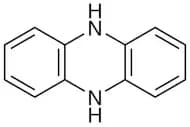
CAS:<p>2-Oxa-6-azaspiro[3.4]octane is an epidermal growth factor (EGF) inhibitor that has shown inhibitory activities against a number of different EGFR-related cell lines, including parental and mutant cell lines. This drug has been shown to inhibit the proliferation of cancer cells in vitro by binding to the epidermal growth receptor (EGFR). 2-Oxa-6-azaspiro[3.4]octane also inhibits the activity of tyrosine kinases and factor receptors, which are involved in the development of cancer cells. It is a potent inhibitor of TK1 and TK2 tyrosine kinases, and is more potent than piperazine or morpholine, which are other EGF inhibitors.</p>Formula:C6H11NOPurity:Min. 95%Color and Shape:White PowderMolecular weight:113.16 g/mol5,10-Dihydrophenazine
CAS:Formula:C12H10N2Purity:>98.0%(T)Color and Shape:White to Light yellow powder to crystalMolecular weight:182.233-Nitro-5-(trifluoromethyl)benzoic acid
CAS:<p>3-Nitro-5-(trifluoromethyl)benzoic acid is a versatile chemical that is an intermediate in the synthesis of a number of pharmaceutical compounds. It can be used to synthesize complex compounds and has been shown to have a high reactivity as well as being useful as a building block for other reactions. 3-Nitro-5-(trifluoromethyl)benzoic acid is also used as a reagent or reaction component in various research projects, such as in the synthesis of many pharmaceuticals and fine chemicals. This chemical has CAS No. 328-80-3, which provides it with high quality and makes it a valuable speciality chemical.</p>Formula:C8H4F3NO4Purity:80%Color and Shape:PowderMolecular weight:235.12 g/mol2-Nitrobenzylamine hydrochloride
CAS:<p>2-Nitrobenzylamine hydrochloride is a compound that has been shown to have cancer-fighting properties. It inhibits the synthesis of proteins necessary for the proliferation of cancer cells, but it does not affect the synthesis of proteins in healthy cells. This drug is used to diagnose and treat certain types of cancers, such as lymphoma and leukemia. 2-Nitrobenzylamine hydrochloride can be modified by genetic engineering techniques to specifically target cancer cells, which may help with the treatment of other types of diseases in the future. It is believed that this drug will be useful for treating cancers that are resistant to chemotherapy or radiation therapy, as well as those that are caused by mutations in DNA.</p>Formula:C7H9ClN2O2Purity:Min. 95%Color and Shape:PowderMolecular weight:188.61 g/mol2,5-Difluoroanisole
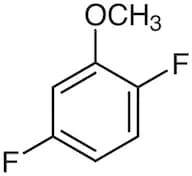
CAS:Formula:C7H6F2OPurity:>98.0%(GC)Color and Shape:Colorless to Almost colorless clear liquidMolecular weight:144.127-Aminoquinoline
CAS:<p>7-Aminoquinoline is a nucleophilic compound that is involved in the catalysis of bond cleavage. It has been shown to react with organic molecules and produce an oxygenative interaction. 7-Aminoquinoline has been shown to produce anti-inflammatory properties by inhibiting prostaglandin synthesis, which occurs through the inhibition of cyclooxygenase activity.</p>Formula:C9H8N2Purity:Min. 95%Color and Shape:Yellow PowderMolecular weight:144.17 g/molBenzo[b]furan-2-boronic acid
CAS:<p>Benzo[b]furan-2-boronic acid is a potent matrix metalloproteinase inhibitor that can be used in the treatment of cancer. It is synthesized from 2-aminobenzofuran by using a Suzuki coupling reaction with boronic acid. Benzo[b]furan-2-boronic acid has been shown to inhibit MMP-1, MMP-13, and MMP-14. This compound also inhibits the activity of other proteases such as cathepsin G, elastase, and chymase. The compound has been shown to be cytotoxic against human breast cancer cells and colon cancer cells. In addition, this compound is fluorescent and its fluorescence has been shown to increase when it binds to cancer cells.</p>Formula:C8H7BO3Purity:Min. 95%Color and Shape:White PowderMolecular weight:161.95 g/molMethyl Pentafluorophenyl Carbonate
CAS:Formula:C8H3F5O3Purity:>98.0%(GC)Color and Shape:White to Almost white powder to lumpMolecular weight:242.10Pentadecane
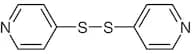
CAS:Formula:C15H32Purity:>99.0%(GC)Color and Shape:Colorless clear liquidMolecular weight:212.424,4'-Dipyridyl Disulfide
CAS:Formula:C10H8N2S2Purity:>97.0%(GC)(T)Color and Shape:White to Light yellow to Light red powder to crystalMolecular weight:220.312-Nitrobiphenyl
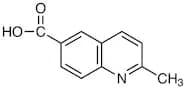
CAS:Formula:C12H9NO2Purity:>98.0%(GC)Color and Shape:White or Colorless to Yellow powder to lump to clear liquidMolecular weight:199.212-Methylquinoline-6-carboxylic Acid
CAS:Formula:C11H9NO2Purity:>98.0%(T)(HPLC)Color and Shape:White to Light yellow to Light orange powder to crystalMolecular weight:187.201,10-Undecadiene
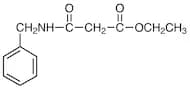
CAS:Formula:C11H20Purity:>90.0%(GC)Color and Shape:Colorless to Light yellow clear liquidMolecular weight:152.28Ethyl 3-(Benzylamino)-3-oxopropionate
CAS:Formula:C12H15NO3Purity:>98.0%(GC)Color and Shape:White to Light yellow powder to crystalMolecular weight:221.263-Fluoro-4-methoxyaniline
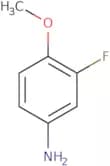
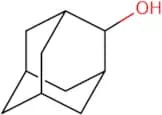
CAS:<p>3-Fluoro-4-methoxyaniline is a chemical intermediate. It is an aminopyridine that is used in the synthesis of bosutinib, an anticancer drug. 3-Fluoro-4-methoxyaniline binds to the ATP binding site of the cell's mitochondria and prevents the release of cytochrome c from the mitochondria, which leads to apoptosis. 3-Fluoro-4-methoxyaniline also has antimitotic effects and can inhibit the growth of tumor cells. 3-Fluoro-4-methoxyaniline has been shown to have poor cellular uptake, which may be due to its interaction with positron emission tomography (PET) agents such as cyanuric acid or glycopeptide. This chemical has also been shown to be a good surrogate for chloride ions in studies on transfected tumor cells.</p>Formula:C7H8FNOPurity:Min. 98.5%Color and Shape:Off-White PowderMolecular weight:141.14 g/mol2-Adamantanol
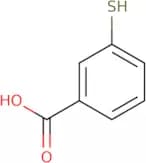
CAS:<p>2-Adamantanol is a biologically active compound that can be found in the form of an oily liquid. It has been shown to have effects on the central nervous system, including analgesia, sedation, and muscle relaxation. 2-Adamantanol is also used as a solvent for organic compounds and as a chemical intermediate. In addition to these properties, it can be found in some polyurethane foam insulation materials and in some rubber products. The mechanism of 2-adamantanol's biological activity is not well understood, but it may involve hydrogen bonding with hydroxyl groups on proteins or other molecules. There are many different ways to synthesize 2-adamantanol; however, one of the most commonly used synthesis methods is through reaction between 1-adamantanol and trifluoroacetic acid followed by hydrogenation with a metal catalyst.<br>2-Adamantanol has been observed to react with deuterium isotopes through transfer reactions during titration</p>Formula:C10H16OPurity:Min. 95%Color and Shape:White PowderMolecular weight:152.23 g/mol3-Mercaptobenzoic acid
CAS:<p>3-Mercaptobenzoic acid is an antimicrobial agent that inhibits bacterial enzyme. It binds to the active site of the enzyme, and prevents it from carrying out its function. 3-Mercaptobenzoic acid has been shown to be an efficient method for the prevention of corrosion in metal surfaces. The binding of 3-mercaptobenzoic acid to metal ions forms a protective film on the surface, preventing corrosion.</p>Formula:C7H6O2SPurity:Min. 95%Color and Shape:PowderMolecular weight:154.19 g/mol

![8-oxa-5-azaspiro[3.5]nonane](/_next/image/?url=https%3A%2Fstatic.cymitquimica.com%2Fproducts%2F3D%2Fthumb-webp%2FFO76093.webp&w=3840&q=75)

![2-Oxa-6-azaspiro[3.4]octane](/_next/image/?url=https%3A%2Fstatic.cymitquimica.com%2Fproducts%2F3D%2Fthumb-webp%2FFO11439.webp&w=3840&q=75)




![Benzo[b]furan-2-boronic acid](/_next/image/?url=https%3A%2Fstatic.cymitquimica.com%2Fproducts%2F3D%2Fthumb-webp%2FFB40264.webp&w=3840&q=75)