Building Blocks
This section contains fundamental products for the synthesis of organic and biological compounds. Building blocks are the essential starting materials used to construct complex molecules through various chemical reactions. They play a critical role in drug discovery, material science, and chemical research. At CymitQuimica, we offer a diverse range of high-quality building blocks to support your innovative research and industrial projects, ensuring you have the essential components for successful synthesis.
Subcategories of "Building Blocks"
- Boronic Acids & Boronic Acid Derivatives(5,756 products)
- Chiral Building Blocks(1,242 products)
- Hydrocarbon Building Blocks(6,093 products)
- Organic Building Blocks(60,519 products)
Found 195533 products of "Building Blocks"
Sort by
Purity (%)
0
100
|
0
|
50
|
90
|
95
|
100
7-Bromobenzo[b]thiophene-2-carboxylic acid
CAS:<p>7-Bromobenzo[b]thiophene-2-carboxylic acid is a fine chemical with CAS No. 19075-59-3. It is a useful building block for research chemicals, reagents, and speciality chemicals. It has high quality and can be used as a versatile building block for reactions. 7-Bromobenzo[b]thiophene-2-carboxylic acid can also be used as an intermediate or scaffold in synthesis of complex compounds.</p>Formula:C9H5BrO2SPurity:Min. 95%Color and Shape:White PowderMolecular weight:257.1 g/mol6-Bromo-7-azaindole
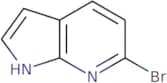
CAS:<p>6-Bromo-7-azaindole is a homologous molecule. It is an electron deficient compound with a piperidine moiety at the 6 position and a nitrogen atom at the 7 position. The nitrogen atom substitutes for an oxygen atom, making this molecule reactive. The electron deficient nature of this molecule makes it suitable for use in transistors and other physicochemical devices. 6-Bromo-7-azaindole has been shown to be effective against carcinoma cells in vitro, as well as to inhibit tumor growth in vivo. This drug also causes homologous recombination by interacting with DNA in mammalian cells. 6-Bromo-7-azaindole binds to DNA, forming a covalent bond with the guanine base of DNA through the nitrogen atom, which is electron deficient.</p>Formula:C7H5BrN2Purity:Min. 95%Color and Shape:Off-White To Beige To Yellow SolidMolecular weight:197.03 g/mol4-Bromo-3-chlorobenzoic acid
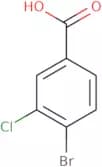
CAS:<p>4-Bromo-3-chlorobenzoic acid is a molecule that belongs to the class of antimicrobial compounds and is used for the treatment of gram-negative pathogens. It inhibits the growth of these bacteria by blocking their ability to synthesize DNA, RNA, and proteins. 4-Bromo-3-chlorobenzoic acid has been shown to be effective against bacteria in mammalian cells and also has activity against multidrug resistant strains. This compound is biosynthesized in plant cells from carbon sources like glucose, and it can be found in plants like carrot tissue. The resistance of bacteria to this compound has been observed globally, with outbreaks occurring in Japan and India.</p>Formula:C7H4BrClO2Purity:Min. 95%Color and Shape:White PowderMolecular weight:235.46 g/mol3-Bromobenzylamine
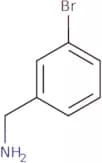
CAS:<p>3-Bromobenzylamine is a chemical compound that belongs to the class of amines. It is used as an intermediate in organic synthesis, and its derivative 3-bromobenzylamine hydrochloride is used in pharmaceuticals as a heart stimulant. 3-Bromobenzylamine can be synthesized by reacting an amine with phosgene and then brominating it. This chemical has been shown to have inhibitory activity against cancer cells and can be used for the treatment of cancer. 3-Bromobenzylamine has also been shown to inhibit the growth of bacteria, fungi, and viruses in vitro. 3-Bromobenzylamine may also be useful for treating psoriasis due to its ability to inhibit prostaglandin synthesis.</p>Formula:C7H8BrNPurity:Min. 95%Color and Shape:Colorless PowderMolecular weight:186.04 g/mol4-Benzoylpyridine
CAS:<p>4-Benzoylpyridine is a reactive molecule that can undergo electron reduction and protonation. The protonated form of 4-benzoylpyridine has been shown to inhibit the enzyme methionine aminopeptidase, which is involved in the degradation of amino acids. The crystallographic structure of 4-benzoylpyridine was determined by X-ray diffraction and was found to contain nitrogen atoms at the center of its ring. The electron density map showed that there are no hydrogen bonds or lone pairs in 4-benzoylpyridine. This molecule is an inhibitor of the transfer reactions in mitochondria, which are required for ATP synthesis. It has been shown to be cytotoxic to mammalian cells in culture and may have photochemical properties.</p>Formula:C12H9NOPurity:Min. 95%Color and Shape:White PowderMolecular weight:183.21 g/molBenzophenone ethylendiamine acrylate
CAS:<p>Please enquire for more information about Benzophenone ethylendiamine acrylate including the price, delivery time and more detailed product information at the technical inquiry form on this page</p>Formula:C19H18N2O3Purity:Min. 95 Area-%Molecular weight:322.36 g/mol2-[1,2,4]Triazol-1-yl-benzylamine
CAS:<p>2-[1,2,4]Triazol-1-yl-benzylamine is a chemical compound that has been shown to be an excellent reagent in organic synthesis. It is also used as a building block for the synthesis of compounds related to pharmaceuticals, pesticides and other speciality chemicals. 2-[1,2,4]Triazol-1-yl-benzylamine is a versatile intermediate that can be used in the synthesis of complex compounds with good yields and high purity.</p>Formula:C9H10N4Purity:Min. 95%Color and Shape:PowderMolecular weight:174.2 g/mol1,2,3,4-Tetrachlorohexafluorobutane
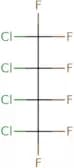
CAS:<p>1,2,3,4-Tetrachlorohexafluorobutane is a colorless liquid with an unpleasant odor. It is used as a solvent and as a chemical intermediate in the production of other chemicals. 1,2,3,4-Tetrachlorohexafluorobutane has been shown to react with hydrochloric acid to produce hydrogen chloride gas and hydrogen fluoride. The reaction vessel must be well-ventilated and the use of protective clothing is recommended due to the potential for exposure to hydrogen fluoride. This compound can also be chlorinated using chlorine gas or hypochlorite solution.</p>Formula:C4Cl4F6Purity:Min. 95%Color and Shape:Colorless Clear LiquidMolecular weight:303.84 g/molFumaryl Chloride
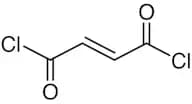
CAS:Formula:C4H2Cl2O2Purity:>95.0%(GC)(T)Color and Shape:Colorless to Light orange to Yellow clear liquidMolecular weight:152.96Ethyl 4-Bromo-3-methylbenzoate
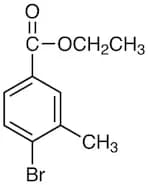
CAS:Formula:C10H11BrO2Purity:>98.0%(GC)Color and Shape:Colorless to Light yellow clear liquidMolecular weight:243.10Ethyl (4-Methylphenoxy)acetate
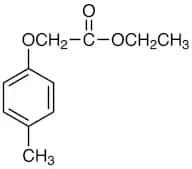
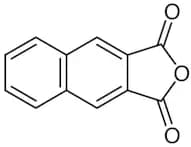
CAS:Formula:C11H14O3Purity:>97.0%(GC)Color and Shape:Colorless to Light yellow clear liquidMolecular weight:194.232,3-Naphthalenedicarboxylic Anhydride
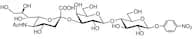
CAS:Formula:C12H6O3Purity:>95.0%(GC)(T)Color and Shape:White to Gray to Brown powder to crystalMolecular weight:198.18Neu5Acα(2-3)Galβ(1-4)Glc-β-pNP
CAS:Formula:C29H42N2O21Purity:>97.0%(HPLC)Color and Shape:White to Light yellow to Green powder to crystalineMolecular weight:754.652-Amino-3-bromopyridine
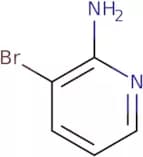
CAS:<p>2-Amino-3-bromopyridine (2ABP) is a nucleoside analogue that is used as a photosensitizer for photodynamic therapy. It has been shown to be effective against the fungus Cryptococcus neoformans, which can cause cryptococcal meningitis. 2ABP is unstable when exposed to light and requires an acidic environment to maintain stability. It binds to the ribose ring of levulinate, forming hydrogen bonding interactions with the hydroxide group on C5 and C8. 2ABP has been shown to have high transport properties in cells. This drug also has photophysical properties that are sensitive to pH, requiring it to be dissolved in a solution of trifluoroacetic acid or acetonitrile at a neutral pH. The 2ABP molecule has been characterized by nuclear magnetic resonance spectroscopy (NMR). Aqueous solutions of sodium hydroxide have been used successfully for the preparation</p>Formula:C5H5BrN2Purity:Min. 95%Color and Shape:White PowderMolecular weight:173.01 g/mol3-Amino-5-bromobenzoic acid
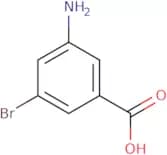
CAS:<p>3-Amino-5-bromobenzoic acid is a synthetic, water soluble anti-inflammatory agent. It is cytotoxic to macrophages in vitro and has significant efficacy in vivo. Its mechanism of action is to inhibit the synthesis of nucleotides in the cell. 3-Amino-5-bromobenzoic acid also inhibits inflammation by inhibiting prostaglandin synthesis and has been shown to be effective against seborrheic dermatitis. This drug has pharmacokinetic properties that are favourable for oral administration and is rapidly absorbed from the gastrointestinal tract with a half life of 2 hours. The drug is eliminated through the kidneys, with an elimination half life of 6 hours.</p>Formula:C7H6BrNO2Purity:Min. 95%Color and Shape:PowderMolecular weight:216.03 g/molDL-Alanine methyl ester hydrochloride
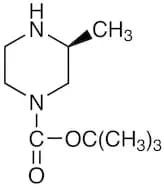
CAS:<p>DL-Alanine methyl ester hydrochloride is a cytotoxic drug that is used to treat cancer. It inhibits the growth of cancer cells by binding to guanine in the cell's DNA and preventing its incorporation into DNA during replication. The substance also inhibits amino acid transport, causing a shortage of amino acids for protein synthesis. This leads to cell death by nucleophilic attack on the bond between two amino acids. DL-Alanine methyl ester hydrochloride has been shown to be effective against murine leukemia, HIV, and Herpes simplex virus type 1 (HSV-1). DL-Alanine methyl ester hydrochloride has two geometric isomers: L-alanine methyl ester hydrochloride and D-alanine methyl ester hydrochloride. These substances have different reactivities due to their different geometric shapes. Magnetic resonance spectroscopy can be used to differentiate between these substances in vivo, as well as in vitro.</p>Formula:C4H9NO2·HClPurity:Min. 95%Color and Shape:White PowderMolecular weight:139.58 g/mol(S)-1-Boc-3-methylpiperazine
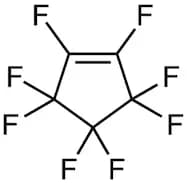
CAS:Formula:C10H20N2O2Purity:>98.0%(GC)(T)Color and Shape:White to Light yellow powder to lumpMolecular weight:200.28Octafluorocyclopentene
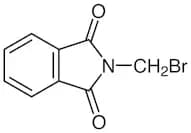
CAS:Formula:C5F8Purity:>98.0%(GC)Color and Shape:Colorless to Almost colorless clear liquidMolecular weight:212.04N-(Bromomethyl)phthalimide
CAS:Formula:C9H6BrNO2Purity:>96.0%(T)Color and Shape:White to Almost white powder to crystalMolecular weight:240.064,4'-Dinonyl-2,2'-bithiazole
CAS:Formula:C24H40N2S2Purity:>98.0%(GC)Color and Shape:White to Yellow to Green powder to crystalMolecular weight:420.72
![7-Bromobenzo[b]thiophene-2-carboxylic acid](/_next/image/?url=https%3A%2Fstatic.cymitquimica.com%2Fproducts%2F3D%2Fthumb-webp%2FFB139377.webp&w=3840&q=75)


![2-[1,2,4]Triazol-1-yl-benzylamine](/_next/image/?url=https%3A%2Fstatic.cymitquimica.com%2Fproducts%2F3D%2Fthumb-webp%2FFT50933.webp&w=3840&q=75)