Building Blocks
This section contains fundamental products for the synthesis of organic and biological compounds. Building blocks are the essential starting materials used to construct complex molecules through various chemical reactions. They play a critical role in drug discovery, material science, and chemical research. At CymitQuimica, we offer a diverse range of high-quality building blocks to support your innovative research and industrial projects, ensuring you have the essential components for successful synthesis.
Subcategories of "Building Blocks"
- Boronic Acids & Boronic Acid Derivatives(5,756 products)
- Chiral Building Blocks(1,242 products)
- Hydrocarbon Building Blocks(6,093 products)
- Organic Building Blocks(60,522 products)
Found 195533 products of "Building Blocks"
Sort by
Purity (%)
0
100
|
0
|
50
|
90
|
95
|
100
L-Homoglutamine
CAS:<p>L-Homoglutamine is a non-essential amino acid that is an important part of the urea cycle. It also plays a role in protein synthesis, as well as in transfer reactions, such as the conversion of ammonia to urea. L-Homoglutamine has been shown to be an inhibitor of binding to collagenase, which may have therapeutic applications for diseases such as rheumatoid arthritis. This amino acid has been used in enzyme preparations and has been found to have biological properties that are similar to those of other carbonyl amino acids (e.g., L-glutamic acid).</p>Formula:C6H12N2O3Purity:Min. 95%Color and Shape:White PowderMolecular weight:160.17 g/mol5-Iodo-2-furaldehyde
CAS:Formula:C5H3IO2Purity:>98.0%(GC)Color and Shape:White to Yellow powder to crystalMolecular weight:221.98Boc-4-(aminomethyl)-L-phenylalanine
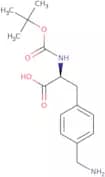
CAS:<p>Boc-4-(aminomethyl)-L-phenylalanine is a useful building block in research and development of pharmaceuticals, agricultural chemicals, and other chemical products. It is a versatile intermediate that can be used in the production of many types of organic compounds. Boc-4-(aminomethyl)-L-phenylalanine has been used as a reagent for the preparation of various complex compounds and a reaction component in organic synthesis. It is also used to produce fluoroquinolones and other antibiotics. CAS No.: 137452-49-4</p>Formula:C15H22N2O4Purity:Min. 95%Molecular weight:294.35 g/molL-Valine b-naphthylamide
CAS:<p>H-Val-bNA</p>Formula:C15H18N2OPurity:Min. 99 Area-%Molecular weight:242.32 g/mol4-Bromo-3-nitroacetophenone
CAS:<p>4-Bromo-3-nitroacetophenone is a potent anticancer agent that has been shown to inhibit cancer cell growth by inhibiting the activity of dehydrogenase enzymes. It has been shown to be active against g1 phase cells, which are cells in the phase of cell cycle before mitosis. 4-Bromo-3-nitroacetophenone also has anti-inflammatory effects and can cross the blood brain barrier due to its hydrogen bond formation. This drug is selectively toxic to cancer cells while sparing healthy tissues and has been shown to be effective in treating inflammatory diseases, such as arthritis, by decreasing the production of proinflammatory cytokines.</p>Formula:C8H6BrNO3Purity:Min. 95%Color and Shape:Yellow To Light (Or Pale) Yellow SolidMolecular weight:244.04 g/mol5-Hydroxy-4-methoxy-2-nitrobenzaldehyde
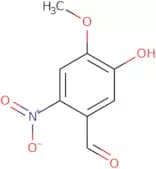
CAS:<p>5-Hydroxy-4-methoxy-2-nitrobenzaldehyde is a substrate molecule that can be minimised to the corresponding oxime, which can then be oxidised to form an aldehyde. The product of this reaction is a conformationally restricted dienone. This compound has been synthesized using a number of different methods, including oxidation by sodium dichromate. 5-Hydroxy-4-methoxy-2-nitrobenzaldehyde is a phenolic compound with two aromatic rings and one carbon ring. It has natural product properties and is used as a chemical skeleton in the synthesis of other compounds.</p>Formula:C8H7NO5Purity:Min. 95%Color and Shape:Slightly Yellow PowderMolecular weight:197.14 g/mol3,7-Dibromodibenzo[b,d]thiophene
CAS:<p>3,7-Dibromodibenzo[b,d]thiophene is a polymerizable monomer that can be used for the synthesis of polymers with interesting optical properties. This material has been shown to undergo copolymerization with vinyl ethers and vinyl esters in the presence of sodium carbonate. The resulting copolymer has semiconducting properties and gel permeation chromatography showed a ring structure. Cross-coupling reactions have been used to synthesize 3,7-dibromodibenzo[b,d]thiophene from 2-bromo-1,3-dithiolane and 2-iodobenzene.</p>Formula:C12H6Br2SPurity:Min. 95%Color and Shape:White PowderMolecular weight:342.05 g/mol4-Hydroxy-3,5-dimethoxybenzaldehyde
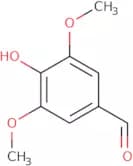
CAS:<p>4-Hydroxy-3,5-dimethoxybenzaldehyde (4HMB) is a phenolic compound that can be obtained from lignin. 4HMB is the precursor in the synthesis of vanillin, which has a characteristic flavor and odor. It is also used as an additive in perfumes. The compound is found naturally in plants, such as in the bark of cinchona trees, and can be extracted using preparative high performance liquid chromatography (HPLC). 4HMB can be synthesized by reacting p-hydroxybenzoic acid with 3,4,5-trimethoxybenzyl alcohol in the presence of copper chloride. This chemical reaction results in an aldehyde form of the molecule. 4HMB binds to sodium salts to form a water soluble salt that can be used for wastewater treatment. It also has antioxidant properties due to its ability to scavenge free radicals. The enzyme activities of 4HMB are not well</p>Formula:C9H10O4Purity:Min. 95%Color and Shape:Off-White PowderMolecular weight:182.17 g/mol(S)-3-(4-Boc-piperazin-1-yl)-2-(Fmoc-amino)propionic acid
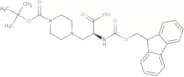
CAS:<p>(S)-3-(4-Boc-piperazin-1-yl)-2-(Fmoc-amino)propionic acid is a high quality reagent which has been synthesized in our lab. It is used as a reaction component and can be used as a speciality chemical, versatile building block, or useful intermediate. This compound has been shown to have complex properties and can be used as a fine chemical.</p>Formula:C27H33N3O6Purity:Min. 95%Color and Shape:White PowderMolecular weight:495.57 g/molL-Lysine diisocyanate ethyl ester
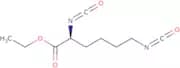
CAS:<p>L-Lysine diisocyanate ethyl ester (LDIEE) is a fluorescence probe that can be used to detect the presence of disulfide bonds. This compound reacts with thiols, such as cysteine, glutathione, and metallothioneins. LDIEE has been shown to bind to human serum proteins and has been used in biological studies for the detection of hydrogen bonding interactions. The biological properties of this compound have not been studied but it is hypothesized that LDIE may have anti-cancer activities due to its ability to react with coumarin derivatives.</p>Formula:C10H14N2O4Purity:Min. 95 Area-%Color and Shape:Clear LiquidMolecular weight:226.23 g/mol3-Thiophenemalonic Acid
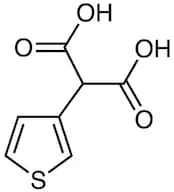
CAS:Formula:C7H6O4SPurity:>98.0%(T)(HPLC)Color and Shape:White to Orange to Green powder to crystalMolecular weight:186.181,1'-[1,4-Phenylenebis(methylene)]bis(4,4'-bipyridinium) Dibromide
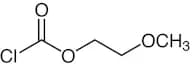
CAS:Formula:C28H24Br2N4Purity:>98.0%(HPLC)Color and Shape:White to Light yellow to Light orange powder to crystalMolecular weight:576.342-Methoxyethyl Chloroformate
CAS:Formula:C4H7ClO3Purity:>93.0%(GC)(T)Color and Shape:Colorless to Light yellow clear liquidMolecular weight:138.55DL-Leucine
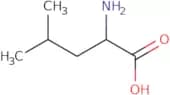
CAS:<p>DL-Leucine is an amino acid that is needed for the formation of proteins. It is also able to inhibit the activity of enzymes by hydrolyzing them. DL-Leucine has been shown to be a potent inhibitor of lysine hydrolases and can be used as an additive in the manufacture of animal feed. DL-Leucine has been shown to be stable in many environments, including those containing chlorine, hydrochloric acid, n-dimethyl formamide, and x-ray crystallography. The enantiomers of DL-leucine have different chemical stability; one form is more stable than the other in acidic environments.</p>Formula:C6H13NO2Purity:Min. 95%Color and Shape:PowderMolecular weight:131.17 g/mol2,3-Dimethylnaphthalene
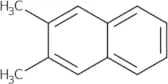
CAS:<p>Dimethylnaphthalene is an aromatic hydrocarbon that absorbs UV radiation. The absorption of UV radiation can be used to measure the concentration of this compound in a sample. The solubility data for dimethylnaphthalene show that it is soluble in supercritical carbon dioxide, but insoluble in water. Dimethylnaphthalene is a chemical compound that can be used as a skin conditioner or in biological treatment. It has been shown to have antioxidant properties and may also have anti-inflammatory effects. Dimethylnaphthalene is synthesized from naphthalene by two different reactions: hydrogenation and oxidation. The reaction mechanism for these two reactions has not yet been determined, but both are believed to produce the same product.</p>Formula:C12H12Purity:Min. 95%Color and Shape:White PowderMolecular weight:156.22 g/mol2,6-Difluorobenzoyl Chloride
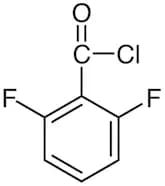
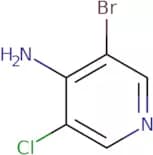
CAS:Formula:C7H3ClF2OPurity:>97.0%(GC)(T)Color and Shape:Colorless to Light orange to Yellow clear liquidMolecular weight:176.553-Bromo-5-chloropyridine-4-amine
CAS:<p>3-Bromo-5-chloropyridine-4-amine is a versatile building block that can be used in many different chemical syntheses. It is a reagent and a useful scaffold for the synthesis of complex compounds. 3-Bromo-5-chloropyridine-4-amine has been used as a high quality, useful intermediate in the synthesis of other chemicals. It is also an effective reaction component for reactions involving amines and thiols.</p>Formula:C5H4BrClN2Purity:Min. 95%Color and Shape:White PowderMolecular weight:207.46 g/mol6-Methyl-5-nitrouracil
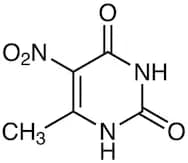
CAS:Formula:C5H5N3O4Purity:>95.0%(T)(HPLC)Color and Shape:Light orange to Yellow to Green powder to crystalMolecular weight:171.11Furfuryl Mercaptan
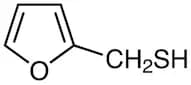
CAS:Formula:C5H6OSPurity:>98.0%(GC)Color and Shape:Colorless to Almost colorless clear liquidMolecular weight:114.162,2-Difluoroethanol
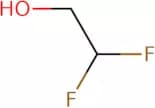
CAS:<p>2,2-Difluoroethanol is a chemical compound with the molecular formula C2H4F2O. It is a colorless liquid that has a distinctive odor and is highly flammable. 2,2-Difluoroethanol reacts in an electrophilic substitution reaction to replace chlorine atoms with hydrogen atoms from the ethyl formate molecule. This reaction can be described by the following equation:</p>Formula:C2H4OF2Purity:Min. 95%Color and Shape:PowderMolecular weight:82.05 g/mol





![3,7-Dibromodibenzo[b,d]thiophene](/_next/image/?url=https%3A%2Fstatic.cymitquimica.com%2Fproducts%2F3D%2Fthumb-webp%2FFD62242.webp&w=3840&q=75)
![1,1'-[1,4-Phenylenebis(methylene)]bis(4,4'-bipyridinium) Dibromide](/_next/image/?url=https%3A%2Fstatic.cymitquimica.com%2Fproducts%2F3B%2Fthumb-webp%2FP1405.webp&w=3840&q=75)