Building Blocks
This section contains fundamental products for the synthesis of organic and biological compounds. Building blocks are the essential starting materials used to construct complex molecules through various chemical reactions. They play a critical role in drug discovery, material science, and chemical research. At CymitQuimica, we offer a diverse range of high-quality building blocks to support your innovative research and industrial projects, ensuring you have the essential components for successful synthesis.
Subcategories of "Building Blocks"
- Boronic Acids & Boronic Acid Derivatives(5,756 products)
- Chiral Building Blocks(1,242 products)
- Hydrocarbon Building Blocks(6,093 products)
- Organic Building Blocks(60,519 products)
Found 195533 products of "Building Blocks"
Sort by
Purity (%)
0
100
|
0
|
50
|
90
|
95
|
100
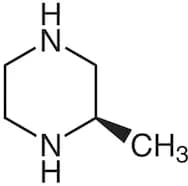
(R)-(-)-2-Methylpiperazine
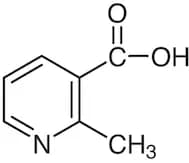
CAS:Formula:C5H12N2Purity:>98.0%(GC)(T)Color and Shape:White to Light yellow powder to crystalMolecular weight:100.172-Methylnicotinic Acid
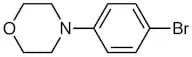
CAS:Formula:C7H7NO2Purity:>98.0%(GC)(T)Color and Shape:White to Green to Brown powder to crystalMolecular weight:137.144-(4-Bromophenyl)morpholine
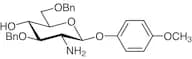
CAS:Formula:C10H12BrNOPurity:>98.0%(GC)(T)Color and Shape:White to Light yellow to Light orange powder to crystalMolecular weight:242.124-Methoxyphenyl 2-Amino-3,6-di-O-benzyl-2-deoxy-β-D-glucopyranoside
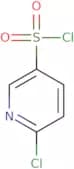
CAS:Formula:C27H31NO6Color and Shape:White to Almost white powder to crystalMolecular weight:465.556-Chloropyridine-3-sulfonyl chloride
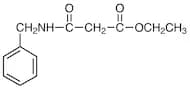
CAS:<p>6-Chloropyridine-3-sulfonyl chloride is a synthetic compound that has been shown to be an inhibitor of the enzyme anhydrase, which is involved in the production of carbonic acid. This inhibition leads to a decrease in the pH of tissues and may inhibit the proliferation of malignant cancer cells. 6-Chloropyridine-3-sulfonyl chloride has also been shown to have anticancer activity against eukaryotes.</p>Formula:C5H3Cl2NO2SPurity:Min. 95%Color and Shape:PowderMolecular weight:212.05 g/molEthyl 3-(Benzylamino)-3-oxopropionate
CAS:Formula:C12H15NO3Purity:>98.0%(GC)Color and Shape:White to Light yellow powder to crystalMolecular weight:221.26(S)-(+)-3-Methyl-1-pentanol
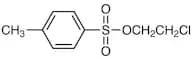
CAS:<p>(S)-(+)-3-Methyl-1-pentanol is a branched-chain, β-unsaturated aldehyde that is produced by the elimination of two molecules of water from (R)-(+)-3-methylbutanal. It is an organocatalytic substrate for the family of enzymes that catalyze the first step in the biosynthetic pathway to abiotic long-chain alcohols. The product is an intermediate in the biosynthesis of escherichia coli and other bacteria. The enzyme involved in this reaction is initially activated by acetate and then inhibited by NADH. In nature, this compound can be found as a natural product or as a metabolic intermediate.</p>Formula:C6H14OPurity:Min. 95%Color and Shape:Colorless Clear LiquidMolecular weight:102.17 g/mol2-Chloroethyl p-Toluenesulfonate
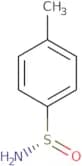
CAS:Formula:C9H11ClO3SPurity:>98.0%(GC)Color and Shape:Colorless to Light yellow clear liquidMolecular weight:234.69(S)-4-Methylbenzenesulfinamide
CAS:<p>(S)-4-Methylbenzenesulfinamide is a synthetic β-amino acid that has been used for the synthesis of various heterocycles. It has been shown to be a selective inhibitor of the enzyme carboxypeptidase B (CPB) in vitro, which is involved in the degradation of β-amino acids. The stereoselective synthesis of (S)-4-methylbenzenesulfinamide has been achieved through the use of hydrophobic phenylphosphinate as a chiral ligand and an azetidine as a starting material. The reaction time was found to be 20 minutes at room temperature with ethyl phenylphosphinate.</p>Formula:C7H9NOSPurity:Min. 95%Color and Shape:White PowderMolecular weight:155.22 g/mol1-(2-Dimethylaminoethyl)-4-methylpiperazine
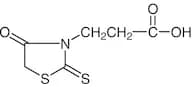
CAS:<p>Polyurethane is a polymer that is synthesized by the reaction of diisocyanates with polyols, such as glycols or sugar alcohols. Polyurethanes are used in a wide variety of products, including coatings, foams and elastomers. 1-(2-Dimethylaminoethyl)-4-methylpiperazine (DMP) is an ionic surfactant that is commonly used as an extender and/or viscosity stabilizer in polyurethane systems. DMP provides good wetting properties to the coating and improves film formation, surface smoothness and abrasion resistance. It also helps to reduce the hardness of the surface film, which can be beneficial when using soft materials such as foam or rubber.</p>Formula:C9H21N3Purity:Min. 95%Color and Shape:Clear LiquidMolecular weight:171.28 g/molRhodanine-3-propionic Acid
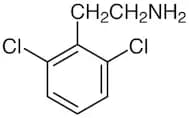
CAS:Formula:C6H7NO3S2Purity:>98.0%(GC)(T)Color and Shape:Light yellow to Brown powder to crystalMolecular weight:205.252-(2,6-Dichlorophenyl)ethylamine
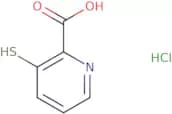
CAS:Formula:C8H9Cl2NPurity:>98.0%(GC)(T)Color and Shape:Colorless to Light orange to Yellow clear liquidMolecular weight:190.073-Mercapto-2-pyridinecarboxylic acid hydrochloride
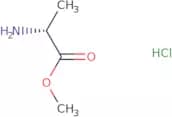
CAS:<p>3-Mercapto-2-pyridinecarboxylic acid hydrochloride (3MP) is a small molecule that is a phosphoenolpyruvate carboxykinase inhibitor. The inhibition of this enzyme leads to an accumulation of 3-phosphoglyceric acid and inhibits the conversion of pyruvate to acetyl CoA, which results in the accumulation of reactive oxygen species. 3MP has been shown to inhibit the activity of mitochondrial phosphoenolpyruvate carboxykinase (PEPCK) in porcine hepatocytes, leading to decreased triglycerides and increased glucose uptake. It also inhibits PEPCK activity in vitro in cultured human cells, leading to increased HSP70 levels and exacerbated oxidative stress.</p>Formula:C6H5NO2S·HClPurity:Min. 95%Color and Shape:PowderMolecular weight:191.64 g/molD-Alanine methyl ester HCl
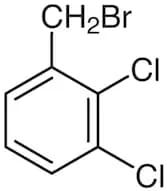
CAS:<p>D-Alanine methyl ester HCl is a diamide with antimycobacterial activity. It was synthesized by the reaction of D-alanine and methyl acrylate in the presence of methanesulfonic acid. The chiral compound was obtained as a racemic mixture. Optical properties are not reported.</p>Formula:C4H9NO2HCIPurity:Min. 95%Color and Shape:White To Off-White SolidMolecular weight:243.04 g/mol2,3-Dichlorobenzyl Bromide
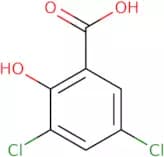
CAS:Formula:C7H5BrCl2Purity:>98.0%(GC)(T)Color and Shape:White or Colorless to Light yellow powder to lump to clear liquidMolecular weight:239.923,5-Dichlorosalicylic acid
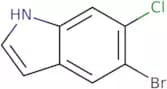
CAS:<p>3,5-Dichlorosalicylic acid is a proton donor that is used to inhibit the 5-nitrosalicylic acid chain reaction. It has a high binding constant with the chlorine atom and can be used as a competitive inhibitor for the binding of 5-nitrosalicylic acid to its target enzyme. 3,5-Dichlorosalicylic acid inhibits the polymerase chain reaction by binding to DNA. This chemical also has biological properties that are similar to those of salicylic acid, including anti-inflammatory activities. 3,5-Dichlorosalicylic acid is not an effective anti-cancer agent because it does not form intramolecular hydrogen bonds or hydrogen bond interactions with DNA bases.</p>Formula:C7H4Cl2O3Purity:Min. 95%Color and Shape:White PowderMolecular weight:207.01 g/mol5-Bromo-6-chloro-1H-indole
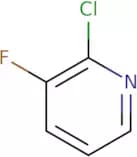
CAS:<p>5-Bromo-6-chloro-1H-indole is a fine chemical that is used as a building block for research chemicals, reagents, and speciality chemicals. It is soluble in chloroform and benzene, but insoluble in water. This product can be used as a reaction component or a useful intermediate in the production of complex compounds. 5-Bromo-6-chloro-1H-indole has been reported to be an effective scaffold for the synthesis of many novel compounds with potential applications such as pharmaceuticals, agrochemicals, and dyes.</p>Formula:C8H5BrClNPurity:Min. 95%Color and Shape:PowderMolecular weight:230.49 g/mol2-Chloro-3-fluoropyridine
CAS:<p>2-Chloro-3-fluoropyridine is a chemical compound that is classified as an allosteric modulator. It has a profile of physicochemical and spectrometric properties, which includes a pyridine ring with two chloro substituents and one fluorine atom. 2-Chloro-3-fluoropyridine can be transported by organic solvents such as benzene or chloroform, but not by water. This chemical reacts with copper chloride to form a cross-coupling reaction, which may be useful for the synthesis of complex organic molecules. 2-Chloro-3-fluoropyridine also has biological properties that include being a ligand for some receptors in the brain and central nervous system, as well as having antioxidant activity.</p>Formula:C5H3ClFNPurity:Min. 95%Color and Shape:Clear LiquidMolecular weight:131.54 g/molFmoc-3-chloro-L-β-homophenylalanine
CAS:<p>Fmoc-3-chloro-L-beta-homophenylalanine is a chemical scaffold that can be used in research, as an intermediate, or as a building block. It has a wide range of utility and can be used to create complex compounds with high purity. This product is sold as a solid that is soluble in organic solvents such as dichloromethane, chloroform, and DMF. Fmoc-3-chloro-L-beta-homophenylalanine is also known by its CAS number 270596-40-2.</p>Formula:C25H22ClNO4Purity:Min. 95%Color and Shape:White PowderMolecular weight:435.9 g/mol6-Fluoropyridine-2-carbonyl chloride
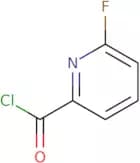
CAS:<p>6-Fluoropyridine-2-carbonyl chloride (6FC) is a versatile building block that is used in the synthesis of complex compounds. It is also a reagent for organic chemistry, research chemicals, and speciality chemicals. 6FC has been shown to be useful as a building block for the preparation of high quality and useful intermediates. The compound reacts with nucleophiles in good yields to produce amines, nitriles, alcohols, and carboxylic acids. 6FC can also be used as a reaction component in organic reactions. It has been shown to be an excellent scaffold for the synthesis of bioactive molecules such as amino acid derivatives and natural products.</p>Formula:C6H3ClFNOPurity:Min. 95%Color and Shape:White PowderMolecular weight:159.55 g/mol