Building Blocks
This section contains fundamental products for the synthesis of organic and biological compounds. Building blocks are the essential starting materials used to construct complex molecules through various chemical reactions. They play a critical role in drug discovery, material science, and chemical research. At CymitQuimica, we offer a diverse range of high-quality building blocks to support your innovative research and industrial projects, ensuring you have the essential components for successful synthesis.
Subcategories of "Building Blocks"
- Boronic Acids & Boronic Acid Derivatives(5,756 products)
- Chiral Building Blocks(1,242 products)
- Hydrocarbon Building Blocks(6,093 products)
- Organic Building Blocks(60,522 products)
Found 195533 products of "Building Blocks"
Sort by
Purity (%)
0
100
|
0
|
50
|
90
|
95
|
100
4-(Acetylamino)-2-nitrobenzoic acid
CAS:<p>4-(Acetylamino)-2-nitrobenzoic acid (AAANB) is a versatile building block that can be used in the synthesis of a wide range of organic and pharmaceutical compounds. AAANB is an intermediate in the preparation of 4-Amino-3-nitrophenol, which is an important research chemical. This compound is a useful scaffold for the synthesis of organic compounds with various biological activities. The CAS number for this product is 21573-29-5.</p>Formula:C9H8N2O5Purity:Min. 95%Color and Shape:PowderMolecular weight:224.17 g/mol1,2-Dibromo-2,4-dicyanobutane
CAS:<p>1,2-Dibromo-2,4-dicyanobutane is a chemical substance with antimicrobial properties. It is used as an ingredient in the production of health care products and preservatives for food. 1,2-Dibromo-2,4-dicyanobutane inhibits bacterial growth by preventing the synthesis of fatty acids and proteins. This compound has been shown to have synergistic effects when combined with benzalkonium chloride or potassium dichromate. 1,2-Dibromo-2,4-dicyanobutane has not been found to be carcinogenic in animal studies and does not cause allergic reactions.</p>Formula:C6H6Br2N2Purity:Min. 95%Color and Shape:White PowderMolecular weight:265.93 g/mol5-Hydroxy-4-methoxy-2-nitrobenzaldehyde
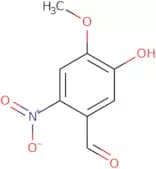
CAS:<p>5-Hydroxy-4-methoxy-2-nitrobenzaldehyde is a substrate molecule that can be minimised to the corresponding oxime, which can then be oxidised to form an aldehyde. The product of this reaction is a conformationally restricted dienone. This compound has been synthesized using a number of different methods, including oxidation by sodium dichromate. 5-Hydroxy-4-methoxy-2-nitrobenzaldehyde is a phenolic compound with two aromatic rings and one carbon ring. It has natural product properties and is used as a chemical skeleton in the synthesis of other compounds.</p>Formula:C8H7NO5Purity:Min. 95%Color and Shape:Slightly Yellow PowderMolecular weight:197.14 g/mol2-Bromo-2',4'-difluoroacetophenone
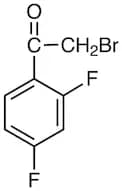
CAS:Formula:C8H5BrF2OPurity:>98.0%(GC)Color and Shape:White or Colorless to Light yellow to Light orange powder to lump to clear liquidMolecular weight:235.032,2-Difluoroethanol
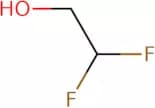
CAS:<p>2,2-Difluoroethanol is a chemical compound with the molecular formula C2H4F2O. It is a colorless liquid that has a distinctive odor and is highly flammable. 2,2-Difluoroethanol reacts in an electrophilic substitution reaction to replace chlorine atoms with hydrogen atoms from the ethyl formate molecule. This reaction can be described by the following equation:</p>Formula:C2H4OF2Purity:Min. 95%Color and Shape:PowderMolecular weight:82.05 g/mol3-Methyl-1-butene (ca. 12.5% in Tetrahydrofuran, ca. 1.5mol/L)
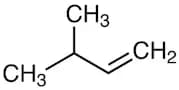
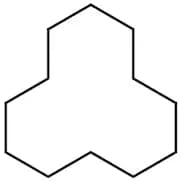
CAS:Formula:C5H10Color and Shape:Colorless to Almost colorless clear liquidMolecular weight:70.14Cyclododecane
CAS:Formula:C12H24Purity:>99.0%(GC)Color and Shape:White to Almost white powder to crystalMolecular weight:168.32Methyl Pentafluorophenyl Carbonate
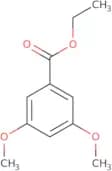
CAS:Formula:C8H3F5O3Purity:>98.0%(GC)Color and Shape:White to Almost white powder to lumpMolecular weight:242.103,5-Dimethoxybenzoic acid ethyl ester
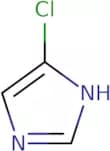
CAS:<p>3,5-Dimethoxybenzoic acid ethyl ester is a carbonic acid ester that can be used as a synthetic intermediate. It is synthesized by reacting 3,5-dimethoxybenzoic acid with the ethyl chloride. The molecular weight of 3,5-dimethoxybenzoic acid ethyl ester is 222.6 g/mol. The homologous series includes dimethylformamide, diethylformamide, and diisopropylformamide. This compound has been shown to inhibit growth factor signaling in vitro and in vivo and may have potential therapeutic applications for cancer treatment. Impurities that may be found in 3,5-dimethoxybenzoic acid ethyl ester include chloride and sulfinyl groups. Synopses of the molecular modeling study are available on request.</p>Formula:C11H14O4Purity:Min. 95%Molecular weight:210.23 g/mol4-Chloro-1H-imidazole
CAS:<p>4-Chloro-1H-imidazole is an organic chemical compound that contains a heterocyclic ring with one nitrogen and three carbons. It is classified as a weak acid. 4-Chloro-1H-imidazole can be found in hydrochloric acid, methyl ketones, and the acid conjugates of pyrazole rings. It has minimal toxicity. 4-Chloro-1H-imidazole binds to receptors in the body, which may account for its effects on blood pressure and heart rate. This drug also reacts with diazonium salts to form an intermediate that is then oxidized by chloride ions to form a reactive intermediate that can react with histidine or flavin (a type of vitamin B2) to form a fluorescent product that can be detected by light absorption or fluorescence emission spectroscopy.</p>Formula:C3H3ClN2Purity:Min. 95%Color and Shape:White PowderMolecular weight:102.52 g/molFmoc-Pro-Pro-Gly-OH
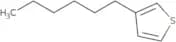
<p>Fmoc-Pro-Pro-Gly-OH is an activating reagent that has been used in the synthesis of peptides with a C-terminal carboxyl group. It is typically used as a chloroformate ester and reacts with amino groups to form amide bonds. The activation of this reagent can be performed either by reaction with isobutyl or by reaction with piperidine. This product may also be used for the synthesis of tripeptides, pentafluorophenyl esters, and mimetic peptides. Fmoc-Pro-Pro-Gly-OH is typically purified by trituration, followed by evaporation in vacuum and then recrystallization from methanol or ethanol.</p>Formula:C27H29N3O6Purity:Min. 95%Color and Shape:PowderMolecular weight:491.54 g/mol3-Hexylthiophene
CAS:<p>Starting reagent for synthesis of P3HT; nanofibres used for preparation of OPTs</p>Formula:C10H16SPurity:Min. 95%Color and Shape:Colorless Clear LiquidMolecular weight:168.3 g/moltrans-4-Propyl-L-proline
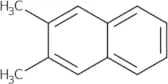
CAS:<p>Please enquire for more information about trans-4-Propyl-L-proline including the price, delivery time and more detailed product information at the technical inquiry form on this page</p>Formula:C8H15NO2Purity:Min. 95%Molecular weight:157.21 g/mol2,3-Dimethylnaphthalene
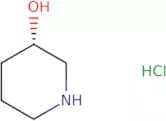
CAS:<p>Dimethylnaphthalene is an aromatic hydrocarbon that absorbs UV radiation. The absorption of UV radiation can be used to measure the concentration of this compound in a sample. The solubility data for dimethylnaphthalene show that it is soluble in supercritical carbon dioxide, but insoluble in water. Dimethylnaphthalene is a chemical compound that can be used as a skin conditioner or in biological treatment. It has been shown to have antioxidant properties and may also have anti-inflammatory effects. Dimethylnaphthalene is synthesized from naphthalene by two different reactions: hydrogenation and oxidation. The reaction mechanism for these two reactions has not yet been determined, but both are believed to produce the same product.</p>Formula:C12H12Purity:Min. 95%Color and Shape:White PowderMolecular weight:156.22 g/mol(S)-3-Hydroxypiperidine hydrochloride
CAS:<p>3-Hydroxypiperidine hydrochloride is an industrial chemical that is used in the synthesis of medicines. It is a nucleophile, and will react with electrophiles in a nucleophilic substitution reaction. 3-Hydroxypiperidine hydrochloride can be used for the synthesis of sulfinates, which are often used as medicine reagents. 3-Hydroxypiperidine hydrochloride has also been shown to be useful in the synthesis of five-membered heterocycles, such as diazepinones, from 2-aminoethanethiols.</p>Formula:C5H12ClNOPurity:Min. 95%Color and Shape:White PowderMolecular weight:137.61 g/mol2,4-Dinitroaniline
CAS:<p>2,4-Dinitroaniline is a diazonium salt that is used in the wastewater treatment process. It is an analytical reagent that can be used to detect and identify nucleophilic groups. 2,4-Dinitroaniline is used as a precursor for other dyes and has been shown to have genotoxic activity in some cases. The chemical structure of 2,4-dinitroaniline is made up of two nitro groups attached to an amino group. This compound absorbs ultraviolet light at 260 nm and emits radiation at 360 nm, which can be measured using synchronous fluorescence spectroscopy. It reacts with hydrochloric acid to form diazonium salt.<br>2,4-Dinitroaniline has been shown to react with the protein monoclonal antibody CEA3B3 by binding to its reactive thiols. This binding leads to the disruption of the antibody's function and inhibits</p>Formula:C6H5N3O4Purity:Min. 95%Color and Shape:Yellow PowderMolecular weight:183.12 g/mol2,6-Dibromobenzoic acid
CAS:<p>2,6-Dibromobenzoic acid is a synthetic molecule that can be used to synthesize pyrrole derivatives in the presence of a base. It has been shown to react with a number of molecules, including halogens and chlorides. The active site of 2,6-dibromobenzoic acid is its bromine atom. The steric interactions between the 2,6-dibromobenzoic acid molecule and the substrate are strong enough to prevent other molecules from accessing the active site. Chlorides and diphenylmethane can also bind to 2,6-dibromobenzoic acid due to their similar properties. This molecule has also been shown to interact with aluminium and solvents such as ethanol or acetone.</p>Formula:C7H4Br2O2Purity:Min. 95%Color and Shape:White PowderMolecular weight:279.91 g/molMethyl Nonanoate
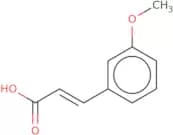
CAS:<p>Methyl Nonanoate is an ester with a chemical formula of C11H24O2. It has been shown to have antidiabetic activity in mice and is being developed as a potential therapeutic agent for type 2 diabetes. Methyl Nonanoate inhibits the production of glucose by inhibiting the conversion of glucose into glycogen, which can be accomplished via its interaction with the insulin receptor. This chemical also has antimicrobial properties, which are due to its ability to inhibit bacterial cell wall synthesis. This mechanism may be due to methyl nonanoate's ability to bind to the hydroxyl group on glycol esters and react with hydrogen fluoride (HF), which leads to the release of energy that is used in the production of fatty acids.</p>Formula:C10H20O2Purity:Min. 95%Color and Shape:Clear LiquidMolecular weight:172.27 g/mol3-Methoxycinnamic acid
CAS:<p>3-Methoxycinnamic acid is a hydroxycinnamic acid that has been shown to inhibit the migration of polymorphonuclear cells and leukocytes. It also inhibits chemotaxis by blocking the production of intracellular cyclic AMP (cAMP) in these cells. 3-Methoxycinnamic acid has been shown to have an inhibitory effect on the production of cAMP in leukocytes and polymorphonuclear cells, as well as inhibiting chemotaxis. The compound is also known to be a potent antioxidant due to its ability to scavenge reactive oxygen species (ROS).</p>Formula:C10H10O3Purity:Min. 95%Color and Shape:PowderMolecular weight:178.18 g/mol2-Naphthalenesulfonic acid sodium
CAS:<p>2-Naphthalenesulfonic acid sodium is a chemical compound that belongs to the class of naphthalene sulfonic acids. It is used in the production of medicines and as an industrial chemical. 2-Naphthalenesulfonic acid sodium has been shown to inhibit the viscosity of blood capillaries and has been proposed for use in the treatment of diabetic retinopathy. This compound also reduces the permeability of cell membranes by binding to fatty acids, which has led it to be studied for its potential effects on prostate cancer. 2-Naphthalenesulfonic acid sodium has been shown to have a Michaelis–Menten kinetics with respect to the enzyme ft-ir spectroscopy and can be used as a reagent for cationic surfactants. 2-Naphthalenesulfonic acid sodium is soluble in water, but insoluble in hydrochloric acid or solvents such as chloroform or acetone.</p>Formula:C10H7O3SNaPurity:Min. 98 Area-%Color and Shape:White Off-White PowderMolecular weight:230.22 g/mol