


Building Blocks
This section contains fundamental products for the synthesis of organic and biological compounds. Building blocks are the essential starting materials used to construct complex molecules through various chemical reactions. They play a critical role in drug discovery, material science, and chemical research. At CymitQuimica, we offer a diverse range of high-quality building blocks to support your innovative research and industrial projects, ensuring you have the essential components for successful synthesis.
Subcategories of "Building Blocks"
- Boronic Acids & Boronic Acid Derivatives(5,756 products)
- Chiral Building Blocks(1,242 products)
- Hydrocarbon Building Blocks(6,095 products)
- Organic Building Blocks(61,037 products)
Found 196200 products of "Building Blocks"
Sort by
Purity (%)
0
100
|
0
|
50
|
90
|
95
|
100
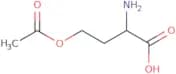
(2S)-4-(Acetyloxy)-2-aminobutanoic acid
CAS:<p>(2S)-4-(Acetyloxy)-2-aminobutanoic acid is a sulfhydrylase inhibitor that has been shown to have in vitro antifungal activity against group P2 bacteria. This compound binds to sulfhydrylases, which are enzymes that catalyze the conversion of sulfides to thiols, and prevents the formation of disulfide bonds. (2S)-4-(Acetyloxy)-2-aminobutanoic acid has also been shown to inhibit bacterial growth by binding to the surface of cells and inhibiting enzymatic reactions on the cell surface. The enzyme activities of this compound are not inhibited by water vapor or sephadex g-100. Structural analysis revealed that (2S)-4-(acetyloxy)-2-aminobutanoic acid contains a disulfide bond.</p>Formula:C6H11NO4Purity:Min. 95%Color and Shape:PowderMolecular weight:161.16 g/molN-Fmoc-4-ethynyl-L-phenylalanine
CAS:<p>Versatile small molecule scaffold</p>Formula:C26H21NO4Purity:Min. 95%Color and Shape:PowderMolecular weight:411.45 g/molBocNH-PEG4-CH2COOH
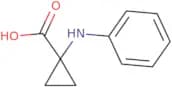
CAS:<p>BocNH-PEG4-CH2COOH is a PEG compound with two different functional groups (also known as heterobifunctional). Unlike homobifunctional PEG compounds (same functional group on both ends), this type of compounds are more versatile as have two different anchor points. BocNH-PEG4-CH2COOH is used as a linker and spacer to add a PEG moiety, via pegylation (a bioconjugation technique) to proteins, peptides, oligonucleotides, small molecules and nanoparticles.</p>Formula:C15H29NO8Purity:Min. 95%Color and Shape:Clear LiquidMolecular weight:351.39 g/mol1-(Phenylamino)cyclopropane-1-carboxylic acid
CAS:<p>1-(Phenylamino)cyclopropane-1-carboxylic acid is a high quality chemical that is a useful intermediate and building block in the synthesis of fine chemicals. It has been used as a reagent and complex compound. The CAS number for this chemical is 210576-54-8. This chemical can be used as a speciality chemical. It has also been shown to be versatile in the laboratory setting, being used as a reaction component for both synthetic and natural product syntheses.</p>Formula:C10H11NO2Purity:Min. 95%Color and Shape:PowderMolecular weight:177.2 g/mol4-Cyclopentylbenzaldehyde
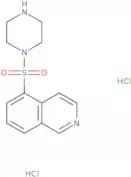
CAS:<p>4-Cyclopentylbenzaldehyde is a homologous compound that is used in the synthesis of other compounds. It is an organic compound with a monoxide group and a cyclohexenyl group. 4-Cyclopentylbenzaldehyde can be prepared by the oxidation of benzene or by the formylation of cyclohexene. This compound can be used in acylation reactions. The yields of this chemical are high, which makes it useful for laboratory purposes. 4-Cyclopentylbenzaldehyde has been shown to undergo carbonylation reactions and catalysis at higher temperatures and pressures. It also reacts with mesitylene, although not toluene, under these conditions.</p>Formula:C12H14OPurity:Min. 95%Color and Shape:PowderMolecular weight:174.24 g/mol5-(piperazine-1-sulfonyl)isoquinoline dihydrochloride
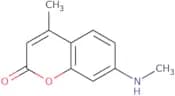
CAS:<p>5-(piperazine-1-sulfonyl)isoquinoline dihydrochloride is an antiviral drug that inhibits the assembly of viral filaments. It is a potent inhibitor of herpes simplex virus type 1 (HSV-1) and HSV-2 in vitro. 5-(piperazine-1-sulfonyl)isoquinoline dihydrochloride has been shown to inhibit the replication of human cytomegalovirus (HCMV) in cell culture. This compound also inhibits the secretion of pertussis toxin, which is necessary for the virulence of Bordetella pertussis. 5-(piperazine-1-sulfonyl)isoquinoline dihydrochloride has been shown to have no effect on noninfected cells, suggesting it may be useful as a therapeutic agent against viruses that infect only specific types of cells.</p>Formula:C13H17Cl2N3O2SPurity:Min. 95%Color and Shape:PowderMolecular weight:350.3 g/mol4-Methyl-7-(methylamino)-2H-chromen-2-one
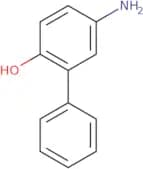
CAS:<p>4-Methyl-7-(methylamino)-2H-chromen-2-one is a fine chemical that is used as a building block in the synthesis of other compounds. It has been used in research as a reagent and in the production of pharmaceuticals. 4-Methyl-7-(methylamino)-2H-chromen-2-one can be used to produce a variety of complex compounds, including those with versatile scaffolds. This compound has been shown to react with many different groups, such as alcohols, amines and thiols, which makes it an excellent intermediate for organic synthesis.</p>Formula:C11H11NO2Purity:Min. 95%Color and Shape:PowderMolecular weight:189.21 g/mol4-Amino-2-phenylphenol
CAS:<p>Versatile small molecule scaffold</p>Formula:C12H11NOPurity:Min. 95%Color and Shape:PowderMolecular weight:185.22 g/mol2-Hydroxy-4-(pyrrolidin-1-yl)benzaldehyde
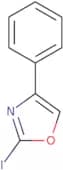
CAS:<p>Versatile small molecule scaffold</p>Formula:C11H13NO2Purity:Min. 95%Molecular weight:191.23 g/mol2-Iodo-4-phenyl-1,3-oxazole
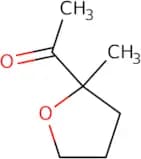
CAS:<p>Versatile small molecule scaffold</p>Formula:C9H6INOPurity:Min. 95%Color and Shape:PowderMolecular weight:271.05 g/mol1-(2-Methyloxolan-2-yl)ethan-1-one
CAS:<p>Versatile small molecule scaffold</p>Formula:C7H12O2Purity:Min. 95%Molecular weight:128.17 g/molMethyl 4-(2-chloroethyl)benzoate
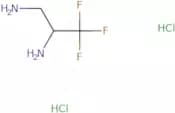
CAS:<p>Versatile small molecule scaffold</p>Formula:C10H11ClO2Purity:Min. 95%Molecular weight:198.65 g/mol3,3,3-Trifluoropropane-1,2-diamine dihydrochloride
CAS:<p>3,3,3-Trifluoropropane-1,2-diamine dihydrochloride is a high quality chemical that belongs to the group of useful building blocks. It is a versatile and complex compound that can be used in research or as a reagent. 3,3,3-Trifluoropropane-1,2-diamine dihydrochloride is also a reaction component for the synthesis of other compounds. This compound has been used as an intermediate for the production of pharmaceuticals and pesticides. It has been studied for its ability to inhibit protein kinase C (PKC) and calcium ion channels.</p>Formula:C3H7F3N2•(HCl)2Purity:Min. 95%Molecular weight:201.02 g/mol(3-Aminopropyl)trimethylazanium chloride
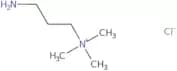
CAS:<p>(3-Aminopropyl)trimethylazanium chloride is a fine chemical that is used as a building block and reagent in the synthesis of various organic compounds. It has been shown to be useful for reactions involving nucleophilic aromatic substitution, radical addition, and cycloaddition reactions. (3-Aminopropyl)trimethylazanium chloride has also been shown to be an effective intermediate in the synthesis of various pharmaceuticals. The CAS number is 19223-69-9.</p>Formula:C6H17ClN2Purity:Min. 95%Color and Shape:PowderMolecular weight:152.66 g/mol3,4,5,6-Tetrahydro-2H-cyclopenta-[D][1,3]thiazol-2-one
CAS:<p>Versatile small molecule scaffold</p>Formula:C6H7NOSPurity:Min. 95%Color and Shape:PowderMolecular weight:141.19 g/molHexahydropyrrolo[1,2-a]pyrazine-1,4-dione
CAS:<p>Hexahydropyrrolo[1,2-a]pyrazine-1,4-dione is a neuroprotective compound that is structurally related to the well-known anti-inflammatory drug ketoprofen. It has been shown to inhibit the production of pro-inflammatory cytokines and reactive oxygen species in vitro by a mechanism involving inhibition of mitochondrial membrane permeability. Hexahydropyrrolo[1,2-a]pyrazine-1,4-dione also inhibits bacterial growth and urea nitrogen excretion in mice. This compound has been found in cyanobacteria and some etoac extracts, as well as in bacteria from the genera Pseudomonas and Staphylococcus.</p>Formula:C7H10N2O2Purity:Min. 95%Molecular weight:154.17 g/mol2-Isocyano-1,3,5-trimethylbenzene
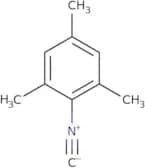
CAS:<p>2-Isocyano-1,3,5-trimethylbenzene is an organic solvent that is insoluble in water. It has been shown to be a bidentate ligand and a ruthenium complex. This compound has been studied in supramolecular chemistry and has shown reversible electrochemical properties.</p>Formula:C10H11NPurity:Min. 95%Molecular weight:145.2 g/mol5-Ethynylbenzo-1,3-dioxole
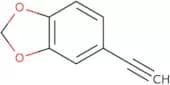
CAS:<p>5-Ethynylbenzo-1,3-dioxole is a terminal alkyne that has two terminal alkyne groups. It can form hydrogen bonds and interactions with other molecules. 5-Ethynylbenzo-1,3-dioxole is a reactive molecule that can be used to create polymers and other chemical compounds. The terminal alkynes are important for the stability of these compounds, as they bind to the polymer chains. 5-Ethynylbenzo-1,3-dioxole is used in organic chemistry to synthesize polymers and other chemical compounds.</p>Formula:C9H6O2Purity:Min. 95%Color and Shape:PowderMolecular weight:146.14 g/molEthyl 2-formyl-1H-pyrrole-3-carboxylate
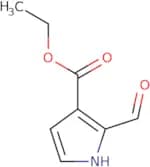
CAS:<p>Ethyl 2-formyl-1H-pyrrole-3-carboxylate is a fine chemical that can be used as a building block in the synthesis of drugs, pesticides, and other organic compounds. It is also a reagent for the synthesis of other compounds. The compound can be easily synthesized by reacting ethyl formate with pyrrole. This process occurs spontaneously at room temperature and does not require any catalysts or solvents. Ethyl 2-formyl-1H-pyrrole-3-carboxylate has been used to synthesize antihistamines, antihypertensives, and anticancer agents. As it is a versatile building block, it can be used as an intermediate for the synthesis of many other compounds. It has also been shown to have useful scaffolding properties in drug design.</p>Formula:C8H9NO3Purity:Min. 95%Color and Shape:PowderMolecular weight:167.16 g/molBicyclo[2.1.1]hexane-1-carboxylic acid
CAS:<p>Versatile small molecule scaffold</p>Formula:C7H10O2Purity:Min. 95%Molecular weight:126.15 g/mol




![3,4,5,6-Tetrahydro-2H-cyclopenta-[D][1,3]thiazol-2-one](/_next/image/?url=https%3A%2Fstatic.cymitquimica.com%2Fproducts%2F3D%2Fthumb-webp%2FHCA00118.webp&w=3840&q=75)
![Hexahydropyrrolo[1,2-a]pyrazine-1,4-dione](/_next/image/?url=https%3A%2Fstatic.cymitquimica.com%2Fproducts%2F3D%2Fthumb-webp%2FUAA17912.webp&w=3840&q=75)
![Bicyclo[2.1.1]hexane-1-carboxylic acid](/_next/image/?url=https%3A%2Fstatic.cymitquimica.com%2Fproducts%2F3D%2Fthumb-webp%2FPCA72577.webp&w=3840&q=75)