Building Blocks
This section contains fundamental products for the synthesis of organic and biological compounds. Building blocks are the essential starting materials used to construct complex molecules through various chemical reactions. They play a critical role in drug discovery, material science, and chemical research. At CymitQuimica, we offer a diverse range of high-quality building blocks to support your innovative research and industrial projects, ensuring you have the essential components for successful synthesis.
Subcategories of "Building Blocks"
- Boronic Acids & Boronic Acid Derivatives(5,756 products)
- Chiral Building Blocks(1,242 products)
- Hydrocarbon Building Blocks(6,093 products)
- Organic Building Blocks(60,522 products)
Found 195533 products of "Building Blocks"
Sort by
Purity (%)
0
100
|
0
|
50
|
90
|
95
|
100
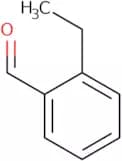
2-Ethylbenzaldehyde
CAS:<p>2-Ethylbenzaldehyde is a colorless volatile liquid that has an odor similar to that of cloves. 2-Ethylbenzaldehyde can be found in the essential oil of nutmeg and other spices, such as cinnamon. It is used in the chemical industry as a control agent for analytical methods, such as the spectrometric determination of ether linkages. 2-Ethylbenzaldehyde has been shown to inhibit fatty acid production by bacteria and to inhibit lipid peroxidation. It also exhibits anti-inflammatory effects when exposed to cells in vitro. Exposure to 2-ethylbenzaldehyde may cause irritation of the eyes, skin, and respiratory tract, dizziness, headache, nausea and vomiting.<br>2-Ethylbenzaldehyde is generally considered safe for human consumption at low levels; however it may cause adverse health effects if ingested in large quantities or if heated over 400° F (204° Celsius).</p>Formula:C9H10OPurity:Min. 95%Color and Shape:PowderMolecular weight:134.18 g/molTrimethyl 1,3,5-benzene tricarboxylate
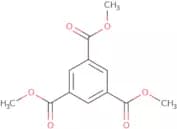
CAS:<p>Trimethyl 1,3,5-benzene tricarboxylate is a chemical compound that belongs to the group of polycarboxylic acids. It is used as a polymerization agent in the manufacture of ionic polymers. The first step in this process is cationic polymerization, which involves the reaction between trimethyl 1,3,5-benzene tricarboxylate and sodium citrate to form an ion pair. This process can be followed by hydrolysis with hydrochloric acid and sodium carbonate to release the carboxylate anion from the polymer chain and regenerate trimethyl 1,3,5-benzene tricarboxylate. Trimethyl 1,3,5-benzene tricarboxylate has been shown to have optical properties that depend on its molecular weight and metal surface interactions. It can also be used as a chelating agent for zinc diethyld</p>Formula:C12H12O6Purity:Min. 95%Color and Shape:White PowderMolecular weight:252.22 g/mol5-Methyl-2-phenyl-1H-imidazole-4-carboxylic acid
CAS:<p>5-Methyl-2-phenyl-1H-imidazole-4-carboxylic acid (MPICA) is a potent inhibitor of xanthine oxidase. It is also an inhibitor of β-glucuronidase and enzymes that maintain the integrity of bacterial DNA. MPICA has been shown to inhibit xanthine oxidase in a dose dependent manner and can be used as a lead compound for new inhibitors of this enzyme.</p>Formula:C11H10N2O2Purity:Min. 95%Color and Shape:White PowderMolecular weight:202.21 g/mol2-Chloro-3-methoxyaniline
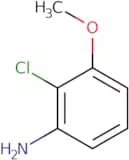
CAS:<p>2-Chloro-3-methoxyaniline is a high quality chemical. It is an intermediate in the synthesis of other complex compounds and has been used as a reagent for organic synthesis. It is also useful as a building block for the preparation of speciality chemicals, research chemicals, and versatile building blocks. 2-Chloro-3-methoxyaniline reacts with other chemicals to form new compounds that are useful for pharmaceuticals and agrochemicals.</p>Formula:C7H8ClNOPurity:Min. 95%Color and Shape:Brown PowderMolecular weight:157.6 g/mol3-Nitro-5-(trifluoromethyl)benzoic acid
CAS:<p>3-Nitro-5-(trifluoromethyl)benzoic acid is a versatile chemical that is an intermediate in the synthesis of a number of pharmaceutical compounds. It can be used to synthesize complex compounds and has been shown to have a high reactivity as well as being useful as a building block for other reactions. 3-Nitro-5-(trifluoromethyl)benzoic acid is also used as a reagent or reaction component in various research projects, such as in the synthesis of many pharmaceuticals and fine chemicals. This chemical has CAS No. 328-80-3, which provides it with high quality and makes it a valuable speciality chemical.</p>Formula:C8H4F3NO4Purity:80%Color and Shape:PowderMolecular weight:235.12 g/mol4-Nitropyridine-2-carboxylic acid
CAS:<p>4-Nitropyridine-2-carboxylic acid (4NPCA) is a nitro compound that can form both an n-oxide and a deuterium isotope effect. 4NPCA has been shown to react with picolinic acid, forming a stable chelate ligand that is stabilized by the electron withdrawal of the nitro group. 4NPCA also reacts with acetonitrile to form isotopomers, which are molecules that differ only in the number of atoms of hydrogen or deuterium present. The formation of these isotopomers occurs through an intramolecular hydrogen transfer from the hydroxyl group on one molecule to the nitro group on another.</p>Formula:C6H4N2O4Purity:Min. 95%Color and Shape:Pale yellow solid.Molecular weight:168.11 g/molMethyl 3-cyano-1H-indole-7-carboxylate
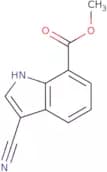
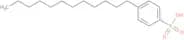
CAS:<p>Methyl 3-cyano-1H-indole-7-carboxylate is a fine chemical that belongs to the class of useful scaffolds, versatile building blocks, and useful intermediates. It is used as a research chemical and a reaction component. Methyl 3-cyano-1H-indole-7-carboxylate is also a speciality chemical with high quality and can be used as a reagent in the production of other compounds.</p>Formula:C11H8N2O2Purity:Min. 95%Color and Shape:White PowderMolecular weight:200.19 g/mol4-Dodecylbenzenesulfonic acid - mixture of C10-C13 isomers
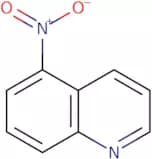
CAS:<p>4-Dodecylbenzenesulfonic acid is a mixture of C10-C13 isomers. It is used as an additive to biodiesel or petroleum diesel fuel to reduce the corrosivity of the fuel and protect the engine. 4-Dodecylbenzenesulfonic acid can be synthesized by reacting hydrochloric acid with a fatty acid. The product is then purified by hydrophilic interaction chromatography and sodium carbonate. 4-Dodecylbenzenesulfonic acid has been shown to have synergistic effects when combined with other compounds, such as boron nitride, in treating breast cancer cells. This compound has also been shown to have antimicrobial properties against bacteria, fungi, and protozoa through its hydroxide solution reaction with nitrogen atoms on the surface of multi-walled carbon nanotubes. 4-Dodecylbenzenesulfonic acid is a white solid that can be crystallized at room</p>Formula:C18H30O3SPurity:Min. 95%Color and Shape:Brown Clear LiquidMolecular weight:326.5 g/mol5-Nitroquinoline
CAS:<p>5-Nitroquinoline is a nitrogen-containing heterocyclic organic compound. It is a white solid that has a melting point of 104 °C and a boiling point of 212 °C. 5-Nitroquinoline can be synthesized by the addition of sodium carbonate to 6-nitroquinoline in hydrochloric acid. The product is then purified by vacuum distillation and recrystallization from nitric acid and acetic acid. 5-Nitroquinoline can be used as an intermediate in the synthesis of other molecules, such as quinolones, which are used in pharmaceuticals. This compound has been shown to cause metastatic colorectal cancer in mice, but not in human liver cells or human lymphocytes.</p>Formula:C9H6N2O2Purity:Min. 95%Color and Shape:Light (Or Pale) Yellow To Dark Yellow SolidMolecular weight:174.16 g/mol2-Octadecoxyethanol
CAS:<p>2-Octadecoxyethanol is a skin cell penetration enhancer. It is a nonionic surfactant that has been shown to increase the permeability of the skin by altering the lipid structure and function of the stratum corneum. This product can be used as an absorption enhancer, or as a plate test for microbial metabolism. 2-Octadecoxyethanol is water soluble and has low toxicity. It is also stable in both acidic and alkaline environments, making it suitable for use in a variety of applications.</p>Formula:C20H42O2Purity:Min. 95%Color and Shape:PowderMolecular weight:314.55 g/mol3-Pyridyl trifluoromethanesulfonate
CAS:<p>3-Pyridyl trifluoromethanesulfonate is a synthetic chemical compound. It is used in the cross-coupling reaction with an alkyl halide to form a substituted enolate and can be used to synthesize chloroformates, nitro compounds, and other organic compounds. 3-Pyridyl trifluoromethanesulfonate reacts with hydroxyl groups to form trisubstituted ethers. This chemical is also used for the irradiation of activated alkene in order to convert it into an epoxide.</p>Formula:C6H4F3NO3SPurity:Min. 95%Color and Shape:PowderMolecular weight:227.16 g/mol2,4,6-Tribromo-3-nitroaniline
CAS:<p>2,4,6-Tribromo-3-nitroaniline is a brominating agent that can produce hydrogen peroxide. It is prepared by the reaction of hydrochloric acid with 2,4,6-tribromoaniline. The bromination of 2,4,6-tribromo-3-nitroaniline produces 4 equivalents of hydrogen peroxide.</p>Formula:C6H3Br3N2O2Purity:Min. 95%Color and Shape:Beige To Brown SolidMolecular weight:374.81 g/mol4-Bromo-3-nitroacetophenone
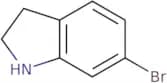
CAS:<p>4-Bromo-3-nitroacetophenone is a potent anticancer agent that has been shown to inhibit cancer cell growth by inhibiting the activity of dehydrogenase enzymes. It has been shown to be active against g1 phase cells, which are cells in the phase of cell cycle before mitosis. 4-Bromo-3-nitroacetophenone also has anti-inflammatory effects and can cross the blood brain barrier due to its hydrogen bond formation. This drug is selectively toxic to cancer cells while sparing healthy tissues and has been shown to be effective in treating inflammatory diseases, such as arthritis, by decreasing the production of proinflammatory cytokines.</p>Formula:C8H6BrNO3Purity:Min. 95%Color and Shape:Yellow To Light (Or Pale) Yellow SolidMolecular weight:244.04 g/mol6-Bromo-2,3-dihydro-1H-indole
CAS:<p>6-Bromo-2,3-dihydro-1H-indole is a natural product that has been shown to inhibit cancer cell growth in vitro. In the presence of 6-bromoindole, cells are unable to proliferate and undergo apoptosis. This compound also shows anti-cancer activity against human leukemia cells. The mechanism of action for this molecule is not yet known but may be related to its ability to activate the caspase enzyme family or its ability to bind to DNA. 6-Bromoindole has been shown to have anti-inflammatory properties through inhibition of prostaglandin synthesis in animal models.</p>Formula:C8H8BrNPurity:Min. 95%Color and Shape:Off-White PowderMolecular weight:198.06 g/mol2,6-Dimethylbenzaldehyde
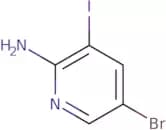
CAS:<p>2,6-Dimethylbenzaldehyde is a colorless liquid with a sweet odor. It is used in the synthesis of fatty acids and as an intermediate for other compounds. This chemical has significant cytotoxicity against leukemia cells, and is used in the production of acrylonitrile. 2,6-Dimethylbenzaldehyde can be synthesized by reacting an amine with an acyl chloride, followed by hydrolysis of the resulting ester. A contactor is usually added to facilitate the reaction. The reaction can also be carried out in the presence of a phosphorane or organic solvent.<br>2,6-Dimethylbenzaldehyde can be hydrogenated to produce 2,4-dimethylaniline and 2,4,6-trimethylaniline.</p>Formula:C9H10OPurity:Min. 95%Color and Shape:Clear White Solid Or Liquid (May Vary)Molecular weight:134.18 g/mol2-Amino-5-bromo-3-iodopyridine
CAS:<p>2-Amino-5-bromo-3-iodopyridine (2AB3IP) is a cacchi anthelmintic that is active against the trophozoites of Giardia lamblia. 2AB3IP also has antimicrobial properties, but is not active against bacteria. The high lipophilicity and pharmacokinetic properties of this drug make it a potential therapeutic candidate for the treatment of giardiasis. The mechanism of action of 2AB3IP is mediated by potassium t-butoxide, which activates the drug to form its reactive intermediate. This intermediate reacts with DNA in the parasite to form covalent adducts. This process leads to inhibition of RNA synthesis and subsequent cell death.</p>Formula:C5H4BrIN2Purity:Min. 95%Color and Shape:White to tan solid.Molecular weight:298.9 g/mol2-Nitrobiphenyl
CAS:Formula:C12H9NO2Purity:>98.0%(GC)Color and Shape:White or Colorless to Yellow powder to lump to clear liquidMolecular weight:199.212-Naphthalenesulfonic acid sodium
CAS:<p>2-Naphthalenesulfonic acid sodium is a chemical compound that belongs to the class of naphthalene sulfonic acids. It is used in the production of medicines and as an industrial chemical. 2-Naphthalenesulfonic acid sodium has been shown to inhibit the viscosity of blood capillaries and has been proposed for use in the treatment of diabetic retinopathy. This compound also reduces the permeability of cell membranes by binding to fatty acids, which has led it to be studied for its potential effects on prostate cancer. 2-Naphthalenesulfonic acid sodium has been shown to have a Michaelis–Menten kinetics with respect to the enzyme ft-ir spectroscopy and can be used as a reagent for cationic surfactants. 2-Naphthalenesulfonic acid sodium is soluble in water, but insoluble in hydrochloric acid or solvents such as chloroform or acetone.</p>Formula:C10H7O3SNaPurity:Min. 98 Area-%Color and Shape:White Off-White PowderMolecular weight:230.22 g/mol1,3-Thiazole-2-carbonyl chloride
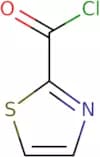
CAS:<p>1,3-Thiazole-2-carbonyl chloride is a hydrogen chloride with an amide and thionyl group. It is used in the synthesis of alicyclic compounds. 1,3-Thiazole-2-carbonyl chloride can be chlorinated to produce a chlorinating agent. This compound has been shown to have oncologic properties and can cause cancer in target cells by binding to the tyrosine kinase enzyme. It is also orally active and aromatic hydrocarbon.</p>Formula:C4H2ClNOSPurity:Min. 95%Color and Shape:Yellow PowderMolecular weight:147.58 g/molPyridinium p-Toluenesulfonate
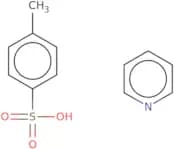
CAS:<p>Pyridinium p-toluenesulfonate is a reagent that can be used in the reduction of chloride to produce chloride ions. This process is called desulfurization. Pyridinium p-toluenesulfonate also reacts with cyclodepsipeptides, and can be used to recrystallize them. The main use for this reagent is in organic synthesis, where it can be used as an acid catalyst to synthesize polyene compounds or as a stereoselective agent for the preparation of dye cations.</p>Formula:C7H8O3S·C5H5NPurity:Min. 95%Color and Shape:White PowderMolecular weight:251.3 g/mol