Building Blocks
This section contains fundamental products for the synthesis of organic and biological compounds. Building blocks are the essential starting materials used to construct complex molecules through various chemical reactions. They play a critical role in drug discovery, material science, and chemical research. At CymitQuimica, we offer a diverse range of high-quality building blocks to support your innovative research and industrial projects, ensuring you have the essential components for successful synthesis.
Subcategories of "Building Blocks"
- Boronic Acids & Boronic Acid Derivatives(5,756 products)
- Chiral Building Blocks(1,242 products)
- Hydrocarbon Building Blocks(6,093 products)
- Organic Building Blocks(60,522 products)
Found 195533 products of "Building Blocks"
Sort by
Purity (%)
0
100
|
0
|
50
|
90
|
95
|
100
5-Iodo-2-furaldehyde
CAS:Formula:C5H3IO2Purity:>98.0%(GC)Color and Shape:White to Yellow powder to crystalMolecular weight:221.982,2-Diphenylethylamine
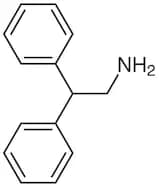
CAS:Formula:C14H15NPurity:>98.0%(GC)(T)Color and Shape:White or Colorless to Light yellow to Light orange powder to lump to clear liquidMolecular weight:197.282-(1H-Pyrazol-3-yl)pyrazine
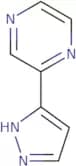
CAS:<p>2-(1H-Pyrazol-3-yl)pyrazine is a dinuclear compound that has been shown to inhibit the activity of anions. It has also been used in the treatment of diabetes by increasing the thermal expansion of beta cells and decreasing insulin resistance. 2-(1H-Pyrazol-3-yl)pyrazine has been shown to have magnetic properties, which can be exploited for its use in medicine. This compound is a single crystal x-ray diffraction research tool that is used to aid in understanding the structural changes that occur during thermal expansion. This compound also expands when heated, which may be due to an increase in volume or less electron density as a result of loss of hydrogens.</p>Formula:C7H6N4Purity:Min. 95%Color and Shape:White PowderMolecular weight:146.15 g/mol2-(4-Chlorophenoxy)ethanol
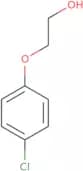
CAS:<p>2-(4-Chlorophenoxy)ethanol is a fatty acid that has shown antimicrobial activity against a number of bacteria and fungi. 2-(4-Chlorophenoxy)ethanol is active against the protozoan Trichomonas vaginalis and has been used in the treatment of bacterial vaginosis. The mechanism of action for the antimicrobial activity of 2-(4-Chlorophenoxy)ethanol is unknown, but it may be due to interference with lipid metabolism or by producing reactive oxygen species and damaging cellular membranes. This compound also possesses anti-inflammatory properties and has been shown to inhibit tumor necrosis factor-α (TNF-α) production in human monocytes.</p>Formula:C8H9ClO2Purity:Min. 95%Color and Shape:PowderMolecular weight:172.61 g/mol2-Cyano-1,5-dimethylpyrrole
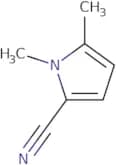
CAS:<p>2-Cyano-1,5-dimethylpyrrole is a quinone antibiotic. It has been shown to have antibacterial activity against organisms such as Staphylococcus, Streptococcus, and Pyogenes. This chemical has been shown to be active in the gaseous phase and against test organisms in alcohol extracts. 2-Cyano-1,5-dimethylpyrrole also exhibits flavonoid and saponin properties that may contribute to its antimicrobial activity.</p>Formula:C7H8N2Purity:Min. 95%Color and Shape:PowderMolecular weight:120.15 g/mol5,6,7,8-Tetrahydro-1-naphthol
CAS:<p>5,6,7,8-Tetrahydro-1-naphthol is a natural compound that belongs to the group of diazonium compounds. It reacts with an alkanoic acid and a hydrochloric acid in the presence of a diazo compound to form an alkylating product. This product can be used as a precursor for the synthesis of other organic compounds. The reaction mechanism has been studied using rat liver microsomes. 5,6,7,8-Tetrahydro-1-naphthol can react with dopamine in human liver samples to form 1-hydroxyindole and phenylhydroxyl radicals (a reactive oxygen species). 5,6,7,8-Tetrahydro-1-naphthol also reacts with soybean lipoxygenase to produce an alkyl radical intermediate that can react with molecular oxygen to form peroxides.</p>Formula:C10H12OPurity:Min. 98 Area-%Color and Shape:PowderMolecular weight:148.2 g/mol2-Thiophenemethanol
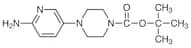
CAS:<p>2-Thiophenemethanol is a colorless liquid that has a strong, disagreeable odor and is soluble in water. It can be prepared by the reaction of 2-methylpropanal with trifluoroacetic acid. This compound reacts with methapyrilene to form polymers, which have a cationic character. The chemical structure of the molecule was determined by a combination of experimental techniques such as proton nuclear magnetic resonance spectroscopy, infrared spectroscopy, and mass spectrometry. Hydrogen bonding plays an important role in the structure of 2-thiophenemethanol as it forms intermolecular hydrogen bonds with neighboring molecules. The chemical formula for this compound is CH3C6H4SO2H. Hydrochloric acid can be used to break down this compound into methylmercaptan and sulfur dioxide.</p>Formula:C5H6OSPurity:Min. 98%Color and Shape:Clear LiquidMolecular weight:114.17 g/moltert-Butyl 4-(6-Amino-3-pyridyl)piperazine-1-carboxylate
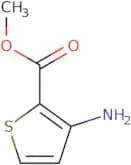
CAS:Formula:C14H22N4O2Purity:>98.0%(T)(HPLC)Color and Shape:White to Yellow to Green powder to crystalMolecular weight:278.363-Amino-2-thiophenecarboxylic acid methyl ester
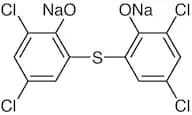
CAS:<p>3-Amino-2-thiophenecarboxylic acid methyl ester is a replication inhibitor that targets hydroxyl groups in the mitochondrial membrane. It has been shown to induce a decrease in the mitochondrial membrane potential, leading to a loss of cell viability and an increase in locomotor activity. 3-Amino-2-thiophenecarboxylic acid methyl ester also induces apoptosis by inhibiting the expression of cyclin D1 and Bcl-XL proteins, which are key regulators of cancer cell proliferation. 3-Amino-2-thiophenecarboxylic acid methyl ester is able to inhibit cancer cell growth in vitro, which may be due to its ability to inhibit h3 acetylation and MDA-MB231 cell proliferation. 3-Amino-2-thiophenecarboxylic acid methyl ester also has antiinflammatory effects by modulating inflammation pathways such as NFκB signaling.</p>Formula:C6H7NO2SPurity:Min. 95%Color and Shape:PowderMolecular weight:157.19 g/molBithionol Disodium Salt
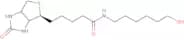
CAS:Formula:C12H4Cl4Na2O2SPurity:>98.0%(T)(HPLC)Color and Shape:White to Gray to Brown powder to crystalMolecular weight:400.006-N-Biotinylaminohexanol
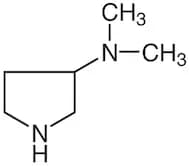
CAS:<p>6-N-Biotinylaminohexanol is a fine chemical that is used as a reagent or as a speciality chemical in research. This compound has also been shown to be a versatile building block for the synthesis of complex compounds and useful scaffolds for medicinal chemistry. 6-N-Biotinylaminohexanol is soluble in organic solvents, such as alcohols and ethers, but insoluble in water. It can be used as an intermediate in organic synthesis or as a reactant for the preparation of other chemicals.</p>Formula:C16H29N3O3SPurity:Min. 95%Color and Shape:PowderMolecular weight:343.49 g/mol3-(Dimethylamino)pyrrolidine
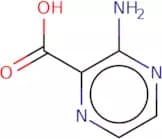
CAS:Formula:C6H14N2Purity:>98.0%(GC)(T)Color and Shape:Colorless to Light yellow clear liquidMolecular weight:114.193-Amino-2-pyrazinecarboxylic acid
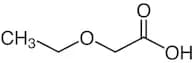
CAS:<p>3-Amino-2-pyrazinecarboxylic acid (APC) is a molecule that has been studied from many different theoretical perspectives. It has been shown to have magnetic, vibrational and spectroscopic properties. APC has a molecular electrostatic potential that can be calculated by the functional theory of atoms in molecules. This theory predicts the distribution of electron density between atoms in molecules and is used to identify which parts of a molecule are more likely to react with other molecules. The Raman spectra of APC show an intense peak at 1108 cm-1 and two weak peaks at 1265 cm-1 and 1403 cm-1. The frequency of these peaks corresponds to a bond length of 1.3 Å, 1.5 Å, and 1.7 Å respectively, corresponding to π bonds in benzene rings, σ bonds and π bonds in amide groups respectively, or σ bonds in amide groups respectively.</p>Formula:C5H5N3O2Purity:Min. 95%Color and Shape:PowderMolecular weight:139.11 g/molEthoxyacetic Acid
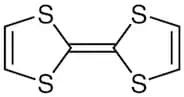
CAS:Formula:C4H8O3Purity:>98.0%(GC)(T)Color and Shape:Colorless to Light yellow clear liquidMolecular weight:104.11Tetrathiafulvalene
CAS:Formula:C6H4S4Purity:>98.0%(GC)Color and Shape:Orange to Brown powder to crystalMolecular weight:204.3412-(t-Boc-amino)-1-dodecanol
CAS:<p>12-(t-Boc-amino)-1-dodecanol is a versatile building block that is used in the synthesis of complex compounds. It can be used by itself or as a reagent or speciality chemical. This compound is useful for the synthesis of high quality research chemicals and useful scaffolds. 12-(t-Boc-amino)-1-dodecanol has CAS No. 67341-03-1 and is a fine chemical that has been widely used in the synthesis of pharmaceuticals, agrochemicals, and other organic compounds.</p>Formula:C17H35NO3Purity:Min. 95%Color and Shape:PowderMolecular weight:301.46 g/mol2-Amino-3-pyridinecarbonitrile
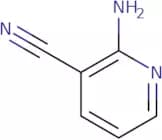
CAS:<p>2-Amino-3-pyridinecarbonitrile is an analgesic that belongs to the group of nonsteroidal anti-inflammatory drugs. It is a member of the class of chemical compounds known as aminopyridines. 2-Amino-3-pyridinecarbonitrile has been shown to have a high affinity for binding to the water vapor in cells, and has physiological effects on tissues. 2APC binds to adenosine receptors in cell membranes and blocks their activation. As a result, it inhibits the release of substances such as prostaglandins and leukotrienes that are involved in inflammation. This drug also has an inhibitory effect on the growth of cancerous cells by interfering with cell proliferation.</p>Purity:Min. 95%Color and Shape:PowderMolecular weight:119.12 g/mol3,4-Dihydro-2H-pyran-2-methanol
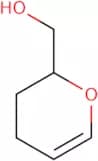
CAS:<p>3,4-Dihydro-2H-pyran-2-methanol is a tetrahydropyran alcohol that has been shown to be able to form cationic polymers in the presence of a ring-opening metathesis polymerization catalyst. The chloride anion is also capable of initiating the polymerization reaction. This compound has potential applications as a drug delivery agent or biomaterials scaffold due to its ability to act as a linker for the synthesis of biocompatible polymers. 3,4-Dihydro-2H-pyran-2-methanol can also be used in molecular modelling studies to explore the reactivity between hydroxy groups and nucleophiles.</p>Formula:C6H10O2Purity:Min. 95%Color and Shape:Colorless PowderMolecular weight:114.14 g/molEthyl 5-Chlorothiophene-2-carboxylate
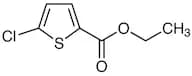
CAS:Formula:C7H7ClO2SPurity:>98.0%(GC)Color and Shape:Colorless to Light yellow clear liquidMolecular weight:190.643-Aminoquinuclidine dihydrochloride
CAS:<p>3-Aminoquinuclidine dihydrochloride (3-AQDH) is a chiral quinuclidine derivative that is an acetylcholine receptor agonist. It has been shown to bind to the α7 nicotinic acetylcholine receptor with high affinity and selectivity. 3-AQDH has also been shown to crosslink the cholinergic receptor, which may lead to increased sensitivity of the receptor. The binding constants between 3-AQDH and the α7 nicotinic acetylcholine receptors are very high and it has been shown to be enantiopure in its synthesis. 3-AQDH also has a hydrophilic interaction chromatography profile, which separates it from other compounds. This agent may have potential use as a drug for treating Alzheimer's disease and Parkinson's disease due to its ability to inhibit acetylcholinesterase activity.</p>Purity:Min. 95%Color and Shape:PowderMolecular weight:199.12 g/mol