Building Blocks
This section contains fundamental products for the synthesis of organic and biological compounds. Building blocks are the essential starting materials used to construct complex molecules through various chemical reactions. They play a critical role in drug discovery, material science, and chemical research. At CymitQuimica, we offer a diverse range of high-quality building blocks to support your innovative research and industrial projects, ensuring you have the essential components for successful synthesis.
Subcategories of "Building Blocks"
- Boronic Acids & Boronic Acid Derivatives(5,756 products)
- Chiral Building Blocks(1,242 products)
- Hydrocarbon Building Blocks(6,093 products)
- Organic Building Blocks(60,519 products)
Found 195533 products of "Building Blocks"
Sort by
Purity (%)
0
100
|
0
|
50
|
90
|
95
|
100
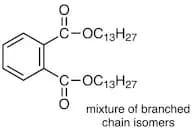
Ditridecyl Phthalate (mixture of branched chain isomers)
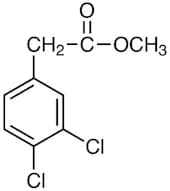
CAS:Formula:C34H58O4Purity:multi component mixture(GC)Color and Shape:Colorless to Almost colorless clear liquidMolecular weight:530.83Methyl 3,4-Dichlorophenylacetate
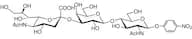
CAS:Formula:C9H8Cl2O2Purity:>98.0%(GC)Color and Shape:Colorless to Light orange to Yellow clear liquidMolecular weight:219.06Neu5Acα(2-6)Galβ(1-3)GlcNAc-β-pNP
Formula:C31H45N3O21Purity:>97.0%(HPLC)Color and Shape:White to Light yellow to Green powder to crystalMolecular weight:795.70Neu5Acα(2-3)Galβ(1-4)GlcNAc-β-pNP
CAS:Formula:C31H45N3O21Purity:>95.0%(HPLC)Color and Shape:White to Almost white powder to crystalMolecular weight:795.701,1,2,2,3,3-Hexafluoro-1-(trifluoromethoxy)-3-[(1,2,2-trifluorovinyl)oxy]propane
CAS:Formula:C6F12O2Purity:>97.0%(GC)Color and Shape:Colorless to Almost colorless clear liquidMolecular weight:332.04(S)-(+)-3-Methyl-1-pentanol
CAS:<p>(S)-(+)-3-Methyl-1-pentanol is a branched-chain, β-unsaturated aldehyde that is produced by the elimination of two molecules of water from (R)-(+)-3-methylbutanal. It is an organocatalytic substrate for the family of enzymes that catalyze the first step in the biosynthetic pathway to abiotic long-chain alcohols. The product is an intermediate in the biosynthesis of escherichia coli and other bacteria. The enzyme involved in this reaction is initially activated by acetate and then inhibited by NADH. In nature, this compound can be found as a natural product or as a metabolic intermediate.</p>Formula:C6H14OPurity:Min. 95%Color and Shape:Colorless Clear LiquidMolecular weight:102.17 g/molButyl Nitrite
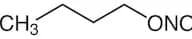
CAS:Formula:C4H9NO2Purity:>95.0%(GC)Color and Shape:Light yellow to Yellow clear liquidMolecular weight:103.122,2':6',2'-Terpyridine-4,4',4''-tricarboxylic acid
CAS:<p>2,2':6',2'-Terpyridine-4,4',4''-tricarboxylic acid is a model system that has been studied for its photochemical properties. In this molecule, there are two carboxyl groups and three pyridine rings. The molecule can be protonated easily by electron transfer to form a positively charged anion. This allows the molecule to undergo electron transfer reactions with other molecules in the presence of radiation or visible light. 2,2':6',2'-Terpyridine-4,4',4''-tricarboxylic acid absorbs photons easily and then transfers its energy to a nearby electron. The electron then passes on the energy to another molecule, which can produce a photocurrent.</p>Formula:C18H11N3O6Purity:Min. 95%Color and Shape:Brown SolidMolecular weight:365.3 g/mol2,3,3-Trimethyl-3H-benzo[e]indole
CAS:<p>2,3,3-Trimethyl-3H-benzo[e]indole is a reactive molecule that has been shown to be an effective treatment for cervical cancer. It can be used in conjunction with monoclonal antibodies that have been designed to target the acidic protonation sites on the surface of cervical cancer cells. This active form binds to the site and emits fluorescence when illuminated with a laser, which can then be detected by a confocal microscope. This technique can also be used for the diagnosis of other cancers. 2,3,3-Trimethyl-3H-benzo[e]indole is not toxic to human serum as it does not react with this type of tissue.</p>Formula:C15H15NPurity:Min. 98 Area-%Color and Shape:PowderMolecular weight:209.29 g/molTetrahydro-1,3-dimethyl-1H-pyrimidin-2-one
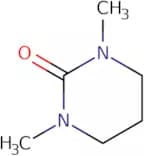
CAS:<p>Tetrahydro-1,3-dimethyl-1H-pyrimidin-2-one is an organic compound that is used in the synthesis of drugs and other organic compounds. It can be synthesized by reacting hydrogen fluoride with nitrogen atoms. Tetrahydro-1,3-dimethyl-1H-pyrimidin-2-one can form stable complexes with iodination reactions and has been used to prepare monoclonal antibodies. This molecule has also been studied using x-ray crystal structures and titration calorimetry to investigate its reaction mechanism. The light emission from this molecule is due to intermolecular hydrogen bonding between a pyrazole ring and a phenyl ring.</p>Formula:C6H12N2OPurity:Min. 98%Color and Shape:Colorless Slightly Yellow Clear LiquidMolecular weight:128.17 g/molN-Carbobenzoxy-L-phenylalaninol
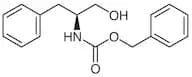
CAS:Formula:C17H19NO3Purity:>98.0%(HPLC)Color and Shape:White to Almost white powder to crystalMolecular weight:285.34tert-Butyl 4-(6-Amino-3-pyridyl)piperazine-1-carboxylate
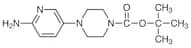
CAS:Formula:C14H22N4O2Purity:>98.0%(T)(HPLC)Color and Shape:White to Yellow to Green powder to crystalMolecular weight:278.362-(tert-Butyldimethylsilyl)thiazole
CAS:Formula:C9H17NSSiPurity:>97.0%(GC)Color and Shape:Colorless to Light orange to Yellow clear liquidMolecular weight:199.39Methacrylic Anhydride [stabilized with 1,1,3-Tris(3-tert-butyl-4-hydroxy-6-methylphenyl)butane]
CAS:Formula:C8H10O3Purity:>97.0%(GC)(T)Color and Shape:Colorless to Light yellow to Light orange clear liquidMolecular weight:154.17N-[(4-Methylphenyl)sulfonyl]acetamide
CAS:Formula:C9H11NO3SPurity:>98.0%(T)(HPLC)Color and Shape:White to Almost white powder to crystalMolecular weight:213.25Tetrahydropyranylethyleneglycol
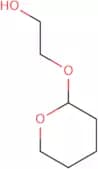
CAS:<p>Tetrahydropyranyl ethyleneglycol is a polymerized, telechelic molecule with a hetero-bifunctional linkage. It is used in bioconjugate chemistry and has been shown to be effective in the treatment of neuropathic pain. Tetrahydropyranyl ethyleneglycol has an acidic hydroxyl group that can be used for ring-opening reactions. It also has a primary amino group that can be used for ion exchange or as a bifunctional agent. The heterobifunctional properties of tetrahydropyranyl ethyleneglycol allow it to be incorporated into polymers and other polymeric materials.</p>Formula:C7H14O3Purity:Min. 95%Color and Shape:PowderMolecular weight:146.18 g/mol2,6-Dichlorobenzenesulfonyl Chloride
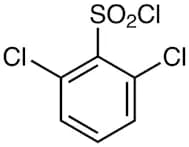
CAS:Formula:C6H3Cl3O2SPurity:>97.0%(GC)(T)Color and Shape:White to Light yellow powder to crystalMolecular weight:245.50Methyl 2-Fluoro-5-nitrobenzoate
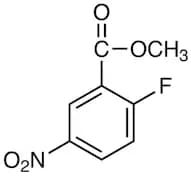
CAS:Formula:C8H6FNO4Purity:>98.0%(GC)Color and Shape:White to Yellow to Green powder to crystalMolecular weight:199.142,5-Difluoroanisole
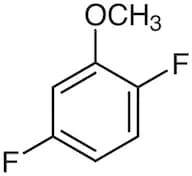
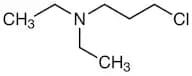
CAS:Formula:C7H6F2OPurity:>98.0%(GC)Color and Shape:Colorless to Almost colorless clear liquidMolecular weight:144.123-Chloro-N,N-diethylpropan-1-amine
CAS:Formula:C7H16ClNPurity:>98.0%(GC)(T)Color and Shape:Colorless to Almost colorless clear liquidMolecular weight:149.66


![1,1,2,2,3,3-Hexafluoro-1-(trifluoromethoxy)-3-[(1,2,2-trifluorovinyl)oxy]propane](/_next/image/?url=https%3A%2Fstatic.cymitquimica.com%2Fproducts%2F3B%2Fthumb-webp%2FH1610.webp&w=3840&q=75)



![2,3,3-Trimethyl-3H-benzo[e]indole](/_next/image/?url=https%3A%2Fstatic.cymitquimica.com%2Fproducts%2F3D%2Fthumb-webp%2FFT29018.webp&w=3840&q=75)

![Methacrylic Anhydride [stabilized with 1,1,3-Tris(3-tert-butyl-4-hydroxy-6-methylphenyl)butane]](/_next/image/?url=https%3A%2Fstatic.cymitquimica.com%2Fproducts%2F3B%2Fthumb-webp%2FM3139.webp&w=3840&q=75)
![N-[(4-Methylphenyl)sulfonyl]acetamide](/_next/image/?url=https%3A%2Fstatic.cymitquimica.com%2Fproducts%2F3B%2Fthumb-webp%2FM3123.webp&w=3840&q=75)