Building Blocks
This section contains fundamental products for the synthesis of organic and biological compounds. Building blocks are the essential starting materials used to construct complex molecules through various chemical reactions. They play a critical role in drug discovery, material science, and chemical research. At CymitQuimica, we offer a diverse range of high-quality building blocks to support your innovative research and industrial projects, ensuring you have the essential components for successful synthesis.
Subcategories of "Building Blocks"
- Boronic Acids & Boronic Acid Derivatives(5,756 products)
- Chiral Building Blocks(1,242 products)
- Hydrocarbon Building Blocks(6,095 products)
- Organic Building Blocks(61,038 products)
Found 196817 products of "Building Blocks"
Sort by
Purity (%)
0
100
|
0
|
50
|
90
|
95
|
100
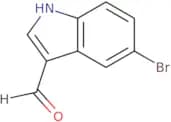
5-Bromoindole-3-carboxaldehyde
CAS:<p>5-Bromoindole-3-carboxaldehyde is a water molecule that has been crystallized in the form of an amide. It is a chemical substance with asymmetric synthesis and significant antifungal activity. 5-Bromoindole-3-carboxaldehyde is active against some strains of the fungus Candida albicans and has been shown to inhibit the growth of kidney cells. This molecule also binds to the neurokinin 1 receptor and is used as a probe for fluorescence studies. The efficient method for synthesizing 5-Bromoindole-3-carboxaldehyde includes using silico analysis to confirm the structure on a computer, then performing an asymmetric synthesis with an acid catalyst to produce this compound.</p>Formula:C9H6BrNOPurity:Min. 98 Area-%Color and Shape:PowderMolecular weight:224.05 g/mol2,6-Dichloro-3-deazapurine
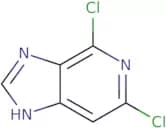
CAS:<p>2,6-Dichloro-3-deazapurine is an isomer of the nucleoside guanosine. It has been shown to inhibit the synthesis of viruses in cell cultures and may be useful in the treatment of leukemia. The synthesis of 2,6-dichloro-3-deazapurine can be achieved through a solid-phase synthesis that uses synthons as starting materials. The molecular modelling studies have shown that this molecule has a potential to bind to adenosine receptor subtypes A2a, A2b, and A3.</p>Formula:C6H3Cl2N3Purity:Min. 95%Color and Shape:Off-White PowderMolecular weight:188.02 g/mol3-(Trifluoromethyl)-1-oxa-2,8-diazaspiro[4.5]dec-2-ene
CAS:<p>Versatile small molecule scaffold</p>Formula:C8H11F3N2OPurity:(%) Min. 85%Color and Shape:PowderMolecular weight:208.18 g/mol2,6-Dichloro-7-deazapurine
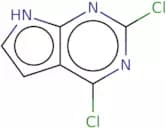
CAS:<p>Intermediate in the synthesis of tofacitinib</p>Formula:C6H3Cl2N3Purity:Min. 95%Color and Shape:Off-White PowderMolecular weight:188.02 g/molGuanine
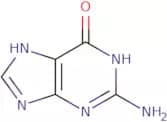
CAS:<p>Guanine is a purine base that is found in the DNA and RNA of all living cells. It plays an important role as a component of the nucleic acid molecule, where it is paired with cytosine. Guanine is involved in many chemical reactions and biological processes, including protein synthesis and cell division. The lack of guanine can lead to deficiency symptoms such as hemolytic anemia or erythrocyte cytoplasmic inclusion bodies. Guanine has been shown to have chemiluminescent properties, which can be used to detect its presence in samples containing DNA or RNA. This reaction occurs when guanine reacts with hydrogen peroxide (H2O2) to form guanidine (HN=C(NH2)NH2). The reaction produces excited states that emit light at a wavelength of 395 nm when they return to their ground state. Guanidine also has electrochemical impedance spectroscopy properties, which can be used for analytical purposes</p>Formula:C5H5N5OPurity:Min. 98 Area-%Color and Shape:PowderMolecular weight:151.13 g/mol1,3,3-Trimethoxypropene
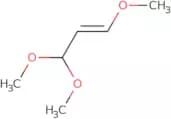
CAS:<p>1,3,3-Trimethoxypropene is a fluorophore that can be used for the labeling of nucleic acids. It has been shown to be photostable and can be used in fluorescence techniques. 1,3,3-Trimethoxypropene has also been used in structural biology research and studies on the physicochemical properties of fluorescent probes. This compound can also be used as a building block for the synthesis of supramolecular structures and conjugates with other molecules that have different properties. 1,3,3-Trimethoxypropene is a fluorophore that emits cyanines in the visible range of light.</p>Formula:C6H12O3Purity:Min. 95%Color and Shape:Clear LiquidMolecular weight:132.16 g/mol3',4'-Dimethoxy-6'-nitroacetophenone
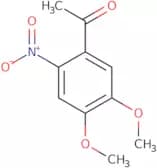
CAS:<p>3',4'-Dimethoxy-6'-nitroacetophenone is a high detection compound that has been used for the detection of p2y12. This molecule has also been shown to be an inhibitor of survivin and inorganic uptake. 3',4'-Dimethoxy-6'-nitroacetophenone has been shown to have anti-cancer properties, specifically against bladder cancer. It is important to note that this compound is not cytotoxic, which means it does not kill or harm cells. The modifications made to the molecule are what make it an effective anti-cancer agent.</p>Formula:C10H11NO5Purity:Min. 95%Color and Shape:SolidMolecular weight:225.2 g/mol3-(2-Hydroxyphenyl)propionic acid
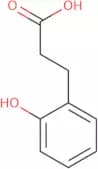
CAS:<p>3-(2-Hydroxyphenyl)propionic acid (HPPA) is an inorganic acid that is found in microbial metabolism. HPPA has been shown to inhibit the growth of bacteria by reacting with the hydroxyl group on the enzyme's active site, thus irreversibly inhibiting enzymatic activity. HPPA can be used as an alternative to other inorganic acids such as p-hydroxybenzoic acid and malonic acid due to its ability to scavenge anion radicals. This inhibition of enzyme activity can be used in wastewater treatment to remove organic compounds from industrial waste streams. It also has been shown to have anti-cancer properties against human breast cancer cells, which may be due to its ability to induce cell death through apoptosis and/or necrosis.</p>Formula:C9H10O3Purity:Min. 95%Color and Shape:White PowderMolecular weight:166.17 g/mol5-Ethenyl-2-methoxyphenol
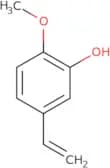
CAS:<p>5-Ethenyl-2-methoxyphenol is a volatile compound that has been isolated from the bark of the cinnamon tree. It has shown anticancer activities "in vitro" and "in vivo". 5-Ethenyl-2-methoxyphenol has been shown to be demethylated by cytochrome P450 enzymes, which may result in its antitumor activity. This active compound can also be detected in postharvested fruit and vegetables as well as processed foods such as apple juice, tomato sauce, and dried fruits. 5-Ethenyl-2-methoxyphenol is responsible for the characteristic flavor of cinnamon, so it is often used as a flavoring agent in food processing.</p>Formula:C9H10O2Purity:Min. 95%Color and Shape:PowderMolecular weight:150.17 g/mol[1-(Aminomethyl)cyclohexyl]methanamine
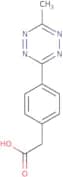
CAS:<p>Cyclohexane-1,1-dicarboxylic acid is a cyclic dicarboxylic acid that is used in the production of polyols. It can be obtained by the hydrogenation of terephthalic acid or by the isomerization of adipic acid. Cyclohexane-1,1-dicarboxylic acid has been shown to have anti-leukemic activity against leukemia cells in mice. The mechanism is not well understood, but it may be due to its ability to produce hydrogen peroxide and tellurate ions. In addition, cyclohexane-1,1-dicarboxylic acid can also react with polyols to form imines and axial alcohols.</p>Formula:C8H18N2Purity:Min. 95%Color and Shape:Colorless Clear LiquidMolecular weight:142.24 g/molMethyltetrazine-acid
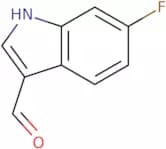
CAS:<p>Versatile small molecule scaffold</p>Formula:C11H10N4O2Purity:Min. 95%Color and Shape:PowderMolecular weight:230.22 g/mol6-Fluoroindole-3-carboxaldehyde
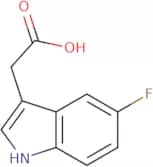
CAS:<p>6-Fluoroindole-3-carboxaldehyde (6FLA) is a synthetic compound that inhibits biosynthesis of the phytoalexins salicylic acid and lignin in plants. It also inhibits the β-glucuronidase enzyme, which hydrolyzes the glucuronide conjugates of phenolic compounds and xenobiotics. 6FLA has been shown to cause mild liver damage in rats, but its effects on humans are unknown. 6FLA may be used as a detectable substance for assays.</p>Formula:C9H6FNOPurity:Min. 95%Molecular weight:163.15 g/mol5-Fluoroindole-3-acetic acid
CAS:<p>5-Fluoroindole-3-acetic acid is a fluorine-containing drug that inhibits the transport of indoleacetic acid (IAA), an auxin, in the peo-iaa system. It has been shown to inhibit cancer cell growth and induce apoptosis in a variety of tumour cells. 5-Fluoroindole-3-acetic acid can be used as a chemotherapeutic agent for cancers such as bladder, breast, and prostate cancers. This drug also activates enzymatic reactions by introducing fluorine atoms into reaction sites.</p>Formula:C10H8FNO2Color and Shape:PowderMolecular weight:193.17 g/moltert-butyl N-{2-azabicyclo[2.1.1]hexan-1-ylmethyl}carbamate
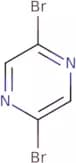
CAS:<p>Versatile small molecule scaffold</p>Formula:C11H20N2O2Purity:Min. 95%Molecular weight:212.3 g/mol2,5-Dibromopyrazine
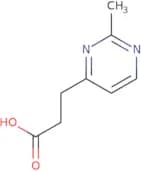
CAS:<p>2,5-Dibromopyrazine is a heterocyclic compound that can be synthesized by the Suzuki coupling reaction of 2-bromo-1,3-dibromopropane with an acceptor. It has been shown to have glycemic parameters and a high rate enhancement for the water molecule photophysical isomerization reaction. Structural isomers of 2,5-dibromopyrazine exist as well and are thought to have different rates of photocatalytic activity. The rate enhancement may be due to the increase in electron density on the heteroatoms in the ring.</p>Formula:C4H2Br2N2Purity:Min. 98%Color and Shape:Brown White Off-White Yellow Clear LiquidMolecular weight:237.88 g/mol3-(2-Methylpyrimidin-4-yl)propanoic acid
CAS:<p>Versatile small molecule scaffold</p>Formula:C8H10N2O2Purity:Min. 95%Color and Shape:PowderMolecular weight:166.18 g/mol10-Undecen-1-ol
CAS:<p>10-Undecen-1-ol is a fatty acid with a hydroxyl group at the 10th position. It has strong intermolecular hydrogen bonding and reacts to form esters and ethers. 10-Undecen-1-ol is used as a multi-walled carbon for wastewater treatment, which removes organic contaminants. This compound also has a high degree of chemical stability, which makes it suitable for use in anhydrous sodium synthesis methods.</p>Formula:C11H22OPurity:Min. 98%Color and Shape:Colorless Clear LiquidMolecular weight:170.29 g/molOrcinol monohydrate
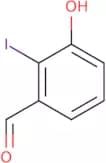
CAS:<p>Orcinol monohydrate is a high quality chemical that can be used as a reagent, complex compound, or useful intermediate in the synthesis of fine chemicals. It is also an important building block in the synthesis of other compounds. This product has CAS No. 6153-39-5 and is classified as a speciality chemical. It is also a versatile building block that can be used as a reaction component in organic syntheses.</p>Formula:C7H10O3Molecular weight:142.16 g/mol3-Hydroxy-2-iodobenzaldehyde
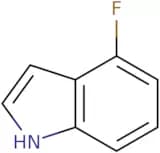
CAS:<p>3-Hydroxy-2-iodobenzaldehyde is a heterocyclic compound that is synthesized from an acetoacetic ester. It is a photochemical precursor to many organic compounds, such as phenanthrene. The synthesis of 3-hydroxy-2-iodobenzaldehyde can be achieved by reacting acetoacetic acid with iodine and sodium nitrite in the presence of a base. This reaction yields 2-iodobenzoic acid in addition to the desired product. 3-Hydroxy-2-iodobenzaldehyde has been studied for its use in the preparation of natural products and research advances.</p>Formula:C7H5IO2Purity:Min. 95%Color and Shape:PowderMolecular weight:248.02 g/mol4-Fluoroindole
CAS:<p>4-Fluoroindole is a compound that belongs to the class of 5-methoxyindoles, which are used as drugs in plant physiology. The analog of 4-fluoroindole is important for cell culture and transcriptomic analysis. It has been shown to reduce the growth of cryptococcus neoformans by inhibiting its ability to produce acid. 4-Fluoroindole also inhibits the growth of other opportunistic fungi, such as Aspergillus niger. This drug is addictive and can be toxic if it enters the environment. 4-Fluoroindole also inhibits the growth of plants when applied as a pesticide.</p>Formula:C8H6FNColor and Shape:PowderMolecular weight:135.14 g/mol

![3-(Trifluoromethyl)-1-oxa-2,8-diazaspiro[4.5]dec-2-ene](/_next/image/?url=https%3A%2Fstatic.cymitquimica.com%2Fproducts%2F3D%2Fthumb-webp%2FRID39800.webp&w=3840&q=75)
![[1-(Aminomethyl)cyclohexyl]methanamine](/_next/image/?url=https%3A%2Fstatic.cymitquimica.com%2Fproducts%2F3D%2Fthumb-webp%2FEAA44155.webp&w=3840&q=75)
![tert-butyl N-{2-azabicyclo[2.1.1]hexan-1-ylmethyl}carbamate](/_next/image/?url=https%3A%2Fstatic.cymitquimica.com%2Fproducts%2F3D%2Fthumb-webp%2FAAC99746.webp&w=3840&q=75)