Building Blocks
This section contains fundamental products for the synthesis of organic and biological compounds. Building blocks are the essential starting materials used to construct complex molecules through various chemical reactions. They play a critical role in drug discovery, material science, and chemical research. At CymitQuimica, we offer a diverse range of high-quality building blocks to support your innovative research and industrial projects, ensuring you have the essential components for successful synthesis.
Subcategories of "Building Blocks"
- Boronic Acids & Boronic Acid Derivatives(5,756 products)
- Chiral Building Blocks(1,242 products)
- Hydrocarbon Building Blocks(6,093 products)
- Organic Building Blocks(60,519 products)
Found 195533 products of "Building Blocks"
Sort by
Purity (%)
0
100
|
0
|
50
|
90
|
95
|
100
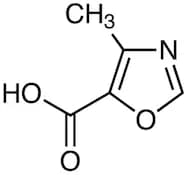
4-Methyloxazole-5-carboxylic Acid
CAS:Formula:C5H5NO3Purity:>98.0%(T)Color and Shape:White to Gray to Brown powder to crystalMolecular weight:127.102-[1,2,4]Triazol-1-yl-benzylamine
CAS:<p>2-[1,2,4]Triazol-1-yl-benzylamine is a chemical compound that has been shown to be an excellent reagent in organic synthesis. It is also used as a building block for the synthesis of compounds related to pharmaceuticals, pesticides and other speciality chemicals. 2-[1,2,4]Triazol-1-yl-benzylamine is a versatile intermediate that can be used in the synthesis of complex compounds with good yields and high purity.</p>Formula:C9H10N4Purity:Min. 95%Color and Shape:PowderMolecular weight:174.2 g/mol3-Benzylthiazolium Bromide
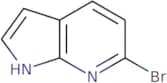
CAS:Formula:C10H10BrNSPurity:>98.0%(T)(HPLC)Color and Shape:White to Light yellow powder to crystalMolecular weight:256.166-Bromo-7-azaindole
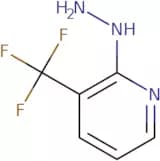
CAS:<p>6-Bromo-7-azaindole is a homologous molecule. It is an electron deficient compound with a piperidine moiety at the 6 position and a nitrogen atom at the 7 position. The nitrogen atom substitutes for an oxygen atom, making this molecule reactive. The electron deficient nature of this molecule makes it suitable for use in transistors and other physicochemical devices. 6-Bromo-7-azaindole has been shown to be effective against carcinoma cells in vitro, as well as to inhibit tumor growth in vivo. This drug also causes homologous recombination by interacting with DNA in mammalian cells. 6-Bromo-7-azaindole binds to DNA, forming a covalent bond with the guanine base of DNA through the nitrogen atom, which is electron deficient.</p>Formula:C7H5BrN2Purity:Min. 95%Color and Shape:Off-White To Beige To Yellow SolidMolecular weight:197.03 g/mol(3-Trifluoromethylpyrid-2-yl)hydrazine
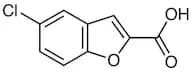
CAS:<p>Building block for preparation of heteroaryltriazole derivatives</p>Formula:C6H6F3N3Purity:Min. 95%Color and Shape:PowderMolecular weight:177.13 g/mol5-Chlorobenzofuran-2-carboxylic Acid
CAS:Formula:C9H5ClO3Purity:>98.0%(GC)(T)Color and Shape:White to Light yellow powder to crystalMolecular weight:196.59Tetramethylpropylcyclopentadiene (mixture of isomers)
Formula:C12H20Purity:>95.0%(GC)Color and Shape:White to Yellow to Green clear liquidMolecular weight:164.29L-Valine b-naphthylamide
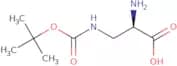
CAS:<p>H-Val-bNA</p>Formula:C15H18N2OPurity:Min. 99 Area-%Molecular weight:242.32 g/molN-b-Boc-D-2,3-diaminopropionic acid
CAS:<p>N-b-Boc-D-2,3-diaminopropionic acid is a chemical compound that belongs to the group of polypeptides. It has been shown to act as a receptor activator in cell-based assays and is capable of binding to taste receptors. N-b-Boc-D-2,3-diaminopropionic acid has also been found to be an effective inhibitor of alpha amylase, which is an enzyme that breaks down starch into maltose and dextrin. This chemical compound could serve as a potential therapeutic agent for type 2 diabetes, obesity, and other metabolic disorders. NBDAPA has also been found in fossilized invertebrates such as squid and urchins.</p>Formula:C8H16N2O4Purity:Min. 95%Color and Shape:White to off-white solid.Molecular weight:204.22 g/mol2-Nitroimidazole
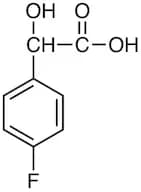
CAS:<p>2-Nitroimidazole is a compound that has been shown to have significant cytotoxicity against tumor cells. It is also an anti-cancer drug with a matrix effect on solid tumours, and has been shown to inhibit the synthesis of DNA, RNA, and proteins in vitro. 2-Nitroimidazole is also active against infectious diseases such as HIV, herpes simplex virus type 1, and influenza A virus. The biological properties of this compound are currently being studied by analytical methods such as LC/MS and HPLC/UV.</p>Formula:C3H3N3O2Purity:Min. 95%Color and Shape:PowderMolecular weight:113.07 g/mol4-Fluoro-DL-mandelic Acid
CAS:Formula:C8H7FO3Purity:>96.0%(GC)(T)Color and Shape:White to Almost white powder to crystalMolecular weight:170.144-Hydroxymethylpiperidine hydrochloride
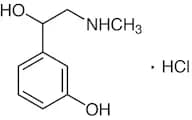
CAS:<p>4-Hydroxymethylpiperidine hydrochloride is a fine chemical that has been used as a versatile building block for the synthesis of complex compounds. It is available for sale as a research chemical, and can be used as an intermediate or reagent in the synthesis of specialty chemicals. This compound is useful in the production of pharmaceuticals, agrochemicals, dyes, and fragrances. 4-Hydroxymethylpiperidine hydrochloride has been found to be useful in the manufacture of high-quality products.</p>Formula:C6H13NO·HClPurity:Min. 95%Color and Shape:White PowderMolecular weight:151.63 g/molDL-Phenylephrine Hydrochloride
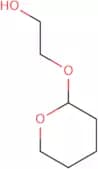
CAS:Formula:C9H13NO2·HClPurity:>98.0%(T)(HPLC)Color and Shape:White to Almost white powder to crystalMolecular weight:203.67Tetrahydropyranylethyleneglycol
CAS:<p>Tetrahydropyranyl ethyleneglycol is a polymerized, telechelic molecule with a hetero-bifunctional linkage. It is used in bioconjugate chemistry and has been shown to be effective in the treatment of neuropathic pain. Tetrahydropyranyl ethyleneglycol has an acidic hydroxyl group that can be used for ring-opening reactions. It also has a primary amino group that can be used for ion exchange or as a bifunctional agent. The heterobifunctional properties of tetrahydropyranyl ethyleneglycol allow it to be incorporated into polymers and other polymeric materials.</p>Formula:C7H14O3Purity:Min. 95%Color and Shape:PowderMolecular weight:146.18 g/mol2-Methylquinoline-6-carboxylic Acid
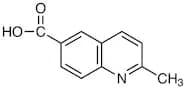
CAS:Formula:C11H9NO2Purity:>98.0%(T)(HPLC)Color and Shape:White to Light yellow to Light orange powder to crystalMolecular weight:187.20Methyl 2-Fluoro-5-nitrobenzoate
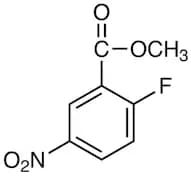
CAS:Formula:C8H6FNO4Purity:>98.0%(GC)Color and Shape:White to Yellow to Green powder to crystalMolecular weight:199.14N-[(4-Methylphenyl)sulfonyl]acetamide
CAS:Formula:C9H11NO3SPurity:>98.0%(T)(HPLC)Color and Shape:White to Almost white powder to crystalMolecular weight:213.25Methyl Pentafluorophenyl Carbonate
CAS:Formula:C8H3F5O3Purity:>98.0%(GC)Color and Shape:White to Almost white powder to lumpMolecular weight:242.10Methacrylic Anhydride [stabilized with 1,1,3-Tris(3-tert-butyl-4-hydroxy-6-methylphenyl)butane]
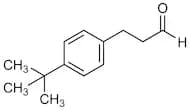
CAS:Formula:C8H10O3Purity:>97.0%(GC)(T)Color and Shape:Colorless to Light yellow to Light orange clear liquidMolecular weight:154.17Bourgeonal
CAS:Formula:C13H18OPurity:>90.0%(GC)Color and Shape:Colorless to Yellow to Yellow green clear liquidMolecular weight:190.29

![2-[1,2,4]Triazol-1-yl-benzylamine](/_next/image/?url=https%3A%2Fstatic.cymitquimica.com%2Fproducts%2F3D%2Fthumb-webp%2FFT50933.webp&w=3840&q=75)






![N-[(4-Methylphenyl)sulfonyl]acetamide](/_next/image/?url=https%3A%2Fstatic.cymitquimica.com%2Fproducts%2F3B%2Fthumb-webp%2FM3123.webp&w=3840&q=75)

![Methacrylic Anhydride [stabilized with 1,1,3-Tris(3-tert-butyl-4-hydroxy-6-methylphenyl)butane]](/_next/image/?url=https%3A%2Fstatic.cymitquimica.com%2Fproducts%2F3B%2Fthumb-webp%2FM3139.webp&w=3840&q=75)