Building Blocks
This section contains fundamental products for the synthesis of organic and biological compounds. Building blocks are the essential starting materials used to construct complex molecules through various chemical reactions. They play a critical role in drug discovery, material science, and chemical research. At CymitQuimica, we offer a diverse range of high-quality building blocks to support your innovative research and industrial projects, ensuring you have the essential components for successful synthesis.
Subcategories of "Building Blocks"
- Boronic Acids & Boronic Acid Derivatives(5,756 products)
- Chiral Building Blocks(1,242 products)
- Hydrocarbon Building Blocks(6,095 products)
- Organic Building Blocks(61,038 products)
Found 196817 products of "Building Blocks"
Sort by
Purity (%)
0
100
|
0
|
50
|
90
|
95
|
100
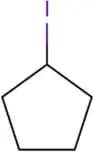
Iodocyclopentane (stabilised with copper)
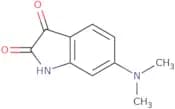
CAS:<p>Iodocyclopentane is an organic compound that has been synthesized for the treatment of infectious diseases. Iodocyclopentane binds to the active site of a lipid kinase and inhibits the enzyme activity, which prevents the synthesis of phospholipids and lipids. This compound also inhibits bacterial growth by binding to nitrogen atoms in their DNA, preventing replication. The X-ray crystal structure of iodocyclopentane shows that it is a symmetric molecule.</p>Formula:C5H9IPurity:Min. 95%Molecular weight:196.03 g/mol6-(Dimethylamino)-2,3-dihydro-1H-indole-2,3-dione
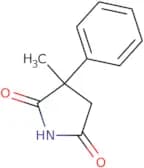
CAS:<p>6-(Dimethylamino)-2,3-dihydro-1H-indole-2,3-dione is a reagent that is used as a high quality intermediate for the synthesis of complex compounds. It is also a useful scaffold for the synthesis of organic compounds. 6-(Dimethylamino)-2,3-dihydro-1H-indole-2,3-dione is a speciality chemical that can be used in research and development to produce novel compounds. This compound can be used in versatile synthetic reactions and is a reaction component with many applications.</p>Formula:C10H10N2O2Purity:Min. 95%Color and Shape:PowderMolecular weight:190.2 g/mol2-Methyl-2-phenylsuccinimide
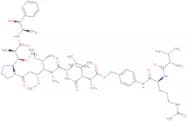
CAS:<p>2-Methyl-2-phenylsuccinimide is a synthetic cannabinoid that has been found in urine samples. It is not known whether 2-methyl-2-phenylsuccinimide has any psychoactive effects. Phensuximide, a drug that is used to treat epilepsy, has been shown to interact with 2-methyl-2-phenylsuccinimide and other drugs. 5HT7 receptor agonists are thought to be involved in the treatment of depression and anxiety. The terminal half-life of 2-methyl-2-phenylsuccinimide is unknown at this time, but it may be shorter than that of phensuximide. Clinical studies have shown that carbamazepine and enzyme inducing antiepileptic drugs can decrease the concentration of 2-methyl-2-phenylsuccinimide in the blood. Chromatography techniques have been used to detect 2 methyl -2 phenyl</p>Formula:C11H11NO2Purity:Min. 95%Molecular weight:189.21 g/molVal-Cit-PAB-MMAE
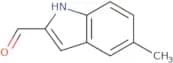
CAS:<p>Val-Cit-PAB-MMAE is a linker that has been conjugated to a monoclonal antibody (Val-Cit) and a cytotoxic agent (MMAE). This linker is designed to provide predictable strategies for site-specific conjugation of therapeutic agents to antibodies. The Val-Cit sequence facilitates the attachment of the linker to the antibody, while MMAE targets cancer cells through its chemotherapeutic effect. The linker provides an anti-cancer drug with an increased halflife in vivo, which may be due to its physicochemical properties. Val-Cit-PAB-MMAE also has the potential for use in other applications such as diagnostics and biosensors.</p>Formula:C58H94N10O12Purity:Min. 95 Area-%Color and Shape:PowderMolecular weight:1,123.43 g/mol5-Methyl-1H-indole-2-carbaldehyde
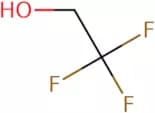
CAS:<p>Versatile small molecule scaffold</p>Formula:C10H9NOPurity:Min. 95%Molecular weight:159.18 g/mol2,2,2-Trifluoroethanol
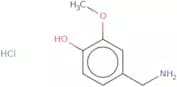
CAS:<p>2,2,2-Trifluoroethanol is a trifluoroacetic acid analogue that has been shown to be an effective antimicrobial agent. It binds to the active site of the enzyme enoyl reductase, inhibiting the synthesis of fatty acids and disrupting cell membrane function. 2,2,2-Trifluoroethanol has also been shown to have anti-inflammatory effects. The drug binds to human serum albumin and inhibits hydrogen peroxide release from neutrophils. This complexation with albumin prevents the release of hydroxyl radicals that are generated in response to oxidative stress. Intramolecular hydrogen bonding between 2,2,2-trifluoroethanol molecules may also contribute to its activity as a natural drug.</p>Formula:C2H3F3OPurity:Min. 95%Color and Shape:Clear LiquidMolecular weight:100.04 g/mol4-Hydroxy-3-methoxybenzylamine hydrochloride
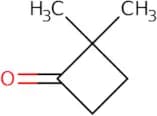
CAS:<p>4-Hydroxy-3-methoxybenzylamine hydrochloride is a reagent, complex compound and useful intermediate for the production of speciality chemicals. CAS No. 7149-10-2 is not a hazardous chemical and does not pose any significant risk to human health or the environment when used as intended. This chemical has many uses including being a useful scaffold in organic synthesis, a useful building block for the preparation of other compounds, and a versatile building block for the preparation of various compounds. It also has many applications in research such as being an intermediate for the synthesis of other compounds, or as a reactant in various reactions.</p>Formula:C8H12NO2ClPurity:Min. 98 Area-%Color and Shape:White PowderMolecular weight:189.64 g/mol2,2-Dimethylcyclobutan-1-one
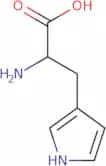
CAS:<p>2,2-Dimethylcyclobutan-1-one is a cycloaddition product of sodium methoxide and trimethylchlorosilane. It is used as an alkylating agent in the preparation of fatty acids. 2,2-Dimethylcyclobutan-1-one can be prepared by reaction of zinc chloride with chlorinated hydrocarbons or alkynes. The product can be purified by distillation and deuterated. The reactants are thermally decomposed to form the desired product at elevated temperatures (≥200 °C). The reaction proceeds via nucleophilic substitution of chloride for the chlorine atom that is attached to the alkene. This process generates a new double bond between carbon atoms 4 and 5 in the molecule. Lastly, 2,2-dimethylcyclobutan-1-one has been found to form a complex with anthracene and emulsifying agents that stabilizes it against thermal decomposition.</p>Formula:C6H10OPurity:Min. 95%Color and Shape:Clear LiquidMolecular weight:98.14 g/mol2-Amino-3-(1H-pyrrol-3-yl)propanoic acid
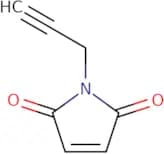
CAS:<p>Versatile small molecule scaffold</p>Formula:C7H10N2O2Purity:Min. 95%Color and Shape:PowderMolecular weight:154.17 g/mol1-(Prop-2-yn-1-yl)-2,5-dihydro-1H-pyrrole-2,5-dione
CAS:<p>1,2-Dihydropyrrolo[3,4-b]pyrrole-2,5-dione is a fine chemical that is used as a research chemical and in the synthesis of complex organic compounds. It is also an intermediate for the production of other chemicals. This compound can be used as a building block for the synthesis of many other chemicals with pharmaceutical and industrial applications. 1,2-Dihydropyrrolo[3,4-b]pyrrole-2,5-dione has been shown to be a useful reagent that can react with various functional groups to form new compounds and has found use in many industries.</p>Formula:C7H5NO2Purity:Min. 95%Color and Shape:PowderMolecular weight:135.12 g/molTrifluoromethanesulfonic anhydride
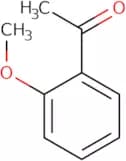
CAS:<p>Trifluoromethanesulfonic anhydride is more frequently known as triflic anhydride, since it derives from triflic acid. It is a versatile and strong electrophile used to insert the triflyl group (represented as Tf-) into chemical molecules (Ouyang, 2018). For example, trifluoromethane sulfonic anhydride interacts with some alkylsulfides to form stable salts that are used in the oxidation of alcohols. Moreover, trifluoromethane sulfonic anhydride has successfully shown high activity as a promoter in glycosylation reactions to obtain disaccharides (Tatai, 2007).</p>Formula:C2F6O5S2Purity:Min. 95%Color and Shape:Colorless Slightly Brown Clear LiquidMolecular weight:282.14 g/mol2'-Methoxyacetophenone
CAS:<p>2'-Methoxyacetophenone is a member of the class of halogenated phenols that exhibits anti-inflammatory activities. It inhibits protease activity in vitro and has been shown to have anti-inflammatory effects in vivo. 2'-Methoxyacetophenone is a ruthenium complex with hydrochloride salt that has been shown to be an efficient catalyst for acylation reactions. This compound also inhibits the transfer of the nerve impulse from the trigeminal nerve to the brain, which may be due to its ability to inhibit lipid peroxidation and protein autoxidation. 2'-Methoxyacetophenone has also been shown to have antimicrobial activity against gram-negative bacterial species, such as Proteus vulgaris, Escherichia coli, Pseudomonas aeruginosa, and Salmonella enterica.</p>Formula:C9H10O2Purity:Min. 98 Area-%Color and Shape:Clear LiquidMolecular weight:150.17 g/mol4D-Hydroxysphinganine
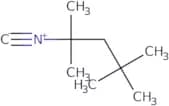
CAS:<p>Sphingolipid; cell membrane component; anti-inflammatory agent</p>Formula:C18H39NO3Purity:Min. 97 Area-%Color and Shape:White PowderMolecular weight:317.51 g/mol1,1,3,3-Tetramethylbutyl isocyanide
CAS:<p>1,1,3,3-Tetramethylbutyl isocyanide (TMBC) is a palladium complex that has been used in palladium-catalyzed coupling reactions. TMBC is also a ligand for the synthesis of β-amino acid and can be used to form hydrogen bonds with nucleophiles. It has been used in biological studies as well as clinical diagnostics. The solid-phase synthesis of TMBC has been shown to be an efficient method for producing this compound. In addition, TMBC shows stereoselective reactivity with amines and methoxy groups. The nmr spectra of TMBC are characteristic of a carbonyl group at δ 3.20 ppm and two methyl groups at δ 1.36 and 1.37 ppm respectively.</p>Formula:C9H17NPurity:Min. 98%Color and Shape:Clear LiquidMolecular weight:139.24 g/mol4-Toluenesulfonyl chloride
CAS:<p>4-Toluenesulfonyl chloride is a tosylate that reacts with amines and n-oxide groups to form sulfonamides. It is used as an antimicrobial agent and as an irreversible enzyme inhibitor. 4-Toluenesulfonyl chloride inhibits enzymes in the bowel, which may be due to its ability to form a disulfide bond with cysteine residues. This compound has been shown to have anti-cancer properties in vitro, where it inhibited the growth of carcinoma cells by inhibiting DNA synthesis. 4-Toluenesulfonyl chloride also has inhibitory properties against nitrogen atoms, which are found in the active site of many enzymes.</p>Formula:C7H7ClO2SPurity:Min. 95%Color and Shape:White Clear LiquidMolecular weight:190.65 g/mol4-Acetamidothiophenol
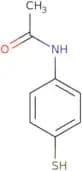
CAS:<p>4-Acetamidothiophenol (4AAT) is an organic compound that has been used in the treatment of inflammatory bowel disease. It has a chemical structure that resembles 5-hydroxytryptamine (5-HT), which is a neurotransmitter and hormone involved in regulating mood and appetite. 4AAT is also used as a reagent in the treatment of wastewater, where it reacts with sulfide to form thiosulfate. In acidic environments, 4AAT undergoes chemical ligation reactions to form covalent bonds with other molecules. Surface-enhanced Raman spectroscopy was used to study the adsorption mechanism of 4AAT on polystyrene particles. This technique revealed that 4AAT binds to the surface of polystyrene particles through hydrophobic interactions and hydrogen bonding with functional groups on the particle surface. The inhibition study showed that 4AAT inhibits 5-hydroxytryptamine receptors.br></p>Formula:C8H9NOSPurity:Min. 95%Color and Shape:PowderMolecular weight:167.23 g/mol3-(Trifluoromethyl)phenylacetone
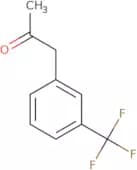
CAS:<p>3-(Trifluoromethyl)phenylacetone is a chiral iminium-type organocatalyst that is used in asymmetric organic reactions. This compound has been shown to be effective for the synthesis of chiral amines and hydroxyl groups, as well as biotransformations. 3-(Trifluoromethyl)phenylacetone binds to substrates through hydrogen bonding, steric interactions, and electrostatic interactions. It also has a high affinity for hydroxides and isosteres. 3-(Trifluoromethyl)phenylacetone can be used as an alternative to L-proline in certain biotransformations because it binds more tightly to the enzyme than L-proline does.</p>Formula:C10H9F3OPurity:Min. 95%Color and Shape:Clear LiquidMolecular weight:202.17 g/mol2-Thiohydantoin
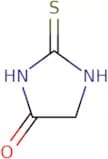
CAS:<p>2-Thiohydantoin is an organic compound that has been structurally characterized. The molecule is planar with a shape that can be described as a chair with both arms. It has been shown to have some interesting biological properties, including the ability to inhibit bowel disease and cancerous growths. 2-Thiohydantoin was also found to be an effective inhibitor of the mitochondrial membrane potential in rats and mice, suggesting it may work by inhibiting mitochondria. 2-Thiohydantoin has also been shown to increase the formation of hydrogen fluoride and other reactive oxygen species, which may contribute to its anti-bacterial activity.</p>Formula:C3H4N2OSPurity:(%) Min. 98%Color and Shape:PowderMolecular weight:116.14 g/molMethyl 4-aminobenzoate
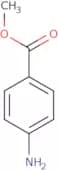
CAS:<p>Methyl 4-aminobenzoate is a chemical compound that is used as a fluorescence probe in the study of DNA replication. It can be used to detect the presence of viral RNA in cell culture, and has been shown to inhibit the replication of bacterial RNA. Methyl 4-aminobenzoate binds to guanine residues in DNA and forms an alkyl bond with them. This prevents the binding of other amino acids, which are essential for DNA replication. Methyl 4-aminobenzoate has also been shown to have pharmacokinetic properties that make it useful for intravenous administration and oral administration.</p>Formula:C8H9NO2Purity:Min. 97.5 Area-%Color and Shape:White PowderMolecular weight:151.16 g/molα-Me-D-Leu-OH
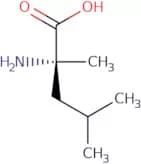
CAS:<p>a-Me-D-Leu-OH is a versatile building block that is used as a reagent in the synthesis of complex compounds, research chemicals, and speciality chemicals. It is also a useful scaffold for drug design. This chemical is also widely used as an intermediate in organic syntheses.</p>Formula:C7H15NO2Purity:Min. 95%Color and Shape:PowderMolecular weight:145.2 g/mol