Building Blocks
This section contains fundamental products for the synthesis of organic and biological compounds. Building blocks are the essential starting materials used to construct complex molecules through various chemical reactions. They play a critical role in drug discovery, material science, and chemical research. At CymitQuimica, we offer a diverse range of high-quality building blocks to support your innovative research and industrial projects, ensuring you have the essential components for successful synthesis.
Subcategories of "Building Blocks"
- Boronic Acids & Boronic Acid Derivatives(5,756 products)
- Chiral Building Blocks(1,242 products)
- Hydrocarbon Building Blocks(6,095 products)
- Organic Building Blocks(61,038 products)
Found 196817 products of "Building Blocks"
Sort by
Purity (%)
0
100
|
0
|
50
|
90
|
95
|
100
2-Chloro-4-methoxybenzoic acid
CAS:<p>2-Chloro-4-methoxybenzoic acid is a model compound for the screening of acridones, which are a class of compounds with anticancer activity. 2-Chloro-4-methoxybenzoic acid has been shown to inhibit potassium t-butoxide efflux in cancer cells and induce multidrug resistance in cancer cells. Furthermore, it has been shown that 2-Chloro-4-methoxybenzoic acid inhibits mitoxantrone efflux in cancer cells, leading to an increase in mitoxantrone cytotoxicity. This compound is also able to induce a phenotype change from cancerous to normal and can be used as a chemotherapeutic agent against cancers.</p>Formula:C8H7ClO3Purity:Min. 95%Color and Shape:PowderMolecular weight:186.59 g/mol2-Chloro-4-methylsulfonylbenzoic acid
CAS:<p>2-Chloro-4-methylsulfonylbenzoic acid is a chlorinating agent that can be used to produce triketones from ketones. It is usually used as a hydrogen peroxide scavenger and a chlorinating agent in the food industry. 2-Chloro-4-methylsulfonylbenzoic acid can also be used to produce glyphosate, phosphoric acid solution, and chloride. The chlorinating property of this compound is due to its ability to form hypochlorous acid when it reacts with water. This reaction produces hypochlorite ions that are active against microorganisms by disrupting the cell membrane. 2-Chloro-4-methylsulfonylbenzoic acid can react with organic solvents such as carbon tetrachloride and optimizes the introduction of chlorine into organic compounds.</p>Formula:C8H7ClO4SPurity:Min. 95%Color and Shape:White PowderMolecular weight:234.66 g/molCyclic-3-(1,2-ethanediylacetal)-17β-cyano-17α-hydroxy-estra-5(10),9(11)-dien-3-one
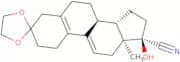
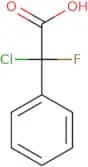
CAS:<p>Cyclic-3-(1,2-ethanediylacetal)-17beta-cyano-17alpha-hydroxy-estra-5(10),9(11)-dien-3 -one is a chemical compound that is used as a reaction component, reagent, and high quality research chemical. It can be used as a useful scaffold or building block for the synthesis of complex compounds. Cyclic-3-(1,2-ethanediylacetal)-17beta-cyano-17alpha -hydroxyestra-5(10),9(11)-diene 3 one has CAS number 3330019 5.</p>Formula:C21H27NO3Purity:Min. 95%Color and Shape:White to off-white solid.Molecular weight:341.44 g/mol2-Chloro-2-fluoro-2-phenylacetic acid
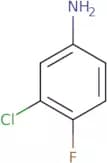
CAS:<p>Versatile small molecule scaffold</p>Formula:C8H6ClFO2Purity:90%MinColor and Shape:PowderMolecular weight:188.58 g/mol3-Chloro-4-fluoroaniline
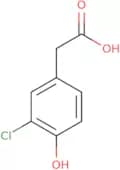
CAS:<p>3-Chloro-4-fluoroaniline is an amine that is used as a chemical intermediate and an antimicrobial agent. It is a potent inhibitor of the enzyme IDO1. 3-Chloro-4-fluoroaniline has been shown to inhibit the growth of carcinoma cell lines and epidermal growth factor in vitro, which may be due to its ability to inhibit the production of protein data. This drug also inhibits the production of the growth factor n-dimethyl formamide by hydrolyzing it into dimethylamine and formic acid, which are then excreted in urine samples. 3-Chloro-4-fluoroaniline has been found to be highly effective at inhibiting IDO1, as well as other enzymes such as tryptophan 2,3 dioxygenase (TDO2) and indoleamine 2,3 dioxygenase (IDO).</p>Formula:C6H5ClFNPurity:Min. 95%Color and Shape:Clear Liquid Solidified MassMolecular weight:145.56 g/mol3-Chloro-4-hydroxyphenylacetic acid.
CAS:<p>3-Chloro-4-hydroxyphenylacetic acid is an organic compound that has a chemical structure that includes a phenyl group substituted with a chlorine atom. 3-Chloro-4-hydroxyphenylacetic acid is an intermediate in the synthesis of many drugs, and it is used to make the monosodium salt, which is a common form of this drug. 3-Chloro-4-hydroxyphenylacetic acid is one of the chemicals that has been shown to have physiological effects on humans and other animals. The most notable effect for humans is that it can be converted into cancerous cells by radiation. In addition, 3-chloro-4-hydroxyphenylacetic acid has been shown to have chemotherapeutic properties against prostate cancer cells and infectious diseases such as HIV and herpes simplex virus type 1 (HSV1). This chemical also exhibits immunomodulatory properties when administered system</p>Formula:C8H7ClO3Purity:Min. 98%Color and Shape:PowderMolecular weight:186.59 g/molL-Valinol
CAS:<p>L-Valinol is a model system that is used to study the reaction of aziridines with oxygen nucleophiles. It has been shown that this reaction proceeds through the formation of an intermediate, hydrogen tartrate, followed by a second step with nitrogen atoms as the nucleophile and alcohol residue as the substrate. The use of L-valinol in asymmetric synthesis was also demonstrated. In this process, amides were obtained with high enantioselectivity by reacting L-valinol with amines in acidic conditions. This synthetic pathway was found to be synergic with other reactions, such as nitroolefination and benzoylation.</p>Formula:C5H13NOPurity:Min. 95%Color and Shape:Solidified MassMolecular weight:103.16 g/mol4-Chloropyrimidine
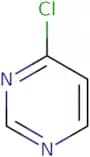
CAS:<p>4-Chloropyrimidine is a nucleophilic compound that is synthesized by the reaction of acetone with hydrogen chloride. The proton NMR spectrum of 4-chloropyrimidine has been determined and it has been shown to be active against herpes simplex virus in clinical studies. The synthesis of this compound is accomplished using a flow system. It can be prepared from trifluoroacetic acid and carbon disulphide or from sodium hydroxide and amines. The structure of 4-chloropyrimidine was determined by X-ray crystallography. It reacts with organic compounds to form new compounds, such as fluorine, which are often toxic to humans or animals.</p>Formula:C4H3ClN2Purity:90%MinColor and Shape:Off-White PowderMolecular weight:114.53 g/mol2-Chloro-1,1,1-trimethoxyethane
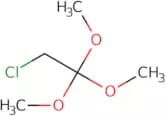
CAS:<p>2-Chloro-1,1,1-trimethoxyethane is a reagent that is used in the synthesis of recombinant proteins. It is also used to produce monoclonal antibodies. Fatty acids can be analyzed by using these reagents as they are soluble in this solvent. The structural analysis of fatty acids has been shown to have anticancer activity. 2-Chloro-1,1,1-trimethoxyethane reacts with glycosyl residues on lysine residues in proteins and produces an acid that causes the protein to unfold and denature. This reaction has been shown to have anticancer activity against cervical cancer cells in human liver cells.</p>Formula:C5H11ClO3Purity:Min. 97.5%Color and Shape:Colorless Clear LiquidMolecular weight:154.59 g/mol4-[(1E)-2-(3-Hydroxyphenyl)ethenyl]phenol
CAS:<p>4-[(1E)-2-(3-Hydroxyphenyl)ethenyl]phenol is a metabolite of estrone sulfate. It is a potent estrogen that can be used in the treatment of prostate cancer, to inhibit the growth of cancer cells. 4-[(1E)-2-(3-Hydroxyphenyl)ethenyl]phenol has been shown to have antiestrogenic activity in breast cancer cell lines and to inhibit the formation of estrogen analogs in vitro. 4-[(1E)-2-(3-Hydroxyphenyl)ethenyl]phenol has been used as an estrogen receptor ligand in transfection experiments with human breast cancer cells, resulting in inhibition of target gene expression. The molecule also inhibits DNA polymerase activity and is believed to form carcinogenic nitrosamines and diazonium ions when subjected to nitrite and hydrogen peroxide. This molecule also exhibits weak antioxidant activity, which may be</p>Formula:C14H12O2Purity:Min. 95%Color and Shape:PowderMolecular weight:212.24 g/mol6-Chloro-7-iodo-7-deazapurine
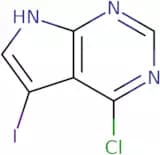
CAS:<p>6-Chloro-7-iodo-7-deazapurine is a nucleoside analogue that is synthesized by a cross-coupling reaction between 6-chloro-2,4(1H,3H)-pyrimidinedione and 7-iodo-7-(trifluoromethyl)purine. 6CIDP has been shown to inhibit growth of epidermal cells at concentrations as low as 0.1 µM, with cytostatic effects seen at 10 µM. 6CIDP has also been shown to potently inhibit the replication of the human papilloma virus in vitro and in vivo. 6CIDP is currently being investigated for the treatment of AIDS and other viral infections. The molecular modeling studies on this compound have revealed that it may be a potent inhibitor of the epidermal growth factor receptor (EGFR).</p>Formula:C6H3ClIN3Purity:Min. 98 Area-%Color and Shape:White PowderMolecular weight:279.47 g/molCyclopentylmethanol
CAS:<p>Cyclopentylmethanol is a chemical compound with the molecular formula CH3OH. It is a colorless liquid that is soluble in water and has a distinctive, sweet odor. Cyclopentylmethanol is used as an intermediate in organic synthesis and as a solvent for nitrocellulose, cellulose acetate, cellulose nitrate, and similar materials. It reacts with chlorine at high temperatures to form chlorinated cyclopentylmethanols. This reaction can be used to synthesize hydroxyapatite (a mineral) from calcium phosphate (a mineral). Cyclopentylmethanol also reacts with nicotinic acetylcholine receptors in the brain, causing them to desensitize. Hydroxyapatite can also be synthesized by reacting cyclopentylmethanol with dinucleotide phosphate and hydroxyl group containing compounds such as esters or soluble guanylate cyclase enzymes. The reactions produce hydrogen</p>Formula:C6H12OPurity:Min. 95%Color and Shape:Clear Colourless LiquidMolecular weight:100.16 g/molCyclamic acid
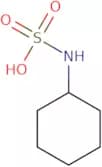
CAS:<p>Artificial sweetener</p>Formula:C6H13NO3SColor and Shape:PowderMolecular weight:179.24 g/mol1-Cyanoimidazole
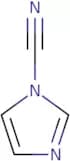
CAS:<p>1-Cyanoimidazole is a phosphodiester that is used in the chemical ligation of nucleic acids. It reacts with terminal alkynes to form covalent linkages between DNA molecules, and can be used as a crosslinker for dna duplexes. 1-Cyanoimidazole can be used as a phosphate group replacement in DNA replication. This compound has been shown to react with terminal alkyne groups on DNA templates, forming stable covalent linkages between strands in the presence of an appropriate nucleophile. 1-Cyanoimidazole has been shown to have sequence specificity and efficient method for linking strands of DNA.</p>Formula:C4H3N3Purity:Min. 95%Color and Shape:Off-White PowderMolecular weight:93.09 g/mol4-Chloroindole-3-acetic acid
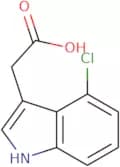
CAS:<p>4-Chloroindole-3-acetic acid is a plant hormone that belongs to the group of auxins. It has been shown to stimulate root formation in plants by increasing the amount of auxin present in the plant's tissues. 4-Chloroindole-3-acetic acid is an intramolecular hydrogen donor and can form hydrogen bonds with other molecules. It also has a receptor binding site and cyclic peptide backbone, which allow it to act as a transcription factor or enzyme inhibitor. This molecule has been shown to be an optimum concentration for root formation in physiology experiments, and can be used as a model system for auxin research.</p>Formula:C10H8ClNO2Purity:Min. 95%Color and Shape:Off-White PowderMolecular weight:209.63 g/mol2-Chloro-4-nitroimidazole
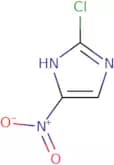
CAS:<p>Radiosensitiser in hypoxic tumours</p>Formula:C3H2ClN3O2Purity:Min. 95%Color and Shape:PowderMolecular weight:147.52 g/mol4-Vinylpyridine, stabilized with 100ppm Hydroquinone
CAS:<p>4-Vinylpyridine, stabilized with 100ppm Hydroquinone is a chemical compound that belongs to the class of pyridines. It has been shown to be stable in aqueous solution and to have a high water permeability. The reaction mechanism is not known, but it is thought that the quaternization of the vinyl group may be involved. 4-Vinylpyridine has been used as a component for the synthesis of polymers and can also be used in palladium-catalyzed coupling reactions.</p>Formula:C7H7NPurity:Min. 97 Area-%Color and Shape:Colorless Clear LiquidMolecular weight:105.14 g/molSuccinimidyl 3-(bromoacetamido)propionate
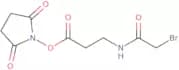
CAS:<p>Succinimidyl 3-(bromoacetamido)propionate (SBAP) is a reactive chemical that can be used to synthesize a variety of polymers. SBAP is used in the treatment of inflammatory bowel disease, where it acts as an immunosuppressant by suppressing antibody response to the bowel. SBAP has also been shown to increase collagen production and glycoconjugates, which are compounds found on the surface of cells that act as receptors for many types of bacteria and viruses. The polymerase chain reaction (PCR), which is used in DNA analysis, uses SBAP as a way to separate DNA fragments. For this reason, SBAP is often found in wastewater treatment plants. It has been shown that exposure to SBAP can cause infectious diseases in humans, such as tuberculosis and leprosy. This compound has also been studied for its effects on growth factor-β1 and body mass index, which may help with autoimmune diseases such as multiple</p>Formula:C9H11N2O5BrPurity:Min. 98 Area-%Color and Shape:White PowderMolecular weight:307.1 g/molL-Serine tert-butyl ester hydrochloride
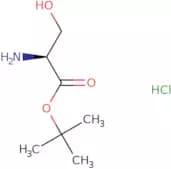
CAS:<p>L-Serine tert-butyl ester hydrochloride is a conditionally catalytic reagent that is used to synthesize aromatic compounds. It is an effective catalyst for toluene hydroxylation, and can be used in the synthesis of L-serine from serine. The tert-butyl group on the molecule prevents side reactions by sterically hindering other molecules from reacting with the reagent.</p>Formula:C7H15O3N·HClPurity:Area-% Min. 95 Area-%Color and Shape:White PowderMolecular weight:197.66 g/mol8-Chloro-1-octanol
CAS:<p>8-Chloro-1-octanol is an organic compound with a hydroxyl group at the 8th position of the octane ring. It has been shown to inhibit bacterial growth in vitro by binding to fatty acid biosynthesis enzymes and preventing the formation of fatty acids, which are vital for bacterial cell wall synthesis. The 8-chloro-1-octanol also inhibits the population growth of bacteria in corneal epithelium, leading to reduced biofilm formation. This compound has been shown to have regulatory effects on microbial populations. 8-Chloro-1-octanol is currently under study for its potential use as a topical antibacterial agent for treating corneal infections.</p>Formula:C8H17ClOPurity:Min. 95%Color and Shape:Colorless Clear LiquidMolecular weight:164.67 g/mol



![4-[(1E)-2-(3-Hydroxyphenyl)ethenyl]phenol](/_next/image/?url=https%3A%2Fstatic.cymitquimica.com%2Fproducts%2F3D%2Fthumb-webp%2FNCA87776.webp&w=3840&q=75)