Building Blocks
This section contains fundamental products for the synthesis of organic and biological compounds. Building blocks are the essential starting materials used to construct complex molecules through various chemical reactions. They play a critical role in drug discovery, material science, and chemical research. At CymitQuimica, we offer a diverse range of high-quality building blocks to support your innovative research and industrial projects, ensuring you have the essential components for successful synthesis.
Subcategories of "Building Blocks"
- Boronic Acids & Boronic Acid Derivatives(5,756 products)
- Chiral Building Blocks(1,242 products)
- Hydrocarbon Building Blocks(6,095 products)
- Organic Building Blocks(61,037 products)
Found 196200 products of "Building Blocks"
Sort by
Purity (%)
0
100
|
0
|
50
|
90
|
95
|
100
Indole-3-acetyl-DL-tryptophan
CAS:<p>Indole-3-acetyl-DL-tryptophan is a useful intermediate for the synthesis of various biologically active compounds. It is a white solid that can be synthesized from indole and tryptophan using acetic acid as a catalyst. Indole-3-acetyl-DL-tryptophan has been used in the synthesis of several complex compounds, such as β-(N) indolyloxypropanal, which is a fine chemical with potential use in the production of polyurethane foam. This compound has also been found to be an effective building block for the synthesis of novel scaffolds, such as 2-(1H-indol-2-yl)-N-(2H-[1,2,4]triazol-3-yl)ethanamine. Indole 3 acetyl DL tryptophan has also been shown to be an excellent intermediate in the synthesis of other heterocycles, such as pyrazolo</p>Formula:C21H19N3O3Molecular weight:361.4 g/molRef: 3D-I-1700
1gTo inquire5gTo inquire10gTo inquire500mgTo inquire2500mgTo inquire-Unit-ggTo inquireIndole-3-acetic acid
CAS:<p>Plant growth hormone. Regulates cell membrane electron transport and proton flux, plays important roles in a number of plant activities, including: development of the embryo, leafformation, phototropism, gravitropism, apical dominance, fruit development, abscission, root initiation.</p>Formula:C10H9NO2Purity:Min. 99 Area-%Molecular weight:175.19 g/mol[3-(Morpholinomethyl)phenyl]methylamine
CAS:<p>3-(Morpholinomethyl)phenyl]methylamine (3-MP) is a modified form of the drug 3-morpholinoaniline. It is an organic compound that has been used as a stabilizer in polyolefins, such as polyethylene, to prevent degradation by heat and light. 3-MP is also used to modify copolymers of polypropylene and polyethylene. This modification prevents the copolymer from being degraded by heat, light, or oxygen. The polymerization reaction creates a cross-linked structure that protects the copolymer from degradation.</p>Formula:C12H18N2OPurity:Min. 95%Color and Shape:Clear LiquidMolecular weight:206.29 g/mol3,4-Dibenzyloxybenzaldehyde
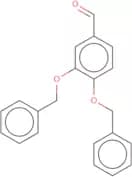
CAS:<p>3,4-Dibenzyloxybenzaldehyde is a chemical compound with the formula ClCH=C(O)CHO. This compound is an intermediate in the synthesis of the cancer drug daunorubicin. 3,4-Dibenzyloxybenzaldehyde has been shown to induce apoptosis in human ovary cells and has been detected in urine samples from patients undergoing chemotherapy for ovarian cancer. 3,4-Dibenzyloxybenzaldehyde also inhibits the production of flavonoids and has been shown to inhibit rat striatal membranes and rat atria.</p>Formula:C21H18O3Purity:Min. 95%Color and Shape:PowderMolecular weight:318.37 g/mol(S)-3-Amino-3-phenylpropionic acid
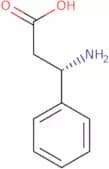
CAS:<p>3-Amino-3-phenylpropionic acid is a β-amino acid that is used in the industrial production of acrylate esters. The acylation reaction of the carboxylic acid group with an alcohol, usually naphthalene or phenol, yields an ester hydrochloride. This is then hydrolyzed to the corresponding amide, which can be further reacted to produce a variety of other compounds. 3-Amino-3-phenylpropionic acid has pharmacokinetic properties that are similar to those of glycine and alanine, but it does not undergo transamination. It also has a very high chloride content and is often used as a reagent for the synthesis of organic chloride salts.</p>Formula:C9H11NO2Purity:Min. 95%Color and Shape:White PowderMolecular weight:165.19 g/molN,N-Diethylpyrrolidine-2-carboxamide
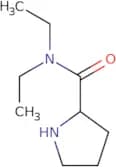
CAS:<p>Versatile small molecule scaffold</p>Formula:C9H18N2OPurity:Min. 90%Color and Shape:PowderMolecular weight:170.25 g/molBis(p-sulfonatophenyl)phenylphosphine dihydrate dipotassium
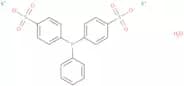
CAS:<p>A common water soluble substitute for triphenylphosphine in palladium coupling reactions</p>Formula:C18H15O6PS2•K2•(H2O)2Purity:Min. 95%Color and Shape:PowderMolecular weight:536.64 g/mol4-Bromo-1-butene
CAS:<p>4-Bromo-1-butene is a useful building block, reaction component, and useful scaffold that can be used in the synthesis of various chemical compounds. This compound is a high quality, complex compound with versatile building blocks that can be used as a reagent in research or as a speciality chemical. 4-Bromo-1-butene has been found to have many uses in the production of other chemicals such as pharmaceuticals, pesticides, and cosmetics.</p>Formula:C3H8INMolecular weight:185.01 g/mol(2E)-Dimethylbut-2-enedioic acid
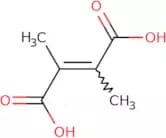
CAS:<p>Dimethylbutanedioic acid is a fatty acid that is found in the human body. Dimethylbutanedioic acid has been shown to have immunomodulatory effects, which are mediated by its ability to inhibit the synthesis of proinflammatory cytokines, such as tumor necrosis factor-α and interleukin-6. Dimethylbutanedioic acid is a potent inhibitor of the proliferation of various types of cells, including hyperproliferative cells. It has been shown to inhibit the diameter of these cells and reduce their number. This agent also inhibits allergic reactions and inorganic particles from reaching the lungs.</p>Formula:C6H8O4Purity:Min. 95%Molecular weight:144.12 g/mol5-(piperazine-1-sulfonyl)isoquinoline dihydrochloride
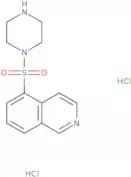
CAS:<p>5-(piperazine-1-sulfonyl)isoquinoline dihydrochloride is an antiviral drug that inhibits the assembly of viral filaments. It is a potent inhibitor of herpes simplex virus type 1 (HSV-1) and HSV-2 in vitro. 5-(piperazine-1-sulfonyl)isoquinoline dihydrochloride has been shown to inhibit the replication of human cytomegalovirus (HCMV) in cell culture. This compound also inhibits the secretion of pertussis toxin, which is necessary for the virulence of Bordetella pertussis. 5-(piperazine-1-sulfonyl)isoquinoline dihydrochloride has been shown to have no effect on noninfected cells, suggesting it may be useful as a therapeutic agent against viruses that infect only specific types of cells.</p>Formula:C13H17Cl2N3O2SPurity:Min. 95%Color and Shape:PowderMolecular weight:350.3 g/mol4-Methoxybenzenediazonium tetrafluoroborate
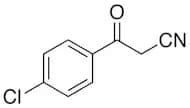
CAS:<p>4-Methoxybenzenediazonium tetrafluoroborate is a reactive chemical that is used as a component of a number of reagents, including those used in organic chemistry. This compound has been used as an intermediate for the synthesis of other chemicals, such as 4-methoxybenzenediazonium chloride and 4-methoxybenzenediazonium bromide. 4-Methoxybenzenediazonium tetrafluoroborate is also an excellent building block for complex compounds and fine chemicals. The CAS No. for this chemical is 459-64-3.</p>Formula:C6H16N2Molecular weight:116.2 g/mol4-Chlorobenzoylacetonitrile
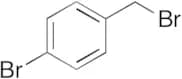
CAS:Controlled ProductFormula:C9H6ClNOColor and Shape:NeatMolecular weight:179.604-Bromobenzyl Bromide
CAS:Controlled ProductFormula:C22H28O4Color and Shape:NeatMolecular weight:356.4555-Bromophthalide
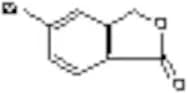
CAS:Controlled Product<p>Applications A useful synthetic intermediate. It is used as a reactant in synthetic preparation of chiral 2-carboxy cyclic ethers.<br>References Zhu, S., et al.: J. Am. Chem. Soc., 132, 16374 (2010);<br></p>Formula:C8H5BrO2Color and Shape:NeatMolecular weight:213.03Isopropyl Acetoacetate
CAS:Controlled Product<p>Applications Isopropyl Acetoacetate (cas# 542-08-5) is a compound useful in organic synthesis.<br></p>Formula:C7H12O3Color and Shape:NeatMolecular weight:144.174-Chloro-2-oxo-2H-chromene-3-carbaldehyde
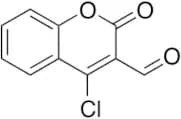
CAS:Controlled Product<p>Applications 4-Chloro-2-oxo-2H-chromene-3-carbaldehyde (cas# 50329-91-4) is a useful research chemical.<br></p>Formula:C10H5O3ClColor and Shape:NeatMolecular weight:208.59trans-Cinnamoyl Chloride
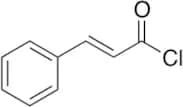
CAS:Controlled Product<p>Applications trans-Cinnamoyl chloride (cas# 102-92-1) is a useful research chemical.<br></p>Formula:C9H7ClOColor and Shape:NeatMolecular weight:166.63-Methoxypropionitrile
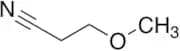
CAS:Controlled Product<p>Applications 3-Methoxypropionitrile (cas# 110-67-8) is a useful research chemical.<br></p>Formula:C4H7NOColor and Shape:NeatMolecular weight:85.12-Formylphenylboronic Acid
CAS:Controlled Product<p>Applications 2-Formylphenylboronic acid (cas# 40138-16-7) is a useful research chemical.<br></p>Formula:C7H7BO3Color and Shape:NeatMolecular weight:149.944-Bromophenylacetic Acid
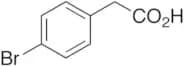
CAS:Controlled Product<p>Applications 4-Bromophenylacetic Acid (cas# 1878-68-8) is a compound useful in organic synthesis.<br></p>Formula:C8H7BrO2Color and Shape:NeatMolecular weight:215.04


![[3-(Morpholinomethyl)phenyl]methylamine](/_next/image/?url=https%3A%2Fstatic.cymitquimica.com%2Fproducts%2F3D%2Fthumb-webp%2FRDA27183.webp&w=3840&q=75)