Building Blocks
This section contains fundamental products for the synthesis of organic and biological compounds. Building blocks are the essential starting materials used to construct complex molecules through various chemical reactions. They play a critical role in drug discovery, material science, and chemical research. At CymitQuimica, we offer a diverse range of high-quality building blocks to support your innovative research and industrial projects, ensuring you have the essential components for successful synthesis.
Subcategories of "Building Blocks"
- Boronic Acids & Boronic Acid Derivatives(5,756 products)
- Chiral Building Blocks(1,242 products)
- Hydrocarbon Building Blocks(6,095 products)
- Organic Building Blocks(61,038 products)
Found 196817 products of "Building Blocks"
Sort by
Purity (%)
0
100
|
0
|
50
|
90
|
95
|
100
2-Amino-4,6-dichloropyrimidine
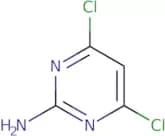
CAS:<p>2-Amino-4,6-dichloropyrimidine is a chemical compound that can be used as an intermediate in the synthesis of other compounds. It is usually prepared by chlorinating 2-amino-pyrimidine with sodium hypochlorite. 2-Amino-4,6-dichloropyrimidine has been shown to inhibit the growth of herpes simplex virus and influenza virus when it is added to cell cultures. This compound also inhibits the replication of protonated nucleic acids by reacting with the amide group of nucleophilic amino acids in DNA or RNA. The reaction between 2-amino-4,6-dichloropyrimidine and amines gives pyridinium salts, which are useful intermediates in organic chemistry reactions.</p>Formula:C4H3Cl2N3Purity:90%Color and Shape:Off-White PowderMolecular weight:163.99 g/mol1-Amino-1-cyclopropanecarboxylic acid
CAS:<p>1-Amino-1-cyclopropanecarboxylic acid (ACC) is a precursor of ethylene, which is a plant hormone that regulates many aspects of plant growth and development. ACC can be converted to ethylene by the enzyme ACC synthase. The conversion of ACC to ethylene is facilitated by the enzymes ACC oxidase and ACC deaminase. Ethylene has been shown to regulate the expression of genes involved in photosynthesis, protein synthesis, and other metabolic pathways. Ethylene also modulates physiological processes such as fruit ripening, leaf senescence, and stomatal closure. This molecule participates in a variety of biological reactions including receptor activity and protein degradation via ubiquitin ligases. It also regulates calcium levels in cells through its role in signal transduction pathways.</p>Formula:C4H7NO2Purity:Min. 95%Color and Shape:PowderMolecular weight:101.1 g/molN-Acetylglycine
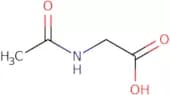
CAS:<p>N-Acetylglycine is an amide, which is a molecule with both a carboxylate and hydroxyl group. It belongs to the class of antimicrobial agents and has been shown to inhibit the growth of bacteria by inhibiting synthesis of folic acid and other metabolites. N-Acetylglycine also inhibits the formation of terminal residues from amino acids. The analytical method for this compound is based on the reaction between n-acetylglycine and hydrogen chloride in methanol. This produces picolinic acid, which can be detected using ultraviolet spectroscopy at a wavelength of 325 nm.</p>Formula:C4H7NO3Purity:Min. 95%Color and Shape:White PowderMolecular weight:117.1 g/molN-Acetyl-L-alanine
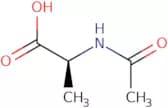
CAS:<p>N-Acetyl-L-alanine is the N-acetylated form of L-alanine and is a nonessential amino acid. It is an amide containing one nitrogen atom and two carbonyl groups. The nitrogen can be found in either the alpha or beta position on the amide. The biological properties of N-acetyl-L-alanine are similar to those of L-alanine, as it is used as a substrate for protein synthesis and has been shown to inhibit p21 and epidermal growth factor. The conformational properties of N-acetyl-L-alanine are different from that of L-alanine due to its changed shape, which may affect its biological activity.</p>Formula:C5H9NO3Purity:Min. 95%Color and Shape:White PowderMolecular weight:131.13 g/mol4-Aminomethylbenzoic acid
CAS:<p>4-Aminomethylbenzoic acid (4AMBA) is a metabolite that is formed from the amino acid methionine. It has been shown to inhibit the growth of prostate cancer cells in vitro and in vivo. 4-Aminomethylbenzoic acid inhibits the activity of polymerase chain reaction (PCR), which is an enzyme that catalyzes DNA replication. The hydroxyl group on 4-aminomethylbenzoic acid reacts with one of the phosphate groups on DNA, forming a covalent bond and inhibiting DNA synthesis. This inhibition occurs at the step called initiation, where DNA synthesis begins by binding of RNA polymerase to a specific sequence of DNA. In addition, 4-aminomethylbenzoic acid also inhibits the activity of x-ray diffraction data, which is an enzyme that catalyzes RNA transcription. Histological analysis shows that 4-aminomethylbenzoic acid causes congestive heart</p>Formula:C8H9NO2Purity:Min. 98 Area-%Color and Shape:White PowderMolecular weight:151.16 g/mol2-(Azidomethyl)pyridine
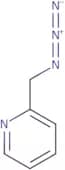
CAS:<p>2-(Azidomethyl)pyridine (2-AP) is an organopalladium complex with a molecular weight of 206.2 g/mol. It has been used in magnetic resonance spectroscopy and has been shown to bind to all-trans retinoic acid, which is an active metabolite of vitamin A. 2-AP has also been shown to inhibit the growth of cancer cells by binding to the glycan on cell surfaces. The copper complex has been shown to have anti-inflammatory properties and can inhibit the activity of enzymes such as cyclooxygenase and lipoxygenase, which are involved in inflammatory responses. 2-AP is a second-order rate constant for the exothermic reaction between hydrogen peroxide and azide ion, which produces nitrous oxide ((NO)) and water molecules.</p>Formula:C6H6N4Purity:Min. 95%Color and Shape:Brown PowderMolecular weight:134.14 g/mol2-[(1-Carboxyethyl)amino]propanoic acid
CAS:<p>2-[(1-Carboxyethyl)amino]propanoic acid (CEPA) is a cell lysing agent that can be used to kill bacteria, fungi, and viruses. CEPA has antimicrobial activity against Gram-positive and Gram-negative bacteria, including MRSA, VRE, and Candida. CEPA has been shown to have chronic pulmonary effects in mice by inhibiting the growth of lung tissue cells. It also inhibits the growth of metastable tumor cells in mice. CEPA binds to the peptidoglycan layer of bacterial cell walls and causes cell lysis by disrupting hydrogen bonding interactions between water molecules and CEPA's carboxyl group. CEPA is a member of group P2 in the CID database with a chemical stability in water vapor greater than 90%. CEPA is soluble in metoprolol succinate at pH 5-6 but insoluble at pH 8 or higher due to the formation of hydrogen tartrate crystals.</p>Formula:C6H11NO4Purity:Min. 95%Molecular weight:161.16 g/mol3-Amino-adamantane-1-carboxylic hydrochloride
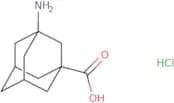
CAS:<p>3-Amino-adamantane-1-carboxylic hydrochloride is a versatile building block that can be used as a research chemical, reagent, speciality chemical, and useful scaffold in the synthesis of various complex compounds. It is a high quality intermediate and reaction component that can be used in the synthesis of fine chemicals. 3-Amino-adamantane-1-carboxylic hydrochloride has a variety of uses due to its versatility and can be used in the production of pharmaceuticals, agrochemicals, dyes, plastics, perfumes, pesticides, herbicides, explosives, and more.</p>Formula:C11H17NO2•HClPurity:Min. 95%Color and Shape:PowderMolecular weight:231.72 g/mol2-Amino-3-(furan-3-yl)propanoic acid hydrochloride
CAS:<p>Please enquire for more information about 2-Amino-3-(furan-3-yl)propanoic acid hydrochloride including the price, delivery time and more detailed product information at the technical inquiry form on this page</p>Formula:C7H9NO3•HClPurity:Min. 95%Color and Shape:PowderMolecular weight:191.61 g/mol4',6'-Dihydrospiro[cyclopropane-1,5'-pyrrolo[1,2-b]pyrazole]-2'-carboxylic acid
CAS:<p>4,6-Dihydrospiro[cyclopropane-1,5'-pyrrolo[1,2-b]pyrazole]-2'-carboxylic acid is a fine chemical that can be used as a versatile building block in the manufacture of complex compounds. CAS No. 2287271-02-5 is a high quality research chemical and reagent that can be used to synthesize speciality chemicals and useful intermediates. It is also an important reaction component in the synthesis of useful scaffolds.</p>Formula:C9H10N2O2Purity:Min. 95%Color and Shape:PowderMolecular weight:178.19 g/molVioluric acid
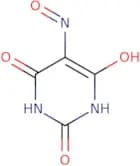
CAS:<p>Violuric acid is a chemical compound that is used in biological treatment. It has a hydroxyl group and UV absorption, which makes it reactive. Violuric acid undergoes protonation and deprotonation to form an acid complex with water. The nitrogen atoms in violuric acid can react with the oxygen atoms of water molecules to form nitrous acid, which then reacts with hydrogen peroxide to form an oxidizing agent. Violuric acid is synthesized by chain reactions between organic acids and inorganic acids. Violuric acid has a redox potential of −0.35 volts, making it an excellent reducing agent for organic compounds. In organic chemistry, violuric acid is used as a reducing agent for esters or amides.</p>Formula:C4H3N3O4Purity:Min. 95%Color and Shape:PowderMolecular weight:157.08 g/mol2-Hydroxy-3-(4-methoxyphenyl)propanoic acid
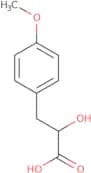
CAS:<p>2-Hydroxy-3-(4-methoxyphenyl)propanoic acid is a monocarboxylic acid that has been used in the synthesis of other compounds. It is an organic compound that is a colorless liquid with a fruity odor. 2-Hydroxy-3-(4-methoxyphenyl)propanoic acid is soluble in water, ethanol and ether. It is a weak acid with pKa values of 3.7 and 4.6. The chemical formula for this compound is C8H10O3P.</p>Formula:C10H12O4Purity:Min. 95%Molecular weight:196.2 g/molPiperitone
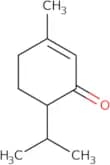
CAS:<p>Piperitone is a natural product that is isolated from the roots of Piper aduncum L. It has shown antimicrobial activity against Gram-positive and Gram-negative bacteria, fungi, and protozoa. The compound has been used as a broad-spectrum antimicrobial agent to treat infectious diseases such as malaria, leishmaniasis, and trypanosomiasis. Piperitone's mechanism of action is not well understood but it may be due to its ability to inhibit fatty acid synthesis or by inhibiting the biosynthesis of hepg2 in human erythrocytes.</p>Formula:C10H16OPurity:Min. 95%Color and Shape:Clear LiquidMolecular weight:152.23 g/mol5-Amino-4-bromo-2-fluorobenzoic acid hydrochloride
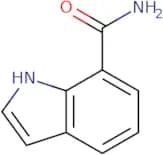
CAS:<p>Please enquire for more information about 5-Amino-4-bromo-2-fluorobenzoic acid hydrochloride including the price, delivery time and more detailed product information at the technical inquiry form on this page</p>Formula:C7H5BrFNO2•HClMolecular weight:270.48 g/mol1H-Indole-7-carboxamide
CAS:<p>Rauwolscine is a pharmacological agent that acts as an alpha-2 adrenergic receptor agonist. It is used to treat eye disease, such as glaucoma and iritis, and also has been used for the treatment of disorders of the urogenital system, such as prostatic hypertrophy. Rauwolscine is metabolized by oxidation at the nitrogen atom to form active metabolites with similar effects. This drug has been shown to be effective for the treatment of cancer, although it does not have any significant effect on muscle tissue. The major route of elimination for this drug is through urine and it may accumulate in tissues with renal disease.</p>Formula:C9H8N2OPurity:90%MinColor and Shape:PowderMolecular weight:160.18 g/mol1H-Indole-4-carboxamide
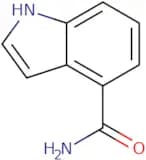
CAS:<p>1H-Indole-4-carboxamide is a hydrogen bond inhibitor that has anticancer activity. It inhibits the growth of cancer cells by interacting with alkoxycarbonyl groups and carboxyalkyl groups in proteins. In addition, it was found to have synergistic effects when combined with Jak2 inhibitors or diazepine derivatives. 1H-Indole-4-carboxamide has been shown to inhibit the tyrosine kinase activity of the JAK2 protein and inhibit cell proliferation in murine melanoma cells.</p>Formula:C9H8N2OPurity:Min. 95%Color and Shape:PowderMolecular weight:160.17 g/mol5-Amino-1-[2,6-dichloro-4-(trifluoromethyl)phenyl]-4-[(trifluoromethyl)sulfinyl]-1H-pyrazole-3-carbonitrile
CAS:<p>5-Amino-1-[2,6-dichloro-4-(trifluoromethyl)phenyl]-4-[(trifluoromethyl)sulfinyl]-1H-pyrazole-3-carbonitrile (TCFP), also known as CX-546, is a photosynthetic activity enhancer that inhibits oxidative injury to chloroplasts. TCFP is a pyrazole ring with a sulfinyl group and a chlorine atom. TCFP has been shown to have no genotoxic or carcinogenic potential in vitro and in vivo studies. TCFP is not active against infectious diseases. TCFP can be used as an analytical reagent for the detection of cytochrome P450 activities in human serum.</p>Formula:C12H4Cl2F6N4OSPurity:Min. 95%Color and Shape:PowderMolecular weight:437.15 g/mol4-(Acetylamino)phenetole
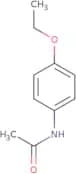
CAS:<p>4-(Acetylamino)phenetole is a drug that belongs to the class of nonsteroidal anti-inflammatory drugs. It is a reactive, toxic chemical that has been shown to inhibit ATP binding cassette transporter (ABC) proteins and can be used for treatment of pain. 4-(Acetylamino)phenetole inhibits cellular energy metabolism by inhibiting an enzyme in the electron transport chain, which prevents the formation of reactive oxygen species necessary for cell growth. 4-(Acetylamino)phenetole also binds to DNA and reduces the transcriptional activity of certain genes. This drug has been found to show cytotoxicity in solid tumours and can be used as a chemotherapeutic agent.</p>Formula:C10H13NO2Purity:Min. 95%Color and Shape:White PowderMolecular weight:179.22 g/mol4-Amino-3-methoxybenzoic acid
CAS:<p>4-Amino-3-methoxybenzoic acid is an inhibitor of the enzyme hydroxylase. It has been shown to inhibit cancer cell growth in nanomolar concentrations and may be a potential anti-cancer drug candidate. 4-Amino-3-methoxybenzoic acid inhibits the production of 3-methoxy-4-nitrobenzoic acid, which is an intermediate in the biosynthesis of cyclic peptides. This compound also has potent inhibitory activity against active enzymes involved in the biosynthesis of 3-methoxy-4-nitrobenzoic acid, such as hydroxylases, nitroreductases, and methyltransferases.</p>Formula:C8H9NO3Purity:Min. 95%Color and Shape:PowderMolecular weight:167.16 g/mol4-Acetamidobenzaldehyde
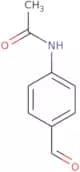
CAS:<p>4-Acetamidobenzaldehyde is an organic compound that has been shown to exhibit inhibitory effects on influenza virus replication in cell culture. 4-Acetamidobenzaldehyde is a dihedral molecule with a p2 group and can be synthesized from benzaldehyde and acetamide. It has also been shown to have potential use in the treatment of tuberculosis. The biological properties of 4-acetamidobenzaldehyde are not well understood, but it is thought that uptake may occur through the imine nitrogen. This molecule has been detected in tissue samples such as lung, liver, and kidney.</p>Formula:C9H9NO2Purity:Min. 95%Color and Shape:PowderMolecular weight:163.17 g/mol



![2-[(1-Carboxyethyl)amino]propanoic acid](/_next/image/?url=https%3A%2Fstatic.cymitquimica.com%2Fproducts%2F3D%2Fthumb-webp%2FUIA75519.webp&w=3840&q=75)
![4',6'-Dihydrospiro[cyclopropane-1,5'-pyrrolo[1,2-b]pyrazole]-2'-carboxylic acid](/_next/image/?url=https%3A%2Fstatic.cymitquimica.com%2Fproducts%2F3D%2Fthumb-webp%2FMRD27102.webp&w=3840&q=75)
![5-Amino-1-[2,6-dichloro-4-(trifluoromethyl)phenyl]-4-[(trifluoromethyl)sulfinyl]-1H-pyrazole-3-car…](/_next/image/?url=https%3A%2Fstatic.cymitquimica.com%2Fproducts%2F3D%2Fthumb-webp%2FFA23290.webp&w=3840&q=75)