Building Blocks
This section contains fundamental products for the synthesis of organic and biological compounds. Building blocks are the essential starting materials used to construct complex molecules through various chemical reactions. They play a critical role in drug discovery, material science, and chemical research. At CymitQuimica, we offer a diverse range of high-quality building blocks to support your innovative research and industrial projects, ensuring you have the essential components for successful synthesis.
Subcategories of "Building Blocks"
- Boronic Acids & Boronic Acid Derivatives(5,756 products)
- Chiral Building Blocks(1,242 products)
- Hydrocarbon Building Blocks(6,095 products)
- Organic Building Blocks(61,038 products)
Found 196817 products of "Building Blocks"
Sort by
Purity (%)
0
100
|
0
|
50
|
90
|
95
|
100
1-Piperidineethanol
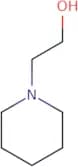
CAS:<p>1-Piperidineethanol is an active analogue of 1-piperidinepropanol. It has been shown to be a 5-HT4 receptor agonist that can inhibit the enzyme matrix polymerase, which is involved in the production of brain infarctions. The reaction mechanism for 1-piperidineethanol is not well understood, but it has been shown to react with hydrogen ions and amines to form a ternary complex. This complex reacts with hydrogen bond donors such as water or alcohols to form a reaction rate. The reaction rate depends on the concentration of hydrogen ions and amines in the solution.</p>Formula:C7H15NOPurity:Min. 99%Color and Shape:Colorless Clear LiquidMolecular weight:129.2 g/molPotassium cinnamate
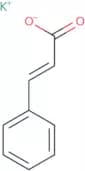
CAS:<p>Potassium cinnamate is a white crystalline solid that is soluble in water, ethanol and acetone. It has been shown to be effective for wastewater treatment and can be used as a reducing agent. Potassium cinnamate has been shown to have high values of hydroxide solution, which are often used in the manufacturing of polymers. Potassium cinnamate also exhibits enzyme activities, such as being able to catalyze the oxidation of propionate. This product has been shown to have anti-oxidant properties and can be used for radiation protection. The polymerization of potassium cinnamate leads to polymaleic acid, which is used in the production of plastics.</p>Formula:C9H7KO2Purity:Min. 98 Area-%Color and Shape:White PowderMolecular weight:186.25 g/molγ-Polyglutamic acid sodium - MW > 700,000
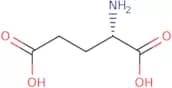
CAS:<p>Gamma-Polyglutamic acid sodium - MW > 700,000 is a high molecular weight biopolymer, which is a salt form of polyglutamic acid. Its unique structure consists of glutamic acid units linked via γ-amide bonds, resulting in a robust and biodegradable polymer.The mode of action of gamma-Polyglutamic acid sodium involves its high water-binding capacity and viscosity, which make it exceptional in forming hydrogels. This property is pivotal in applications that require moisture retention or controlled release of active ingredients. Its biodegradability and non-toxic nature add to its versatility and safety profile.Gamma-Polyglutamic acid sodium is used across various fields, including biotechnology, pharmaceuticals, agriculture, and cosmetics. In biotechnology and pharmaceuticals, it is utilized as a drug delivery vehicle and tissue engineering scaffold due to its compatibility with human tissues. Its agricultural applications include acting as a soil conditioner and enhancing water retention. In cosmetics, it serves as a potent moisturizer and anti-aging ingredient.</p>Formula:(C5H7NO3)n•NaxPurity:Min. 90 Area-%Color and Shape:White PowderDL-Pantolactone
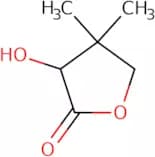
CAS:<p>DL-Pantolactone is a chiral lactone compound. In cosmetics, it is often used in formulations aimed at improving skin hydration and elasticity as it is an emulsion stabiliser. In pharmaceuticals it can be used as an intermediate in organic synthesis. The D-enantiomer is often used as a chiral auxiliary.</p>Formula:C6H10O3Purity:Min. 95%Color and Shape:White PowderMolecular weight:130.14 g/mol1-[5-Bromo-2-(difluoromethoxy)phenyl]ethan-1-one
CAS:<p>1-[5-Bromo-2-(difluoromethoxy)phenyl]ethan-1-one is an organic chemical compound. It is a reaction component and a reagent. 1-[5-Bromo-2-(difluoromethoxy)phenyl]ethan-1-one has been used in research for the synthesis of complex compounds, fine chemicals, and speciality chemicals. This chemical may be used as a versatile building block, useful intermediate, or useful building block. 1-[5-Bromo-2-(difluoromethoxy)phenyl]ethan-1-one has also been shown to be a high quality product with high purity.</p>Formula:C9H7BrF2O2Purity:Min. 95%Color and Shape:PowderMolecular weight:265.05 g/mol1-[3-(Piperidine-1-carbonyl)phenyl]methanamine
CAS:<p>Versatile small molecule scaffold</p>Formula:C13H18N2OPurity:Min. 95%Color and Shape:Clear LiquidMolecular weight:218.29 g/mol5-Chloro-2-methylindole
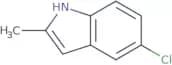
CAS:<p>5-Chloro-2-methylindole is an antimicrobial agent that is used to treat bacterial infections. It binds to the enzyme acetylacetone hydrazide, which prevents it from forming acetoacetate and 5-chloroindole. This leads to a decrease in the formation of serotonin, which may contribute to the alleviation of symptoms in patients with cerebral escherichia coli infection. 5-Chloro-2-methylindole has been shown to have antimicrobial effects against a number of bacteria, including E. coli and Staphylococcus aureus. The drug is injected intraperitoneally as a magnetic resonance imaging contrast agent for myelography, angiography, and other medical imaging procedures.</p>Formula:C9H8ClNPurity:Min. 95%Molecular weight:165.62 g/molPivalonitrile
CAS:<p>Solvent and labile ligand in coordination chemistry</p>Formula:C5H9NPurity:Min. 98 Area-%Color and Shape:Clear LiquidMolecular weight:83.13 g/mol4-Methoxy-6-methyl-2H,5H,6H,7H,8H-[1,3]dioxolo[4,5-G]isoquinoline
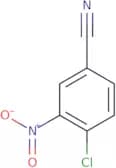
CAS:<p>4-Methoxy-6-methyl-2H,5H,6H,7H,8H-[1,3]dioxolo[4,5-G]isoquinoline is an electron donor that has been shown to have an excitatory effect on cells. It has been used for the treatment of cancer and other diseases. 4-Methoxy-6-methyl-2H,5H,6H,7H,8H-[1,3]dioxolo[4,5-G]isoquinoline has been shown to have a cavity inhibiting effect in mice and also inhibits the growth of tumor cells in rats. This drug has been evaluated for clinical use in humans and is available as a granule formulation. The particle size of 4-Methoxy-6-methyl-2H,5H,6H,7H,8H-[1,3]dioxolo[4,5-G]</p>Formula:C12H15NO3Purity:Min. 95%Color and Shape:PowderMolecular weight:221.25 g/mol4-Chloro-3-nitrobenzonitrile
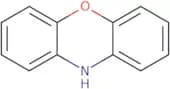
CAS:<p>4-Chloro-3-nitrobenzonitrile is a molecule with potent antibacterial activity. It is synthesized by the reaction of sodium carbonate, hydrogen chloride, and 4-chlorobenzonitrile. 4-Chloro-3-nitrobenzonitrile has shown antimicrobial properties against a wide range of bacteria, including methicillin resistant Staphylococcus aureus (MRSA) and Enterococcus faecium. This compound has been used in the treatment of infections caused by these bacteria. 4-Chloro-3-nitrobenzonitrile also has the ability to inhibit the synthesis of fatty acids and lipids in bacterial cells, which may be responsible for its antimicrobial effects.</p>Formula:C7H3ClN2O2Purity:Min. 95%Color and Shape:PowderMolecular weight:182.56 g/molPhenoxazine
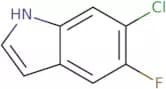
CAS:<p>Phenoxazine is a fluorescence probe that binds to DNA and has minimal toxicity. It is used in biological studies as a redox potential indicator to measure the electrochemical impedance of cells. Phenoxazine has been shown to have anti-inflammatory activity by inhibiting prostaglandin E2 levels in HL-60 cells. This drug also can be used as a model system for studying infectious diseases, such as tuberculosis, which are caused by mycobacteria. Phenoxazine has been shown to inhibit the growth of mycobacteria using an electrochemical impedance spectroscopy (EIS) polymerase chain reaction (PCR) technique.</p>Formula:C12H9NOPurity:Min. 96.5 Area-%Color and Shape:Beige PowderMolecular weight:183.21 g/mol6-Chloro-5-fluoroindole
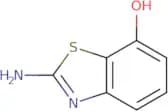
CAS:<p>6-Chloro-5-fluoroindole is a chemical compound that has been shown to be an effective inhibitor of 5-HT2C receptors. 6-Chloro-5-fluoroindole was synthesized in 1972 by the reaction of formamide with chloroacetyl chloride, and it was found to have anti-cancer effects in 1979. 6-Chloro-5-fluoroindole binds to 5HT2C receptors and prevents the activation of G proteins. This inhibition leads to cancer cell death because the receptor is involved in many important signalling pathways. 6CI5FI is used as a research tool for studying the function of this receptor.</p>Formula:C8H5ClFNPurity:Min. 95%Color and Shape:PowderMolecular weight:169.58 g/mol2-amino-1,3-benzothiazol-7-ol
CAS:<p>2-Amino-1,3-benzothiazol-7-ol is a versatile building block that can be used in the synthesis of complex compounds. It has been used as a research chemical and as a reagent for the production of speciality chemicals. 2-Amino-1,3-benzothiazol-7-ol is also useful as an intermediate in organic reactions or as a scaffold to construct novel molecular frameworks. This compound is known to have a high quality and purity.</p>Formula:C7H6N2OSPurity:Min. 95%Color and Shape:PowderMolecular weight:166.2 g/mol10H-Phenothiazine-10-propanesulfonic acid sodium salt
CAS:<p>As a derivative of phenothiazine this compound may have various applications, including in the field of pharmaceuticals or materials science, depending on its specific properties and reactivity. Phenothiazine derivatives, in general, have been explored for their diverse biological and chemical activities, ranging from antipsychotic properties to use as dyes and light-sensitive materials.</p>Formula:C15H14NNaO3S2Purity:Min. 98 Area-%Color and Shape:PowderMolecular weight:343.4 g/mol1-Cyano-2-hydroxy-3-butene
CAS:<p>1-Cyano-2-hydroxy-3-butene is a mitochondrial toxin that causes apoptosis in liver cells. It has been shown to cause liver lesions in CD1 mice. 1-Cyano-2-hydroxy-3-butene reduces the mitochondrial membrane potential, which leads to a decrease in ATP production and an increase in reactive oxygen species (ROS) production. This toxin also inhibits the transcriptional activity of nuclear receptors and induces the expression of cytochrome P450 2E1, leading to increased detoxification enzyme activity. 1-Cyano-2-hydroxy-3-butene is activated by mitochondria, which leads to its ability to cause apoptosis of liver cells.</p>Formula:C5H7NOPurity:Min. 95%Color and Shape:Colorless PowderMolecular weight:97.12 g/mol(4-Chlorophenyl)[3-(trifluoromethyl)phenyl]methanone
CAS:<p>4-Chlorophenyl[3-(trifluoromethyl)phenyl]methanone is a chemical compound that can be used as a reaction component or a reagent. It is often used as a building block in organic synthesis, due to its high quality and versatility. 4-Chlorophenyl[3-(trifluoromethyl)phenyl]methanone is soluble in organic solvents and has been shown to have no significant toxicity. This chemical is also useful for the production of complex compounds with various applications, such as pharmaceuticals, agrochemicals, and dyes.</p>Formula:C14H8ClF3OPurity:Min. 95%Molecular weight:284.66 g/mol3-Carboxypropanesulfonamide
CAS:<p>3-Carboxypropanesulfonamide is a chemical compound that has been shown to have the ability to modulate cardiac cell function. This compound has been shown to be effective in a reaction monitoring technique, which monitors the functional groups and techniques of chemical reactions, in order to introduce this molecule into the cell membrane and alter its potential. 3-Carboxypropanesulfonamide is capable of changing the lipid composition of the membrane by introducing a linker group that can bind with other molecules such as cholesterol or phospholipids. This linker group alters the membrane potential of cells, leading to changes in ion flow and cellular response.</p>Formula:C4H9NO4SPurity:Min. 95%Color and Shape:White PowderMolecular weight:167.18 g/molPyrazine-2-carbaldehyde
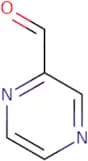
CAS:<p>Pyrazine-2-carbaldehyde is a synthetic compound that has been shown to have reactive properties. It is used as a model system in x-ray crystallography and structural studies of heart disease. Pyrazine-2-carbaldehyde can be prepared from an ethylbenzimidazole derivative substituted with substituents such as C1-6 alkyl, N, or NH groups. The nitrogen atoms in this molecule form hydrogen bonds with the carbonyl group and the C=O bond in its structure. This compound also has metabolic disorders including neurosis and benzimidazole derivatives. It reacts with alkynyl groups with the loss of HCl to form dihydropyridine derivatives.</p>Formula:C5H4N2OPurity:Min. 95%Color and Shape:PowderMolecular weight:108.1 g/molPhenylacetone oxime
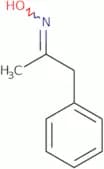
CAS:<p>Phenylacetone oxime is a chemical intermediate that can be used in the synthesis of pharmaceuticals. It has a neutral pH and is stable in the presence of alkalis, acids, oxidizing agents, and reducing agents. Phenylacetone oxime reacts with hydrogen chloride to form 1-chloro-2-phenylethanone and 2-chloroethanol. The reaction mechanism is as follows:</p>Formula:C9H11NOPurity:Min. 95%Color and Shape:PowderMolecular weight:149.19 g/mol(3-Phenoxyphenyl)-2-nitroethene
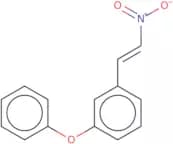
CAS:<p>(3-Phenoxyphenyl)-2-nitroethene is a high quality building block that can be used to produce a variety of complex compounds. This chemical is a versatile building block with many uses, including as a reagent for synthesizing other chemicals and as a useful intermediate. It can also be used as a reaction component to produce fine chemicals such as pharmaceuticals, agrochemicals, and specialty chemicals.</p>Formula:C14H11NO3Purity:Min. 95%Color and Shape:PowderMolecular weight:241.24 g/mol

![1-[5-Bromo-2-(difluoromethoxy)phenyl]ethan-1-one](/_next/image/?url=https%3A%2Fstatic.cymitquimica.com%2Fproducts%2F3D%2Fthumb-webp%2FQYB99475.webp&w=3840&q=75)
![1-[3-(Piperidine-1-carbonyl)phenyl]methanamine](/_next/image/?url=https%3A%2Fstatic.cymitquimica.com%2Fproducts%2F3D%2Fthumb-webp%2FRQB68866.webp&w=3840&q=75)

![4-Methoxy-6-methyl-2H,5H,6H,7H,8H-[1,3]dioxolo[4,5-G]isoquinoline](/_next/image/?url=https%3A%2Fstatic.cymitquimica.com%2Fproducts%2F3D%2Fthumb-webp%2FAAA55010.webp&w=3840&q=75)


![(4-Chlorophenyl)[3-(trifluoromethyl)phenyl]methanone](/_next/image/?url=https%3A%2Fstatic.cymitquimica.com%2Fproducts%2F3D%2Fthumb-webp%2FRDA50365.webp&w=3840&q=75)