Building Blocks
This section contains fundamental products for the synthesis of organic and biological compounds. Building blocks are the essential starting materials used to construct complex molecules through various chemical reactions. They play a critical role in drug discovery, material science, and chemical research. At CymitQuimica, we offer a diverse range of high-quality building blocks to support your innovative research and industrial projects, ensuring you have the essential components for successful synthesis.
Subcategories of "Building Blocks"
- Boronic Acids & Boronic Acid Derivatives(5,756 products)
- Chiral Building Blocks(1,242 products)
- Hydrocarbon Building Blocks(6,095 products)
- Organic Building Blocks(61,038 products)
Found 196817 products of "Building Blocks"
Sort by
Purity (%)
0
100
|
0
|
50
|
90
|
95
|
100
2-Hydroxy-4-(pyrrolidin-1-yl)benzaldehyde
CAS:<p>Versatile small molecule scaffold</p>Formula:C11H13NO2Purity:Min. 95%Molecular weight:191.23 g/mol2-Amino-6-bromo-4-fluorophenol
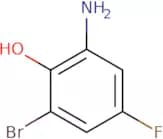
CAS:<p>2-Amino-6-bromo-4-fluorophenol is a reagent that is used in the synthesis of complex compounds. It is also a useful intermediate for the production of fine chemicals and speciality chemicals. This chemical is used as a building block in the synthesis of versatile building blocks, which are needed to produce speciality chemicals such as pharmaceuticals, agrochemicals, fragrances, and dyes. 2-Amino-6-bromo-4-fluorophenol has been used as a reaction component in the synthesis of various organic compounds. It can be synthesized from phenol or aniline via reductive amination.</p>Formula:C6H5BrFNOPurity:Min. 95 Area-%Color and Shape:PowderMolecular weight:206.01 g/mol2-(7-Bromo-1H-indol-3-yl)ethanamine hydrochloride
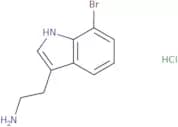
CAS:Controlled Product<p>2-(7-Bromo-1H-indol-3-yl)ethanamine hydrochloride is an organic chemical compound that belongs to the group of versatile building blocks. It is a colorless solid and has a melting point of 160°C. 2-(7-Bromo-1H-indol-3-yl)ethanamine hydrochloride can be used as a research chemical, reagent, or specialty chemical. This compound is a useful building block for the synthesis of complex compounds and can be used as a reaction component in the synthesis of useful scaffolds.</p>Formula:C10H12BrClN2Purity:Min. 95%Color and Shape:PowderMolecular weight:275.57 g/mol4-{5H,6H,7H,8H-Pyrido[4,3-c]pyridazin-3-yl}-1,4-oxazepane
CAS:<p>Versatile small molecule scaffold</p>Formula:C12H18N4OPurity:Min. 95%Color and Shape:PowderMolecular weight:234.3 g/mol4-Fluoro-1-butanol
CAS:<p>4-Fluoro-1-butanol is a gaseous protonated fluorine compound. The proton is transferred from the hydrogen to the fluorine, resulting in an intramolecular hydrogen bond. 4-Fluoro-1-butanol has been shown to undergo conformational changes due to the substituent effects of other atoms on its molecules. This molecule has been shown to be able to orient itself in different ways, depending on the experimental parameters and conditions that are used. 4-Fluoro-1-butanol has also been shown to have a strong hydrogen bond with other molecules such as water, which may be due to its ability to form a stable H···O hydrogen bond with a strong donor atom (fluorine).</p>Formula:C4H9FOPurity:Min. 95%Color and Shape:Colourless To Yellow LiquidMolecular weight:92.11 g/mol5-Fluoro-2-methylbenzoic acid
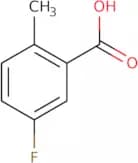
CAS:<p>5-Fluoro-2-methylbenzoic acid is a synthetic compound that has antiviral potency against the influenza A virus. It is the active form of 5-fluoro-2-methylbenzoyl chloride, which is synthesized from a Grignard reagent and an asymmetric synthesis. 5-Fluoro-2-methylbenzoic acid has been shown to have anticancer properties in vitro, which may be due to its ability to inhibit cancer cell growth through interaction with chloride channels. This drug also inhibits the activity of dehydrogenases, which are enzymes that catalyze the oxidation of various substrates by reducing them.</p>Formula:C8H7FO2Purity:Min. 95%Color and Shape:White PowderMolecular weight:154.14 g/mol2-Amino-5-chloro-N-methoxy-N-methylbenzamide
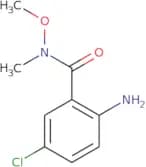
CAS:<p>Versatile small molecule scaffold</p>Formula:C9H11ClN2O2Purity:Min. 95%Color and Shape:PowderMolecular weight:214.65 g/mol2-[3-(4-Methylphenyl)-1,2,4-oxadiazol-5-yl]acetonitrile
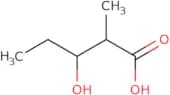
CAS:<p>Heterocycle with nitrile functional handle</p>Formula:C11H9N3OPurity:Min. 95%Color and Shape:PowderMolecular weight:199.21 g/mol3-Hydroxy-2-methylpentanoic acid
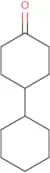
CAS:<p>2-Hydroxy-3-methylpentanoic acid (HMVA) is an organic acid generated by L-isoleucine metabolism. There are 4 stereoisomers of HMVA (2S,3S-HMVA, 2R,3R-HMVA, 2S,3R-HMVA and 2R,3S-HMVA). HMVA is found in the urine and blood of normal individuals but in very elevated levels in patients with maple syrup urine disease (MSUD). Maple syrup urine disease (MSUD) is an inherited metabolic disease predominantly characterized by neurological dysfunction including psychomotor/delay/mental retardation.</p>Formula:C6H12O3Purity:Min. 95%Color and Shape:Clear LiquidMolecular weight:132.16 g/mol4-Cyclohexylcyclohexan-1-one
CAS:<p>4-Cyclohexylcyclohexan-1-one is an organic solvent that has a high boiling point and low vapor pressure. It is a colorless liquid with a sweet odor. 4-Cyclohexylcyclohexan-1-one is used in the production of hydrochloride salts and cyclic hydrocarbons, as well as in organic synthesis reactions involving boron nitride, reaction mechanisms, and efficient methods. Exposure to 4-cyclohexylcyclohexan-1-one can lead to chronic health effects such as dehydration and reduced lung function. The functional theory of 4-cyclohexylcyclohexan-1-one is that it reacts with water molecules to produce hydrogen chloride gas. Hydrochloric acid is produced when 4CCHC reacts with hydrochlorides salts. This reaction produces particles that are small enough to be inhaled into the lungs, which can cause particle toxicity, respiratory irritation, and pulmonary</p>Formula:C12H20OPurity:Min. 95%Color and Shape:PowderMolecular weight:180.29 g/mol4-Ethenyl-1,2-dimethylbenzene
CAS:<p>4-Ethenyl-1,2-dimethylbenzene is a volatile oil that has been found in plants and is a metabolite of styrene. It is classified as a vinyl group, which are compounds with the general formula CH=CH2. 4-Ethenyl-1,2-dimethylbenzene is also a volatile substance, meaning that it evaporates easily from surfaces or materials. This compound may be used as an intermediate for other organic chemicals.</p>Formula:C10H12Purity:Min. 95%Color and Shape:Clear LiquidMolecular weight:132.2 g/mol6,7-Dimethoxy-1-methyl-1,2,3,4-tetrahydro-isoquinoline
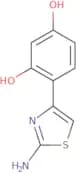
CAS:<p>6,7-Dimethoxy-1-methyl-1,2,3,4-tetrahydroisoquinoline is a trifluoroacetic acid derivative that inhibits the synthesis of dopamine by inhibiting the enzyme tyrosine hydroxylase. It has been shown to be an inhibitor of tissue culture cells and natural compounds. The compound was synthesized from allyl carbonate and pueraria lobata in an asymmetric synthesis with a magnesium salt as a catalyst.</p>Formula:C12H17NO2Purity:Min. 90%Color and Shape:PowderMolecular weight:207.27 g/mol4-(2-Amino-1,3-thiazol-4-yl)benzene-1,3-diol
CAS:<p>Versatile small molecule scaffold</p>Formula:C9H8N2O2SPurity:Min. 95%Color and Shape:PowderMolecular weight:208.24 g/mol4-Aminobutylphosphonic acid
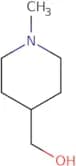
CAS:<p>4-Aminobutylphosphonic acid is a potent antagonist of the ganglion cell nicotinic acetylcholine receptors. It has been shown to produce irreversible oxidation of the ganglion cell membrane by inhibiting the enzyme catalase, which is responsible for the removal of hydrogen peroxide produced by cells. 4-Aminobutylphosphonic acid also inhibits gamma-aminobutyric acid (GABA) synthesis and increases locomotor activity in frogs. This drug also binds to functional groups on the frog’s muscle cells and stimulates a nerve impulse that causes muscle contraction. The molecule has been shown to be an effective inhibitor of x-ray diffraction data from calf thymus DNA, vinyl alcohol, and glass slides.</p>Formula:C4H12NO3PPurity:Min. 95%Color and Shape:PowderMolecular weight:153.12 g/mol(1-Methylpiperidin-4-yl)methanol
CAS:<p>(1-Methylpiperidin-4-yl)methanol is a potent inhibitor of the kinases vegfr-2 and vesicular glutamate transporter 2 (vglut2). It is also active against human tumor xenografts. The inhibitory activity was determined to be due to its ability to bind and covalently modify tyrosine residues in the kinase domain. The inhibitory potency of (1-Methylpiperidin-4-yl)methanol was found to be constant, regardless of oxygenation status. This suggests that the inhibition is not due to the binding of oxygenated metabolites. In vitro experiments showed that it inhibits cellular proliferation by blocking protein synthesis and arresting cells at G1 phase. This drug has potential as an antitumor agent because it inhibits tumor growth without affecting normal tissue or causing significant toxicity in animal models.</p>Formula:C7H15NOPurity:Min. 95%Color and Shape:Colourless to yellow liquid.Molecular weight:129.2 g/mol2,3-Dichloro-N-[2-({2-[(2,3-dichlorophenyl)amino]ethyl}amino)ethyl]aniline
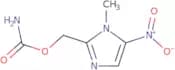
CAS:<p>2,3-Dichloro-N-[2-({2-[(2,3-dichlorophenyl)amino]ethyl}amino)ethyl]aniline is a chemical compound that is used as a building block in the synthesis of other chemicals. It is also used as a reagent, speciality chemical and research chemical. This product has many uses in the field of organic chemistry, such as use as an intermediate in organic reactions or as a scaffold for complex compounds. 2,3-Dichloro-N-[2-({2-[(2,3-dichlorophenyl)amino]ethyl}amino)ethyl]aniline has high quality and can be used to synthesize many different products.</p>Formula:C16H17Cl4N3Purity:Min. 95%Color and Shape:PowderMolecular weight:393.1 g/mol1-Methyl-5-nitro-1H-imidazole-2-methanol 2-carbamate
CAS:<p>1-Methyl-5-nitro-1H-imidazole-2-methanol 2-carbamate is an antimicrobial agent that has been shown to be active against a number of bacteria, including Gram negative and Gram positive bacteria. It was shown to have a matrix effect in vivo and its kinetic energy was found to be reactive. The 1NIMC has been shown to inhibit the growth of bacteria by interfering with DNA replication and RNA synthesis. This drug has also been shown to have an analytical method that is linear in calibrations curves, which makes it suitable for quantitative analysis. It also has chemical stability, as it decomposes slowly at room temperature.</p>Formula:C6H8N4O4Purity:Min. 98.5%Color and Shape:White PowderMolecular weight:200.15 g/mol1-Phenoxy-2-propanol
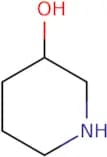
CAS:<p>1-Phenoxy-2-propanol is an antimicrobial agent that belongs to the group of glycol ethers. It has a hydroxyl group and atp levels, which are both vital for its activity index. 1-Phenoxy-2-propanol is used as a preservative in cosmetics and pharmaceuticals, with the exception of eye products. It also has been shown to have a low level of toxicity for humans and other mammals, such as rats and guinea pigs. The EPA has classified 1-phenoxy-2 propanol as Group D - not classifiable as to human carcinogenicity. 1-Phenoxy-2 propanol is toxic to bacteria, yeast, fungi, algae, plants, and invertebrates when present in high concentrations.</p>Formula:C9H12O2Purity:Min. 95%Color and Shape:Colorless Clear LiquidMolecular weight:152.19 g/mol3-Hydroxypiperidine
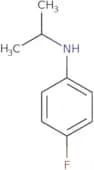
CAS:<p>3-Hydroxypiperidine is a chemical compound that contains an asymmetric carbonyl group. It has been used in the synthesis of enantiopure pharmaceuticals, and is also a competitive inhibitor for some enzymes. 3-Hydroxypiperidine can be synthesized by hydrogenation reduction or hydroxylation of piperidine. This compound has been shown to have pharmacokinetic properties in rats and mice, as well as inhibitory effects on brain functions such as memory retention and learning. 3-Hydroxypiperidine has also been shown to induce apoptosis in breast cancer cells, which may be due to its ability to inhibit protein synthesis in these cells.</p>Formula:C5H11NOPurity:Min. 95%Color and Shape:White PowderMolecular weight:101.15 g/mol4-Fluoro-N-isopropylaniline
CAS:<p>4-Fluoro-N-isopropylaniline is an organic compound that is a nitroarene with the chemical formula C6H5FNO2. It is soluble in organic solvents and reacts with halogens, alkoxy groups, or polysubstituted alkyl groups to form substituted or polysubstituted alkyl radicals. 4-Fluoro-N-isopropylaniline can be used as a catalyst for many reactions including those involving alkoxycarbonyl groups. This compound is also used as a reagent in the synthesis of other compounds such as 4-fluoroaniline, which can be used to synthesize dyes and pharmaceuticals.</p>Formula:C9H12FNPurity:Min. 95%Color and Shape:Yellow PowderMolecular weight:153.2 g/mol

![4-{5H,6H,7H,8H-Pyrido[4,3-c]pyridazin-3-yl}-1,4-oxazepane](/_next/image/?url=https%3A%2Fstatic.cymitquimica.com%2Fproducts%2F3D%2Fthumb-webp%2FJHD95611.webp&w=3840&q=75)

![2-[3-(4-Methylphenyl)-1,2,4-oxadiazol-5-yl]acetonitrile](/_next/image/?url=https%3A%2Fstatic.cymitquimica.com%2Fproducts%2F3D%2Fthumb-webp%2FICA59900.webp&w=3840&q=75)



![2,3-Dichloro-N-[2-({2-[(2,3-dichlorophenyl)amino]ethyl}amino)ethyl]aniline](/_next/image/?url=https%3A%2Fstatic.cymitquimica.com%2Fproducts%2F3D%2Fthumb-webp%2FZGC85789.webp&w=3840&q=75)