Building Blocks
This section contains fundamental products for the synthesis of organic and biological compounds. Building blocks are the essential starting materials used to construct complex molecules through various chemical reactions. They play a critical role in drug discovery, material science, and chemical research. At CymitQuimica, we offer a diverse range of high-quality building blocks to support your innovative research and industrial projects, ensuring you have the essential components for successful synthesis.
Subcategories of "Building Blocks"
- Boronic Acids & Boronic Acid Derivatives(5,756 products)
- Chiral Building Blocks(1,242 products)
- Hydrocarbon Building Blocks(6,095 products)
- Organic Building Blocks(61,037 products)
Found 196139 products of "Building Blocks"
Sort by
Purity (%)
0
100
|
0
|
50
|
90
|
95
|
100
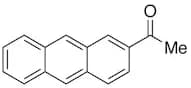
2-Acetylanthracene
CAS:<p>Applications 2-Acetylanthracene is an organic fluorophore.<br>References Burstein, E., et al.: Photochem. Photobiol., 64, 316 (1996), Patil, S., et al.: Bioorg. Med. Chem., 15, 1212 (2007),<br></p>Formula:C16H12OColor and Shape:YellowMolecular weight:220.272,6-Dichlorobenzaldehyde
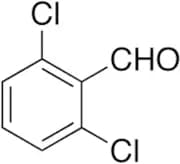
CAS:Controlled Product<p>Applications An intermediate in the synthesis of substituted (2,6-dichlorobenzylideneamino)guanidines and some hydrazone derivatives of C-cyanoformamidrazone. It showed antihypertensive activity.<br>References Rietveld, E.C. , et al.: Arch. Toxicol., 59, 228 (1986),<br></p>Formula:C7H4Cl2OColor and Shape:Light Yellow To WhiteMolecular weight:175.012-Bromobenzoic Acid
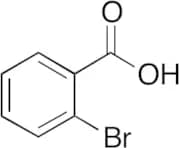
CAS:Controlled Product<p>Applications 2-Bromobenzoic acid is a sterically hindered ortho-bromo compound that is used as a starting material to synthesize quinazolinones (e.g. 8-Hydroxy-2-methyl-4(3H)-quinazolinone [H948330]).<br>References Liu, X., et al.: Angew. Chem. Int. Edit., 121, 354 (2009); Lu, G., et al.: Tetrahedron Lett., 46, 4255 (2005)<br></p>Formula:C7H5BrO2Color and Shape:NeatMolecular weight:201.028-Bromooctanoic Acid
CAS:Controlled Product<p>Applications 8-Bromooctanoic Acid (cas# 17696-11-6) is a compound useful in organic synthesis.<br> Not a dangerous good if item is equal to or less than 1g/ml and there is less than 100g/ml in the package<br></p>Formula:C8H15BrO2Color and Shape:NeatMolecular weight:223.112-Amino-4,5-dichloropyrimidine
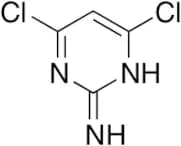
CAS:Controlled Product<p>Applications 2-AMINO-4,6-DICHLOROPYRIMIDINE (cas# 56-05-3) is a useful research chemical.<br></p>Formula:C4H3Cl2N3Color and Shape:NeatMolecular weight:163.99(+/-)-4-Chlorophenyl-5-[(3,4-isopropylidine)-2-methylpyridine]methanol-d4
CAS:Controlled Product<p>Applications Intermediate in the production of labelled Cicletanine<br></p>Formula:C17H14D4ClNO3Color and Shape:NeatMolecular weight:323.81trans-Cinnamoyl Chloride
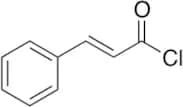
CAS:Controlled Product<p>Applications trans-Cinnamoyl chloride (cas# 102-92-1) is a useful research chemical.<br></p>Formula:C9H7ClOColor and Shape:NeatMolecular weight:166.63-Methyl-3-(methylamino)butanoic Acid Methyl Ester
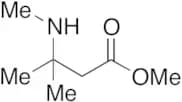
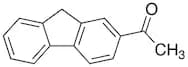
CAS:Controlled Product<p>Applications 3-Methyl-3-(methylamino)butanoic Acid Methyl Ester is an derivative of substituted 3-pyrrolidinols with potential anticholinergic activities.<br>References Ryan, C.W., et al.; J. Org. Chem., 27, 2901 (1962);<br></p>Formula:C7H15NO2Color and Shape:NeatMolecular weight:145.22-Acetylfluorene
CAS:Controlled Product<p>Applications 2-Acetylfluorene (cas# 781-73-7) is a useful research chemical.<br></p>Formula:C15H12OColor and Shape:NeatMolecular weight:208.25Diethyl 4-Ethoxyphenyl-(ethyl-d5)malonate
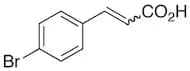
CAS:Controlled Product<p>Applications Diethyl 4-Ethoxyphenyl-(ethyl-d5)malonate (cas# 1189708-84-6) is a compound useful in organic synthesis.<br></p>Formula:C172H5H19O5Color and Shape:NeatMolecular weight:313.404-Bromocinnamic Acid
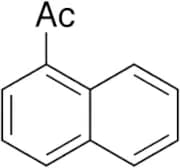
CAS:Controlled Product<p>Applications 4-Bromocinnamic Acid (cas# 1200-07-3) is a compound useful in organic synthesis.<br>References Patel, C., et al.: Bioorg. Med. Chem. Lett., 16, 4752 (2006), Ghorai, P., et al.: J. Med. Chem., 51, 7193 (2008),<br></p>Formula:C9H7BrO2Color and Shape:NeatMolecular weight:227.061-Acetylnaphthalene
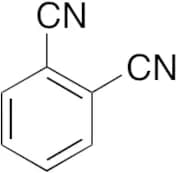
CAS:Controlled Product<p>Applications 1-Acetylnaphthalene is used in the preparation of S(-)-1-(1'-naphthyl) ethanol, an important synthetic intermediate of mevinic acid analog.<br>References Kamble, A.L. et al.: J. Mol. Catal. B Enzym., 35, 1 (2005); Bhattacharyya, M. et al.: Biores. Technol., 98, 1958 (2007);<br></p>Formula:C12H10OColor and Shape:NeatMolecular weight:170.211,2-Dicyanobenzene
CAS:Controlled Product<p>Applications Phthalodinitrile monomers can be polymerized thermally in the presence of small amounts of curing agents into thermosetting polymers. Phthalodinitrile is a precursor to phthalocyanine which is used as a dye or pigment.<br>References Sastri, S. B. and Keller, T. M.: J. Polym. Sci. A Polym. Chem., 36, 1885-1890(1998), Löbbert, G. Phthalocyanines. In Ullmann's Encyclopedia of Industrial Chemistry, (Ed.)., (2000).<br></p>Formula:C8H4N2Color and Shape:NeatMolecular weight:128.1315-Hydroxy-2-oxo-2,3-dihydro-1H-[1]benzazephe-4-carboxylic Acid Ethyl Ester
CAS:Controlled Product<p>Applications 5-Hydroxy-2-oxo-2,3-dihydro-1H-[1]benzazephe-4-carboxylic Acid Ethyl Ester (cas# 108993-98-2) is a compound useful in organic synthesis.<br> Not a dangerous good if item is equal to or less than 1g/ml and there is less than 100g/ml in the package<br></p>Formula:C13H13NO4Color and Shape:NeatMolecular weight:247.253-Hydroxyoctanoic Acid
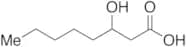
CAS:<p>Applications Used in a novel process for preparing β-hydroxy-fatty acids which are useful as base material for lipids A, LB films, cosmetics, liquid crystals etc.<br>References Hanahan, D., et al.: J. Mol. Biol., 166, 557 (1983), Yang, S., et al.: Biotechnol. Bioeng., 43, 1124 (1994), Ramsay, J., et al.: Can. J. Microbiol., 41, 262 (1995), Rehm, B., et al.: Intl. J. Biol. Macromol., 25, 3 (1999),<br></p>Formula:C8H16O3Color and Shape:NeatMolecular weight:160.211Potassium Ethyl Xanthogenate technical grade, 90%
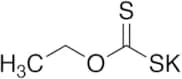
CAS:Controlled ProductFormula:C3H5OS2·KPurity:90%Color and Shape:NeatMolecular weight:160.303-Pyridineboronic Acid
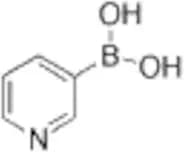
CAS:Controlled Product<p>Applications Boronic acid derivatives and their binding affinities with diols.<br>References Yang, W., et al.: Bioorg. Med. Chem. Lett., 12, 2175 (2002), Yang, W., et al.: Med. Res. Rev., 23, 346 (2003),<br></p>Formula:C5H6BNO2Color and Shape:NeatMolecular weight:122.92Methyl 4-Methoxyphenylacetate
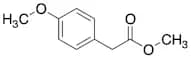
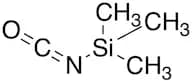
CAS:Controlled Product<p>Applications Methyl 4-Methoxyphenylacetate (cas# 23786-14-3) is a useful research chemical.<br></p>Formula:C10H12O3Color and Shape:NeatMolecular weight:180.2Trimethylsilyl isocyanate
CAS:Controlled ProductFormula:C4H9NOSiColor and Shape:NeatMolecular weight:115.206


![(+/-)-4-Chlorophenyl-5-[(3,4-isopropylidine)-2-methylpyridine]methanol-d4](/_next/image/?url=https%3A%2Fstatic.cymitquimica.com%2Fproducts%2FTR%2Fthumb-webp%2FC378552.webp&w=3840&q=75)

![5-Hydroxy-2-oxo-2,3-dihydro-1H-[1]benzazephe-4-carboxylic Acid Ethyl Ester](/_next/image/?url=https%3A%2Fstatic.cymitquimica.com%2Fproducts%2FTR%2Fthumb-webp%2FH950810.webp&w=3840&q=75)