Building Blocks
This section contains fundamental products for the synthesis of organic and biological compounds. Building blocks are the essential starting materials used to construct complex molecules through various chemical reactions. They play a critical role in drug discovery, material science, and chemical research. At CymitQuimica, we offer a diverse range of high-quality building blocks to support your innovative research and industrial projects, ensuring you have the essential components for successful synthesis.
Subcategories of "Building Blocks"
- Boronic Acids & Boronic Acid Derivatives(5,756 products)
- Chiral Building Blocks(1,242 products)
- Hydrocarbon Building Blocks(6,095 products)
- Organic Building Blocks(61,037 products)
Found 196200 products of "Building Blocks"
Sort by
Purity (%)
0
100
|
0
|
50
|
90
|
95
|
100
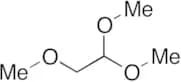
Methoxyacetaldehyde Dimethyl Acetal
CAS:Controlled Product<p>Applications Methoxyacetaldehyde Dimethyl Acetal is a reagent used in balancing oral exposure with Cyp3A4 inhibition in benzimidazole-based IGF-1R inhibitors.<br> Not a dangerous good if item is equal to or less than 1g/ml and there is less than 100g/ml in the package<br>References Zimmermann, K., et al.: Bioorg. Med. Chem. Lett., 18, 4075 (2008);<br></p>Formula:C5H12O3Color and Shape:NeatMolecular weight:120.15(1-Methoxy-2-methylprop-1-enoxy)trimethylsilane
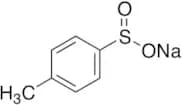
CAS:Controlled Product<p>Stability Moisture and Acid Sensitive<br>Applications (1-Methoxy-2-methylprop-1-enoxy)trimethylsilane is useful in the synthesis of organic compounds such as 1,1'-Bis[1-(1-methoxycarbonyl-1-methyl-ethyl)-3-butenyl] Ferrocene Monome, Alkylbismuths and N-Tosyl-α,β-dehydroamino Esters.<br>References Espinosa, M., et al.: RC Adv., 6, 15655 (2016); Nishimoto, T., et al.: Chem. Eur. J., 19, 14411 (2013); Wang, J., et al.: Faming Zhuanli Shenqing, CN 103665053 A 20140326 (2014)<br></p>Formula:C8H18O2SiColor and Shape:NeatMolecular weight:174.11Sodium 4-Methylbenzenesulfinate
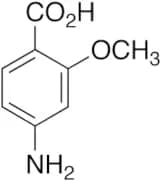
CAS:Controlled Product<p>Applications Sodium 4-methylbenzenesulfinate (cas# 824-79-3) is a useful research chemical.<br></p>Formula:C7H7NaO2SColor and Shape:NeatMolecular weight:178.192-Methoxy-4-aminobenzoic Acid
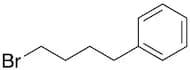
CAS:Controlled Product<p>Applications 2-Methoxy-4-aminobenzoic Acid (cas# 2486-80-8) is a compound useful in organic synthesis.<br></p>Formula:C8H9NO3Color and Shape:NeatMolecular weight:167.161-Bromo-4-phenylbutane
CAS:Controlled Product<p>Applications 1-Bromo-4-phenylbutane<br></p>Formula:C10H13BrColor and Shape:NeatMolecular weight:213.11410-Bromo-1-decanol
CAS:Controlled Product<p>Stability Moisture Sensitive<br>Applications 10-Bromodecanol can be used to synthesize rotaxane dendrimers. It can also be used to synthesize J2326, a molecule that induces neurite outgrowth in neuronal cells.<br>References Wei, W., et al.: Proc. Natl. Acad. Sci. USA 112, 5597 (2015); Chang, P., et al.: Neuropharmacology 92, 146 (2015)<br></p>Formula:C10H21BrOColor and Shape:NeatMolecular weight:237.18Adipoyl Chloride
CAS:Controlled Product<p>Applications Adipoyl Chloride can be used in the synthesis of nylon. Also it is used in the synthesis of chiral polymer for membrane application.<br> Not a dangerous good if item is equal to or less than 1g/ml and there is less than 100g/ml in the package<br>References Gaymans, R. et al.: J. Polym. Sci., 15, 535 (1977); Hazarika, S. et al.: Polym. J., 41, 1067 (2009);<br></p>Formula:C6H8Cl2O2Color and Shape:Light Brown LiquidMolecular weight:183.03(±)-3-Heptanol
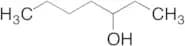
CAS:Controlled Product<p>Applications (±)-3-Heptanol, is a volatile components of various plants, and can be used as flavor and fragrance ingredients. It is also used as building block used for the synthesis of various chemicals. It is used for the preparation of biologically active ester derivatives as potent inhibitors of the soluble epoxide hydrolase.<br> Not a dangerous good if item is equal to or less than 1g/ml and there is less than 100g/ml in the package<br>References Kim, I., et al.: Bioorg. Med. Chem. Lett., 55 (18), 5889 (2012); Gibka, J., et al.: Zeszyty Naukowe - Politechnika Lodzka, 60, 65 (1998);<br></p>Formula:C7H16OColor and Shape:NeatMolecular weight:116.25-Fluoro-2,4-dichloropyrimidine
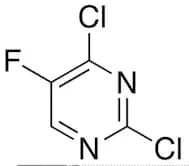
CAS:Controlled ProductFormula:C4HCl2FN2Color and Shape:NeatMolecular weight:166.972-Acetylfluorene
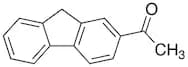
CAS:Controlled Product<p>Applications 2-Acetylfluorene (cas# 781-73-7) is a useful research chemical.<br></p>Formula:C15H12OColor and Shape:NeatMolecular weight:208.25trans-2-Pentenoic Acid
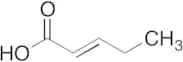
CAS:Controlled Product<p>Applications trans-2-Pentenoic Acid has been used in preparation of new nonsteroidal human androgen receptor (hAR) agonists from an hAR antagonist pharmacophore, 2(1H)-piperidino[3,2-g]quinolinone.<br> Not a dangerous good if item is equal to or less than 1g/ml and there is less than 100g/ml in the package<br>References Zhi, L., et al.: Bioorg. Med. Chem. Lett., 9, 1009-1012 (1999)<br></p>Formula:C5H8O2Color and Shape:NeatMolecular weight:100.12Homophthalic acid
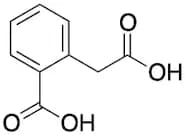
CAS:Controlled Product<p>Applications Homophthalic acid (cas# 89-51-0) is a useful research chemical.<br></p>Formula:C9H8O4Color and Shape:NeatMolecular weight:180.153-Methyl-3-(methylamino)butanoic Acid Methyl Ester
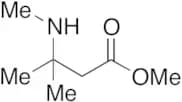
CAS:Controlled Product<p>Applications 3-Methyl-3-(methylamino)butanoic Acid Methyl Ester is an derivative of substituted 3-pyrrolidinols with potential anticholinergic activities.<br>References Ryan, C.W., et al.; J. Org. Chem., 27, 2901 (1962);<br></p>Formula:C7H15NO2Color and Shape:NeatMolecular weight:145.2Dimethyl Phosphite
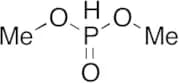
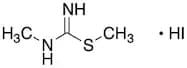
CAS:Controlled Product<p>Stability Hygroscopic<br>Applications Dimethyl Phosphite is used as a reagent in the synthesis of 4-(thiophen-2-ylmethyl)-2H-phthalazin-1-ones as potent PARP-1 inhibitors. It is also used as a reagent in the synthesis of estafiatin phosphonate derivatives which exhibit antibacterial and antifungal activity.<br>References Suleimen, E.M., et al.: Chem. Nat. Compd., 50, 846 (2014); Wang, L., et al.: Bioorg. Med. Chem. Lett., 24, 3739 (2014)<br></p>Formula:C2H7O3PColor and Shape:NeatMolecular weight:110.051,2-Dimethylisothiourea-HI
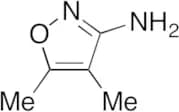
CAS:Controlled Product<p>Applications 1,2-Dimethylisothiourea-HI (cas# 41306-45-0) is a useful research chemical.<br></p>Formula:C3H8N2S·HIColor and Shape:NeatMolecular weight:232.084,5-Dimethyl-3-isoxazolamine
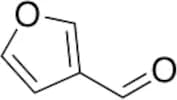
CAS:Controlled Product<p>Applications 4,5-Dimethyl-3-isoxazolamine is an isoxazole derivative used in the preparation of a varitey of biologically active compounds such as selective ETA receptor antagonists.<br>References Murugesan, N. et al.: J. Med. Chem., 46, 125 (2003);<br></p>Formula:C5H8N2OColor and Shape:NeatMolecular weight:112.133-Furaldehyde
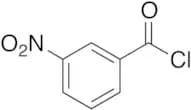
CAS:Controlled Product<p>Stability Light Sensitive<br>Applications 3-Furaldehyde is a volatile compound of honey of various floral origin.<br> Not a dangerous good if item is equal to or less than 1g/ml and there is less than 100g/ml in the package<br>References Alissandrakis, E., et al.: Food Chem., 100, 396 (2007), Baltrusaityte, V., et al.: Food Technol. Biotechnol., 45, 201 (2007),<br></p>Formula:C5H4O2Color and Shape:NeatMolecular weight:96.083-Nitrobenzoyl Chloride
CAS:Controlled Product<p>Applications 3-Nitrobenzoyl Chloride is an useful building block reagent in the preparation of organic compounds of research interest.<br>References Guimond, N, et. al.: J. Am. Chem. Soc., 132, 6908 (2010);Mortimer, C., et. al.: J. Med. Chem., 49, 179 (2006);Shiradkar, M., et. al.: Bioorg. Med. Chem., 15, 3997 (2007)<br></p>Formula:C7H4ClNO3Color and Shape:NeatMolecular weight:185.56Myristoyl Chloride
CAS:Controlled Product<p>Applications Myristoyl Chloride is a building block that has been used to form esters on rubber wood. Esterification reduces crystalinity of wood and reduces light0induced color changes (phot-yellowing ) at wood surfaces. Myristoyl Chloride has also been used in the modification of isophalate-PEG copolymers to make amphiphilic copolymers as nanocarriers for drug delivery.<br> Not a dangerous good if item is equal to or less than 1g/ml and there is less than 100g/ml in the package<br>References Salla, J., et. al.: J. Wood Chem. Tech. , 32, 121 (2012); Gupta, B., et. al.: J. Macromol. Sci. Pure, 48, 1009 (2011)<br></p>Formula:C14H27ClOColor and Shape:NeatMolecular weight:246.82