Building Blocks
This section contains fundamental products for the synthesis of organic and biological compounds. Building blocks are the essential starting materials used to construct complex molecules through various chemical reactions. They play a critical role in drug discovery, material science, and chemical research. At CymitQuimica, we offer a diverse range of high-quality building blocks to support your innovative research and industrial projects, ensuring you have the essential components for successful synthesis.
Subcategories of "Building Blocks"
- Boronic Acids & Boronic Acid Derivatives(5,756 products)
- Chiral Building Blocks(1,242 products)
- Hydrocarbon Building Blocks(6,095 products)
- Organic Building Blocks(61,055 products)
Found 199650 products of "Building Blocks"
Sort by
Purity (%)
0
100
|
0
|
50
|
90
|
95
|
100
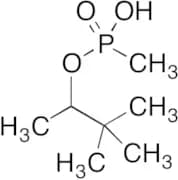
Pinacolyl Methylphosphonate
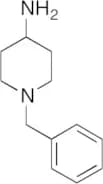
CAS:Controlled ProductFormula:C7H17O3PColor and Shape:NeatMolecular weight:180.18181-(Phenylmethyl)-4-piperidinamine
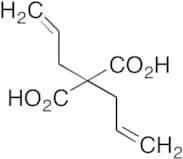
CAS:Controlled Product<p>Applications 1-(Phenylmethyl)-4-piperidinamine is used in the preparation of 4-substituted coumarins as novel acetylcholinesterase inhibitors used in the treatment and various therapeutic approaches to Alzheimer’s disease. It is also used in the synthesis of nicotinamide derivatives as anti-angiogenic agents.<br>References Razavi, S. et al.: Eur. J. Med. Chem., 64, 252 (2013); Choi, H. et al.: Bioorg. Med. Chem. Lett., 23, 2083 (2013);<br></p>Formula:C12H18N2Color and Shape:NeatMolecular weight:190.28Diallylmalonic Acid
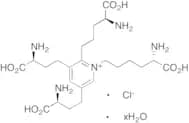
CAS:Controlled Product<p>Applications Diallylmalonic Acid is an intermediate in the synthesis of metabolites of Valproic Acid (V094750) as anticonvulsant agents. It can also be used for the synthesis of Velbanamine.<br>References Zielinski, G. K., et al.: Org. Biomolec. Chem., 13, 2684 (2015):<br></p>Formula:C9H12O4Color and Shape:NeatMolecular weight:184.19Isodesmosine Chloride Hydrate (Synthetic)
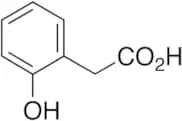
Controlled ProductFormula:C24H40N5O8·Cl·xH2OColor and Shape:NeatMolecular weight:526.61 + 35.45 + x(18.02)2-Hydroxyphenylacetic Acid
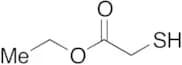
CAS:Controlled Product<p>Applications 2-Hydroxyphenylacetic Acid (cas# 614-75-5) is a compound useful in organic synthesis.<br></p>Formula:C8H8O3Color and Shape:NeatMolecular weight:152.15Ethyl 2-Mercaptoacetate
CAS:Controlled Product<p>Applications Ethyl 2-Mercaptoacetate is an off-odor compound in white wine and an eye irritant.<br> Not a dangerous good if item is equal to or less than 1g/ml and there is less than 100g/ml in the package<br>References Nikolantonaki, M., Darriet, P.: J. Agr. Food Chem., 59, 10191 (2011); Bagley, D.M., et. al.: Toxicol. in vitro, 13, 505 (1999)<br></p>Formula:C4H8O2SColor and Shape:NeatMolecular weight:120.17α-Desethyl Butamirate
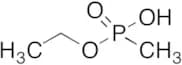
CAS:Controlled Product<p>Applications α-Desethyl Butamirate is an impurity in the synthesis of Butamirate (B690025), an antitussive drug.<br>References Wang, T., et al.: J. Pharm. Biomed. Anal., 23, 867 (2000), Lasztity, A., et al.: Microchem. J., 73, 59 (2002), Wang, L., et al.: J. Pharm. Biomed. Anal., 33, 961 (2003), Lewen, N., et al.: J. Pharm. Biomed. Anal., 35, 739 (2004),<br></p>Formula:C16H25NO3Color and Shape:NeatMolecular weight:279.37Ethyl Methylphosphonate
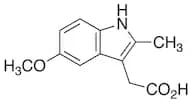
CAS:Controlled ProductFormula:C3H9O3PColor and Shape:NeatMolecular weight:124.08N-Deschlorobenzoyl Indomethacin
CAS:<p>Impurity Indomethacin EP Impurity B<br>Applications N-Deschlorobenzoyl Indomethacin (Indomethacin EP Impurity B) is a metabolite of Indomethacin.<br>References O'Brien, W., et al.: Clin. Pharmacol. Ther., 9, 94 (1968), Duggan, D., et al.: J. Pharmacol. Exp. Ther., 181, 563 (1972), Abourashed, E., et al.: Curr. Med. Chem., 6, 359 (1999), Chatterjee, P., et al.: J. Nat. Prod., 62, 761 (1999),<br></p>Formula:C12H13NO3Color and Shape:NeatMolecular weight:219.242-Ethylhexyl-4-aminobenzoate
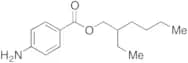
CAS:Controlled Product<p>Stability Air Sensitive, Hygroscopic<br>Applications 2-Ethylhexyl-4-aminobenzoate is an impurity in the synthesis of Ethylhexyl Triazone (E918810), used in sunscreen formulations as a UV filter to block out harmful ultraviolet light.<br>References Potard, G. et al.: Int. J. Pharm., 189, 249 (1999); Couteau, C. et al.: J. Pharm. Biomed. Anal., 44, 270 (2007);<br></p>Formula:C15H23NO2Color and Shape:Orange Solid With A Low Melting PointMolecular weight:249.35N-Methyl-γ-oxo-3-pyridinebutanamide
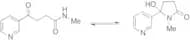
CAS:Controlled Product<p>Applications An metabolite of Cotinine. In equilibrium with 5’-Hydroxycotinine the cyclized form.<br> Not a dangerous good if item is equal to or less than 1g/ml and there is less than 100g/ml in the package<br>References Morselli, P.L, et al.: J. Med. Chem., 10, 1033 (1967); Murphy, S.E. et. al.: Chem. Res. Toxicol. 12, 639 (1999)<br></p>Formula:C10H12N2O2Color and Shape:NeatMolecular weight:192.21Mono-tert-butyl Succinate
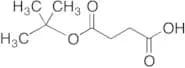
CAS:Controlled Product<p>Applications Mono-tert-butyl Succinate is a reagent used for the synthesis of fluorinated β2- and β3-amino acids, an inhibitor of α-chymotrypsin.<br>References Peddie, V., et al.: Synthesis, 1845-1859 (2010);<br></p>Formula:C8H14O4Color and Shape:White To Off-WhiteMolecular weight:174.1943,5-Dichlorophenyldiazonium Tetrafluoroborate
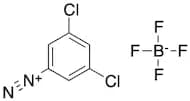
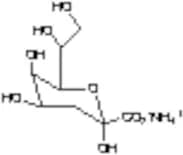
CAS:Controlled ProductFormula:C6H3Cl2N2•BF4Color and Shape:Light Orange Colour To OrangeMolecular weight:260.813-Deoxy-D-manno-2-octulosonic Acid Ammonium Salt
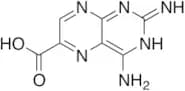
CAS:Controlled Product<p>Stability Hygroscopic<br>Applications 3-Deoxy-D-manno-2-octulosonic Acid Ammonium Salt is a ketosidic component in all lipopolysaccharides of Gram-negative bacteria and has been identified in several acidic exopolysaccharides (K-antigens). Synthetic analogues of KDO may be studied for their potential to disrupt the biosynthesis of bacterial cell-wall components, and lead to new antibacterial agents.<br>References Altschul, S., et al.: J. Mol. Biol., 215, 403 (1990), Baumann, H., et al.: Biochemistry, 31, 4081 (1992), Hashimoto, M., et al.: Eur. J. Biochem., 268, 3139 (2001), Kodar, K., et al.: Immunol. Invest., 38, 704 (2009),<br></p>Formula:C8H14O8·H3NColor and Shape:NeatMolecular weight:255.222,4-Diaminopteridine-6-carboxylicAcid
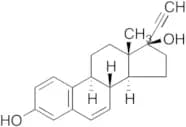
CAS:Controlled Product<p>Applications 2,4-DIAMINOPTERIDINE-6-CARBOXYLIC ACID (cas# 716-74-5) is a useful research chemical.<br></p>Formula:C7H6N6O2Color and Shape:Off-WhiteMolecular weight:206.1626,7-Dehydro Ethynyl Estradiol
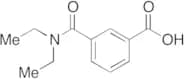
CAS:Controlled Product<p>Impurity Ethinylestradiol EP Impurity I<br>Applications 6,7-Dehydro Ethynyl Estradiol (Ethinylestradiol EP Impurity I) is an Ethynyl Estradiol (E685100) impurity.<br> Not a dangerous good if item is equal to or less than 1g/ml and there is less than 100g/ml in the package<br>References Tettey-Amlalo, R., et al.: J. Pharm. Biomed. Anal., 50, 580 (2009), Neue, U., et al.: J. Sep. Sci., 2001, 24, 921 (2001),<br></p>Formula:C20H22O2Color and Shape:Light BrownMolecular weight:294.39DEET ω-Carboxylic Acid
CAS:Controlled Product<p>Stability Hygroscopic<br>Applications DEET ω-Carboxylic Acid is a metabolite of DEET (D228500), an insect repellant commonly used to prevent contact with mosquitoes.<br>References Constantino, L. & Iley, J.: Xenobiotica, 29, 409 (1999); Syed, Z. & Leal, W.: P. Natl. Acad. Sci. USA, 105, 13598 (2008)<br></p>Formula:C12H15NO3Color and Shape:NeatMolecular weight:221.25N1-(2-((2,4-Dimethylphenyl)thio)phenyl)ethane-1,2-diamine
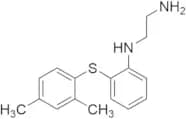
CAS:Controlled ProductFormula:C16H20N2SColor and Shape:NeatMolecular weight:272.408