Building Blocks
This section contains fundamental products for the synthesis of organic and biological compounds. Building blocks are the essential starting materials used to construct complex molecules through various chemical reactions. They play a critical role in drug discovery, material science, and chemical research. At CymitQuimica, we offer a diverse range of high-quality building blocks to support your innovative research and industrial projects, ensuring you have the essential components for successful synthesis.
Subcategories of "Building Blocks"
- Boronic Acids & Boronic Acid Derivatives(5,756 products)
- Chiral Building Blocks(1,242 products)
- Hydrocarbon Building Blocks(6,095 products)
- Organic Building Blocks(61,038 products)
Found 196817 products of "Building Blocks"
Sort by
Purity (%)
0
100
|
0
|
50
|
90
|
95
|
100
4-Iodobenzaldehyde
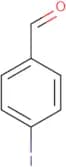
CAS:<p>4-Iodobenzaldehyde is a chemical compound with the molecular formula C6H5IO. It is an aromatic compound that can be used in cancer therapy. 4-Iodobenzaldehyde reacts with trifluoroacetic acid to form an intramolecular hydrogen, which is detected using a low-energy monomer and high detection sensitivity. 4-Iodobenzaldehyde has two phenyl substituents and a serine protease functional group, which are required for its interaction with other molecules. The presence of these functional groups allows analytical methods to be used to identify 4-iodobenzaldehyde in various samples. Using analytical methods, it can be determined that 4-iodobenzaldehyde interacts with an acceptor molecule at the reaction vessel thermally or by irradiation.</p>Formula:C7H5IOPurity:Min. 95%Color and Shape:Yellow PowderMolecular weight:232.02 g/mol3-Indoleacetic acid potassium salt
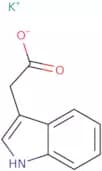
CAS:<p>Plant hormone of the auxin class; promotes root growth</p>Formula:C10H8NO2·KPurity:Min. 95%Color and Shape:White PowderMolecular weight:213.27 g/molD-Isoserine
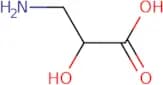
CAS:<p>D-Isoserine is a stereoselective synthetic amino acid that can be used as a structural analog of l-serine. D-Isoserine is synthesized from d-threonine and has been shown to inhibit the bacterial enzyme tyrosine kinase, which is important in cell signaling. D-Isoserine is also being investigated as a treatment for inflammatory diseases such as rheumatoid arthritis and Crohn's disease. The marine sponge Aerogenes sp. produces this compound, which is also produced by the microbial species Aerobacter aerogenes and Staphylococcus aureus.</p>Formula:C3H7NO3Purity:Min. 95%Molecular weight:105.09 g/molIndole-4-carboxaldehyde
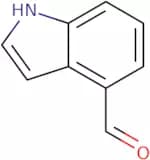
CAS:<p>Indole-4-carboxaldehyde is a natural compound that can be found in the acetate extract of the roots of Scopolia japonica. It has been shown to have an inhibitory effect on locomotor activity and may also have an inhibitory effect on protein synthesis. The mechanism of this inhibition is not yet known, but it may be due to an intramolecular hydrogen bond or other interactions with proteins. Indole-4-carboxaldehyde has also been shown to induce apoptotic cell death in 3T3-L1 preadipocytes by inducing mitochondrial dysfunction and oxidative stress.</p>Formula:C9H7NOColor and Shape:Off-White PowderMolecular weight:145.16 g/molIndoline-2-carboxylic acid
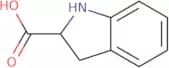
CAS:<p>Indoline-2-carboxylic acid is a photophysical molecule with an absorption maximum at 518 nm. It has been shown to inhibit the activity of enzymes such as cyclooxygenase, lipoxygenase, and monoamine oxidases. This compound has been found to be effective in the treatment of cancer cells. Indoline-2-carboxylic acid is also used in pharmaceutical preparations, where it binds to enantiomers of other molecules and inhibits their biological activity. Indoline-2-carboxylic acid reacts with hydrochloric acid to form allyl carbonate and amide.</p>Formula:C9H9NO2Purity:Min. 97 Area-%Color and Shape:PowderMolecular weight:163.17 g/mol1-Phenyl-1,3-diazinane-2,4-dione
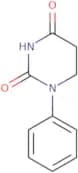
CAS:<p>1-Phenyl-1,3-diazinane-2,4-dione is a synthetic molecule that has been found to be active against influenza virus. It inhibits the replication of influenza A and B viruses by inhibiting the enzyme dihydropyrimidinase. This compound also has an effect on parasitic worms and animal health. 1-Phenyl-1,3-diazinane-2,4-dione is used in research for the development of new drugs. The chemical properties of this drug are similar to β-amino acids that are known to inhibit the synthesis of proteins such as rna polymerase and transporter proteins.</p>Formula:C10H10N2O2Purity:Min. 95%Color and Shape:PowderMolecular weight:190.2 g/molBoc-D-Leu-OH
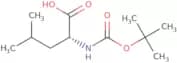
CAS:<p>Boc-D-Leu-OH is a cyclic peptide that has been shown to have antibacterial activity. It is a monomer with a hydroxy group and a cavity. Boc-D-Leu-OH was found to be able to transport hydrophobic compounds across membranes, which may be due to its hydrophobic nature. Boc-D-Leu-OH also induces apoptosis in cells, which can lead to cancer. This compound has been optimized by structural modifications and residue substitutions, which have led to improved properties such as enhanced stability and increased antimicrobial activity.</p>Formula:C11H21NO4Purity:Min. 95%Color and Shape:PowderMolecular weight:231.29 g/mol2-Amino-6-bromo-4-fluorophenol
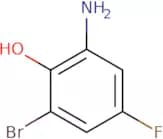
CAS:<p>2-Amino-6-bromo-4-fluorophenol is a reagent that is used in the synthesis of complex compounds. It is also a useful intermediate for the production of fine chemicals and speciality chemicals. This chemical is used as a building block in the synthesis of versatile building blocks, which are needed to produce speciality chemicals such as pharmaceuticals, agrochemicals, fragrances, and dyes. 2-Amino-6-bromo-4-fluorophenol has been used as a reaction component in the synthesis of various organic compounds. It can be synthesized from phenol or aniline via reductive amination.</p>Formula:C6H5BrFNOPurity:Min. 95 Area-%Color and Shape:PowderMolecular weight:206.01 g/mol3-Dimethylaminobenzoic acid
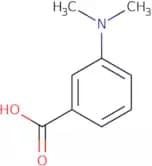
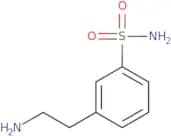
CAS:<p>3-Dimethylaminobenzoic acid is a bacterial enzyme that belongs to the group of p2 carboxylates. It is a non-specific esterase that has been shown to hydrolyze 3-ethylbenzthiazoline-6-sulfonic acid, which is an indicator of root formation. The enzyme activity of 3-dimethylaminobenzoic acid has been demonstrated in kinetic data and redox potential measurements. 3DMBB is found in plants and can be used for the determination of dry weight, as it can hydrolyze triticum aestivum urine samples or cholesterol esters. This enzyme also has catalase activity and can be used in the determination of catalase activity in biological fluids such as urine samples or blood serum.</p>Formula:C9H11NO2Purity:Min. 95%Color and Shape:Off-White PowderMolecular weight:165.19 g/mol3-(2-Aminoethyl)benzenesulfonamide
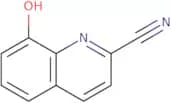
CAS:<p>3-(2-Aminoethyl)benzenesulfonamide (AEEBS) is a pyridine derivative that can be used as a reagent, speciality chemical, or in the synthesis of other compounds. AEEBS is an amine building block and has been used in the preparation of a variety of complex organic compounds, such as pharmaceuticals. This product is also useful for research purposes and can be used to synthesize different organic compounds.</p>Formula:C8H12N2O2SPurity:Min. 95%Color and Shape:PowderMolecular weight:200.26 g/mol8-Hydroxy-2-quinolinecarbonitrile
CAS:8-Hydroxy-2-quinolinecarbonitrile is an uncomplexed ligand that can be used for the synthesis of metal complexes. 8-Hydroxy-2-quinolinecarbonitrile is insoluble in most solvents, including water, and has a high melting point. This compound can be synthesized from acetonitrile and primary amines by condensing with formaldehyde. It is not possible to catalyze this reaction, as it does not undergo homolysis or heterolysis reactions. The uncomplexed ligand has been shown to bind to metal ions such as copper and silver. Its diffraction pattern was found to have a polynuclear nature with a number of diffraction peaks within the range of 5–9 Å.Formula:C10H6N2OPurity:Min. 95%Color and Shape:PowderMolecular weight:170.17 g/mol4-[(1E)-3-Hydroxyprop-1-en-1-yl]phenol
CAS:<p>4-[(1E)-3-Hydroxyprop-1-en-1-yl]phenol (4-HP) is a natural compound that belongs to the group of polyphenols. It is one of the main constituents of the plant extract, which is obtained from leaves of the plant Ferula communis. 4-HP has been shown to have antiinflammatory activity by inhibiting prostaglandin synthesis in 3T3-L1 preadipocytes. The synergic effect can be explained by a combination of its antioxidant and antiinflammatory properties. In an analytical method, 4-HP was found to be present in ferulic acid and p-hydroxybenzoic acid. 4-HP also inhibits dna polymerase activity and rna synthesis at low concentration levels. The mechanism of action may be due to the inhibition of bacterial dna gyrase and topoisomerase I, leading to bacterial cell death.</p>Formula:C9H10O2Purity:Min. 95%Molecular weight:150.17 g/mol2-(3-Hydroxypropyl)benzimidazole
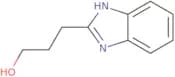
CAS:<p>2-(3-Hydroxypropyl)benzimidazole is a chloroform extract of the bark of the tree, Pongamia pinnata. It has been shown to have antibacterial and antitumor activity. 2-(3-Hydroxypropyl)benzimidazole has been found to be active against methicillin-resistant Staphylococcus aureus (MRSA), showing strong inhibitory effects on bacterial cell growth in vitro. The mechanism of action may be due to its ability to bind to DNA and RNA, preventing transcription and replication. 2-(3-Hydroxypropyl)benzimidazole also inhibits protein synthesis by binding to ribosomes and interfering with the function of enzymes that are involved in this process such as cytochrome c reductase, glutathione reductase, and 3-ketoacyl coenzyme A thiolase.</p>Formula:C10H12N2OPurity:Min. 95%Color and Shape:White PowderMolecular weight:176.22 g/mol4-(N,N-Diethylamino)benzoic acid
CAS:<p>4-(N,N-Diethylamino)benzoic acid is a hydrogenated product of 4-hydroxybenzoic acid. It has been shown to be an effective chemopreventive agent against chemically induced cancer in rats. The analytical method for this compound is based on the fluorescence properties of the compound and its structural studies have been reported. This drug also has bioequivalence properties, which were shown by the spectrometry analyses of human serum samples. The dipole moment of 4-(N,N-diethylamino)benzoic acid is 1.8 D and it reacts with protocatechuic acid to form 4-hydroxybenzaldehyde and diethyl ether.</p>Formula:C11H15NO2Purity:Min. 95%Color and Shape:PowderMolecular weight:193.24 g/mol2-Chloro-N-(2-methoxybenzyl)acetamide
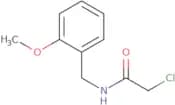
CAS:<p>2-Chloro-N-(2-methoxybenzyl)acetamide is a fine chemical that can be used as a versatile building block in the synthesis of many compounds. It is also a research chemical and reagent with potential use in the production of pharmaceuticals, agricultural chemicals, and pesticides. The compound has been shown to have useful properties for use in complex syntheses, such as its reactivity toward amines and alcohols, which makes it a useful intermediate for the synthesis of other compounds. 2-Chloro-N-(2-methoxybenzyl)acetamide is an excellent high quality reagent that can be used for many purposes.</p>Formula:C10H12ClNO2Purity:Min. 95%Color and Shape:PowderMolecular weight:213.66 g/mol1-(2-Fluoro-4-methoxyphenyl)ethylamine hydrochloride
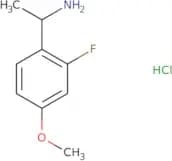
CAS:<p>1-(2-Fluoro-4-methoxyphenyl)ethylamine hydrochloride is a fine chemical that belongs to the group of versatile building blocks. It is a useful reagent, speciality chemical, and reaction component for the synthesis of complex compounds. 1-(2-Fluoro-4-methoxyphenyl)ethylamine hydrochloride is a high quality and useful intermediate for the production of other chemicals. Its CAS number is 1309602-79-6.</p>Formula:C9H13ClFNOPurity:Min. 95%Color and Shape:PowderMolecular weight:205.66 g/mol3,4-Dimethoxytoluene
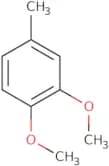
CAS:<p>3,4-Dimethoxytoluene is a methoxylated aromatic hydrocarbon. It has the chemical formula CH3OCH2C6H4CH3. 3,4-Dimethoxytoluene is used as an intermediate in the synthesis of a variety of organic compounds including olefins, polymers, and pharmaceuticals. It can also be used to extract fatty acids from plant oils and animal fats. The extraction yield increases when using this compound as an extraction solvent. 3,4-Dimethoxytoluene is synthesized by reacting benzene with formaldehyde in the presence of a Friedel-Crafts catalyst such as aluminum chloride or zinc chloride.<br>END>></p>Formula:C9H12O2Purity:Min. 95%Color and Shape:PowderMolecular weight:152.19 g/mol2,4-Dimethoxybenzoic acid
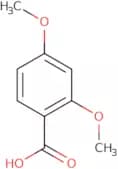
CAS:<p>2,4-Dimethoxybenzoic acid is a phenolic compound that has been shown to bind to the ferrocene carboxylate of protocatechuic acid. The resulting complex was shown to be able to react with chloride ions in an acylation reaction. The kinetic study showed that the rate of reaction increased with increasing concentration of 2,4-dimethoxybenzoic acid. The protonation of 2,4-dimethoxybenzoic acid also increases its ability to react with chloride ions. This acidic compound can also react with amines and other compounds containing nitrogen in a similar manner as acetic anhydride. Addition of alkali hydrolysis may cause the cleavage of the hydrogen bond between 2,4-dimethoxybenzoic acid and protocatechuic acid, releasing 2,4-dimethoxybenzoic acid and protocatechuic acid.</p>Formula:C9H10O4Purity:Min. 95%Color and Shape:White PowderMolecular weight:182.17 g/mol5-Fluoro-4-methylpyridin-3-amine
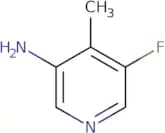
CAS:<p>Versatile small molecule scaffold</p>Formula:C6H7FN2Purity:Min. 95%Color and Shape:PowderMolecular weight:126.13 g/mol4-Hydroxyquinoline
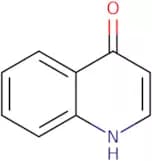
CAS:<p>4-Hydroxyquinoline is a chemical compound that has been shown to have anticancer, anti-inflammatory, and antiviral properties. It is an inhibitor of the enzyme tyrosinase, which is required for the production of melanin. 4-Hydroxyquinoline has also been shown to suppress bowel inflammation by inhibiting the synthesis of 3-hydroxyanthranilic acid in cells. 4-Hydroxyquinoline has been found to be effective against Herpes Simplex Virus Type 1 (HSV1) in cell culture and in vitro assays. <br>4-Hydroxyquinoline's photochemical properties make it a useful precursor for the synthesis of other biologically active compounds. This chemical undergoes a reaction with trifluoroacetic acid to form diazonium salt intermediate, which then reacts with hydrogen peroxide to form an active oxygen species that damages DNA and kills cells.</p>Formula:C9H7NOPurity:Min. 95%Color and Shape:White PowderMolecular weight:145.16 g/mol

![4-[(1E)-3-Hydroxyprop-1-en-1-yl]phenol](/_next/image/?url=https%3A%2Fstatic.cymitquimica.com%2Fproducts%2F3D%2Fthumb-webp%2FVAA64940.webp&w=3840&q=75)