Building Blocks
This section contains fundamental products for the synthesis of organic and biological compounds. Building blocks are the essential starting materials used to construct complex molecules through various chemical reactions. They play a critical role in drug discovery, material science, and chemical research. At CymitQuimica, we offer a diverse range of high-quality building blocks to support your innovative research and industrial projects, ensuring you have the essential components for successful synthesis.
Subcategories of "Building Blocks"
- Boronic Acids & Boronic Acid Derivatives(5,756 products)
- Chiral Building Blocks(1,242 products)
- Hydrocarbon Building Blocks(6,095 products)
- Organic Building Blocks(61,038 products)
Found 196817 products of "Building Blocks"
Sort by
Purity (%)
0
100
|
0
|
50
|
90
|
95
|
100
4-Acetoxy-3-methoxyacetophenone
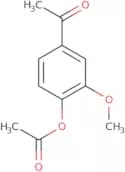
CAS:<p>4-Acetoxy-3-methoxyacetophenone is a phenol that belongs to the group of phenolates. It is an oxidation product of eugenol, which is formed during the reaction of eugenol with halides, such as chlorine or bromine. 4-Acetoxy-3-methoxyacetophenone has been shown to be a potent inhibitor of the growth of bacteria, including Staphylococcus aureus and Escherichia coli. This compound has been studied by x-ray crystallography and it has been found to have a conformation that reproduces well in different conditions. The molecule contains a carbonyl group and an oxygenated group that are essential for its properties.</p>Formula:C11H12O4Purity:Min. 95%Color and Shape:White PowderMolecular weight:208.21 g/mol3-Amino-4-methylbenzonitrile
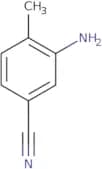
CAS:<p>3-Amino-4-methylbenzonitrile is an organic compound that is produced by the oxidative dehydrogenation of 3,4-dimethylaniline. It has been shown to undergo a number of reactions, including hydrochloric acid transfer hydrogenation and diazotization. This reaction yields 3-amino-4-methylbenzonitrile, dimethylamine and anilines. The transfer hydrogenation of nitroarenes with 3-amino-4-methylbenzonitrile gives 3-(3,4)-diaminobenzonitrile and 2,6-dinitrotoluene. The optimization of this reaction has led to the discovery of new nitrite derivatives as a result of the addition of nitrite in the presence of 3-amino-4-methylbenzonitrile.</p>Formula:C8H8N2Purity:Min. 95%Color and Shape:PowderMolecular weight:132.16 g/mol2-Acetoxybenzonitrile
CAS:<p>2-Acetoxybenzonitrile is an atypical, acidic organic compound with a molecular weight of 136.06 g/mol. It has a melting point of -5.5 °C and decomposes spontaneously at high temperatures to form benzonitrile, carbon dioxide, and water. 2-Acetoxybenzonitrile is able to act as a competitive inhibitor of acetylsalicylic acid (ASA) in the kinetic determination of ASA using acetylation as the rate-determining step. In this experiment, 2-acetoxybenzonitrile was found to be an effective inhibitor of acetylation with a KI value of 1.8 x 10 M. The spectrometer can be used to determine the molecular weight and purity of 2-acetoxybenzonitrile by measuring its absorbance in the ultraviolet region.<br>2-Acetoxybenzonitrile binds metal cations such as Cu(II), Fe(</p>Formula:C9H7NO2Purity:Min. 95%Color and Shape:Clear LiquidMolecular weight:161.16 g/mol3,3-Diphenylpropylamine
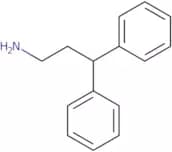
CAS:<p>3,3-Diphenylpropylamine is an organic compound that is used in the analytical method for infectious diseases. It has been shown to be stable under acidic conditions and can be hydrolyzed by enzymes to form 3,3-diphenylpropionic acid. This chemical is also an enantiomer of 2,2-diphenylpropanolamine. The hydrochloride salt of 3,3-diphenylpropylamine has been used as a pharmaceutical preparation for the treatment of gastric ulcers. This drug has pharmacokinetic properties that include a long half-life and low oral bioavailability.</p>Formula:C15H17NPurity:Min. 95%Color and Shape:PowderMolecular weight:211.31 g/mol1-Amino-2-(furan-2-yl)propan-2-ol
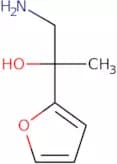
CAS:<p>1-Amino-2-(furan-2-yl)propan-2-ol is a useful building block for the synthesis of heterocycles. It is also used as a reagent for the protection of amines, hydrazones, and carbonyl groups. This compound is soluble in water and is stable under acidic conditions. 1-Amino-2-(furan-2-yl)propan-2-ol has been found to be an important intermediate in the synthesis of pharmaceuticals, pesticides, dyes, perfumes, and solar cells.</p>Formula:C7H11NO2Purity:Min. 95%Color and Shape:Clear LiquidMolecular weight:141.17 g/molFmoc-Gln(Trt)-OH
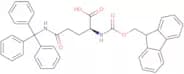
CAS:<p>Fmoc-Gln(Trt)-OH is a synthetic amino acid that contains a hydroxyl group in its side chain. The hydroxyl group of Fmoc-Gln(Trt)-OH can react with other molecules and form conjugates, which leads to impurities in the final product. In the synthesis of Fmoc-Gln(Trt)-OH, the reaction time can affect the efficiency of the synthesis. In order to produce a high concentration of Fmoc-Gln(Trt)-OH, it is necessary to use chromatographic methods for purification. Fmoc-Gln(Trt)-OH has been shown to be beneficial as an anticancer agent due to its ability to inhibit serine proteases.</p>Formula:C39H34N2O5Purity:Min. 98 Area-%Color and Shape:White Off-White PowderMolecular weight:610.7 g/mol5-Fluoroanthranilic acid
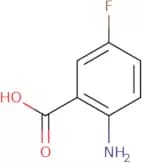
CAS:<p>5-Fluoroanthranilic acid is a synthetic compound that belongs to the class of anthranilic acid derivatives. It inhibits the growth of bacteria by reacting with the hydroxyl group on the bacterial cell wall and binding to its target, which is a cellular component found in Gram-positive bacteria. The molecular modeling and gene analysis have shown that this compound has an optimal reaction at pH 8.5, which is not in accordance with the natural environment of bacteria. 5-Fluoroanthranilic acid has been shown to have anticancer activity against wild-type cells but not against resistant mutants.</p>Formula:C7H6FNO2Purity:Min. 95%Color and Shape:PowderMolecular weight:155.13 g/molFmoc-Trp(Boc)-OH
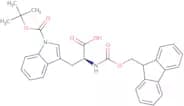
CAS:<p>Fmoc-Trp(Boc)-OH is an amide that has been shown to have the ability to bind to human serum proteins, making it useful in clinical diagnostics. This compound has also been found to be effective against a variety of bacterial strains and fungi. The Fmoc-Trp(Boc)-OH peptide can be synthesized using solid-phase synthesis techniques, which involve attaching amino acid residues to a polymer support. This process is cell specific and allows for the production of peptides with specific sequences. The presence of histidine residues on the side chain of this molecule makes it a good candidate for use in antimicrobial peptides.</p>Formula:C31H30N2O6Purity:Min. 98 Area-%Color and Shape:White Off-White PowderMolecular weight:526.58 g/mol4-Methoxy-3-methylphenylacetone
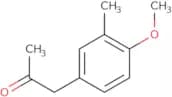
CAS:<p>4-Methoxy-3-methylphenylacetone is an organic chemical that is used as a reaction component, reagent, and useful scaffold. It is a high quality research chemical that can be used as an intermediate in the synthesis of other compounds. 4-Methoxy-3-methylphenylacetone has a CAS number of 16882-23-8 and can be found under the category of speciality chemicals. This compound is versatile and can be used to make complex compounds.</p>Formula:C11H14O2Purity:Min. 95%Color and Shape:Yellow PowderMolecular weight:178.23 g/mol2-Chloro-N-(2-methoxybenzyl)acetamide
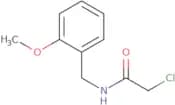
CAS:<p>2-Chloro-N-(2-methoxybenzyl)acetamide is a fine chemical that can be used as a versatile building block in the synthesis of many compounds. It is also a research chemical and reagent with potential use in the production of pharmaceuticals, agricultural chemicals, and pesticides. The compound has been shown to have useful properties for use in complex syntheses, such as its reactivity toward amines and alcohols, which makes it a useful intermediate for the synthesis of other compounds. 2-Chloro-N-(2-methoxybenzyl)acetamide is an excellent high quality reagent that can be used for many purposes.</p>Formula:C10H12ClNO2Purity:Min. 95%Color and Shape:PowderMolecular weight:213.66 g/mol2,3-Dichloropyridine
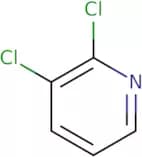
CAS:<p>2,3-Dichloropyridine is an organic compound with the formula P(Cl)Cl. It is a white crystalline solid that reacts violently with water and alcohols. 2,3-Dichloropyridine can be used for the preparation of dichloroacetic acid by reaction with phosphorus pentachloride in the presence of sodium carbonate and water vapor. This compound can also be used to prepare copper chloride by reaction with diazonium salt in hydrochloric acid and chlorine atom in the presence of sodium carbonate at low energy.</p>Formula:C5H3Cl2NPurity:Min. 95%Color and Shape:PowderMolecular weight:147.99 g/molFmoc-Leu-OH
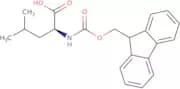
CAS:<p>Fmoc-Leu-OH is a fatty acid that contains a hydroxyl group. It is used in the synthesis of polymer drugs, especially sodium salt polymers. The activity of Fmoc-Leu-OH can be reversed with degarelix acetate, an irreversible inhibitor of ns3 protease. In addition to its use as an antidiabetic agent, Fmoc-Leu-OH has been shown to have immunomodulatory effects and antiinflammatory activity. In tumor treatment, Fmoc-Leu-OH has been shown to inhibit the growth of fat cells without affecting normal cells or causing any toxic side effects.</p>Formula:C21H23NO4Purity:Min. 98 Area-%Color and Shape:White PowderMolecular weight:353.41 g/molFmoc-Gly-OH
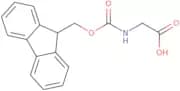
CAS:<p>Fmoc-Gly-OH is a peptide that has been shown to have anti-inflammatory properties. It inhibits the production of inflammatory cytokines by binding to the receptor for IL-1β on du145 cells, which are prostate cancer cells. The synthesis of Fmoc-Gly-OH is achieved through an ester hydrochloride and amide bond formation. This synthesis method is not efficient and requires high amounts of reagents and solvents. Fmoc-Gly-OH has been shown to be effective in inhibiting the inflammatory response in human serum with a dose of 10 μM, but it does not inhibit inflammation in chronic exposure studies with rats or mice.!--</p>Formula:C17H15NO4Purity:Min. 98 Area-%Color and Shape:White Off-White PowderMolecular weight:297.31 g/mol1,1-Dimethylpiperazin-1-ium chloride
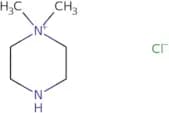
CAS:<p>1,1-Dimethylpiperazin-1-ium chloride is a fine chemical that is used as a building block in the synthesis of complex compounds. It has been shown to be useful as a reaction component in the synthesis of speciality chemicals and intermediate products for research purposes. 1,1-Dimethylpiperazin-1-ium chloride is also an important reagent for the preparation of high quality chemical compounds.</p>Formula:C6H15ClN2Purity:Min. 95%Color and Shape:PowderMolecular weight:150.65 g/mol1,4-Dimethyl-1H-imidazole-5-carboxylic acid
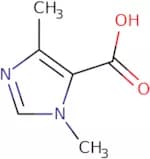
CAS:<p>Versatile small molecule scaffold</p>Formula:C6H8N2O2Purity:Min. 90%Molecular weight:140.14 g/mol2-Chloropropan-1-amine hydrochloride
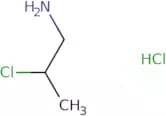
CAS:<p>2-Chloropropan-1-amine hydrochloride is a chlorinating agent that is used to produce 1-naphthaldehyde. It is used in the production of acrylamides, polyacrylamides, and other chemicals. 2-Chloropropan-1-amine hydrochloride has been shown to react with 1-naphthaldehyde in an aerobic reaction at room temperature to produce aziridine, which can be cyclized to form a cyclic compound. This compound can then be alkylated to form a fluxional compound with potentiation properties.</p>Formula:C3H8ClN•HClPurity:Min. 95%Color and Shape:PowderMolecular weight:130.01 g/moltrans-Ferulic acid
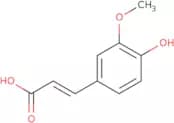
CAS:<p>Hydroxycinnamic acid; inhibitor of 5-LO and 12-LO enzymes</p>Formula:C10H10O4Purity:Min. 99.0 Area-%Color and Shape:White PowderMolecular weight:194.18 g/molCyclohexylmethanethiol
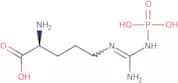
CAS:<p>Cyclohexylmethanethiol is a reactive chemical that is a colorless liquid with a strong odor. It is an organic compound belonging to the group of polybasic, hydroxamic acids and has been found to be an antimicrobial agent. Cyclohexylmethanethiol reacts with the hydroxyl groups on the surface of bacteria and damages the cell wall by disrupting the cross-linking of peptidoglycan. This reaction product inhibits bacterial growth by binding to proteins in the cell membrane, which prevents essential molecules from entering or exiting the cell. Cyclohexylmethanethiol also reacts with alkylthio groups on proteins in bacterial cells, which alters their function and leads to protein denaturation.</p>Formula:C7H14SPurity:Min. 95%Molecular weight:130.25 g/molN-Phospho-L-arginine lithium salt hydrate
CAS:<p>N-Phospho-L-arginine lithium salt hydrate is an arginine derivative that has a complex life cycle. It is used as a substrate for ATP synthesis, and also participates in the formation of disulfide bonds during protein folding. N-Phospho-L-arginine lithium salt hydrate is an important component of many enzymes, which are vital to the body's metabolic processes. This compound can be used to study biochemical properties of enzymes in biological samples and infectious diseases, which could lead to new treatments for these diseases.</p>Formula:C6H15N4O5P·xLi·yH2OPurity:Min. 95%Color and Shape:PowderMolecular weight:254.18 g/mol1-Naphthol dihydrogen phosphate monosodium monohydrate
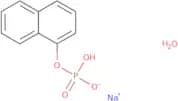
CAS:<p>1-Naphthol dihydrogen phosphate monosodium salt monohydrate is an organic compound that is a useful scaffold for the synthesis of other organic compounds. It is also used as a reagent and building block in organic synthesis. 1-Naphthol dihydrogen phosphate monosodium salt monohydrate has CAS No. 81012-89-7 and can be used as a reaction component, intermediate, or building block in the synthesis of complex compounds. This compound is soluble in water, ethanol, ethers, benzene, chloroform, and acetone. The purity level of 1-naphthol dihydrogen phosphate monosodium salt monohydrate ranges from 99% to 100%.</p>Formula:C10H9O4P•Na•H2OPurity:Min. 98%Color and Shape:PowderMolecular weight:265.16 g/mol