Building Blocks
This section contains fundamental products for the synthesis of organic and biological compounds. Building blocks are the essential starting materials used to construct complex molecules through various chemical reactions. They play a critical role in drug discovery, material science, and chemical research. At CymitQuimica, we offer a diverse range of high-quality building blocks to support your innovative research and industrial projects, ensuring you have the essential components for successful synthesis.
Subcategories of "Building Blocks"
- Boronic Acids & Boronic Acid Derivatives(5,756 products)
- Chiral Building Blocks(1,242 products)
- Hydrocarbon Building Blocks(6,095 products)
- Organic Building Blocks(61,038 products)
Found 196817 products of "Building Blocks"
Sort by
Purity (%)
0
100
|
0
|
50
|
90
|
95
|
100
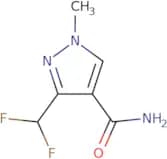
3-(Difluoromethyl)-1-methyl-1H-pyrazole-4-carboxamide
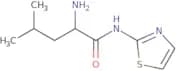
CAS:<p>This drug is a pyrazole analog and is used as an insecticide. 3-(Difluoromethyl)-1-methyl-1H-pyrazole-4-carboxamide inhibits the growth of insects by interfering with their ability to synthesize fatty acids. The effective dose for this compound has been determined in rat hepatocytes. Target pest includes bromodomain proteins, which are proteins that regulate DNA transcription and replication. Control agents include n-oxide, fatty acid, and carbonyl group. Risk group includes prioritizing monoclonal antibodies, sequences, and heart disease</p>Formula:C6H7F2N3OPurity:Min. 95%Molecular weight:175.14 g/mol2-Amino-4-methyl-N-(1,3-thiazol-2-yl)pentanamide
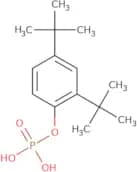
CAS:<p>Versatile small molecule scaffold</p>Formula:C9H15N3OSPurity:Min. 95%Color and Shape:PowderMolecular weight:213.3 g/mol(2,4-Di-tert-butylphenoxy)phosphonic acid
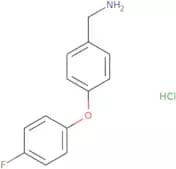
CAS:<p>(2,4-Di-tert-butylphenoxy)phosphonic acid is a fine chemical with CAS No. 18351-37-6. It is an intermediate for the production of other chemicals and can also be used as a reagent or speciality chemical. The compound is a versatile building block that can be used in the production of complex compounds with high quality and versatility. The compound has been shown to react with many functional groups, which makes it useful in research and development. (2,4-Di-tert-butylphenoxy)phosphonic acid is also a useful scaffold for the synthesis of pharmaceuticals.</p>Formula:C14H23O4PPurity:Min. 95%Color and Shape:PowderMolecular weight:286.3 g/mol4-(4-Fluorophenoxy)benzylamine hydrochloride
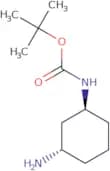
CAS:<p>4-(4-Fluorophenoxy)benzylamine hydrochloride is a metabolic agent that inhibits the metabolism of phenylpropionic acid and butanoic acid. It is used industrially as an oxime to protect other organic compounds from damage by peroxides, such as in polymerization reactions. 4-(4-Fluorophenoxy)benzylamine hydrochloride has been shown to be effective in treating metabolic diseases, such as phenylketonuria and urea cycle disorders.</p>Formula:C13H12FNO·HClPurity:Min. 95%Color and Shape:PowderMolecular weight:253.7 g/mol(1S,3S)-1-(Boc-amino)cyclohexan-3-amine
CAS:<p>Versatile small molecule scaffold</p>Formula:C11H22N2O2Purity:Min. 95%Molecular weight:214.3 g/mol7-Methyl-[1,2,4]triazolo[1,5-α]pyridin-6-amine
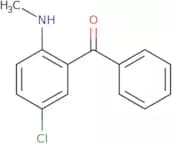
CAS:<p>7-Methyl-[1,2,4]triazolo[1,5-α]pyridin-6-amine is an organic chemical compound that is a reaction component and useful scaffold. It is also used as a reagent in the synthesis of other compounds, such as pharmaceuticals and agrochemicals. 7-Methyl-[1,2,4]triazolo[1,5-α]pyridin-6-amine has been shown to have high purity and quality. This chemical is a versatile building block for the synthesis of complex compounds.</p>Formula:C7H8N4Purity:Min. 95%Color and Shape:PowderMolecular weight:148.17 g/mol5-Chloro-2-methylaminobenzophenone
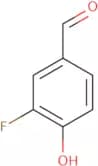
CAS:<p>5-Chloro-2-methylaminobenzophenone is an intermediate in the synthesis of 2,4-dichlorophenoxyacetic acid. 5-Chloro-2-methylaminobenzophenone is a reactive intermediate that can be used for wastewater treatment and for the production of chemicals that are used in the manufacture of other substances. It is also a reaction intermediate in chemical ionization. It has been shown to have chronic toxicity as well as carcinogenic effects when it is present in urine samples or human serum. In addition, 5-Chloro-2-methylaminobenzophenone has been found to cause light sensitivity and skin irritation when it is exposed to UV light. This chemical reacts with hydrochloric acid and pyridoxine hydrochloride to form 2,4,-dichlorophenoxyacetic acid. The activation energies for this process are between 30 and 60 kJ/mol.</p>Formula:C14H12NOClPurity:Min. 95%Color and Shape:PowderMolecular weight:245.7 g/mol3-Fluoro-4-hydroxybenzaldehyde
CAS:<p>3-Fluoro-4-hydroxybenzaldehyde is a hydroxyl group with an activation energy of 87.7 kJ/mol. The molecule can be synthesized by the reaction of salicylaldehyde and 3,4-dihydroxybenzaldehyde in the presence of an organic solvent such as chloroform or methylene chloride. This compound has been shown to cause cell death in ht-29 cells and cancer cell lines, as well as human ovarian carcinoma cells. It causes apoptosis by inhibiting mitochondrial membrane potential, which leads to decreased intracellular ATP levels. 3-Fluoro-4-hydroxybenzaldehyde is most commonly used in molecular modeling studies to represent the hydroxyl group due to its simplicity in comparison to other hydroxyl groups like methanol or ethanol.</p>Formula:C7H5FO2Purity:90%Color and Shape:White PowderMolecular weight:140.11 g/mol3-Fluoro-4-methoxybenzaldehyde
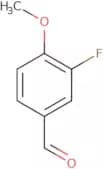
CAS:<p>3-Fluoro-4-methoxybenzaldehyde is a chemical compound that is used in the synthesis of natural products. It has been shown to have inhibitory properties against cancer cells, and has been synthesized as an analog of 3-fluoro-4-hydroxybenzaldehyde. The biological function of 3-fluoro-4-methoxybenzaldehyde is not yet known. Hydrochloric acid may be used to react with 3-fluoro-4-methoxybenzaldehyde to form a salt. This chemical also has anti-tumor effects and can be synthesized using cryogenic techniques.</p>Formula:C8H7FO2Purity:Min. 95%Color and Shape:Slightly Yellow PowderMolecular weight:154.14 g/mol2,4-Dichloronitrobenzene
CAS:<p>2,4-Dichloronitrobenzene is a chemical compound that is used in the production of dyes, drugs, and pesticides. It has been shown to be effective against alopecia areata in vitro. This chemical also exhibits detoxification enzymes activity. 2,4-Dichloronitrobenzene is activated by benzalkonium chloride and then undergoes microbial metabolism. The chlorine atom on this molecule can be substituted with another kind of halogen in order to modify its properties. In vitro studies have shown that 2,4-dichloronitrobenzene is metabolized by human serum as well as wastewater treatment systems.<br>2,4-Dichloronitrobenzene</p>Formula:C6H3Cl2NO2Purity:Min. 95%Color and Shape:Solidified MassMolecular weight:192 g/mol2,3-Dichloro-N-[2-({2-[(2,3-dichlorophenyl)amino]ethyl}amino)ethyl]aniline
CAS:<p>2,3-Dichloro-N-[2-({2-[(2,3-dichlorophenyl)amino]ethyl}amino)ethyl]aniline is a chemical compound that is used as a building block in the synthesis of other chemicals. It is also used as a reagent, speciality chemical and research chemical. This product has many uses in the field of organic chemistry, such as use as an intermediate in organic reactions or as a scaffold for complex compounds. 2,3-Dichloro-N-[2-({2-[(2,3-dichlorophenyl)amino]ethyl}amino)ethyl]aniline has high quality and can be used to synthesize many different products.</p>Formula:C16H17Cl4N3Purity:Min. 95%Color and Shape:PowderMolecular weight:393.1 g/mol2-{[1-(2,4-Difluorophenyl)ethyl]amino}-N-ethylacetamide
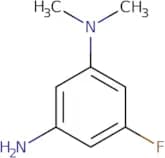
CAS:<p>Versatile small molecule scaffold</p>Formula:C12H16F2N2OPurity:Min. 95%Color and Shape:PowderMolecular weight:242.26 g/mol5-Fluoro-N1,N1-dimethylbenzene-1,3-diamine
CAS:<p>5-Fluoro-N1,N1-dimethylbenzene-1,3-diamine is a reaction component that can be used in the synthesis of compounds with a wide range of applications. It can be used as a reagent and has been shown to exhibit high quality in research. 5-Fluoro-N1,N1-dimethylbenzene-1,3-diamine is also known to be useful for the synthesis of pharmaceuticals, agrochemicals and other chemicals. The compound can be used as an intermediate or building block in the synthesis of more complex compounds. 5-Fluoro-N1,N1-dimethylbenzene-1,3-diamine is also versatile due to its ability to react with various types of functional groups including amines and thiols. This product is a fine chemical that exhibits a high degree of purity when synthesized.</p>Formula:C8H11FN2Purity:Min. 95%Color and Shape:Clear LiquidMolecular weight:154.18 g/molN-(1-Cyano-1-methylethyl)-2-methylpropanamide
CAS:<p>N-(1-Cyano-1-methylethyl)-2-methylpropanamide is a chemical that is used in pharmaceutical dosage. It is a prodrug of aminopropiophenone, which has been shown to be useful for the treatment of depression. This chemical is readily soluble in water and hydrochloric acid, but insoluble in trifluoroacetic acid or hydrophilic interaction chromatography. N-(1-Cyano-1-methylethyl)-2-methylpropanamide has been shown to bind to chloride ions, amines, and dodecyl groups.</p>Formula:C8H14N2OPurity:Min. 95%Color and Shape:PowderMolecular weight:154.21 g/mol4-Hydroxybenzaldehyde
CAS:<p>4-Hydroxybenzaldehyde is a phenolic compound that is produced in plants. 4-Hydoxybenzaldehyde is used as an extractant for sodium carbonate and hydroxyl group from acetate extract. The locomotor activity of animals was tested following administration of this substance, and it has been shown to have a high resistance against x-ray crystallography. The reaction mechanism for the formation of p-hydroxybenzoic acid from 4-hydroxybenzaldehyde has been proposed, which may be due to the oxidation of 4-hydroxybenzaldehyde by hydrogen peroxide. This reaction also induces apoptosis pathway in cells. Kinetic data for the reaction between 4-hydroxybenzaldehyde and hydrogen peroxide were obtained using UV spectroscopy.</p>Formula:C7H6O2Purity:Min. 95%Color and Shape:White PowderMolecular weight:122.12 g/molHypoxanthine
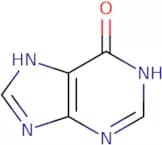
CAS:<p>Hypoxanthine is a nucleoside that is found in human cells. It is synthesized from guanine by the enzyme, xanthine oxidoreductase. Hypoxanthine is also produced from xanthine by adenosine deaminase and converted back to xanthine, which can then be reused for DNA synthesis. Hypoxanthine has been shown to inhibit the growth of photosynthetic bacteria, such as Rhodopseudomonas viridis and Rhodobacter sphaeroides. This inhibition may be due to an equilibrative nucleotide effect on the folate receptor. The x-ray diffraction data collected from the chrysanthemum flower (a source of hypoxanthine) showed that hypoxanthine has a calcium salt structure.</p>Formula:C5H4N4OPurity:Min. 95%Color and Shape:White PowderMolecular weight:136.11 g/mol2-(Hydroxymethyl)-3-methylfuran
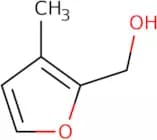
CAS:<p>2-(Hydroxymethyl)-3-methylfuran is a ketone with a ring system that contains one hydroxymethyl group and two methyl groups. It is also an adduct, which means that it is the product of a reaction between two substances. This compound can be used as a binder in pyrotechnics and polymers. 2-(Hydroxymethyl)-3-methylfuran has been proven to be stable under normal conditions, making it an excellent model compound for studying other compounds with similar structures.</p>Formula:C6H8O2Purity:Min. 95 Area-%Color and Shape:Clear LiquidMolecular weight:112.13 g/mol4-Cyanobenzaldehyde
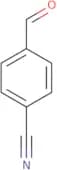
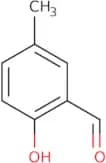
CAS:<p>4-Cyanobenzaldehyde is an acid that inhibits tyrosinase, an enzyme involved in the production of melanin. It has been shown to have a strong inhibitory effect on the activity of this enzyme in a variety of biological studies. 4-Cyanobenzaldehyde is chemically stable and does not react with hydrochloric acid or water at room temperature, making it suitable for use in experiments involving these substances. This chemical also has antiinflammatory properties and can be used as a substitute for phenols in some chemical reactions. 4-Cyanobenzaldehyde is soluble in methanol and reacts with diphenolase, an enzyme involved in the synthesis of lignin, to produce benzophenone and benzoic acid. This reaction may be important for the formation of lignin during wood decomposition.</p>Formula:C8H5NOPurity:80%Color and Shape:PowderMolecular weight:131.13 g/mol2-Hydroxy-5-methylbenzaldehyde
CAS:<p>2-Hydroxy-5-methylbenzaldehyde (2HMBA) is a biologically active molecule that has been shown to bind to human serum albumin. The binding constants for the two molecules are relatively low, with a Kd of approximately 2.6 x 10 M. The nitrogen atoms in the molecule form hydrogen bonds with the hydroxyl group on the ethylene diamine, which stabilizes it and prevents it from dissolving in water. This compound also has a cyclohexane ring and can be found in natural products such as erythronolide B, an antibiotic produced by Streptomyces erythreus. 2HMBA is stable when complexed with hydrochloric acid or potassium dichromate and can be used in structural analysis of other molecules.</p>Formula:C8H8O2Purity:Min. 95%Color and Shape:Off-White PowderMolecular weight:136.15 g/mol2-Methyl-3-morpholin-4-yl-propionic acid hydrochloride
CAS:<p>2-Methyl-3-morpholin-4-yl-propionic acid hydrochloride is a reagent that can be used in the synthesis of various compounds. It is also a building block for the preparation of complex compounds and fine chemicals. The CAS number for this chemical is 1052522-32-3.</p>Formula:C8H16ClNO3Purity:Min. 95%Color and Shape:PowderMolecular weight:209.67 g/mol

![7-Methyl-[1,2,4]triazolo[1,5-α]pyridin-6-amine](/_next/image/?url=https%3A%2Fstatic.cymitquimica.com%2Fproducts%2F3D%2Fthumb-webp%2FXLD46650.webp&w=3840&q=75)

![2,3-Dichloro-N-[2-({2-[(2,3-dichlorophenyl)amino]ethyl}amino)ethyl]aniline](/_next/image/?url=https%3A%2Fstatic.cymitquimica.com%2Fproducts%2F3D%2Fthumb-webp%2FZGC85789.webp&w=3840&q=75)
![2-{[1-(2,4-Difluorophenyl)ethyl]amino}-N-ethylacetamide](/_next/image/?url=https%3A%2Fstatic.cymitquimica.com%2Fproducts%2F3D%2Fthumb-webp%2FFWB46460.webp&w=3840&q=75)