Building Blocks
This section contains fundamental products for the synthesis of organic and biological compounds. Building blocks are the essential starting materials used to construct complex molecules through various chemical reactions. They play a critical role in drug discovery, material science, and chemical research. At CymitQuimica, we offer a diverse range of high-quality building blocks to support your innovative research and industrial projects, ensuring you have the essential components for successful synthesis.
Subcategories of "Building Blocks"
- Boronic Acids & Boronic Acid Derivatives(5,756 products)
- Chiral Building Blocks(1,242 products)
- Hydrocarbon Building Blocks(6,095 products)
- Organic Building Blocks(61,038 products)
Found 196817 products of "Building Blocks"
Sort by
Purity (%)
0
100
|
0
|
50
|
90
|
95
|
100
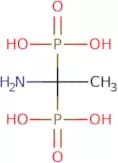
(1-Aminoethane-1,1-diyl)diphosphonic acid
CAS:<p>(1-Aminoethane-1,1-diyl)diphosphonic acid (HEDPA) is a synthetic phosphonate that is soluble in water and organic solvents. HEDPA has been used in gravimetric analysis because it is stable to boiling point and can be easily dried on the surface of a glass plate. It also has been used as a reagent for the synthesis of hydroxy methyl phosphonates and other phosphonate compounds. In crystal x-ray diffraction, HEDPA shows strong hydrogen bonding interactions with counterions such as PO43-, SO42-, or NH4+. The coordination chemistry of HEDPA involves metal ions such as Fe3+, Cu2+, Co2+, Ni2+, Cr3+, Mn2+, Zn2+, Cd2+ and Al3+. Functional theory predicts that the architecture of HEDPA's supramolecular units are either tetrahedral or octahedral. Inf</p>Formula:C2H9NO6P2Purity:Min. 95%Color and Shape:PowderMolecular weight:205.04 g/mol1-(2,3-Difluorophenyl)ethan-1-amine hydrochloride
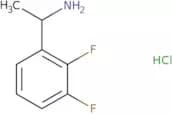
CAS:<p>1-(2,3-Difluorophenyl)ethan-1-amine hydrochloride is a high quality chemical. It is a reagent that can be used as an intermediate in the synthesis of complex compounds and fine chemicals. This compound is also a useful scaffold for the development of new drugs and novel materials. 1-(2,3-Difluorophenyl)ethan-1-amine hydrochloride is also a versatile building block for reactions in organic chemistry. It is a speciality chemical that can be used as a research chemical or reaction component for synthetic organic chemistry.</p>Formula:C8H10ClF2NPurity:Min. 95%Color and Shape:PowderMolecular weight:193.62 g/mol4-Chloro-3-nitrocinnamic acid
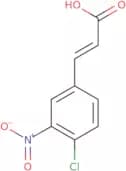
CAS:<p>4-Chloro-3-nitrocinnamic acid is a thionyl chloride derivative of cinnamic acid. It is used as an intermediate in the preparation of pharmaceuticals and dyestuffs. 4-Chloro-3-nitrocinnamic acid inhibits the activity of amides, dimethylformamide, alkaline hydrolysis, xylene, carboxyphenyl, cinnamic, refluxing, nitrophenyl and carboxylic acids. 4-Chloro-3-nitrocinnamic acid reacts with chloride to form the corresponding chloride salt. This compound can also react with formamide to form an amide salt. The ester group of 4-chloro-3-nitrocinnamic acid can be cleaved by nitro compounds to produce nitro derivatives.</p>Formula:C9H6ClNO4Purity:Min. 95%Color and Shape:Off-White PowderMolecular weight:227.6 g/mol4-Cyanopyridine
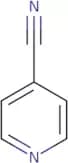
CAS:<p>4-Cyanopyridine is an organic compound with the chemical formula (CN)N. It is a white solid that is soluble in water and polar solvents. When exposed to hydrochloric acid, 4-cyanopyridine undergoes a reaction that converts it to picolinic acid. This reaction proceeds through a mechanism in which the nucleophilic hydroxyl group of 4-cyanopyridine attacks the protonated nitrogen atom of hydrochloric acid. The resulting intermediate then loses a proton and becomes picolinic acid. Kinetic data on this reaction has been obtained from UV-vis spectroscopy, X-ray diffraction, and mass spectrometry experiments. The crystal structures of the bound form of 4-cyanopyridine and its quinoline derivatives have also been determined by x-ray crystallography.</p>Formula:C6H4N2Purity:Min. 95%Color and Shape:PowderMolecular weight:104.11 g/molSodium 2-methyl-4,5-dihydro-1,3-thiazole-4-carboxylate
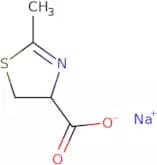
CAS:<p>Versatile small molecule scaffold</p>Formula:C5H6NNaO2SPurity:Min. 95%Color and Shape:PowderMolecular weight:167.16 g/molBis(trifluoromethane)sulfonimide lithium salt
CAS:<p>Please enquire for more information about Bis(trifluoromethane)sulfonimide lithium salt including the price, delivery time and more detailed product information at the technical inquiry form on this page</p>Formula:C2F6LiNO4S2Molecular weight:287.09 g/molRef: 3D-Q-101273
1kgTo inquire5kgTo inquire250gTo inquire500gTo inquire2500gTo inquire-Unit-kgkgTo inquire(2,5-Dichlorophenyl)acetone
CAS:<p>(2,5-Dichlorophenyl)acetone is a chemical compound that is used as a reaction component in the synthesis of other compounds. It can be used as a reagent in the preparation of high quality research chemicals, speciality chemicals and fine chemicals. It is also used as an intermediate in the synthesis of complex compounds. (2,5-Dichlorophenyl)acetone has CAS number 102052-40-4.</p>Formula:C9H8Cl2OPurity:Min. 95%Color and Shape:PowderMolecular weight:203.06 g/mol2-Chloro-4-methylsulfonylbenzoic acid
CAS:<p>2-Chloro-4-methylsulfonylbenzoic acid is a chlorinating agent that can be used to produce triketones from ketones. It is usually used as a hydrogen peroxide scavenger and a chlorinating agent in the food industry. 2-Chloro-4-methylsulfonylbenzoic acid can also be used to produce glyphosate, phosphoric acid solution, and chloride. The chlorinating property of this compound is due to its ability to form hypochlorous acid when it reacts with water. This reaction produces hypochlorite ions that are active against microorganisms by disrupting the cell membrane. 2-Chloro-4-methylsulfonylbenzoic acid can react with organic solvents such as carbon tetrachloride and optimizes the introduction of chlorine into organic compounds.</p>Formula:C8H7ClO4SPurity:Min. 95%Color and Shape:White PowderMolecular weight:234.66 g/mol2-Chloro-4-fluorobenzonitrile
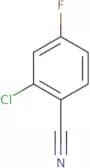
CAS:<p>2-Chloro-4-fluorobenzonitrile is a drug that has been shown to have antitumor effects by binding to the CB2 receptor. It inhibits hydrogenation reduction of the molecule, which may be due to its ability to react with both functional groups. 2-Chloro-4-fluorobenzonitrile has also been shown to inhibit progesterone receptor, which may lead to an increase in progesterone levels and a decrease in estrogen levels. The pharmacokinetic properties of this compound are not yet known.</p>Formula:C7H3ClFNPurity:Min. 95%Color and Shape:White PowderMolecular weight:155.56 g/molCyclic-3-(1,2-ethanediylacetal)-17β-cyano-17α-hydroxy-estra-5(10),9(11)-dien-3-one
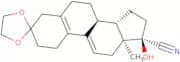
CAS:<p>Cyclic-3-(1,2-ethanediylacetal)-17beta-cyano-17alpha-hydroxy-estra-5(10),9(11)-dien-3 -one is a chemical compound that is used as a reaction component, reagent, and high quality research chemical. It can be used as a useful scaffold or building block for the synthesis of complex compounds. Cyclic-3-(1,2-ethanediylacetal)-17beta-cyano-17alpha -hydroxyestra-5(10),9(11)-diene 3 one has CAS number 3330019 5.</p>Formula:C21H27NO3Purity:Min. 95%Color and Shape:White to off-white solid.Molecular weight:341.44 g/mol3-Chloro-4-fluoroaniline
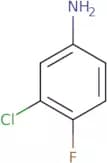
CAS:<p>3-Chloro-4-fluoroaniline is an amine that is used as a chemical intermediate and an antimicrobial agent. It is a potent inhibitor of the enzyme IDO1. 3-Chloro-4-fluoroaniline has been shown to inhibit the growth of carcinoma cell lines and epidermal growth factor in vitro, which may be due to its ability to inhibit the production of protein data. This drug also inhibits the production of the growth factor n-dimethyl formamide by hydrolyzing it into dimethylamine and formic acid, which are then excreted in urine samples. 3-Chloro-4-fluoroaniline has been found to be highly effective at inhibiting IDO1, as well as other enzymes such as tryptophan 2,3 dioxygenase (TDO2) and indoleamine 2,3 dioxygenase (IDO).</p>Formula:C6H5ClFNPurity:Min. 95%Color and Shape:Clear Liquid Solidified MassMolecular weight:145.56 g/mol3-Chloro-4-hydroxyphenylacetic acid.
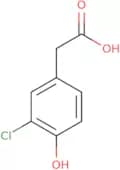
CAS:<p>3-Chloro-4-hydroxyphenylacetic acid is an organic compound that has a chemical structure that includes a phenyl group substituted with a chlorine atom. 3-Chloro-4-hydroxyphenylacetic acid is an intermediate in the synthesis of many drugs, and it is used to make the monosodium salt, which is a common form of this drug. 3-Chloro-4-hydroxyphenylacetic acid is one of the chemicals that has been shown to have physiological effects on humans and other animals. The most notable effect for humans is that it can be converted into cancerous cells by radiation. In addition, 3-chloro-4-hydroxyphenylacetic acid has been shown to have chemotherapeutic properties against prostate cancer cells and infectious diseases such as HIV and herpes simplex virus type 1 (HSV1). This chemical also exhibits immunomodulatory properties when administered system</p>Formula:C8H7ClO3Purity:Min. 98%Color and Shape:PowderMolecular weight:186.59 g/mol4-Chloropyrimidine
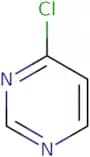
CAS:<p>4-Chloropyrimidine is a nucleophilic compound that is synthesized by the reaction of acetone with hydrogen chloride. The proton NMR spectrum of 4-chloropyrimidine has been determined and it has been shown to be active against herpes simplex virus in clinical studies. The synthesis of this compound is accomplished using a flow system. It can be prepared from trifluoroacetic acid and carbon disulphide or from sodium hydroxide and amines. The structure of 4-chloropyrimidine was determined by X-ray crystallography. It reacts with organic compounds to form new compounds, such as fluorine, which are often toxic to humans or animals.</p>Formula:C4H3ClN2Purity:90%MinColor and Shape:Off-White PowderMolecular weight:114.53 g/mol2-Chloro-1,1,1-trimethoxyethane
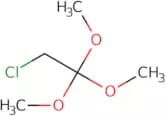
CAS:<p>2-Chloro-1,1,1-trimethoxyethane is a reagent that is used in the synthesis of recombinant proteins. It is also used to produce monoclonal antibodies. Fatty acids can be analyzed by using these reagents as they are soluble in this solvent. The structural analysis of fatty acids has been shown to have anticancer activity. 2-Chloro-1,1,1-trimethoxyethane reacts with glycosyl residues on lysine residues in proteins and produces an acid that causes the protein to unfold and denature. This reaction has been shown to have anticancer activity against cervical cancer cells in human liver cells.</p>Formula:C5H11ClO3Purity:Min. 97.5%Color and Shape:Colorless Clear LiquidMolecular weight:154.59 g/mol2,4-Difluoro-3-hydroxybenzoic acid methyl ester
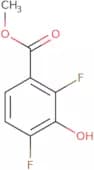
CAS:<p>2,4-Difluoro-3-hydroxybenzoic acid methyl ester is a fine chemical that is used as a versatile building block for research chemicals and other complex compounds. It can be used as a reaction component in the synthesis of new chemical entities or as a reagent for organic chemistry reactions. 2,4-Difluoro-3-hydroxybenzoic acid methyl ester has CAS No. 194804-80-3 and is available in high quality.</p>Formula:C8H6F2O3Purity:Min. 95%Color and Shape:PowderMolecular weight:188.13 g/mol6-Chloro-7-iodo-7-deazapurine
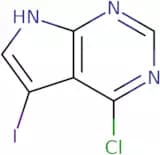
CAS:<p>6-Chloro-7-iodo-7-deazapurine is a nucleoside analogue that is synthesized by a cross-coupling reaction between 6-chloro-2,4(1H,3H)-pyrimidinedione and 7-iodo-7-(trifluoromethyl)purine. 6CIDP has been shown to inhibit growth of epidermal cells at concentrations as low as 0.1 µM, with cytostatic effects seen at 10 µM. 6CIDP has also been shown to potently inhibit the replication of the human papilloma virus in vitro and in vivo. 6CIDP is currently being investigated for the treatment of AIDS and other viral infections. The molecular modeling studies on this compound have revealed that it may be a potent inhibitor of the epidermal growth factor receptor (EGFR).</p>Formula:C6H3ClIN3Purity:Min. 98 Area-%Color and Shape:White PowderMolecular weight:279.47 g/mol4-(Hydroxymethyl)benzamide
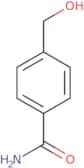
CAS:<p>4-(Hydroxymethyl)benzamide is a heterocyclic compound that is activated with sodium borohydride. It can be used in the synthesis of peptides, which are chains of amino acids. 4-(Hydroxymethyl)benzamide has been shown to have a high efficiency for the synthesis of peptides and has been shown to be an excellent reactant for manual peptide synthesis. Kinetics studies have also shown that this reagent is more effective than other deprotecting agents such as hydrochloric acid. This compound has been found to be useful in the analysis of amino acids and can be used in the ligation reaction during peptide synthesis. The deprotection reactions catalyzed by 4-(Hydroxymethyl)benzamide are typically carried out at room temperature, although solvents such as dichloromethane or chloroform can be used instead if necessary.</p>Formula:C8H9NO2Purity:Min. 95%Molecular weight:151.16 g/molCyclopentylmethanol
CAS:<p>Cyclopentylmethanol is a chemical compound with the molecular formula CH3OH. It is a colorless liquid that is soluble in water and has a distinctive, sweet odor. Cyclopentylmethanol is used as an intermediate in organic synthesis and as a solvent for nitrocellulose, cellulose acetate, cellulose nitrate, and similar materials. It reacts with chlorine at high temperatures to form chlorinated cyclopentylmethanols. This reaction can be used to synthesize hydroxyapatite (a mineral) from calcium phosphate (a mineral). Cyclopentylmethanol also reacts with nicotinic acetylcholine receptors in the brain, causing them to desensitize. Hydroxyapatite can also be synthesized by reacting cyclopentylmethanol with dinucleotide phosphate and hydroxyl group containing compounds such as esters or soluble guanylate cyclase enzymes. The reactions produce hydrogen</p>Formula:C6H12OPurity:Min. 95%Color and Shape:Clear Colourless LiquidMolecular weight:100.16 g/mol3,4-Dihydroxybenzylamine hydrobromide
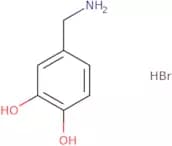
CAS:<p>3,4-Dihydroxybenzylamine hydrobromide is a chemical that reacts with hydrogen peroxide to produce light. It is used as a nutrient for the chemiluminescent reaction in a nutrient solution to detect dopamine, chlorogenic acids, and trifluoroacetic acid. 3,4-Dihydroxybenzylamine hydrobromide can also be used as an analytical method for the measurement of cortisol concentration in plasma and saliva samples. This chemical analogically reacts with monoamine neurotransmitters such as dopamine and gamma-aminobutyric acid (GABA) to form fluorescent probes. 3,4-Dihydroxybenzylamine hydrobromide is not toxic or mutagenic and has been shown to be safe for use in humans.</p>Formula:C7H10BrNO2Purity:Min. 95%Color and Shape:PowderMolecular weight:220.06 g/mol3,5-Difluoro-4-hydroxybenzaldehyde
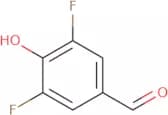
CAS:<p>3,5-Difluoro-4-hydroxybenzaldehyde is a biochemical that belongs to the group of anticancer agents. It is activated by hydroxyl radicals and inhibits cancer cells. 3,5-Difluoro-4-hydroxybenzaldehyde inhibits protein synthesis in the cell by binding to messenger RNA and preventing its translation into protein. This compound also has inhibitory properties against DNA polymerase, which prevents DNA replication and transcription. 3,5-Difluoro-4-hydroxybenzaldehyde can be used as a template for oligodeoxynucleotides (ODN) to enhance photochemical properties.</p>Formula:C7H4F2O2Purity:Min. 95%Color and Shape:Off-White PowderMolecular weight:158.1 g/mol