Building Blocks
This section contains fundamental products for the synthesis of organic and biological compounds. Building blocks are the essential starting materials used to construct complex molecules through various chemical reactions. They play a critical role in drug discovery, material science, and chemical research. At CymitQuimica, we offer a diverse range of high-quality building blocks to support your innovative research and industrial projects, ensuring you have the essential components for successful synthesis.
Subcategories of "Building Blocks"
- Boronic Acids & Boronic Acid Derivatives(5,756 products)
- Chiral Building Blocks(1,242 products)
- Hydrocarbon Building Blocks(6,095 products)
- Organic Building Blocks(61,038 products)
Found 196817 products of "Building Blocks"
Sort by
Purity (%)
0
100
|
0
|
50
|
90
|
95
|
100
(R,R)-2,8-Diazabicyclo[4.3.0]nonane
CAS:<p>(R,R)-2,8-Diazabicyclo[4.3.0]nonane is an antibacterial agent that is synthesized from piperazine and fluoroquinolone derivatives. It has a high yield of (R,R)-2,8-diazabicyclo[4.3.0]nonane and a low reaction time in the microwave amination reaction. This compound can be used to replace environmentally hazardous chemicals such as mercury(II) chloride in the synthesis of (R,R)-2,8-diazabicyclo[4.3.0]nonane by avoiding the use of toxic mercury compounds and reducing the cost of production by using microwave irradiation.</p>Formula:C7H14N2Purity:Min. 95%Color and Shape:PowderMolecular weight:126.2 g/mol6-Chloro-N1,N1-dimethylbenzene-1,3-diamine
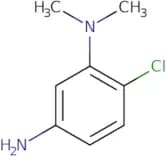
CAS:<p>6-Chloro-N1,N1-dimethylbenzene-1,3-diamine is a reagent that has been used as a building block in the synthesis of complex compounds and speciality chemicals. It is an intermediate that has been used in the synthesis of heterocycles and polymers. 6-Chloro-N1,N1-dimethylbenzene-1,3-diamine is also a versatile building block with many potential applications in organic chemistry. It can be used as a starting material for the synthesis of pharmaceuticals and other fine chemicals. In addition, this compound is also available for research purposes.</p>Formula:C8H11ClN2Purity:Min. 95%Color and Shape:PowderMolecular weight:170.64 g/mol2,6-Diaminotoluene
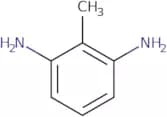
CAS:<p>2,6-Diaminotoluene (2,6-TDA), also known as o-tolidine, is a colorless to yellowish crystalline solid that is soluble in organic solvents. This compound has been shown to be genotoxic and carcinogenic in laboratory animals. 2,6-TDA binds to the receptor molecule of DNA and inhibits the repair of DNA strand breaks, leading to mutations and cancerous cells. 2,6-TDA has been shown to have toxic effects on fetal bovine kidney cells at low doses. The toxicity studies showed that 2,6-TDA inhibits cell growth and induces apoptosis in a dose dependent manner. This study also shows that 2,6-TDA inhibits protein synthesis by binding to ribosomes in the cytoplasm.</p>Formula:C7H10N2Purity:Min. 95%Color and Shape:PowderMolecular weight:122.17 g/mol1,2-Diamino-4,5-methylenedioxybenzene dihydrochloride
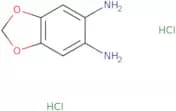
CAS:<p>1,2-Diamino-4,5-methylenedioxybenzene dihydrochloride, also known as DMB dihydrochloride, is a building block used in organic chemistry. DMB dihydrochloride is the bis HCl salt of a 1,3-benzodioxole ring with amino groups in the 4 and 5 positions.</p>Formula:C7H10Cl2N2O2Purity:Min. 90 Area-%Color and Shape:Beige PowderMolecular weight:225.07 g/molAdipoRon
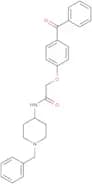
CAS:<p>AdipoRon is a high-quality, versatile building block that can be used in the synthesis of complex molecules. It is a reagent and speciality chemical with applications in research and development. AdipoRon reacts with other chemicals to form new compounds, which are useful as scaffolds for the synthesis of pharmaceuticals or fine chemicals.</p>Formula:C27H28N2O3Purity:Min. 95%Color and Shape:PowderMolecular weight:428.53 g/mol4,5-Diamino-6-hydroxy-2-mercapto pyrimidine
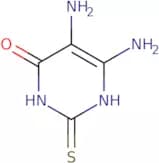
CAS:<p>4,5-Diamino-6-hydroxy-2-mercaptopyrimidine is a primary amino that binds to the sulfur in a molecule. It has potent antibacterial activity and can be used for desulfurization of petroleum products. 4,5-Diamino-6-hydroxy-2-mercaptopyrimidine has been shown to react with some cancer cells in vitro and may be used as an anticancer agent. It can also be used as a catalyst for the oxidation of organic compounds in wastewater treatment or hydrochloric acid production. 4,5-Diamino-6-hydroxy-2-mercaptopyrimidine can be synthesized by reacting 3 mercapto propionic acid with 5 aminopyrimidines. The synthesis was optimized using a kinetic method and coordination chemistry. It has also been shown to inhibit cell growth when used on human erythrocytes using patch clamp experiments and assays.br>br</p>Formula:C4H6N4OSPurity:Min. 95%Color and Shape:Off-White PowderMolecular weight:158.18 g/mol2,3,5-Trichloro-4-methylpyridine
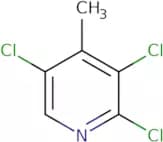
CAS:<p>2,3,5-Trichloro-4-methylpyridine is a chemical building block that is used in the synthesis of fine chemicals. It has been shown to be a useful intermediate and building block for complex compounds. This compound is an important reagent for the production of pharmaceuticals and other specialty chemicals. 2,3,5-Trichloro-4-methylpyridine is a versatile reactant that can be used in reactions with alkynes and amines to produce useful products such as quinazolinones and 3,4-dihydroisoquinolones.</p>Formula:C6H4Cl3NPurity:Min. 95 Area-%Color and Shape:PowderMolecular weight:196.46 g/mol1,4-Diacrylylpiperazine
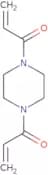
CAS:<p>Used for preparation of acrylamide gels</p>Formula:C10H14N2O2Purity:Min. 98 Area-%Color and Shape:White PowderMolecular weight:194.23 g/molN,N'-Diacetyl-L-cystine
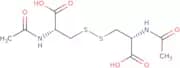
CAS:<p>N,N'-Diacetyl-L-cystine (NAC) is a cysteine derivative that is used in the preparation of samples for analysis by liquid chromatography. It has been shown to have an antiatherogenic effect in chronic bronchitis patients and has been found to be a growth factor, inhibiting apoptosis and stimulating cell proliferation. NAC also increases the activity of aminotransferases in serum samples, which can be used as an indicator of liver health. Its chemical stability and low toxicity make it an ideal candidate for use as a pharmaceutical preparation at doses below those required for its enzyme-stimulating effects.</p>Formula:C10H16N2O6S2Purity:Min. 95%Color and Shape:PowderMolecular weight:324.38 g/mol1,3-Di-(2-pyrenyl)propane
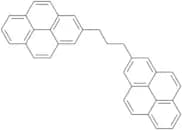
CAS:<p>1,3-Di-(2-pyrenyl)propane is a synthetic molecule that has been used as a model for the phosphatidylethanolamine (PE) component of bacterial membranes. 1,3-Di-(2-pyrenyl)propane has been shown to have a phase transition temperature of -7 degrees Celsius. It is hydrophobic and highly soluble in organic solvents like chloroform, ethanol, ether, and benzene. This molecule is kinetically inert and thermodynamically stable. The monomeric form of 1,3-Di-(2-pyrenyl)propane is not sensitive to ionizing radiation. However, in the bilayer form it is highly sensitive to radiation and can lead to the formation of double bonds that can break down into radicals.</p>Formula:C35H24Purity:Min. 95%Color and Shape:White PowderMolecular weight:444.57 g/mol2,5-Dichlorobenzoic acid methyl ester
CAS:<p>2,5-Dichlorobenzoic acid methyl ester is a synthetic chemical compound that belongs to the class of aryl chlorides. It is soluble in organic solvents and can be polymerized using the vibrational method. 2,5-Dichlorobenzoic acid methyl ester has been shown to inhibit the growth of various bacteria strains by binding to sulfhydryl groups on proteins and inhibiting protein synthesis. This chemical also inhibits the uptake of sulfate ions by inhibiting the enzyme sulfate adenylyltransferase.</p>Formula:C8H6Cl2O2Purity:Min. 95%Color and Shape:PowderMolecular weight:205.04 g/mol2,4-Diiodo-6-{[methyl(1-methylpiperidin-4-yl)amino]methyl}phenol oxalate
CAS:<p>2,4-Diiodo-6-[(methyl(1-methylpiperidin-4-yl)amino]methyl}phenol oxalate is a high quality chemical reagent. It is a useful intermediate for the preparation of complex compounds and has been used as a fine chemical. 2,4-Diiodo-6-[(methyl(1-methylpiperidin-4-yl)amino]methyl}phenol oxalate can be used as a building block for the synthesis of speciality chemicals. This compound can also be used as a reaction component in the synthesis of versatile chemicals.</p>Formula:C14H20I2N2O•C2H2O4Purity:Min. 95%Color and Shape:PowderMolecular weight:574.16 g/molDde biotin picolyl azide
CAS:<p>Azide-activated cleavable biotin probe</p>Formula:C38H57N9O9SPurity:Min. 95%Color and Shape:Clear LiquidMolecular weight:815.98 g/mol4,5-Dimethoxy-2-nitrobenzoic acid - Technical
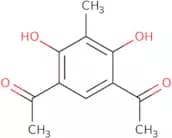
CAS:<p>4,5-Dimethoxy-2-nitrobenzoic acid is a versatile building block and reagent that can be used in research and development as well as for the production of fine chemicals. This compound has been shown to react with amines using the nitration reaction to produce a variety of useful compounds. The synthesis of this compound is not difficult, but requires care and some speciality chemicals. 4,5-Dimethoxy-2-nitrobenzoic acid is also a useful scaffold for complex compounds. It reacts readily with other building blocks to form nitrogen heterocycles and is used in the production of pharmaceuticals and pesticides.</p>Formula:C9H9NO6Purity:Min. 95%Molecular weight:227.17 g/mol1,1'-(4,6-Dihydroxy-5-methyl-1,3-phenylene)diethanone
CAS:<p>1,1'-(4,6-Dihydroxy-5-methyl-1,3-phenylene)diethanone is a versatile building block that can be used in the synthesis of complex compounds. This compound is a useful intermediate for research chemicals and reagents. It has been shown to be an effective catalyst for the production of high quality products.</p>Formula:C11H12O4Purity:Min. 95%Color and Shape:Yellow To Brown SolidMolecular weight:208.21 g/mol1,2-Dioleoyl-sn-glycerol
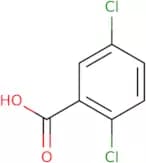
CAS:<p>1,2-Dioleoyl-sn-glycerol is a lipid molecule that contains an acyl chain of carbon atoms with two double bonds. It is formed through the union of glycerol and oleic acid. 1,2-Dioleoyl-sn-glycerol has been shown to activate diacylglycerol and fatty acid, which are important for cell signaling. The enzyme activity of 1,2-dioleoyl-sn-glycerol is dependent on its concentration in the body. This molecule also interacts with membranes by hydrogen bonding and can form a hydrophobic region that may be used to stabilize membrane structures.</p>Formula:C39H72O5Purity:Min. 95%Color and Shape:LiquidMolecular weight:620.99 g/mol2,5-Dichlorobenzoic acid
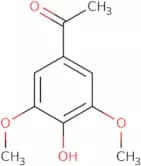
CAS:<p>2,5-Dichlorobenzoic acid is a hydrogen-bonding agent that interacts with other molecules by forming hydrogen bonds. It reacts with benzoate to form 2,5-dichlorobenzoate, which is an intermediate in the synthesis of phenylbenzene and biphenyl. 2,5-Dichlorobenzoic acid has been shown to inhibit the growth of bacteria such as Stenotrophomonas maltophilia and Pseudomonas aeruginosa. The compound also lowers cholesterol levels in rats and humans.<br>2,5-Dichlorobenzoic acid has a redox potential of -0.25 V and can be used to reduce sodium hydroxide solution or hydroxide solution. This chemical's structure allows it to be taken up by cells through passive diffusion and active transport mechanisms.</p>Formula:C7H4Cl2O2Purity:Min. 95%Color and Shape:White PowderMolecular weight:191.01 g/mol3',5'-Dimethoxy-4'-hydroxyacetophenone
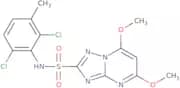
CAS:<p>Inducer of transformation in Agrobacterium tumefaciens</p>Formula:C10H12O4Purity:Min. 97 Area-%Color and Shape:Brown White PowderMolecular weight:196.2 g/molMetosulam
CAS:<p>Metosulam is a triazolopyrimidine herbicide that inhibits the growth of weeds by interfering with plant photosynthesis. Metosulam binds to fatty acids and carbohydrates, which prevents these molecules from binding to the enzyme ATP synthase. This results in a loss of energy production, leading to cell death. Metosulam has been shown to cause chronic cough in mice when given at sublethal doses for long periods of time. The chronic cough was found to be due to an interactive effect between metosulam and polymeric matrix in the lungs that caused inflammation.</p>Formula:C14H13Cl2N5O4SPurity:Min. 90%Color and Shape:Beige PowderMolecular weight:418.26 g/mol1,4-Dimethoxy-2-fluorobenzene
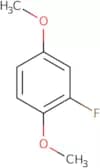
CAS:<p>1,4-Dimethoxy-2-fluorobenzene is a synthetic molecule that belongs to the class of halides. It is used as a ligand in X-ray crystallography and has been shown to have anti-cancer properties. 1,4-Dimethoxy-2-fluorobenzene can be prepared by reacting primary amines with chloroformates in the presence of bases at temperatures between -20 °C and 100 °C. This method is efficient and produces high yields. The synthesis of 1,4-dimethoxy 2-fluorobenzene can be optimized by using strategies such as preparative scale techniques or temperature changes.</p>Formula:C8H9FO2Purity:Min. 95%Color and Shape:PowderMolecular weight:156.15 g/mol
![(R,R)-2,8-Diazabicyclo[4.3.0]nonane](/_next/image/?url=https%3A%2Fstatic.cymitquimica.com%2Fproducts%2F3D%2Fthumb-webp%2FFD21506.webp&w=3840&q=75)


![2,4-Diiodo-6-{[methyl(1-methylpiperidin-4-yl)amino]methyl}phenol oxalate](/_next/image/?url=https%3A%2Fstatic.cymitquimica.com%2Fproducts%2F3D%2Fthumb-webp%2FFD181210.webp&w=3840&q=75)