Building Blocks
This section contains fundamental products for the synthesis of organic and biological compounds. Building blocks are the essential starting materials used to construct complex molecules through various chemical reactions. They play a critical role in drug discovery, material science, and chemical research. At CymitQuimica, we offer a diverse range of high-quality building blocks to support your innovative research and industrial projects, ensuring you have the essential components for successful synthesis.
Subcategories of "Building Blocks"
- Boronic Acids & Boronic Acid Derivatives(5,756 products)
- Chiral Building Blocks(1,242 products)
- Hydrocarbon Building Blocks(6,095 products)
- Organic Building Blocks(61,038 products)
Found 196817 products of "Building Blocks"
Sort by
Purity (%)
0
100
|
0
|
50
|
90
|
95
|
100
Methyl 4-chlorobenzoate
CAS:<p>Methyl 4-chlorobenzoate is a synthetic chemical that belongs to the group of phenyl compounds. It is a solvent for organic solvents and has been shown to be toxic to humans. Methyl 4-chlorobenzoate is used in various industrial applications, such as in the production of pesticides, herbicides, and pharmaceuticals. Methyl 4-chlorobenzoate can also be used as an intermediate for the synthesis of other chemicals, such as chlorinated hydrocarbons. This chemical has been reported to cause environmental pollution and has been classified as a carcinogen by the International Agency for Research on Cancer (IARC).</p>Formula:C8H7ClO2Purity:Min. 98.5%Color and Shape:White PowderMolecular weight:170.59 g/mol2-Methoxybenzene-1,4-diamine sulfate
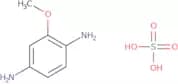
CAS:<p>2-Methoxybenzene-1,4-diamine sulfate (2MBDS) is a chemical that inhibits the synthesis of quinolines and dyes. 2MBDS is used as a control in animal experiments to maintain the level of sulfate in the blood. It is injected into animals and then measured using assays to measure the concentration of sulfate in the blood. 2MBDS has been shown to cause genetic damage and death in animals, as well as brittleness of muscle cells. The effects of 2MBDS on DNA replication and cell division have been studied by observing its effect on meiosis in mice. This chemical also simplifies chromosome structure and reduces chromosome number during meiosis, which may lead to chromosomal aberrations.</p>Formula:C7H10N2O·H2O4SPurity:Min. 95%Color and Shape:Off-White PowderMolecular weight:236.25 g/mol3-Methoxyphenylacetic acid
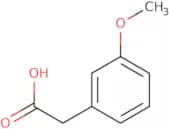
CAS:<p>3-Methoxyphenylacetic acid is a molecule that belongs to the class of fatty acids. It can be synthesized by the Friedel-Crafts reaction between 3-methoxyphenol and acetic anhydride in an organic solvent. The molecule has been shown to inhibit the growth of k562 cells and subtilis, which are both bacteria, at low concentrations. 3-Methoxyphenylacetic acid is also used as a reagent for solid phase synthesis of organic molecules. Immobilization of this molecule is done by covalent linkage to silica gel, polystyrene, or other insoluble supports. This immobilization prevents the loss of 3-methoxyphenylacetic acid during reaction conditions such as heating, vacuum distillation, or exposure to air. 3-Methoxyphenylacetic acid has been shown to have a diameter of approximately 2 nm and hydrogen bonding capability with anhyd</p>Formula:C9H10O3Purity:Min. 95%Color and Shape:PowderMolecular weight:166.17 g/mol1-(4-Methoxyphenyl)acetophenone
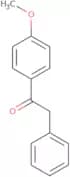
CAS:<p>1-(4-Methoxyphenyl)acetophenone is an enantiomer of the naturally occurring compound melatonin. It has been shown to have insecticidal activities and is effective against insects at temperatures below 10°C. 1-(4-Methoxyphenyl)acetophenone undergoes a cyclodehydration reaction with loss of water and formation of a six-membered ring, which is catalysed by acid, inorganic bases, or metal salts. This reaction can be modified by substituting diacids, halides, or electrolysing agents for water. The resulting products are unsymmetrical and soluble in organic solvents.</p>Formula:C15H14O2Purity:Min. 95%Color and Shape:PowderMolecular weight:226.27 g/mol(1-Methylpiperidin-4-yl)methanol
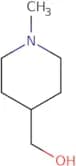
CAS:<p>(1-Methylpiperidin-4-yl)methanol is a potent inhibitor of the kinases vegfr-2 and vesicular glutamate transporter 2 (vglut2). It is also active against human tumor xenografts. The inhibitory activity was determined to be due to its ability to bind and covalently modify tyrosine residues in the kinase domain. The inhibitory potency of (1-Methylpiperidin-4-yl)methanol was found to be constant, regardless of oxygenation status. This suggests that the inhibition is not due to the binding of oxygenated metabolites. In vitro experiments showed that it inhibits cellular proliferation by blocking protein synthesis and arresting cells at G1 phase. This drug has potential as an antitumor agent because it inhibits tumor growth without affecting normal tissue or causing significant toxicity in animal models.</p>Formula:C7H15NOPurity:Min. 95%Color and Shape:Colourless to yellow liquid.Molecular weight:129.2 g/mol4-(Pyrrolidin-1-yl)phenol
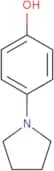
CAS:<p>Versatile small molecule scaffold</p>Formula:C10H13NOPurity:Min. 95%Color and Shape:PowderMolecular weight:163.22 g/mol4-(1,3-Oxazol-5-yl)aniline
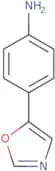
CAS:<p>Versatile small molecule scaffold</p>Formula:C9H8N2OPurity:Min. 95%Molecular weight:160.17 g/mol4-Acetamidobenzaldehyde
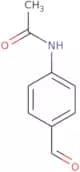
CAS:<p>4-Acetamidobenzaldehyde is an organic compound that has been shown to exhibit inhibitory effects on influenza virus replication in cell culture. 4-Acetamidobenzaldehyde is a dihedral molecule with a p2 group and can be synthesized from benzaldehyde and acetamide. It has also been shown to have potential use in the treatment of tuberculosis. The biological properties of 4-acetamidobenzaldehyde are not well understood, but it is thought that uptake may occur through the imine nitrogen. This molecule has been detected in tissue samples such as lung, liver, and kidney.</p>Formula:C9H9NO2Purity:Min. 95%Color and Shape:PowderMolecular weight:163.17 g/mol2,5-Furandicarboxylic acid dimethyl ester
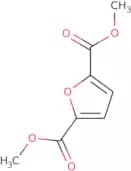
CAS:<p>2,5-Furandicarboxylic acid dimethyl ester is a structural analog of diacids. It has been synthesized by the reaction of 5-hydroxymethylfurfural with ethyl esters and phosphotungstic acid. The isolated yield was determined by gravimetric analysis. The structure of 2,5-furandicarboxylic acid dimethyl ester is shown in the following figure:</p>Formula:C8H8O5Purity:Min. 98 Area-%Color and Shape:White Off-White PowderMolecular weight:184.15 g/mol2,3,4-Trimethoxy-6-methylbenzaldehyde
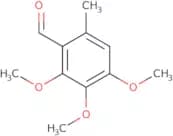
CAS:<p>2,3,4-Trimethoxy-6-methylbenzaldehyde is a synthetic coumarin with antibacterial activity. It is synthesized by the condensation of 3-hydroxyacetophenone and benzaldehyde. 2,3,4-Trimethoxy-6-methylbenzaldehyde has been shown to have antibacterial activity against both Gram-positive and Gram-negative bacteria. This molecule has also been shown to inhibit the growth of Gram negative bacteria in the presence of hydrogen peroxide. The crystal structure of this molecule was determined by XRD analysis and shows that it contains a dihedral angle of about 155°.</p>Formula:C11H14O4Purity:Min. 95%Molecular weight:210.23 g/mol6-Fluoroindole-3-carboxaldehyde
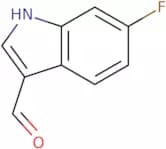
CAS:<p>6-Fluoroindole-3-carboxaldehyde (6FLA) is a synthetic compound that inhibits biosynthesis of the phytoalexins salicylic acid and lignin in plants. It also inhibits the β-glucuronidase enzyme, which hydrolyzes the glucuronide conjugates of phenolic compounds and xenobiotics. 6FLA has been shown to cause mild liver damage in rats, but its effects on humans are unknown. 6FLA may be used as a detectable substance for assays.</p>Formula:C9H6FNOPurity:Min. 95%Molecular weight:163.15 g/molN1-(4,5-Dihydro-1H-imidazol-2-yl)benzene-1,4-diamine dihydrochloride
CAS:<p>Versatile small molecule scaffold</p>Formula:C9H14Cl2N4Purity:Min. 95%Color and Shape:PowderMolecular weight:249.14 g/mol5-Fluoroindole-3-acetic acid
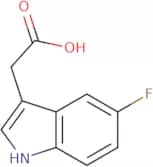
CAS:<p>5-Fluoroindole-3-acetic acid is a fluorine-containing drug that inhibits the transport of indoleacetic acid (IAA), an auxin, in the peo-iaa system. It has been shown to inhibit cancer cell growth and induce apoptosis in a variety of tumour cells. 5-Fluoroindole-3-acetic acid can be used as a chemotherapeutic agent for cancers such as bladder, breast, and prostate cancers. This drug also activates enzymatic reactions by introducing fluorine atoms into reaction sites.</p>Formula:C10H8FNO2Color and Shape:PowderMolecular weight:193.17 g/molcis-4-Chloro-3-nitrocinnamic acid
<p>Cis-4-Chloro-3-nitrocinnamic acid is an aromatic organic compound with potential utility in biochemical research and synthesis. This compound is typically derived from synthetic chemical processes involving chlorination and nitration reactions on cinnamic acid derivatives. Its molecular structure, characterized by both chloro and nitro functional groups, allows it to interact in unique ways with various biochemical pathways and molecular frameworks.</p>Formula:C9H6ClNO4Purity:Min. 95%Color and Shape:White PowderMolecular weight:227.6 g/mol4-Fluoroindole
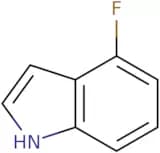
CAS:<p>4-Fluoroindole is a compound that belongs to the class of 5-methoxyindoles, which are used as drugs in plant physiology. The analog of 4-fluoroindole is important for cell culture and transcriptomic analysis. It has been shown to reduce the growth of cryptococcus neoformans by inhibiting its ability to produce acid. 4-Fluoroindole also inhibits the growth of other opportunistic fungi, such as Aspergillus niger. This drug is addictive and can be toxic if it enters the environment. 4-Fluoroindole also inhibits the growth of plants when applied as a pesticide.</p>Formula:C8H6FNColor and Shape:PowderMolecular weight:135.14 g/mol(5-Trifluoromethyl-thiophen-3-yl)-methanol
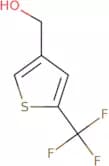
CAS:(5-Trifluoromethyl-thiophen-3-yl)-methanol is a fine chemical that is used as a building block for research chemicals, reagents, and specialty chemicals. It can be used in the synthesis of various complex compounds and is a versatile building block for organic reactions. (5-Trifluoromethyl-thiophen-3-yl)-methanol is an intermediate that can serve as a scaffold for the synthesis of more complex molecules. This compound has CAS No. 1447913-56-5 and has a high quality.Formula:C6H5F3OSPurity:Min. 95%Color and Shape:Clear LiquidMolecular weight:182.16 g/molMonomethyl triazeno imidazole carboxamide
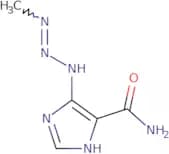
CAS:<p>Monomethyl triazeno imidazole carboxamide (MTIC) is a drug that is used to treat cancer. It has been shown to inhibit the proliferation of tumor cells and induce apoptosis by inhibiting the expression of proteins, such as Bcl-2, which are involved in regulating mitochondrial membrane potential. MTIC has also been shown to inhibit protein synthesis and cell signaling pathways, such as the PI3K/Akt pathway. The use of MTIC for diagnosis purposes can be achieved using electrochemical impedance spectroscopy. A concentration–time curve can be obtained by incubating a biological sample with MTIC and measuring cell response using an impedance spectrophotometer. The clinical properties of MTIC include its ability to be administered orally or intravenously, have low toxicity, and inhibit the growth of tumor cells in vivo and in vitro.</p>Formula:C5H8N6OPurity:(¹H-Nmr) Min. 95 Area-%Color and Shape:White PowderMolecular weight:168.16 g/mol2,5-Furandicarboxylic diethyl ester
CAS:<p>2,5-Furandicarboxylic acid diethyl ester is a synthetic monomer that can be used in the production of polyesters. It is synthesized from primary alcohols by an acid-catalyzed reaction, followed by dehydration with phosphotungstic acid or heating to produce furanic and furfural. 2,5-Furandicarboxylic acid diethyl ester is a sustainable compound because it does not contain any toxic chemicals and it only contains one carbon atom that can be recycled into biomass. It has been shown to have control experiments and sequences that are similar to diglycerol.</p>Formula:C10H12O5Purity:Min. 95%Color and Shape:PowderMolecular weight:212.2 g/mol2,4-Dihydroxy-6-pentylbenzoic acid
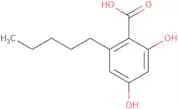
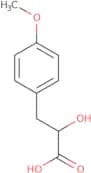
CAS:<p>An intermediate in the phytocannabinoid biosynthetic pathway.</p>Formula:C12H16O4Purity:Min. 98 Area-%Color and Shape:PowderMolecular weight:224.25 g/mol2-Hydroxy-3-(4-methoxyphenyl)propanoic acid
CAS:<p>2-Hydroxy-3-(4-methoxyphenyl)propanoic acid is a monocarboxylic acid that has been used in the synthesis of other compounds. It is an organic compound that is a colorless liquid with a fruity odor. 2-Hydroxy-3-(4-methoxyphenyl)propanoic acid is soluble in water, ethanol and ether. It is a weak acid with pKa values of 3.7 and 4.6. The chemical formula for this compound is C8H10O3P.</p>Formula:C10H12O4Purity:Min. 95%Molecular weight:196.2 g/mol