Building Blocks
This section contains fundamental products for the synthesis of organic and biological compounds. Building blocks are the essential starting materials used to construct complex molecules through various chemical reactions. They play a critical role in drug discovery, material science, and chemical research. At CymitQuimica, we offer a diverse range of high-quality building blocks to support your innovative research and industrial projects, ensuring you have the essential components for successful synthesis.
Subcategories of "Building Blocks"
- Boronic Acids & Boronic Acid Derivatives(5,756 products)
- Chiral Building Blocks(1,242 products)
- Hydrocarbon Building Blocks(6,095 products)
- Organic Building Blocks(61,038 products)
Found 196817 products of "Building Blocks"
Sort by
Purity (%)
0
100
|
0
|
50
|
90
|
95
|
100
Nα-Nim-Bis-Z-L-histidine ethanol
CAS:<p>Please enquire for more information about Nα-Nim-Bis-Z-L-histidine ethanol including the price, delivery time and more detailed product information at the technical inquiry form on this page</p>Formula:C22H21N3O6•C2H6OPurity:Min. 95%Color and Shape:PowderMolecular weight:469.49 g/mol5-Bromo-3-methylisoxazole
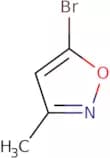
CAS:<p>5-Bromo-3-methylisoxazole is a brominated heterocycle with a pyridine ring. It is used in research as a reagent, speciality chemical, and intermediate for the preparation of complex compounds. 5-Bromo-3-methylisoxazole is also useful as a building block for the synthesis of more complex molecules. The compound is also used as an intermediate for organic synthesis, reaction component, and scaffold.</p>Formula:C4H4BrNOPurity:Min. 90%Color and Shape:Clear LiquidMolecular weight:161.98 g/molBis(p-sulfonatophenyl)phenylphosphine dihydrate dipotassium
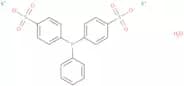
CAS:<p>A common water soluble substitute for triphenylphosphine in palladium coupling reactions</p>Formula:C18H15O6PS2•K2•(H2O)2Purity:Min. 95%Color and Shape:PowderMolecular weight:536.64 g/mol4-Bromo-3-nitroacetophenone - 90%
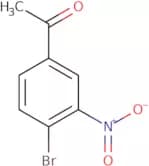
CAS:<p>4-Bromo-3-nitroacetophenone is a chemical compound with the molecular formula C6H4BrNO2. It is an organic nitroaromatic compound that is used in organic synthesis as a building block for pharmaceuticals. 4-Bromo-3-nitroacetophenone has been shown to be effective in relieving pain and it has been used as an analgesic. The compound was synthesized by the Suzuki reaction, which involves the use of palladium as a catalyst, and thermogravimetric analysis showed that it hydrolyzes in water. 4-Bromo-3-nitroacetophenone also reacts with europium ion to produce phosphor, which can be observed using absorption spectroscopy. This chemical has also been shown to have an emission spectrum. The reaction product of 4-bromo-3-nitroacetophenone and ligands can be measured using various fields or cross coupling reactions.</p>Formula:C8H6BrNO3Purity:Min. 95%Color and Shape:PowderMolecular weight:244.04 g/mol4-(Bromomethyl)-4'-methyl-2,2'-bipyridyl
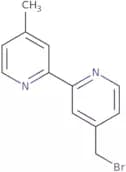
CAS:<p>4-(Bromomethyl)-4'-methyl-2,2'-bipyridyl is a high quality reagent with versatile applications. It is a complex compound that can be used as an intermediate or building block in the synthesis of other compounds. 4-(Bromomethyl)-4'-methyl-2,2'-bipyridyl has been shown to be useful in the synthesis of speciality chemicals and research chemicals. This product is a versatile building block that can be used as a reaction component in many organic syntheses.</p>Formula:C12H11BrN2Purity:Min. 95%Color and Shape:PowderMolecular weight:263.13 g/molBis(2-ethylbutyl)phthalate
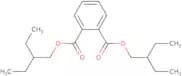
CAS:<p>Bis(2-ethylbutyl)phthalate (BEBP) is a chemical that has been used in the production of polyvinyl chloride (PVC) plastics, and as a stabilizer for PVC resins. BEBP is found in low levels in human tissue samples and sediments. Levels of BEBP have been measured through gas chromatography-mass spectrometry and liquid chromatography-mass spectroscopy methods. The environmental concentrations of BEBP can be calculated using the linear regression equation. Biota are also exposed to this chemical, which may be due to its use as an additive in certain food packaging materials.</p>Formula:C20H30O4Purity:Min. 95%Color and Shape:Colourless To Pale Yellow LiquidMolecular weight:334.45 g/mol2-Bromo-1,3-diethylbenzene
CAS:<p>2-Bromo-1,3-diethylbenzene is a reactive intermediate that can be used for the synthesis of styrene derivatives. It is also used as an anesthetic agent and has been shown to have cognition-enhancing properties. This compound reacts with electrophiles to form monoadducts, which are useful for protein targetting. The pharmacophore of 2-bromo-1,3-diethylbenzene consists of vinyl groups and halides. Radiation induces substitution reactions on the vinyl groups. Pharmacophores are important in drug design because they help identify specific chemical features that are necessary for binding to a particular protein target or protein targets.</p>Formula:C10H13BrPurity:Min. 95%Color and Shape:Clear LiquidMolecular weight:213.11 g/mol3-Butenoic acid
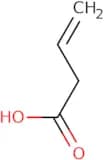
CAS:<p>3-Butenoic acid is a fatty acid that belongs to the group of short chain carboxylic acids. It is used in detergent compositions where it functions as a cationic surfactant and has a hydroxyl group that can be used for polymerization reactions. 3-Butenoic acid is also used as an analytical reagent, e.g., in electrochemical impedance spectroscopy, in which it has been shown to have phase transition temperature of around 38°C. 3-Butenoic acid can be synthesized by reacting butanol with hydrochloric acid and copper chloride in the presence of a cationic surfactant such as alkyltrimethylammonium chloride or benzalkonium chloride. 3-Butenoic acid also acts as a Jak1 inhibitor and has receptor activity against all types of receptors, including those for histamine, acetylcholine, dopamine, serotonin, and GABA (gamma aminob</p>Formula:C4H6O2Purity:Min. 95 Area-%Color and Shape:Colorless Clear LiquidMolecular weight:86.09 g/mol2-Bromo-4-hydroxyacetophenone
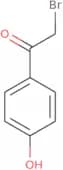
CAS:<p>2-Bromo-4-hydroxyacetophenone is a membrane permeable inhibitor of monoamine oxidase (MAO) that has been shown to inhibit the enzyme's activity with an IC50 of 10 μM. It is used as a research tool in biological studies and has been shown to be active against MAO A, MAO B, and MAO C. 2-Bromo-4-hydroxyacetophenone has also been shown to inhibit the growth of carcinoma cells in vitro. This molecule is also a β-unsaturated ketone that binds to catalytic domains and forms covalent bonds with chloride ions. 2-Bromo-4-hydroxyacetophenone can be used as an industrial process catalyst for chemical reactions involving chloride.<br>2-Bromo-4-hydroxyacetophenone synergistically inhibits the growth of cancer cells when combined with other compounds such as trifluoroacetic acid or dichloromet</p>Formula:C8H7BrO2Purity:(%) Min. 85%Color and Shape:PowderMolecular weight:215.04 g/mol3-Buten-3-ethyl-1-ol
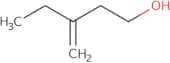
CAS:<p>3-Buten-3-ethyl-1-ol is a versatile building block that can be used as a reagent for chemical synthesis. It is a complex compound that can be used as a reaction component or intermediate in organic synthesis. 3-Buten-3-ethyl-1-ol has been shown to have antiinflammatory properties, which may be due to the inhibition of prostaglandin synthesis.</p>Formula:C6H12OPurity:Min. 95%Color and Shape:Clear LiquidMolecular weight:100.16 g/mol7-Bromoindole
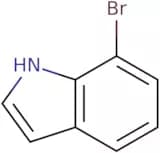
CAS:<p>7-Bromoindole is a synthetic compound that has been used as an analog for indole. It has been shown to have some biological activity in vivo, but it is not known if this activity is due to the drug itself or its breakdown products. 7-Bromoindole can be decarboxylated under acid conditions and saponified with sodium hydroxide. The isolated yield of this reaction is about 2 grams per mole of reactant. 7-Bromoindole shows hemolytic activity against human pathogens such as Staphylococcus aureus and Escherichia coli, but not against Bacillus subtilis or Pseudomonas aeruginosa.</p>Formula:C8H6BrNColor and Shape:PowderMolecular weight:196.04 g/mol2-Bromophenylacetic acid
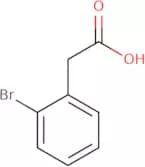
CAS:<p>2-Bromophenylacetic acid is a potent inhibitor of the human enzyme COX-2. It has been shown to have anticancer activity, which may be due to its ability to inhibit cellular proliferation and induce apoptosis in cancer cells. This compound has been tested in a variety of experimental models, including chromatographic assays and striatal membrane preparations, with promising results. 2-Bromophenylacetic acid also has potent inhibitory activity on the human enzyme COX-2 and can be used as a dietary supplement for anticancer therapy.<br>COX-2 inhibitors are usually administered as ethyl esters or solutes in order to prevent degradation by esterases or glucuronidases. The 2-bromophenyl group is electron donating and this may increase the reactivity of the carbon adjacent to it and lead to an acylation reaction with nucleophilic groups such as thiols or amines.</p>Formula:C8H7BrO2Purity:Min. 95%Color and Shape:White PowderMolecular weight:215.04 g/mol(S)-N-Boc-2-aminopent-4-en-1-ol
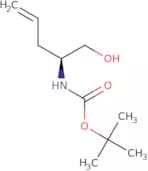
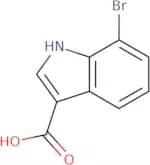
CAS:<p>(S)-N-Boc-2-aminopent-4-en-1-ol is an organic compound that is a useful scaffold for the synthesis of complex compounds. It is also a useful intermediate in organic synthesis and can be used as a building block to synthesize fine chemicals. The chemical has been registered with CAS number 116613-81-1.</p>Formula:C10H19NO3Purity:Min. 95%Color and Shape:Colourless To Yellow LiquidMolecular weight:201.26 g/mol7-Bromo-1H-indole-3-carboxylic acid
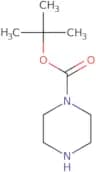
CAS:<p>Please enquire for more information about 7-Bromo-1H-indole-3-carboxylic acid including the price, delivery time and more detailed product information at the technical inquiry form on this page</p>Formula:C9H6BrNO2Purity:Min. 95%Color and Shape:PowderMolecular weight:240.05 g/moltert-Butyl 1-piperazinecarboxylate
CAS:<p>tert-Butyl 1-piperazinecarboxylate is an antimicrobial agent that belongs to the group of aryl halides. It has been shown to have high affinity for the 5-HT1A receptor and inhibit its function. Tert-butyl 1-piperazinecarboxylate inhibits the kinase activity of protein tyrosine phosphatase 1B (PTP1B) and prevents the activation of this enzyme, which is involved in a number of cellular processes. This compound has been shown to inhibit the growth factor amines, such as NGF, IGF-1, PDGF and GHRH. Hydrogen bonds are formed between tert-butyl 1-piperazinecarboxylate molecules through hydrophobic interactions with aromatic rings, which may account for its potency against resistant mutants.</p>Formula:C9H18N2O2Purity:Min. 95%Color and Shape:PowderMolecular weight:186.25 g/molBiotin alkyne
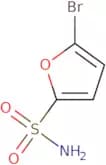
CAS:<p>Biotin alkyne is a reactive molecule that can be used as a diagnostic or therapeutic agent. It is a bioreactor for the synthesis of amino acid sequences and can be used in the diagnosis and treatment of cancer. Biotin alkyne is also useful in the detection of disease-causing bacteria, as it reacts with their amino acids to form fluorescent products. The reaction between biotin alkyne and azide creates an unstable intermediate that undergoes an addition reaction with nucleophiles such as DNA or RNA. This reaction yields a product that emits light upon excitation by ultraviolet light, which can be detected using fluorescence microscopy or flow cytometry. This product can also be used to label proteins for diagnostics or functionalizing cell surfaces for immunological purposes.</p>Formula:C24H40N4O7SPurity:Min. 95%Color and Shape:PowderMolecular weight:528.66 g/mol5-Bromofuran-2-sulfonamide
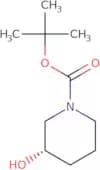
CAS:<p>Versatile small molecule scaffold</p>Formula:C4H4BrNO3SPurity:Min. 95%Color and Shape:PowderMolecular weight:226.05 g/mol(S)-1-Boc-3-hydroxypiperidine
CAS:<p>Intermediate in the synthesis of ibrutinib</p>Formula:C10H19NO3Purity:Min. 97 Area-%Color and Shape:White PowderMolecular weight:201.26 g/mol4'-Bromo-2'-methylacetophenone
CAS:<p>4'-Bromo-2'-methylacetophenone is a reagent and a useful intermediate that can be used in the synthesis of a variety of organic compounds. It is supplied as a fine chemical and is currently not commercially available. It has been found to be an effective building block for the synthesis of speciality chemicals, such as research chemicals and versatile building blocks.</p>Formula:C9H9BrOPurity:Min. 95%Color and Shape:Slightly Yellow Clear LiquidMolecular weight:213.07 g/mol2,2'-Bipyridine-4,4'-dicarboxamide
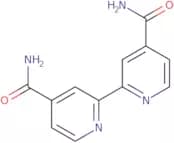
CAS:<p>2,2'-Bipyridine-4,4'-dicarboxamide is a catalyst that can be used in a variety of reactions. It has been used as an additive to increase yields and to accelerate catalytic reactions. The compound also has the ability to oxidize picolinic acid and form formic acid. This product can be used in glycerol synthesis or hydrogen peroxide production. 2,2'-Bipyridine-4,4'-dicarboxamide is a ligand that binds to picolinic acid and peroxide ions, forming an ion pair with the peroxide ion. This complex increases the efficiency of hydrogen peroxide evolution from water by up to 100%.</p>Formula:C12H10N4O2Purity:Min. 95%Color and Shape:PowderMolecular weight:242.23 g/mol