Building Blocks
This section contains fundamental products for the synthesis of organic and biological compounds. Building blocks are the essential starting materials used to construct complex molecules through various chemical reactions. They play a critical role in drug discovery, material science, and chemical research. At CymitQuimica, we offer a diverse range of high-quality building blocks to support your innovative research and industrial projects, ensuring you have the essential components for successful synthesis.
Subcategories of "Building Blocks"
- Boronic Acids & Boronic Acid Derivatives(5,778 products)
- Chiral Building Blocks(1,242 products)
- Hydrocarbon Building Blocks(6,098 products)
- Organic Building Blocks(61,034 products)
Found 199601 products of "Building Blocks"
Sort by
Purity (%)
0
100
|
0
|
50
|
90
|
95
|
100
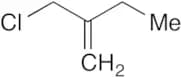
2-(Chloromethyl)-1-butene
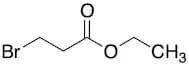
CAS:Controlled ProductFormula:C5H9ClColor and Shape:NeatMolecular weight:104.58Ethyl 3-Bromopropionate
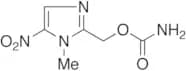
CAS:Controlled Product<p>Applications Ethyl 3-bromopropionate<br></p>Formula:C5H9BrO2Color and Shape:NeatMolecular weight:181.03Ronidazole
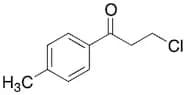
CAS:<p>Applications Antimicrobial.<br>References Yamada, R., et al.: Biosci. Biotechnol. Biochem., 70, 54 (2006), Mohamed, R., et al.: J. Agric. Food Chem., 56, 3500 (2008), Leitsch, D., et al.: Mol. Microbiol., 72, 518 (2009),<br></p>Formula:C6H8N4O4Color and Shape:Light YellowMolecular weight:200.153-Chloro-1-(4-methylphenyl)propan-1-one
CAS:Controlled Product<p>Applications 3-chloro-1-(4-methylphenyl)propan-1-one is a reagent used in the synthesis of Mannich base-type derivatives which can be used in the treatment of chagas disease.<br>References Martin-Escolano, R. et al.: J. Med. Chem., 61, 5843 (2018);<br></p>Formula:C10H11ClOColor and Shape:White To Off-WhiteMolecular weight:182.647Ribitol-1,2,3,4,5-13C5
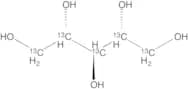
CAS:Controlled Product<p>Applications Labeled D-Ribitol, which is used in the preparation of L-ribose and and arabinose. it is also a diagnostic tool for identifying human bladder cancer (HBC) through noninvasive urinary metabonomics.<br>References Pasikanti, K. et al.: J . Proteo. Res., 9, 2988 (2010); Ahmed, Z. et al.: J. Biosci. Bioeng., 88, 444 (1999);<br></p>Formula:C5H12O5Color and Shape:NeatMolecular weight:157.113-Rhodanineacetic Acid
CAS:Controlled ProductFormula:C5H5NO3S2Color and Shape:NeatMolecular weight:191.23Rhein
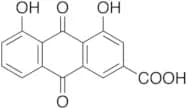
CAS:<p>Impurity Diacerein Impurity C<br>Stability Hygroscopic<br>Applications Found in the free state and as glucoside in Rheum spp, Polygonaceae (rhubarb) and in Senna leaves.A potential antioxidant resource: endophytic fungi from medicinal plants . Diacerein Impurity C<br>References Wanitschke, Pharmacology, 20, Suppl. 1, 21 (1980), Raimondi, L., et al.: Pharmacol. Res. Commun., 14, 103 (1982), Franchi-Micheli, S., et al.: J. Pharm. Pharmacol., 35, 262 (1983),<br></p>Formula:C15H8O6Color and Shape:NeatMolecular weight:284.229-cis-Retinyl Stearate-d5
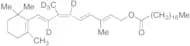
CAS:Controlled Product<p>Applications 9-cis-Retinyl Stearate-d5, is the labeled analogue of 9-cis-Retinyl Stearate (R275600), a fatty acid ester of Retinol isomer, found mainly in the retina.<br>References Bridges, C.D.B., et al.: Methods Enzymol., 81, 463 (1982),<br></p>Formula:C38D5H59O2Color and Shape:NeatMolecular weight:557.9444-Chloromethyl-2,2-dimethyl-1,3-dioxolane
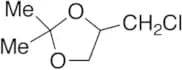
CAS:Controlled Product<p>Applications 4-Chloromethyl-2,2-dimethyl-1,3-dioxolane is used in biosynthetic preparations.<br> Not a dangerous good if item is equal to or less than 1g/ml and there is less than 100g/ml in the package<br>References Spelberg, J.H., Tetrahedron, Asy., 10, 2863 (1999);<br></p>Formula:C6H11ClO2Color and Shape:NeatMolecular weight:150.6033Ethyl 2-Bromopropionate
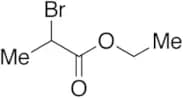
CAS:Controlled Product<p>Stability Corrosive<br>Applications Ethyl 2-Bromopropionate is an intermediate in the synthesis of organic compounds and pharmaceuticals.<br> Not a dangerous good if item is equal to or less than 1g/ml and there is less than 100g/ml in the package<br>References Zhang, Li., et al.: Bioorg. Med. Chem., 18, 7948 (2010); Roberts, D.W., et al.: Chem Res. Toxicol., 23, 228 (2010);<br></p>Formula:C5H9BrO2Color and Shape:NeatMolecular weight:181.03Pyruvic Acid Sodium Salt
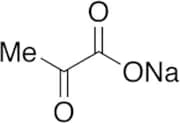
CAS:Controlled Product<p>Applications Intermediate in sugar metabolism and in enzymatic carbohydrate degradation (alcoholic fermentation) where it is converted to acetaldehyde and CO2 by carboxylase. In muscle, Pyruvic acid (derived from glycogen) is reduced to lactic acid during exertion, which is reoxidized and partially retransformed to glycogen during rest. The liver can convert Pyruvic acid to alanine by amination. A diagnostic agent for Parkinson disease.<br>References Wenzel, A., et al.: J. Neurosci., 21, 53 (2001), Martinez., et al.: Development, 6, 851 (2002), Nakayama, K., et al.: J. Biochem., 146, 757 (2009), Tanaka, T., et al.: J. Pharmacol. Sci., 109, 24 (2009),<br></p>Formula:C3H3O3·NaColor and Shape:NeatMolecular weight:110.04Pyruvaldehyde (35% w/w aqueous)
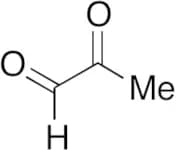
CAS:Controlled Product<p>Applications Pyruvaldehyde is used in the synthesis and cytotoxicity evaluation of N-terminal analogues of tubulysin-U an antimitotic compound. Also used in the synthesis of imidazoles as potent calcitonin gene-related CGRP antagonists.<br> Not a dangerous good if item is equal to or less than 1g/ml and there is less than 100g/ml in the package<br>References Shankar, S. et al.: Tetrahedron Lett., 54, 6137 (2013); Tora, G. et al.: Bioorg. Med. Chem. Lett., 23, 5684 (2013);<br></p>Formula:C3H4O2Color and Shape:NeatMolecular weight:72.06a-Chloro-p-methyltoluene
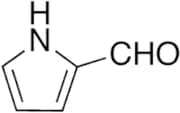
CAS:Controlled Product<p>Applications α-Chloro-p-methyltoluene is a building block that has been used as a reactant for the preparation of 6-aminoquinolone derivatives as submicromolar hepatitis C virus NS5B inhibitors<br> Not a dangerous good if item is equal to or less than 1g/ml and there is less than 100g/ml in the package<br>References Manfroni, G., et. al.: J. Med. Chem., Ahead of Print (2013)<br></p>Formula:C8H9ClColor and Shape:NeatMolecular weight:140.61Pyrrole-2-carboxaldehyde
CAS:Controlled ProductFormula:C5H5NOColor and Shape:NeatMolecular weight:95.10(E)-Ethyl 4-Bromo-3-methyl-2-butenoate
CAS:Controlled Product<p>Applications (E)-Ethyl 4-Bromo-3-methyl-2-butenoate (cas# 51318-62-8) is a compound useful in organic synthesis.<br></p>Formula:C7H11BrO2Color and Shape:NeatMolecular weight:207.071-Chloro-6-iodohexane
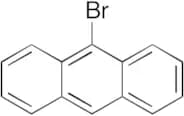
CAS:Controlled Product<p>Applications 1-Chloro-6-iodohexane is used in studies to demonstrate the direct reduction of 1-Bromo-6-chlorohexane/1-Chloro-6-iodohexane at silver cathodes in Dimethylformamide.<br>References Rose, J.A., et al.: ?Electrochim. Acta, 218, 311-317 (2016)<br></p>Formula:C6H12ClIColor and Shape:NeatMolecular weight:246.529-Bromoanthracene
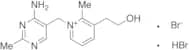
CAS:Controlled Product<p>Applications 9-Bromoanthracene is an intermediate in the synthesis of 9-substituted derivative of the polycyclic aromatic hydrocarbon (PAH) anthracene (A678400).<br>References Corream A., et al.: J. Am. Chem. Soc., 136, 1062 (2014)<br></p>Formula:C14H9BrColor and Shape:Light YellowMolecular weight:257.13Pyrithiamine
CAS:Controlled Product<p>Applications Thiamine (T344185) antagonist. Thiamine (T344185) analog.<br>References Cooper, J., et al.: J. Neurochem., 19, 1809 (1972), Patrini, C., et al.: Brain Res., 628, 179 (1993), Nauti, A., et al.: Metab. Brain Dis., 12, 145 (1997),<br></p>Formula:C14H19N4O·HBr·BrColor and Shape:Light Yellow To Light BeigeMolecular weight:420.14