Building Blocks
This section contains fundamental products for the synthesis of organic and biological compounds. Building blocks are the essential starting materials used to construct complex molecules through various chemical reactions. They play a critical role in drug discovery, material science, and chemical research. At CymitQuimica, we offer a diverse range of high-quality building blocks to support your innovative research and industrial projects, ensuring you have the essential components for successful synthesis.
Subcategories of "Building Blocks"
- Boronic Acids & Boronic Acid Derivatives(5,756 products)
- Chiral Building Blocks(1,242 products)
- Hydrocarbon Building Blocks(6,095 products)
- Organic Building Blocks(61,038 products)
Found 196817 products of "Building Blocks"
Sort by
Purity (%)
0
100
|
0
|
50
|
90
|
95
|
100
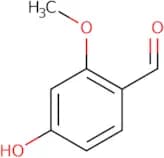
4-Hydroxy-2-methoxybenzaldehyde
CAS:<p>Echinatin is a benzaldehyde derivative that is found in the roots of Echinacea purpurea. It is a phenolic compound with a carbonyl group and two benzyl groups. 4-Hydroxy-2-methoxybenzaldehyde has been shown to have photophysical, cell culture, and functional group properties. This compound is used as a precursor for the production of echinatin and other plant polyphenols such as malonic acid. The biosynthesis of 4-hydroxy-2-methoxybenzaldehyde begins with the oxidation of cinnamic acid by cytochrome P450 monooxygenase to form cinnamoyl CoA. The enzyme cinnamate decarboxylase then converts this intermediate to p-hydroxybenzoic acid, which is then hydroxylated to form 4-hydroxy-2-methoxybenzaldehyde.</p>Formula:C8H8O3Purity:Min. 95%Color and Shape:PowderMolecular weight:152.15 g/mol4-[2-(Dimethylamino)ethoxy]benzene-1-carboximidamide
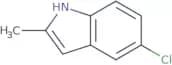
CAS:Controlled Product<p>Versatile small molecule scaffold</p>Formula:C11H17N3OPurity:Min. 90%Color and Shape:PowderMolecular weight:207.27 g/mol5-Chloro-2-methylindole
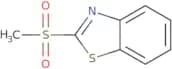
CAS:<p>5-Chloro-2-methylindole is an antimicrobial agent that is used to treat bacterial infections. It binds to the enzyme acetylacetone hydrazide, which prevents it from forming acetoacetate and 5-chloroindole. This leads to a decrease in the formation of serotonin, which may contribute to the alleviation of symptoms in patients with cerebral escherichia coli infection. 5-Chloro-2-methylindole has been shown to have antimicrobial effects against a number of bacteria, including E. coli and Staphylococcus aureus. The drug is injected intraperitoneally as a magnetic resonance imaging contrast agent for myelography, angiography, and other medical imaging procedures.</p>Formula:C9H8ClNPurity:Min. 95%Molecular weight:165.62 g/mol2-(Methylsulfonyl)benzothiazole
CAS:<p>Benzothiazole, 2-(methylsulfonyl)- is a chemical with anticancer activity. It is an amatoxin that inhibits the synthesis of RNA and DNA by binding to the enzyme nitro. The reactive benzothiazole moiety can be converted to a reactive amide by reaction with amine groups on proteins or nucleic acids. This compound has been shown to inhibit cellular uptake of cancer cells in xenopus oocytes and has been studied as a potential drug against cervical cancer.</p>Formula:C8H7NO2S2Purity:Min. 95%Color and Shape:PowderMolecular weight:213.28 g/mol[2-(Cyclopropylmethoxy)ethyl](methyl)amine
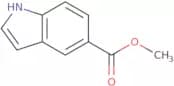
CAS:<p>Versatile small molecule scaffold</p>Formula:C7H15NOPurity:Min. 80%Color and Shape:Clear LiquidMolecular weight:129.2 g/molMethyl indole-5-carboxylate
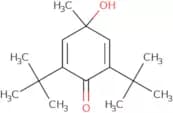
CAS:<p>Methyl indole-5-carboxylate is a hdac inhibitor that has been shown to have anticancer activity. It has been shown to inhibit the growth of hCT116 cells and xenograft tumors in mice. Methyl indole-5-carboxylate is also an active analog for other anticancer agents, such as 5-azacytidine and 5-aza-2'-deoxycytidine. The drug is cytotoxic to L6 cells and increases the expression of p21 protein, which inhibits tumor cell proliferation. This compound is metabolized by cytochrome P450 enzymes into methyl indole carboxylate, which can be further converted into a reactive intermediate that binds DNA.</p>Formula:C10H9NO2Color and Shape:PowderMolecular weight:175.18 g/mol2,6-Di(tert-butyl)-4-hydroxy-4-methyl-2,5-cyclohexadien-1-one
CAS:<p>2,6-Di(tert-butyl)-4-hydroxy-4-methyl-2,5-cyclohexadien-1-one (BHT) is a reactive methide that can be produced by the nucleophilic attack of an electrophile on a molecule containing a methylene group. BHT is used in analytical chemistry as an antioxidant and free radical scavenger. BHT has been shown to protect rat liver microsomes from damage induced by oxidative stress and to inhibit the development of lung cancer in rats chronically treated with cigarette smoke. This product also has been used in modelling studies to study the effect of alveolar type II cells on airway hyperresponsiveness.</p>Formula:C15H24O2Purity:Min. 95%Color and Shape:PowderMolecular weight:236.35 g/mol2-{[1-(2,4-Difluorophenyl)ethyl]amino}-N-ethylacetamide
CAS:<p>Versatile small molecule scaffold</p>Formula:C12H16F2N2OPurity:Min. 95%Color and Shape:PowderMolecular weight:242.26 g/mol6-Cyanoindole
CAS:<p>6-Cyanoindole is a reactive intermediate in organic synthesis. It is used as a building block for the synthesis of other chemical compounds.</p>Formula:C9H6N2Molecular weight:142.16 g/mol4-[(1E)-2-(3-Hydroxyphenyl)ethenyl]phenol
CAS:<p>4-[(1E)-2-(3-Hydroxyphenyl)ethenyl]phenol is a metabolite of estrone sulfate. It is a potent estrogen that can be used in the treatment of prostate cancer, to inhibit the growth of cancer cells. 4-[(1E)-2-(3-Hydroxyphenyl)ethenyl]phenol has been shown to have antiestrogenic activity in breast cancer cell lines and to inhibit the formation of estrogen analogs in vitro. 4-[(1E)-2-(3-Hydroxyphenyl)ethenyl]phenol has been used as an estrogen receptor ligand in transfection experiments with human breast cancer cells, resulting in inhibition of target gene expression. The molecule also inhibits DNA polymerase activity and is believed to form carcinogenic nitrosamines and diazonium ions when subjected to nitrite and hydrogen peroxide. This molecule also exhibits weak antioxidant activity, which may be</p>Formula:C14H12O2Purity:Min. 95%Color and Shape:PowderMolecular weight:212.24 g/moltert-Butyl 1H,4H,5H,6H,7H-pyrrolo[3,2-c]pyridine-5-carboxylate
CAS:<p>Tert-Butyl 1H,4H,5H,6H,7H-pyrrolo[3,2-c]pyridine-5-carboxylate is a fine chemical that is a useful scaffold for the synthesis of various organic compounds. It is an intermediate for research chemicals and a reaction component for speciality chemicals. Tert-Butyl 1H,4H,5H,6H,7H-pyrrolo[3,2-c]pyridine-5-carboxylate has been used as a reagent in the synthesis of complex compounds. This compound has high purity and can be used as a building block in synthesis of other compounds.</p>Formula:C12H18N2O2Purity:Min. 95%Color and Shape:PowderMolecular weight:222.28 g/mol5-(2-Bromoethyl)-4-methyl-1,3-thiazole
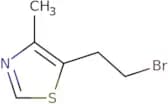
CAS:<p>Versatile small molecule scaffold</p>Formula:C6H8BrNSPurity:Min. 95%Molecular weight:206.11 g/mol3-Methoxyphenylacetic acid
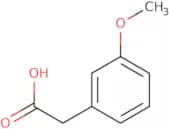
CAS:<p>3-Methoxyphenylacetic acid is a molecule that belongs to the class of fatty acids. It can be synthesized by the Friedel-Crafts reaction between 3-methoxyphenol and acetic anhydride in an organic solvent. The molecule has been shown to inhibit the growth of k562 cells and subtilis, which are both bacteria, at low concentrations. 3-Methoxyphenylacetic acid is also used as a reagent for solid phase synthesis of organic molecules. Immobilization of this molecule is done by covalent linkage to silica gel, polystyrene, or other insoluble supports. This immobilization prevents the loss of 3-methoxyphenylacetic acid during reaction conditions such as heating, vacuum distillation, or exposure to air. 3-Methoxyphenylacetic acid has been shown to have a diameter of approximately 2 nm and hydrogen bonding capability with anhyd</p>Formula:C9H10O3Purity:Min. 95%Color and Shape:PowderMolecular weight:166.17 g/mol3,5-Diiodophenol
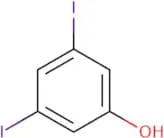
CAS:<p>Versatile small molecule scaffold</p>Formula:C6H4I2OPurity:Min. 95%Molecular weight:345.9 g/mol(3S)-3-Amino-1-hydroxy-1,2,3,4-tetrahydroquinolin-2-one
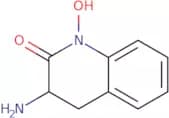
CAS:<p>(3S)-3-Amino-1-hydroxy-1,2,3,4-tetrahydroquinolin-2-one is a fine chemical with versatile building block properties. This compound has been used as a reagent and in the synthesis of complex compounds. It has also been used as a speciality chemical in research and can be used as a useful intermediate for organic reactions. (3S)-3-Amino-1-hydroxy-1,2,3,4-tetrahydroquinolin-2-one is an intermediate that can be used to synthesize other compounds or scaffolds with different functional groups. CAS No.: 34783-48-7</p>Formula:C9H10N2O2Purity:Min. 95%Color and Shape:PowderMolecular weight:178.19 g/mol2-Chloro-3-nitropyridine
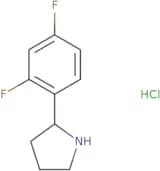
CAS:<p>2-Chloro-3-nitropyridine is a reagent, which is used as a building block for the synthesis of other chemicals. It is a complex compound that can be used to synthesize pharmaceuticals and pesticides. 2-Chloro-3-nitropyridine is also an intermediate that can be used in the synthesis of pesticides, pharmaceuticals, and specialty chemicals. It has been shown to have useful activity as a building block in the synthesis of antibacterial agents and antiviral drugs. This product has been identified by the US Drug Enforcement Administration (DEA) as a chemical of interest.</p>Formula:C5H3ClN2O2Molecular weight:158.54 g/mol2-(2,4-Difluorophenyl)pyrrolidine hydrochloride
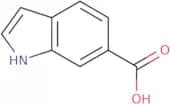
CAS:<p>Versatile small molecule scaffold</p>Formula:C10H11NF2•HClPurity:Min. 95%Color and Shape:PowderMolecular weight:219.65 g/mol6-Carboxyindole
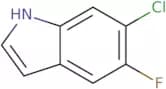
CAS:<p>6-Carboxyindole is an indole that binds to the IL-17A receptor, which leads to the production of pro-inflammatory cytokines. It has been shown to be involved in autoimmune diseases and other inflammatory conditions. 6-Carboxyindole can be used as a probe for studying the biology of IL-17A, by binding to it and inhibiting its effects. The chemical structure of 6-carboxyindole is also useful for diagnostic purposes, as it can bind to antibodies and antigens for detecting infectious diseases or other biological processes. 6-Carboxyindole can be used in the treatment of heart tissue by binding with monoclonal antibodies that are specific for cardiac proteins such as myosin light chain kinase.</p>Formula:C9H7NO2Purity:Min. 95%Molecular weight:161.16 g/mol6-Chloro-5-fluoroindole
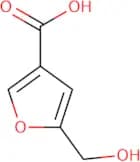
CAS:<p>6-Chloro-5-fluoroindole is a chemical compound that belongs to the class of fine chemicals. It can be used as a versatile building block for the synthesis of complex compounds.</p>Formula:C8H5ClFNMolecular weight:169.59 g/mol5-(Hydroxymethyl)furan-3-carboxylic acid
CAS:<p>5-(Hydroxymethyl)furan-3-carboxylic acid (5HFCA) is a diphenyl ether that can be found in nature. 5HFCA has been shown to have significant antifungal activity against flavus, a genus of fungi. The uptake of 5HFCA by the fungus is rapid and it accumulates in the cell. The polyphenol content of plants is also considered to be an important factor for its growth inhibition effect on fungi. There are many active substances in 5HFCA that are responsible for this effect, such as carvacrol and p-cresol. 5HFCA has been shown to have strong oxidative activity and can induce oxidative stress in fungi, leading to cell death.</p>Formula:C6H6O4Purity:Min. 95%Molecular weight:142.11 g/mol

![4-[2-(Dimethylamino)ethoxy]benzene-1-carboximidamide](/_next/image/?url=https%3A%2Fstatic.cymitquimica.com%2Fproducts%2F3D%2Fthumb-webp%2FSQB04906.webp&w=3840&q=75)
amine](/_next/image/?url=https%3A%2Fstatic.cymitquimica.com%2Fproducts%2F3D%2Fthumb-webp%2FIKB52698.webp&w=3840&q=75)
![2-{[1-(2,4-Difluorophenyl)ethyl]amino}-N-ethylacetamide](/_next/image/?url=https%3A%2Fstatic.cymitquimica.com%2Fproducts%2F3D%2Fthumb-webp%2FFWB46460.webp&w=3840&q=75)

![4-[(1E)-2-(3-Hydroxyphenyl)ethenyl]phenol](/_next/image/?url=https%3A%2Fstatic.cymitquimica.com%2Fproducts%2F3D%2Fthumb-webp%2FNCA87776.webp&w=3840&q=75)
![tert-Butyl 1H,4H,5H,6H,7H-pyrrolo[3,2-c]pyridine-5-carboxylate](/_next/image/?url=https%3A%2Fstatic.cymitquimica.com%2Fproducts%2F3D%2Fthumb-webp%2FPGC95879.webp&w=3840&q=75)