


Building Blocks
This section contains fundamental products for the synthesis of organic and biological compounds. Building blocks are the essential starting materials used to construct complex molecules through various chemical reactions. They play a critical role in drug discovery, material science, and chemical research. At CymitQuimica, we offer a diverse range of high-quality building blocks to support your innovative research and industrial projects, ensuring you have the essential components for successful synthesis.
Subcategories of "Building Blocks"
- Boronic Acids & Boronic Acid Derivatives(5,756 products)
- Chiral Building Blocks(1,242 products)
- Hydrocarbon Building Blocks(6,095 products)
- Organic Building Blocks(61,038 products)
Found 196817 products of "Building Blocks"
Sort by
Purity (%)
0
100
|
0
|
50
|
90
|
95
|
100
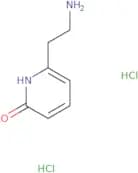
6-(2-Aminoethyl)-1,2-dihydropyridin-2-one dihydrochloride
CAS:<p>6-(2-Aminoethyl)-1,2-dihydropyridin-2-one dihydrochloride (CEP) is a versatile building block that is used in the research and development of complex compounds, reagents, and speciality chemicals. It is an intermediate for the production of other compounds that can be used in pharmaceuticals or agrochemicals. CEP has also been shown to be a useful scaffold for the synthesis of new compounds with potential applications as anti-cancer agents.</p>Formula:C7H12Cl2N2OPurity:Min. 95%Color and Shape:PowderMolecular weight:211.09 g/mol2,3,4-Trihydroxybenzaldehyde
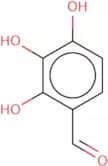
CAS:<p>2,3,4-Trihydroxybenzaldehyde is a chemical compound that has been shown to have anti-cancer properties. It is used in the detection of cancer cells and as an indicator for the presence of palladium complexes. 2,3,4-Trihydroxybenzaldehyde is also a skin allergen and can cause allergic reactions. This chemical reacts with potassium ions in solution to form a precipitate or sludge. 2,3,4-Trihydroxybenzaldehyde has been shown to be effective against colorectal carcinoma cells and Group P2 bacteria.</p>Formula:C7H6O4Purity:Min. 95%Color and Shape:PowderMolecular weight:154.12 g/molMethyl 2-nitrobenzoate
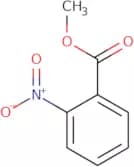
CAS:<p>Methyl 2-nitrobenzoate is a nitro compound that has been used to synthesize benzyl esters. It has been shown to react with protonation and acidic conditions. Methyl 2-nitrobenzoate is also used as an intermediate in the synthesis of methyl anthranilate, which is a component of artificial grape flavoring. The mechanism of the reaction is not fully understood, but it has been proposed that methyl 2-nitrobenzoate undergoes an intramolecular hydrogen bond with the benzoate group to form an intermediate compound called N-methyl-2-(phenylmethyl)benzamide. This intermediate then reacts with methylamine to form methyl anthranilate.<br> <br>The molecule can be detected by gas chromatography or liquid chromatography in organic solvents such as methanol or acetone.</p>Formula:C8H7NO4Purity:Min. 95%Color and Shape:Yellow Clear LiquidMolecular weight:181.15 g/mol5-Methoxy-D-tryptophan
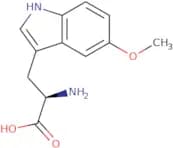
CAS:<p>5-Methoxy-D-tryptophan is a biaryl amino acid derivative that belongs to the class of alkaloids. It is a chiral monomeric building block derived from D-tryptophan. 5-Methoxy-D-tryptophan is commonly used in research chemicals and has been found in natural products such as lochnerine and indole. This compound exhibits unique properties and can be utilized for various applications in the field of chemistry and biochemistry. Its versatility makes it an essential component for researchers and scientists looking to explore new avenues in their studies.</p>Formula:C12H14N2O3Purity:Min. 95%Color and Shape:PowderMolecular weight:234.25 g/mol5-Benzyloxyindole-3-glyoxylamide
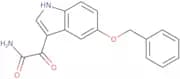
CAS:<p>5-Benzyloxyindole-3-glyoxylamide is a versatile building block that can be used in the synthesis of complex compounds. It has been shown to have a high quality and is useful as a reagent for research purposes. 5-Benzyloxyindole-3-glyoxylamide can be used as a reaction component and is useful as an intermediate in organic synthesis. 5BIGA has CAS number 22424-62-0 and is also known as 3-(benzyloxy)-5-(2,2,2-trifluoroethoxy)indole glyoxamide.</p>Formula:C17H14N2O3Purity:Min. 95%Molecular weight:294.3 g/mol4-(Trifluoromethylthio)benzaldehyde
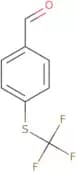
CAS:<p>4-(Trifluoromethylthio)benzaldehyde is a magnetic, stereogenic, mononuclear compound with a thermodynamic stability that has been improved by advances in the field of thermodynamics. The compound can also be synthesized using an asymmetric synthesis and is tetrasubstituted with antiferromagnetic coupling. 4-(Trifluoromethylthio)benzaldehyde has many functions, including being able to control the oxidation-reduction potentials of lanthanide ions and ferromagnetic materials. It also has a calorimetry effect on the adsorption of water vapor onto hydrophobic surfaces.</p>Formula:C8H5F3OSPurity:Min. 95%Color and Shape:PowderMolecular weight:206.19 g/mol6-Bromo-1-hexanol
CAS:<p>6-Bromo-1-hexanol is an azobenzene polymer film that is used in the manufacture of a number of pharmaceuticals. The polymer has been shown to have a broad spectrum of activity against bacteria and fungi, including human maltase glucoamylase, which is found in the gut. The polymers are prepared by reacting sodium salts with maleate, hydroxyl group, and x-ray crystal structures. 6-Bromo-1-hexanol has been shown to have good optical properties and can be used as a sample preparation material for x-ray diffraction studies. It also has a high chloride ion content and acts as a halide donor in cell culture experiments. This polymer also fluoresces under UV light.!--</p>Formula:C6H13BrOPurity:Min. 97 Area-%Color and Shape:Colorless Clear LiquidMolecular weight:181.07 g/mol4-Methyl-2,3-dihydro-1H-inden-1-amine hydrochloride
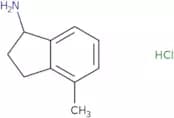
CAS:Controlled Product<p>Versatile small molecule scaffold</p>Formula:C10H13N•HClPurity:Min. 95%Molecular weight:183.68 g/mol3-Methylbenzophenone
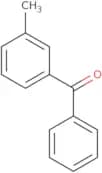
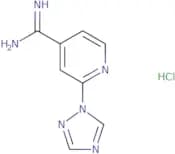
CAS:<p>3-Methylbenzophenone is a fatty acid that has been used as an analytical reagent in organic synthesis. It can be synthesized by acylation of benzoic acid with methylchloroformate. 3-Methylbenzophenone is also a chlorinated derivative of benzophenone, and its structure can be rationalized by the protonation and deprotonation of the chloride ion. The acidic properties of 3-methylbenzophenone are due to the presence of carbonyl group.</p>Formula:C14H12OPurity:Min. 98 Area-%Color and Shape:PowderMolecular weight:196.24 g/mol2-(1H-1,2,4-Triazol-1-yl)pyridine-4-carboximidamide hydrochloride
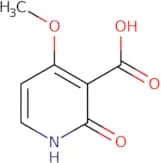
CAS:<p>2-(1H-1,2,4-Triazol-1-yl)pyridine-4-carboximidamide hydrochloride is a versatile building block that can be used in the synthesis of many compounds. This compound is a fine chemical and may be useful as a research chemical or as a speciality chemical. CAS No. 1421606-01-0.</p>Formula:C8H9ClN6Purity:Min. 95%Color and Shape:PowderMolecular weight:224.65 g/mol4-Methoxy-2-oxo-1,2-dihydropyridine-3-carboxylic acid
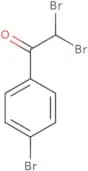
CAS:<p>4-Methoxy-2-oxo-1,2-dihydropyridine-3-carboxylic acid is a versatile building block and useful intermediate in organic synthesis. This compound can be used as a reagent or speciality chemical for research purposes. It has been shown to be an effective reactant in the preparation of diverse complex compounds. 4-Methoxy-2-oxo-1,2-dihydropyridine 3 carboxylic acid has also been shown to be a high quality material with applications in specialty chemicals and pharmaceuticals.</p>Formula:C7H7NO4Purity:Min. 95 Area-%Color and Shape:PowderMolecular weight:169.14 g/mol±,±,p-Tribromoacetophenone
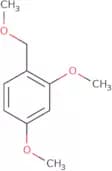
CAS:<p>Tribromoacetophenone is a brominated analog of acetophenone. It can be accessed by the reaction of an acid chloride with acetylacetone and then reacting the resulting bromide with hydrogen bromide. Tribromoacetophenone has been studied as an anti-cancer agent, but has shown little activity in animals. It is also used in the synthesis of other compounds, such as covid-19, which is being studied for its potential use as a pandemic vaccine against influenza type A H5N1.</p>Formula:C8H5OBr3Purity:Min. 95%Color and Shape:PowderMolecular weight:356.84 g/mol2,4-Dimethoxy-1-(methoxymethyl)benzene
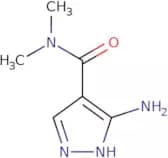
CAS:<p>Versatile small molecule scaffold</p>Formula:C10H14O3Purity:Min. 95%Color and Shape:Clear LiquidMolecular weight:182.22 g/mol5-Amino-N,N-dimethyl-1H-pyrazole-4-carboxamide
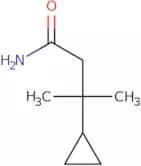
CAS:<p>Versatile small molecule scaffold</p>Formula:C6H10N4OPurity:Min. 95%Color and Shape:PowderMolecular weight:154.17 g/mol3-Cyclopropyl-3-methylbutanamide
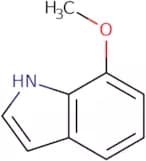
CAS:<p>Versatile small molecule scaffold</p>Formula:C8H15NOPurity:Min. 95%Color and Shape:PowderMolecular weight:141.21 g/mol7-Methoxy-1H-indole
CAS:<p>7-Methoxy-1H-indole (7MI) is a synthetic compound that exhibits anti-inflammatory activity. It is an analog of the amino acid methionine found in proteins and its synthesis involves the condensation of a chlorinated alkyl acetate with an esterified hydrazide to form the corresponding amide. 7MI has been shown to inhibit both bacterial and mammalian protein synthesis, as well as to inhibit tumor cell growth. 7MI binds reversibly to the N7 atom of the adenine base in DNA, thereby inhibiting DNA replication through inhibition of DNA polymerase.</p>Formula:C9H9NOPurity:Min. 95%Color and Shape:Clear LiquidMolecular weight:147.17 g/mol5-Methoxy-2-nitrobenzoic acid
CAS:<p>5-Methoxy-2-nitrobenzoic acid is a compound that has been shown to have antiinflammatory properties. It has been found to inhibit the production of inflammatory mediators such as leukotrienes and prostaglandins. 5-Methoxy-2-nitrobenzoic acid also inhibits certain enzymes, such as cyclooxygenase and lipoxygenase, which are involved in the biosynthesis of these mediators. 5-Methoxy-2-nitrobenzoic acid may be useful in the treatment of inflammatory diseases such as arthritis or asthma. This drug can also be used for chemoprevention against cancer. The drug has been shown to inhibit the growth of tumor cells in vivo by oral administration. This is due to its ability to inhibit DNA synthesis and protein synthesis in cells by binding with DNA and inhibiting RNA synthesis through inhibition of ribonucleotide reductase.</p>Formula:C8H7NO5Purity:90%Color and Shape:PowderMolecular weight:197.14 g/mol3-Methyl-5-(trifluoromethyl)isoxazole-4-carboxylic acid
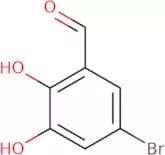
CAS:<p>Versatile small molecule scaffold</p>Formula:C6H4F3NO3Purity:Min. 95%Molecular weight:195.1 g/mol5-Bromo-2,3-dihydroxybenzaldehyde
CAS:<p>5-Bromo-2,3-dihydroxybenzaldehyde is a chemical compound that is used as a reaction component. It has been used in the synthesis of high quality research chemicals and speciality chemicals. This chemical has also been used as a useful scaffold for complex compounds and as a reagent for the synthesis of fine chemicals. 5-Bromo-2,3-dihydroxybenzaldehyde is soluble in water and can be stored at room temperature.</p>Formula:C7H5BrO3Purity:Min. 95%Color and Shape:PowderMolecular weight:217.02 g/mol6-Oxa-1-azaspiro[3.5]nonane hydrochloride
CAS:<p>6-Oxa-1-azaspiro[3.5]nonane hydrochloride is a fine chemical that can be used as a versatile building block, useful intermediate, and a reaction component in research and development. It has been shown to have high quality and is a reagent that can be used in the synthesis of complex compounds. CAS No. 1956324-37-0.</p>Formula:C7H14ClNOPurity:Min. 95%Color and Shape:PowderMolecular weight:163.64 g/mol




![6-Oxa-1-azaspiro[3.5]nonane hydrochloride](/_next/image/?url=https%3A%2Fstatic.cymitquimica.com%2Fproducts%2F3D%2Fthumb-webp%2FGDD32437.webp&w=3840&q=75)