Building Blocks
This section contains fundamental products for the synthesis of organic and biological compounds. Building blocks are the essential starting materials used to construct complex molecules through various chemical reactions. They play a critical role in drug discovery, material science, and chemical research. At CymitQuimica, we offer a diverse range of high-quality building blocks to support your innovative research and industrial projects, ensuring you have the essential components for successful synthesis.
Subcategories of "Building Blocks"
- Boronic Acids & Boronic Acid Derivatives(5,756 products)
- Chiral Building Blocks(1,242 products)
- Hydrocarbon Building Blocks(6,095 products)
- Organic Building Blocks(61,051 products)
Found 199813 products of "Building Blocks"
Sort by
Purity (%)
0
100
|
0
|
50
|
90
|
95
|
100
α-Desethyl Butamirate
CAS:Controlled Product<p>Applications α-Desethyl Butamirate is an impurity in the synthesis of Butamirate (B690025), an antitussive drug.<br>References Wang, T., et al.: J. Pharm. Biomed. Anal., 23, 867 (2000), Lasztity, A., et al.: Microchem. J., 73, 59 (2002), Wang, L., et al.: J. Pharm. Biomed. Anal., 33, 961 (2003), Lewen, N., et al.: J. Pharm. Biomed. Anal., 35, 739 (2004),<br></p>Formula:C16H25NO3Color and Shape:NeatMolecular weight:279.37(-)-O-Desmethyl-N,N-bisdesmethyl Tramadol
CAS:<p>Applications A optically active metabolite of Tramadol.<br>References Lintz, V.W., et al.: Arzneim.-Forsch./Drug Res., 31, II, 11, 1932 (1981)<br></p>Formula:C13H19NO2Color and Shape:NeatMolecular weight:221.31,3-Diacetin (Technical grade, ~50%)
CAS:<p>Applications 1,3-Diacetin is a derivative of Triacetin (T720850) which is used as a food additive and flavorings. Triacetin can be used as an excipient in pharmaceutical products where it is used as a humectant, a plasticizer, and as a solvent. Triacetin can also be used as a fuel additive as an antiknock agent.<br>References Mouret, A., et al.: Green Chem., 16 (1), 269 (2014); Snejdrova, E., et al.: Inter. J. Pharma., 458, 282 (2013)<br></p>Formula:C7H12O5Purity:~50%Color and Shape:NeatMolecular weight:176.17N1,N4-Di-p-tolylbenzene-1,4-diamine
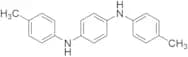
CAS:Controlled Product<p>Applications N1,N4-Di-p-tolylbenzene-1,4-diamine is a useful intermediate for the preparation of some chemically active substances for polymeric materials.<br>References Belorossova, A. G., et al.: Uchenye Zapiski Yaroslavskogo Tekhnologicheskogo Instituta, 11, 200 (1969)<br></p>Formula:C20H20N2Color and Shape:RedMolecular weight:288.3862,4-Dinitrobenzaldehyde
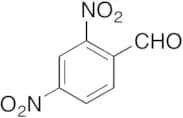
CAS:Controlled ProductFormula:C7H4N2O5Color and Shape:NeatMolecular weight:196.122,4-Diaminoanisole
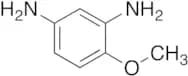
CAS:<p>Applications 2,4-Diaminoanisole is a component and degredation product of azo dyes in fabrics and textiles. Azo dyes occasionally produce carcinogenic effects and environmental reproductive toxicology. Dyes and metabolites, Environmental TestingEnvironmental toxin on US EPA Toxic Release Inventory list (TRI) list.<br> Not a dangerous good if item is equal to or less than 1g/ml and there is less than 100g/ml in the package<br>References Nguyen, A. et al.: J. Env. Sci. Health A., 51, 744 (2016);<br></p>Formula:C7H10N2OColor and Shape:Dark BrownMolecular weight:138.172,5-Diaminoanisole Sulfate
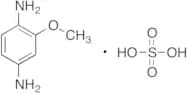
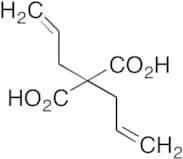
CAS:Controlled ProductFormula:C7H10N2O·(H2O4S)Color and Shape:NeatMolecular weight:138.17 + (98.08)Diallylmalonic Acid
CAS:Controlled Product<p>Applications Diallylmalonic Acid is an intermediate in the synthesis of metabolites of Valproic Acid (V094750) as anticonvulsant agents. It can also be used for the synthesis of Velbanamine.<br>References Zielinski, G. K., et al.: Org. Biomolec. Chem., 13, 2684 (2015):<br></p>Formula:C9H12O4Color and Shape:NeatMolecular weight:184.19Diallyl Tetrasulfide (>85%)
CAS:Controlled ProductFormula:C6H10S4Purity:>85%Color and Shape:NeatMolecular weight:210.4043-[[[2-[(Diaminomethylene]amino-4-thiazolyl]thio]propionitrile
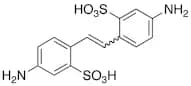
CAS:Controlled ProductFormula:C8H11N5S2Color and Shape:NeatMolecular weight:241.344,4’-Diaminostilbene-2,2’-disulfonic Acid, 95+%
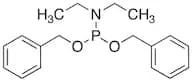
CAS:Controlled Product<p>Stability Light Sensitive<br>Applications 4,4’-Diaminostilbene-2,2’-disulfonic Acid, 95+% (cas# 81-11-8) is a compound useful in organic synthesis.<br></p>Formula:C14H14N2O6S2Purity:95+%Color and Shape:NeatMolecular weight:370.40Dibenzyl N,N-Diethylphosphoramidite, Technical Grade
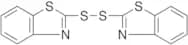
CAS:Controlled Product<p>Applications A useful reagent for the efficient phosphorylative conversion of alcohols into their corresponding dibenzylphosphorotriesters as well as dibenzyl glycosyl phosphites, which can easily be converted to glycosyl phosphates or used in glycosylation reagents in oligosaccharide synthesis.<br> Not a dangerous good if item is equal to or less than 1g/ml and there is less than 100g/ml in the package<br>References Perich, J.W., et al.: Synthesis, 142 (1988), Wong, C-H., et al.: J. Am. Chem. Soc., 115, 2260 (1993)<br></p>Formula:C18H24NO2PColor and Shape:NeatMolecular weight:317.362,2’-Dibenzothiazoyl Disulfide
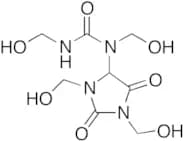
CAS:Controlled Product<p>Applications 2,2’-Dibenzothiazoyl Disulfide has the potential to combat HPV, acting as a zinc-ejecting inhibitor. It also can act as radical polymerization photo-initiators or co-initiators.<br> Not a dangerous good if item is equal to or less than 1g/ml and there is less than 100g/ml in the package<br>References Beerheide, W. et al.: J. Natl Cancer Inst., 91, 1211 (1999); Lalevee, J. et al.: J. Polym. Sci. Part A: Polym. Chem., 45, 2494 (2007);<br></p>Formula:C14H8N2S4Color and Shape:NeatMolecular weight:332.49Diazolidinyl Urea (Technical Grade)
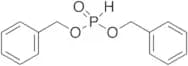
CAS:Controlled Product<p>Stability Hygroscopic<br>Applications Diazolidinyl urea is an antimicrobial agent.<br></p>Formula:C8H14N4O7Color and Shape:White To Off-WhiteMolecular weight:278.22Dibenzyl Phosphite
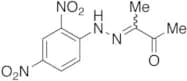
CAS:Controlled Product<p>Applications Dibenzyl Phosphite is used in the preparation of phenylalkylphosphonamidates which are then used as probes for a hydrophobic binding register in prostate-specific membrane antigen.<br>References Maung, J. et al.: Bioorg. Med. Chem., 12, 4969 (2004);<br></p>Formula:C14H15O3PColor and Shape:NeatMolecular weight:262.24Diacetyl 2,4-Dinitrophenylhydrazone
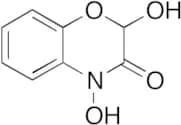
CAS:<p>Applications: 2,4-Dinitrophenylhydrazone (DNPH) derivative. Also, it is used in TLC as internal standards.<br>References Lindsay, R.C., et al.: J. Food Sci., 29, 266 (1964),<br></p>Formula:C10H10N4O5Color and Shape:NeatMolecular weight:266.21DIBOA
CAS:Controlled Product<p>Applications DIBOA is an allelopathic biochemical that is produced by grasses. This benzoxazinoid compound displays health-promoting effects in rats.<br>References Adhikari, K. et al.: J. Agri. Food Chem., 60, 11518 (2012);<br></p>Formula:C8H7NO4Color and Shape:NeatMolecular weight:181.152,4'-Dibromoacetophenone
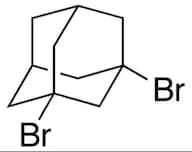
CAS:Formula:C8H6Br2OColor and Shape:White To Off-WhiteMolecular weight:277.941,3-Dibromoadamantane
CAS:Controlled Product<p>Applications 1,3-Dibromoadamantane (cas# 876-53-9) is a compound useful in organic synthesis.<br></p>Formula:C10H14Br2Color and Shape:NeatMolecular weight:294.032,4-Dibromobutyric Acid
CAS:Controlled Product<p>Applications 2,4-Dibromobutyric acid (cas# 63164-16-9) is a useful research chemical.<br></p>Formula:C4H6Br2O2Color and Shape:NeatMolecular weight:245.897



![3-[[[2-[(Diaminomethylene]amino-4-thiazolyl]thio]propionitrile](/_next/image/?url=https%3A%2Fstatic.cymitquimica.com%2Fproducts%2FTR%2Fthumb-webp%2FD416372.webp&w=3840&q=75)