Building Blocks
This section contains fundamental products for the synthesis of organic and biological compounds. Building blocks are the essential starting materials used to construct complex molecules through various chemical reactions. They play a critical role in drug discovery, material science, and chemical research. At CymitQuimica, we offer a diverse range of high-quality building blocks to support your innovative research and industrial projects, ensuring you have the essential components for successful synthesis.
Subcategories of "Building Blocks"
- Boronic Acids & Boronic Acid Derivatives(5,778 products)
- Chiral Building Blocks(1,242 products)
- Hydrocarbon Building Blocks(6,098 products)
- Organic Building Blocks(61,098 products)
Found 199594 products of "Building Blocks"
Sort by
Purity (%)
0
100
|
0
|
50
|
90
|
95
|
100
1H-Phenalen-1-one
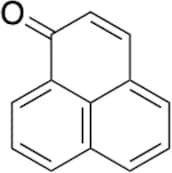
CAS:Controlled Product<p>Applications 1H-Phenalen-1-one (CAS# 548-39-0) is a useful research chemical compound.<br></p>Formula:C13H8OColor and Shape:Yellow To Dark OrangeMolecular weight:180.2024-Pyridoxic Acid
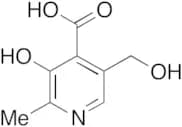
CAS:<p>Stability Hygroscopic<br>Applications 4-Pyridoxic Acid, a catabolite of vitamin B6 (P991735), is a water-soluble B-group vitamin that can be used as a urinary diagnostic biomarker for determining the nutritional status of these vitamins.<br>References Shibata, K., et al.: J. Nutr. Sci. Vitaminol., 59, 178 (2013)<br></p>Formula:C8H9NO4Color and Shape:Light Beige To Light BrownMolecular weight:183.16trans-3-Hexen-1-ol
CAS:Controlled ProductFormula:C6H12OColor and Shape:ColourlessMolecular weight:100.163-Hydroxy Ketoprofen
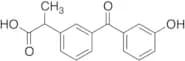
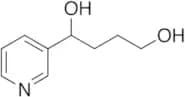
CAS:Controlled Product<p>Applications 3-Hydroxy Ketoprofen is related to rac Ketoprofen (K200800) a Anti-inflammatory drug. 3-Hydroxy Ketoprofen is used to study the metabolism of ketoprofen<br>References Liversidge, G.G., Anal. Profiles Drug Subs., 10, 443 (1981), Jamali, F., et al.: Clin. Pharmacokinet., 19, 197 (1990), Huq, F., et al.: Pure Appl. Chem., 2, 229-234 (2007)<br></p>Formula:C16H14O4Color and Shape:Off-White To Light BeigeMolecular weight:270.281-(3-Pyridyl)-1,4-butanediol
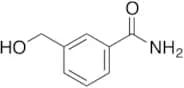
CAS:Controlled ProductFormula:C9H13NO2Color and Shape:NeatMolecular weight:167.203-(Hydroxymethyl)Benzamide (~85%)
CAS:Controlled Product<p>Applications 3-(Hydroxymethyl)Benzamide (cas# 126926-34-9) is a useful research chemical.<br></p>Formula:C8H9NO2Purity:~85%Color and Shape:NeatMolecular weight:151.16Harmine
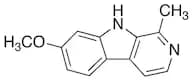
CAS:<p>Applications Harmine is a natural β-carboline alkaloid and a CNS stimulant (1,2). Harmine has been shown to be a potent and selective inhibitor of dual specificity tyrosine phosphorylation regulated kinase 1A (DYRK1A) (3). DYRK1A is a potential therapeutic target for treating diabetes, Down Syndrome, and HIV (4).<br>References (1) DiStefano, S., et al.: J. Pharmacol. Exp. Ther., 174, 456 (1970)(2) Dos Santos, R. G. and Hallak, J. E. J Psychoactive Drugs. 5,1 (2016) (3) Atteya, R., et al.: Mech Ageing Dev. 6, S0047 (2016)(4) Bol, S. M., et al.: PLoS One. 6, e17190 (2011)<br></p>Formula:C13H12N2OColor and Shape:White To BrownMolecular weight:212.25(S)-1-Pyridin-2-yl-ethylamine
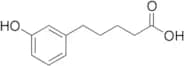
CAS:Controlled Product<p>Applications (S)-1-Pyridin-2-yl-ethylamine (cas# 27854-90-6) is a useful research chemical.<br></p>Formula:C7H10N2Color and Shape:NeatMolecular weight:122.1685-(3-hydroxyphenyl)pentanoic Acid
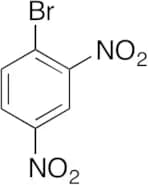
CAS:<p>Applications 5-(3-hydroxyphenyl)pentanoic acid (cas# 31129-95-0) is a useful research chemical.<br></p>Formula:C11H14O3Color and Shape:NeatMolecular weight:194.231-Bromo-2,4-dinitrobenzene
CAS:Controlled ProductFormula:C6H3BrN2O4Color and Shape:Light GreenMolecular weight:247.05-[(3-hydroxyphenyl)methyl]oxolan-2-one
CAS:<p>Stability Hygroscopic<br>Applications 5-[(3-hydroxyphenyl)methyl]oxolan-2-one (cas# 21618-91-7) is a useful research chemical.<br></p>Formula:C11H12O3Color and Shape:NeatMolecular weight:192.212-(Bromomethyl)benzonitrile
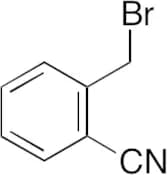
CAS:Controlled Product<p>Applications 2-(Bromomethyl)benzonitrile is an intermediate in the synthesis of Alogliptin (A575425), an oral antihyperglycemic agent that is a selective inhibitor of the enzyme dipeptidyl peptidase-4 (DPP-4). Antidiabetic agent.<br> Not a dangerous good if item is equal to or less than 1g/ml and there is less than 100g/ml in the package<br>References Lai, Z., et. al.: Eur. J. Med. Chem., 83, 547 (2014); Lynn, F., et al.: Diabetes, 50, 1004 (2001); Trumper, A., et al.: J. Endocrinol., 174, 233 (2002); Vollmer, K., et al.: J. Clin. Endocrinol. Metab., 94, 1379 (2009)<br></p>Formula:C8H6BrNColor and Shape:NeatMolecular weight:196.04Potassium 4-Hydroxy-4-methylpentanoate
CAS:Controlled Product<p>Applications potassium 4-hydroxy-4-methylpentanoate (cas# 1607261-66-4) is a useful research chemical.<br></p>Formula:C6H11O3•KColor and Shape:NeatMolecular weight:170.245-Aminoquinoline
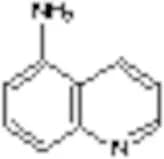
CAS:Controlled Product<p>Applications Intermediate in the preparation of P2X7 antagonists<br>References Donnelly-Roberts, D., et al.: Neuropharmacol., 56, 223 (2009), Perez-Medrano, A., et al.: J. Med. Chem., 52, 3366 (2009),<br></p>Formula:C9H8N2Color and Shape:NeatMolecular weight:144.172-(3-hydroxyphenyl)propanoic acid
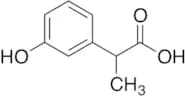
CAS:Controlled ProductFormula:C9H10O3Color and Shape:NeatMolecular weight:166.174GW 501516 Methyl Ester
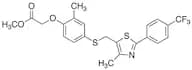
CAS:<p>Applications Precursor to GW 501516.<br>References Pereira, R., et al.: Bioorg. Med. Chem. Lett., 16, 49 (2006),<br></p>Formula:C22H20F3NO3S2Color and Shape:NeatMolecular weight:467.52(R)-1-(3-Pyridyl)ethanol
CAS:Controlled Product<p>Applications (R)-1-(3-Pyridyl)ethanol (cas# 7606-26-0) is a useful research chemical.<br></p>Formula:C7H9NOColor and Shape:ColourlessMolecular weight:123.1532-(2-Pyridyl)imidazole
CAS:Controlled ProductFormula:C8H7N3Color and Shape:NeatMolecular weight:145.1611-(2-Pyridyl)piperazine
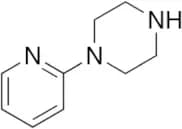
CAS:<p>Applications 1-(2-Pyridyl)piperazine is a compound that belongs to a class of selective α2-adrenoceptor antagonists. 1-(2-Pyridyl)piperazine shows sympatholytic activity. 1-(2-Pyridyl)piperazine is also a metabolite of Azaperone (A802200).<br>References Saari, W.S. et al.: J. Med. Chem., 26, 1696 (1983); Caccia, S. et al.: J. Chrom., 283, 211 (1984);<br></p>Formula:C9H13N3Color and Shape:NeatMolecular weight:163.22Guanidinoacetic Acid
CAS:<p>Applications Guanidinoacetic Acid is an important marker for renal failure, in kidney transplantation, and for the renal metabolic activity.<br>References Zugno, A., et al.: Neurochem. Res., 33, 1804 (2008), Debray, F., et al.: Neurol., 71, 44 (2008), da Silva, R., et al.: Am. J. Physiol., 296, E256 (2009),<br></p>Formula:C3H7N3O2Color and Shape:WhiteMolecular weight:117.11



![5-[(3-hydroxyphenyl)methyl]oxolan-2-one](/_next/image/?url=https%3A%2Fstatic.cymitquimica.com%2Fproducts%2FTR%2Fthumb-webp%2FH100690.webp&w=3840&q=75)