Building Blocks
This section contains fundamental products for the synthesis of organic and biological compounds. Building blocks are the essential starting materials used to construct complex molecules through various chemical reactions. They play a critical role in drug discovery, material science, and chemical research. At CymitQuimica, we offer a diverse range of high-quality building blocks to support your innovative research and industrial projects, ensuring you have the essential components for successful synthesis.
Subcategories of "Building Blocks"
- Boronic Acids & Boronic Acid Derivatives(5,756 products)
- Chiral Building Blocks(1,242 products)
- Hydrocarbon Building Blocks(6,095 products)
- Organic Building Blocks(61,038 products)
Found 196817 products of "Building Blocks"
Sort by
Purity (%)
0
100
|
0
|
50
|
90
|
95
|
100
1-[(2-Azidoethoxy)sulfonyl]-4-methylbenzene
CAS:<p>1-[(2-Azidoethoxy)sulfonyl]-4-methylbenzene is a molecule that inhibits matrix metalloproteinase, a proteolytic enzyme that degrades extracellular matrix proteins. It has been shown to inhibit the growth of cancer cells in vitro and in vivo, which may be due to its ability to inhibit the production of epidermal growth factor (EGF).</p>Formula:C9H11N3O3SPurity:Min. 95%Color and Shape:Clear LiquidMolecular weight:241.27 g/mol2,2'-Bipyridine-4,4'-dicarboxamide
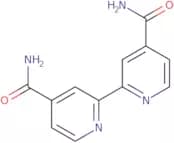
CAS:<p>2,2'-Bipyridine-4,4'-dicarboxamide is a catalyst that can be used in a variety of reactions. It has been used as an additive to increase yields and to accelerate catalytic reactions. The compound also has the ability to oxidize picolinic acid and form formic acid. This product can be used in glycerol synthesis or hydrogen peroxide production. 2,2'-Bipyridine-4,4'-dicarboxamide is a ligand that binds to picolinic acid and peroxide ions, forming an ion pair with the peroxide ion. This complex increases the efficiency of hydrogen peroxide evolution from water by up to 100%.</p>Formula:C12H10N4O2Purity:Min. 95%Color and Shape:PowderMolecular weight:242.23 g/molBiotin alkyne
CAS:<p>Biotin alkyne is a reactive molecule that can be used as a diagnostic or therapeutic agent. It is a bioreactor for the synthesis of amino acid sequences and can be used in the diagnosis and treatment of cancer. Biotin alkyne is also useful in the detection of disease-causing bacteria, as it reacts with their amino acids to form fluorescent products. The reaction between biotin alkyne and azide creates an unstable intermediate that undergoes an addition reaction with nucleophiles such as DNA or RNA. This reaction yields a product that emits light upon excitation by ultraviolet light, which can be detected using fluorescence microscopy or flow cytometry. This product can also be used to label proteins for diagnostics or functionalizing cell surfaces for immunological purposes.</p>Formula:C24H40N4O7SPurity:Min. 95%Color and Shape:PowderMolecular weight:528.66 g/molN-(3-Phenylpropionyl)glycine
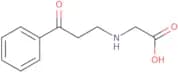
CAS:<p>N-(3-Phenylpropionyl)glycine is a metabolite of the amino acid glycine that is produced by plants. It has been used in diagnostic tests to measure the activity of enzymes involved in fatty acid metabolism and as a marker for metabolic disorders. N-(3-Phenylpropionyl)glycine can be detected in urine samples and has been used to diagnose different types of orotic aciduria, including infantile orotic aciduria. This metabolite inhibits the activity of the enzyme hexanoylglycerol O-acyltransferase, which catalyzes the conversion of hexanoylglycine to p-hydroxybenzoic acid. Hexanoylglycine is an intermediate product of human liver metabolism and it can be found in high concentrations in body tissues such as heart tissue.</p>Formula:C11H13NO3Purity:Min. 95%Color and Shape:PowderMolecular weight:207.23 g/moltert-Butyl 1-piperazinecarboxylate
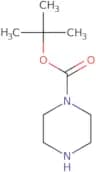
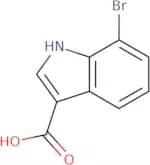
CAS:<p>tert-Butyl 1-piperazinecarboxylate is an antimicrobial agent that belongs to the group of aryl halides. It has been shown to have high affinity for the 5-HT1A receptor and inhibit its function. Tert-butyl 1-piperazinecarboxylate inhibits the kinase activity of protein tyrosine phosphatase 1B (PTP1B) and prevents the activation of this enzyme, which is involved in a number of cellular processes. This compound has been shown to inhibit the growth factor amines, such as NGF, IGF-1, PDGF and GHRH. Hydrogen bonds are formed between tert-butyl 1-piperazinecarboxylate molecules through hydrophobic interactions with aromatic rings, which may account for its potency against resistant mutants.</p>Formula:C9H18N2O2Purity:Min. 95%Color and Shape:PowderMolecular weight:186.25 g/mol7-Bromo-1H-indole-3-carboxylic acid
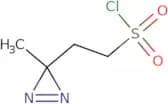
CAS:<p>Please enquire for more information about 7-Bromo-1H-indole-3-carboxylic acid including the price, delivery time and more detailed product information at the technical inquiry form on this page</p>Formula:C9H6BrNO2Purity:Min. 95%Color and Shape:PowderMolecular weight:240.05 g/mol2-(3-Methyl-3H-diazirin-3-yl)ethane-1-sulfonyl chloride
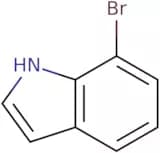
CAS:<p>Versatile small molecule scaffold</p>Formula:C4H7ClN2O2SPurity:Min. 95%Molecular weight:182.63 g/mol7-Bromoindole
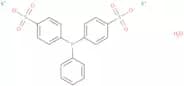
CAS:<p>7-Bromoindole is a synthetic compound that has been used as an analog for indole. It has been shown to have some biological activity in vivo, but it is not known if this activity is due to the drug itself or its breakdown products. 7-Bromoindole can be decarboxylated under acid conditions and saponified with sodium hydroxide. The isolated yield of this reaction is about 2 grams per mole of reactant. 7-Bromoindole shows hemolytic activity against human pathogens such as Staphylococcus aureus and Escherichia coli, but not against Bacillus subtilis or Pseudomonas aeruginosa.</p>Formula:C8H6BrNColor and Shape:PowderMolecular weight:196.04 g/molBis(p-sulfonatophenyl)phenylphosphine dihydrate dipotassium
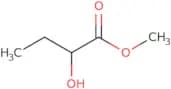
CAS:<p>A common water soluble substitute for triphenylphosphine in palladium coupling reactions</p>Formula:C18H15O6PS2•K2•(H2O)2Purity:Min. 95%Color and Shape:PowderMolecular weight:536.64 g/molMethyl 2-hydroxybutanoate
CAS:<p>Versatile small molecule scaffold</p>Formula:C5H10O3Purity:Min. 95%Color and Shape:Clear LiquidMolecular weight:118.13 g/mol5-Bromo-3-methylisoxazole
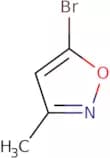
CAS:<p>5-Bromo-3-methylisoxazole is a brominated heterocycle with a pyridine ring. It is used in research as a reagent, speciality chemical, and intermediate for the preparation of complex compounds. 5-Bromo-3-methylisoxazole is also useful as a building block for the synthesis of more complex molecules. The compound is also used as an intermediate for organic synthesis, reaction component, and scaffold.</p>Formula:C4H4BrNOPurity:Min. 90%Color and Shape:Clear LiquidMolecular weight:161.98 g/mol5-(2-Fluorophenyl)-1-methyl-1H-pyrrole-2-carboxylic acid
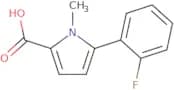
CAS:<p>Versatile small molecule scaffold</p>Formula:C12H10FNO2Purity:Min. 95%Color and Shape:PowderMolecular weight:219.21 g/mol2-(Bromomethyl)benzoic acid
CAS:<p>2-(Bromomethyl)benzoic acid is a functional group that can be found in many organic compounds. It is a derivative of phthalic acid and has some similar properties, including the ability to form micelles and radical species. 2-(Bromomethyl)benzoic acid has been shown to react with carbon tetrachloride or terephthalic acid to produce peroxides. This reaction is initiated by oxidation of the carbon-carbon double bond, which produces a radical pair that reacts with oxygen in the air to form radicals that are stabilized by resonance. 2-(Bromomethyl)benzoic acid also reacts with an inorganic base such as sodium hydroxide or potassium hydroxide to produce bromine gas and water.</p>Formula:C8H7BrO2Purity:Min. 97 Area-%Color and Shape:White Off-White PowderMolecular weight:215.04 g/mol5-Benzyloxyindole-3-acetic acid
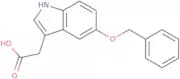
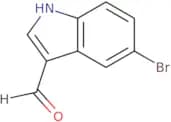
CAS:<p>5-Benzyloxyindole-3-acetic acid is a synthetic chemical that is used as a plant growth regulator. It inhibits the uptake of other plant nutrients, such as nitrates and phosphate ions by roots, which leads to decreased plant growth. This compound also has an inhibitory effect on membranes and morphology. The inhibition of membrane transport can lead to cell death, which can be seen in the case of plants treated with this chemical. 5-Benzyloxyindole-3-acetic acid has been shown to affect the response pathway of plants at temperatures between c1-c3 degrees Celsius.</p>Formula:C17H15NO3Purity:Min. 95%Color and Shape:PowderMolecular weight:281.31 g/mol5-Bromoindole-3-carboxaldehyde
CAS:<p>5-Bromoindole-3-carboxaldehyde is a water molecule that has been crystallized in the form of an amide. It is a chemical substance with asymmetric synthesis and significant antifungal activity. 5-Bromoindole-3-carboxaldehyde is active against some strains of the fungus Candida albicans and has been shown to inhibit the growth of kidney cells. This molecule also binds to the neurokinin 1 receptor and is used as a probe for fluorescence studies. The efficient method for synthesizing 5-Bromoindole-3-carboxaldehyde includes using silico analysis to confirm the structure on a computer, then performing an asymmetric synthesis with an acid catalyst to produce this compound.</p>Formula:C9H6BrNOPurity:Min. 98 Area-%Color and Shape:PowderMolecular weight:224.05 g/molN-α-Benzoyl-L-arginine ethyl ester hydrochloride
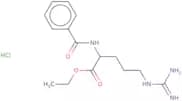
CAS:<p>Benzoyl-L-arginine ethyl ester hydrochloride is a white or beige crystalline solid with a melting point of 85°C. It is soluble in water and ethanol. It has been used as a reagent, speciality chemical, and reaction component for the synthesis of complex compounds. Benzoyl-L-arginine ethyl ester hydrochloride is used as a building block in the synthesis of an intermediate, which is then used to create scaffold drugs.</p>Formula:C15H23ClN4O3Purity:Min. 98 Area-%Color and Shape:White PowderMolecular weight:342.82 g/mol[Bis(trifluoroacetoxy)iodo]benzene
CAS:<p>Bis(trifluoroacetoxy)iodobenzene is a reactive, radiating, profile, planar molecule with a frequency of low energy. It has been shown to react in acid analysis and the carbonyl group. The reaction mechanism involves the generation of an intermediate that reacts with oxygen to produce the desired product. The impedance is high at resonance frequencies.</p>Formula:C10H5F6IO4Purity:Min. 95%Color and Shape:White PowderMolecular weight:430.04 g/mol(1S,2S)-Boc-1,2-diaminocyclopentane
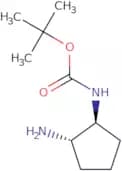
CAS:<p>Please enquire for more information about (1S,2S)-Boc-1,2-diaminocyclopentane including the price, delivery time and more detailed product information at the technical inquiry form on this page</p>Formula:C10H20N2O2Purity:Min. 95%Color and Shape:PowderMolecular weight:200.28 g/mol4-Vinylpyridine, stabilized with 100ppm Hydroquinone
CAS:<p>4-Vinylpyridine, stabilized with 100ppm Hydroquinone is a chemical compound that belongs to the class of pyridines. It has been shown to be stable in aqueous solution and to have a high water permeability. The reaction mechanism is not known, but it is thought that the quaternization of the vinyl group may be involved. 4-Vinylpyridine has been used as a component for the synthesis of polymers and can also be used in palladium-catalyzed coupling reactions.</p>Formula:C7H7NPurity:Min. 97 Area-%Color and Shape:Colorless Clear LiquidMolecular weight:105.14 g/mol2-Chloro-3-nitropyridine
CAS:<p>2-Chloro-3-nitropyridine is a reagent, which is used as a building block for the synthesis of other chemicals. It is a complex compound that can be used to synthesize pharmaceuticals and pesticides. 2-Chloro-3-nitropyridine is also an intermediate that can be used in the synthesis of pesticides, pharmaceuticals, and specialty chemicals. It has been shown to have useful activity as a building block in the synthesis of antibacterial agents and antiviral drugs. This product has been identified by the US Drug Enforcement Administration (DEA) as a chemical of interest.</p>Formula:C5H3ClN2O2Molecular weight:158.54 g/mol
![1-[(2-Azidoethoxy)sulfonyl]-4-methylbenzene](/_next/image/?url=https%3A%2Fstatic.cymitquimica.com%2Fproducts%2F3D%2Fthumb-webp%2FNEA73822.webp&w=3840&q=75)



![[Bis(trifluoroacetoxy)iodo]benzene](/_next/image/?url=https%3A%2Fstatic.cymitquimica.com%2Fproducts%2F3D%2Fthumb-webp%2FFB49107.webp&w=3840&q=75)