Building Blocks
This section contains fundamental products for the synthesis of organic and biological compounds. Building blocks are the essential starting materials used to construct complex molecules through various chemical reactions. They play a critical role in drug discovery, material science, and chemical research. At CymitQuimica, we offer a diverse range of high-quality building blocks to support your innovative research and industrial projects, ensuring you have the essential components for successful synthesis.
Subcategories of "Building Blocks"
- Boronic Acids & Boronic Acid Derivatives(5,756 products)
- Chiral Building Blocks(1,242 products)
- Hydrocarbon Building Blocks(6,095 products)
- Organic Building Blocks(61,038 products)
Found 196817 products of "Building Blocks"
Sort by
Purity (%)
0
100
|
0
|
50
|
90
|
95
|
100
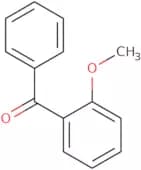
2-Methoxybenzophenone
CAS:<p>2-Methoxybenzophenone is an organic chemical compound that is a benzoylating agent. It is used as a solid catalyst in the benzoic anhydride synthesis from 2-methoxybenzene and acetic acid. 2-Methoxybenzophenone reacts with chloride to form benzoic acid, which can be converted to other compounds with different functional groups. 2-Methoxybenzophenone also acts as an antioxidant and can inhibit acetylation reactions. The reaction time for this process varies depending on the nature of the carbonyl group present in the reactant.</p>Formula:C14H12O2Purity:Min. 98.0 Area-%Color and Shape:White PowderMolecular weight:212.24 g/mol3-Methoxycinnamic acid methyl ester
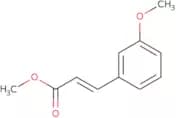
CAS:<p>3-Methoxycinnamic acid methyl ester is a high quality, versatile building block for the synthesis of complex compounds. It is an intermediate in the synthesis of reagents and fine chemicals. 3-Methoxycinnamic acid methyl ester has been used in research as a scaffold to create new chemical entities. This compound has been used as a reaction component in multistep syntheses and as a precursor to speciality chemicals.</p>Formula:C11H12O3Purity:Min. 95%Color and Shape:Colorless PowderMolecular weight:192.21 g/mol3-N-Maleimidobenzoic acid
CAS:<p>3-N-Maleimidobenzoic acid is a chemical crosslinking agent that reacts with proteins through the formation of an amide bond. It has been shown to react with both actin subunits and human immunoglobulin. This molecule also reacts with spermatozoa, which are composed primarily of actin filaments, and is used in the preparation of polyclonal antibodies. 3-N-Maleimidobenzoic acid can be used to fix antigen onto a solid support for immunological purposes. It is also a cross-linking agent that can be used in cytochalasin B experiments to inhibit plastid activity in chloroplasts. 3-N-Maleimidobenzoic acid reacts with monoclonal antibodies by forming an amide bond, which can be used as a reaction product.</p>Formula:C11H7NO4Purity:Min. 95%Color and Shape:PowderMolecular weight:217.18 g/molMethyl 3,4-diaminobenzoate
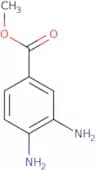
CAS:<p>Methyl 3,4-diaminobenzoate is a molecule that has been shown to inhibit nitrite reductase. It also binds to the receptor binding domain of the growth factor and to quinoxalines, which are antimicrobial peptides. In vitro assays have revealed that methyl 3,4-diaminobenzoate has antimicrobial properties against bacteria such as Enterococcus faecalis, Pseudomonas aeruginosa, Staphylococcus aureus, and Bacillus cereus. The mechanism of action for these activities is not well understood. Methyl 3,4-diaminobenzoate has been shown to be an inhibitor of tryptophan fluorescence in vitro and may act as a competitive inhibitor of the enzyme tryptophan fluorescence decarboxylase.</p>Formula:C8H10N2O2Purity:Min. 95%Color and Shape:White PowderMolecular weight:166.18 g/molMethyl-3-Formylindole-5-carboxylate
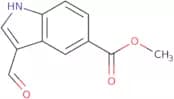
CAS:<p>Please enquire for more information about Methyl-3-Formylindole-5-carboxylate including the price, delivery time and more detailed product information at the technical inquiry form on this page</p>Formula:C11H9NO3Purity:Min. 95%Molecular weight:203.19 g/molMethyl 4-amino-2-methyl benzoate
CAS:Methyl 4-amino-2-methyl benzoate is a fine chemical that can be used as a building block for research chemicals, pharmaceuticals, and speciality chemicals. Methyl 4-amino-2-methyl benzoate is a versatile building block in organic synthesis because it can be used as a reaction component and intermediate to synthesize other compounds. This compound is also an excellent scaffold for the synthesis of complex compounds, making it a useful intermediate for organic chemistry. Methyl 4-amino-2-methyl benzoate has CAS No. 6933-47-7 and is soluble in organic solvents such as dichloromethane, chloroform, ether, or acetone.Formula:C9H11NO2Purity:Min. 95%Color and Shape:PowderMolecular weight:165.19 g/molMethanesulfonamide
CAS:<p>Methanesulfonamide is a drug that is used to treat infectious diseases and in the treatment of HIV. It is a non-steroidal anti-inflammatory drug that inhibits prostaglandin synthesis by blocking the activity of cyclooxygenase (COX) enzymes, COX-1 and COX-2. Methanesulfonamide has been shown to have chemoprotective effects against HIV infection and may reduce the risk of opportunistic infections associated with AIDS. Methanesulfonamide may also inhibit the production of inflammatory cytokines such as tumor necrosis factor alpha (TNFα) and interleukin-1β (IL-1β).</p>Formula:CH5NO2SPurity:Min. 95%Color and Shape:PowderMolecular weight:95.12 g/mol5-Methylindole
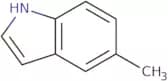
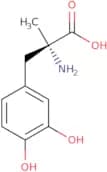
CAS:<p>5-Methylindole is a molecule that has been found to be active against Staphylococcus aureus. This drug interferes with the synthesis of glycogen, which is an important energy storage molecule in animals. 5-Methylindole inhibits glycogen synthase kinase 3 (GSK-3) activity and thereby reduces the production of proinflammatory cytokines. This drug has also been shown to have cardiac effects, such as tachycardia and arrhythmias in mice. The optical properties of 5-methylindole are characterized by fluorescence and absorbance spectra, as well as its chemical reactions. 5-Methylindole is detectable at concentrations of 10 µg/mL and reacts with aminoglycosides by forming an adduct that can be detected using chromatographic methods.</p>Formula:C9H9NPurity:Min. 95%Color and Shape:PowderMolecular weight:131.17 g/mol3-(3,4-Dihydroxyphenyl)-2-methyl-L-alanine sesquihydrate
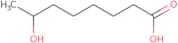
CAS:<p>3-(3,4-Dihydroxyphenyl)-2-methyl-L-alanine sesquihydrate is a biological sample that is an active inhibitor of the enzyme methyldopa. This compound has been shown to reduce blood pressure in rats and humans by blocking the α7 nicotinic acetylcholine receptor. 3-(3,4-Dihydroxyphenyl)-2-methyl-L-alanine sesquihydrate is also a polymer composition that has been shown to be toxic in animal studies. The toxicity of 3-(3,4-dihydroxyphenyl)-2-methyl-L-alanine sesquihydrate can be attributed to its structural similarity to methyldopa or its ability to act as a receptor agonist.</p>Formula:C10H13NO4•(H2O)1Purity:Min. 95%Molecular weight:238.24 g/mol7-Hydroxyoctanoic acid
CAS:<p>7-Hydroxyloctanoic acid is a fatty acid that is naturally present in the human body. It is also found in dairy products and some vegetables. 7-Hydroxyoctanoic acid can be converted to isocaproic acid by the enzyme 3-hydroxyacyl coenzyme A dehydrogenase (HAD). HAD deficiency can lead to the accumulation of 7-hydroxyloctanoic acid, which may cause symptoms such as fatigue, dizziness, and mental confusion. The conversion of 7-hydroxyloctanoic acid to isocaproic acid is important for the production of energy from fats, so an HAD deficiency can lead to low levels of energy production.</p>Formula:C8H16O3Purity:Min. 95%Color and Shape:Clear LiquidMolecular weight:160.21 g/mol1-[(2S)-2-(Hydroxymethyl)pyrrolidin-1-yl]ethan-1-one
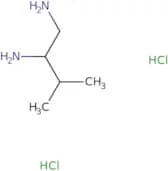
CAS:<p>1-[(2S)-2-(Hydroxymethyl)pyrrolidin-1-yl]ethan-1-one is a molecule with biological properties. It is a non-competitive inhibitor of exonucleases and circularizes DNA, stabilizing it. The molecule has been sequenced and shown to be polymorphic in different individuals, which may affect its biological properties. 1-[(2S)-2-(Hydroxymethyl)pyrrolidin-1-yl]ethan-1-one is an acid molecule that can be used as a translation inhibitor on RNA polymerase II.</p>Formula:C7H13NO2Purity:Min. 95%Molecular weight:143.18 g/mol3-Methylbutane-1,2-diamine dihydrochloride
CAS:<p>3-Methylbutane-1,2-diamine dihydrochloride is a reagent that is used as a building block in organic synthesis. It can be used as an intermediate or reactant in the preparation of compounds with other functional groups. 3-Methylbutane-1,2-diamine dihydrochloride is also known to have applications in polymer chemistry and pharmaceuticals. This chemical has been assigned CAS No. 54750-81-1 and is available for purchase through various chemical suppliers.</p>Formula:C5H16Cl2N2Purity:Min. 95 Area-%Color and Shape:PowderMolecular weight:175.1 g/molMethyl 4-chlorobenzoate
CAS:<p>Methyl 4-chlorobenzoate is a synthetic chemical that belongs to the group of phenyl compounds. It is a solvent for organic solvents and has been shown to be toxic to humans. Methyl 4-chlorobenzoate is used in various industrial applications, such as in the production of pesticides, herbicides, and pharmaceuticals. Methyl 4-chlorobenzoate can also be used as an intermediate for the synthesis of other chemicals, such as chlorinated hydrocarbons. This chemical has been reported to cause environmental pollution and has been classified as a carcinogen by the International Agency for Research on Cancer (IARC).</p>Formula:C8H7ClO2Purity:Min. 98.5%Color and Shape:White PowderMolecular weight:170.59 g/mol2-(4-Bromophenyl)-1,3-thiazole
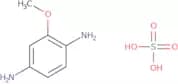
CAS:<p>Versatile small molecule scaffold</p>Formula:C9H6BrNSPurity:Min. 95%Color and Shape:PowderMolecular weight:240.12 g/mol2-Methoxybenzene-1,4-diamine sulfate
CAS:<p>2-Methoxybenzene-1,4-diamine sulfate (2MBDS) is a chemical that inhibits the synthesis of quinolines and dyes. 2MBDS is used as a control in animal experiments to maintain the level of sulfate in the blood. It is injected into animals and then measured using assays to measure the concentration of sulfate in the blood. 2MBDS has been shown to cause genetic damage and death in animals, as well as brittleness of muscle cells. The effects of 2MBDS on DNA replication and cell division have been studied by observing its effect on meiosis in mice. This chemical also simplifies chromosome structure and reduces chromosome number during meiosis, which may lead to chromosomal aberrations.</p>Formula:C7H10N2O·H2O4SPurity:Min. 95%Color and Shape:Off-White PowderMolecular weight:236.25 g/mol(R)-1-(Thiazol-2-yl)ethanamine dihydrochloride
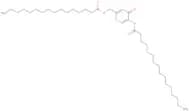
CAS:<p>Versatile small molecule scaffold</p>Formula:C5H8N2S•(HCl)2Purity:Min. 95%Color and Shape:PowderMolecular weight:200.66 g/molKojic acid dipalmitate
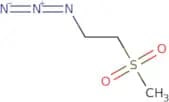
CAS:<p>Tyrosinase inhibitor; skin whitener</p>Formula:C38H66O6Purity:(Hplc) Min. 98.5%Color and Shape:White Off-White PowderMolecular weight:618.93 g/mol1-Azido-2-(methylsulfonyl)ethane solution in dichloromethane
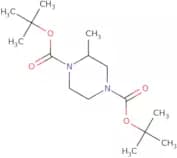
CAS:<p>Versatile small molecule scaffold</p>Formula:C3H7N3O2SPurity:Min. 95%Color and Shape:Clear LiquidMolecular weight:149.17 g/mol1,4-Di-tert-butyl 2-methylpiperazine-1,4-dicarboxylate
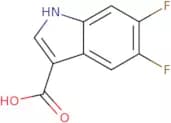
CAS:<p>Versatile small molecule scaffold</p>Formula:C15H28N2O4Purity:Min. 95%Color and Shape:PowderMolecular weight:300.39 g/mol5,6-Difluoro-1H-indole-3-carboxylic acid
CAS:<p>Versatile small molecule scaffold</p>Formula:C9H5F2NO2Purity:Min. 95%Color and Shape:PowderMolecular weight:197.14 g/mol




![1-[(2S)-2-(Hydroxymethyl)pyrrolidin-1-yl]ethan-1-one](/_next/image/?url=https%3A%2Fstatic.cymitquimica.com%2Fproducts%2F3D%2Fthumb-webp%2FRCA15868.webp&w=3840&q=75)