Building Blocks
This section contains fundamental products for the synthesis of organic and biological compounds. Building blocks are the essential starting materials used to construct complex molecules through various chemical reactions. They play a critical role in drug discovery, material science, and chemical research. At CymitQuimica, we offer a diverse range of high-quality building blocks to support your innovative research and industrial projects, ensuring you have the essential components for successful synthesis.
Subcategories of "Building Blocks"
- Boronic Acids & Boronic Acid Derivatives(5,756 products)
- Chiral Building Blocks(1,242 products)
- Hydrocarbon Building Blocks(6,095 products)
- Organic Building Blocks(61,038 products)
Found 196817 products of "Building Blocks"
Sort by
Purity (%)
0
100
|
0
|
50
|
90
|
95
|
100
N-Boc-D-proline
CAS:<p>N-Boc-D-proline is a lipase inhibitor that is used in the preparation of quinine, aldehyde, and carboxylate. N-Boc-D-proline has been shown to inhibit the activity of the sodium channels, which may be due to its ability to bind to the termini of these channels. The inhibition of sodium channels can lead to a decrease in nerve excitability and seizures. N-Boc-D-proline was synthesized by an organocatalytic method using sodium bicarbonate as the catalyst. It was found that this compound was stereoselective with respect to its activity on different enantiomers of chiral substrates. Preparative methods for N-Boc-D-proline include column chromatography or crystallization with diethyl ether or ethyl acetate. The isolated yield is about 99%.</p>Formula:C10H17NO4Purity:Min. 95%Color and Shape:PowderMolecular weight:215.25 g/mol5-Bromo-2-chloropyrimidine
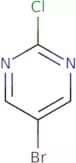
CAS:<p>Intermediate in the synthesis of macitentan; building block</p>Formula:C4H2BrClN2Purity:Min. 95%Color and Shape:White PowderMolecular weight:193.43 g/mol1-Bromo-2-methoxy-3-nitrobenzene
CAS:<p>1-Bromo-2-methoxy-3-nitrobenzene is a high quality chemical that is used as a reagent and building block in organic synthesis. It is also a versatile intermediate and can be used in the synthesis of complex compounds. This chemical has been shown to have anti-inflammatory properties, which may be due to its inhibition of prostaglandin synthesis.</p>Formula:C7H6BrNO3Purity:Min. 95%Color and Shape:PowderMolecular weight:232.03 g/mol4-Bromo-2-hydroxybenzaldehyde
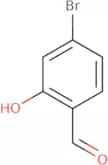
CAS:<p>4-Bromo-2-hydroxybenzaldehyde is a chemical compound that is used in the synthesis of azides. It has a molecular formula of C6H5BrO, a diameter of 197.037 pm, and a structural formula of CHBrO. 4-Bromo-2-hydroxybenzaldehyde can be prepared by reacting bromine with hydroxybenzaldehyde in the presence of an amine catalyst. This product has been shown to have synergistic effects when used in combination with other anticancer agents such as aminopyrimidines, coumarin derivatives, or 2-(4'-hydroxyphenyl) benzoxazole. The photophysical properties of 4-bromo-2-hydroxybenzaldehyde are characterized by its fluorescence emission at 272 nm and its absorption at 270 nm. This product also shows low detection levels in human liver tissue samples, which may be due to its high water sol</p>Formula:C7H5BrO2Purity:Min. 95%Color and Shape:White PowderMolecular weight:201.02 g/mol1-Bromo-2,4-dinitrobenzene
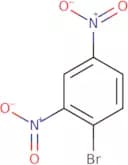
CAS:<p>1-Bromo-2,4-dinitrobenzene, also known as DNB, is a molecule that belongs to the group p2. It has been shown to be a substrate for catalysis in vitro assays. 1-Bromo-2,4-dinitrobenzene is used in cancer research and can inhibit the growth of skin cells. 1-Bromo-2,4-dinitrobenzene does not show any cytotoxic effects on untreated control cells and it has been shown to have limited solubility in water (less than 0.1 g/L). This molecule also shows low reactivity with nucleophilic compounds and has been found to be less reactive than nitro compounds.</p>Formula:C6H3BrN2O4Purity:Min. 95%Color and Shape:Off-White PowderMolecular weight:247 g/mol4-(Bromomethyl)benzaldehyde
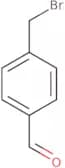
CAS:<p>4-(Bromomethyl)benzaldehyde is a chemical compound that can be synthesized by the reaction of benzaldehyde with bromine in the presence of a base. This compound has been shown to bind to human immunoglobulin G, formyl group and photophysical properties. 4-(Bromomethyl)benzaldehyde has also been used as a model for cancer studies because it binds to DNA and forms an imine bond with thymine. It has been used as a reagent for analytical methods such as phosphotungstic acid, which is a reagent used to detect proteins. The mechanism of this compound is not yet fully understood, but it may involve the formation of an imine bond with thymine in DNA.</p>Formula:C8H7BrOPurity:Min. 95%Color and Shape:PowderMolecular weight:199.04 g/mol6-Amino-2-chloropurine
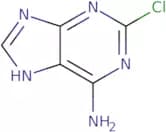
CAS:<p>6-Amino-2-chloropurine (6AC) is a nucleoside analogue that inhibits the synthesis of DNA, RNA, and protein by inhibiting the activity of polymerase chain reaction. It has been used to study the molecular mechanisms of pandemic influenza A virus and HIV infection. 6AC has also been shown to be effective in treating solid tumours and metastatic colorectal cancer in mice. This drug is also used as a competitive inhibitor for measuring endonuclease activity in polymerase chain reactions. 6AC binds to the enzyme's active site and prevents it from cleaving the DNA strands during replication, resulting in incomplete replication of the viral genome.</p>Formula:C5H4ClN5Purity:Min. 95%Color and Shape:PowderMolecular weight:169.57 g/mol3-Aminobenzonitrile
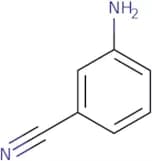
CAS:<p>3-Aminobenzonitrile is an amine that has been shown to inhibit the growth of bacteria. It was synthesized by the reaction of nitrobenzene with benzamide in the presence of acetic acid. The chemical structure of 3-aminobenzonitrile is similar to that of a group of natural amino acids, including cysteine and tryptophan, which are known inhibitors of bacterial growth. This compound is soluble in organic solvents and can be used as an injection solution. 3-Aminobenzonitrile has been evaluated by kinetic studies and found to have a high affinity for bacterial cells, with an inhibition constant (Ki) value of 0.37 mM. It is also active against other microorganisms such as yeast or mold fungi, but not against plant or animal cells. 3-Aminobenzonitrile inhibits the synthesis of proteins by binding to a number of different sites on the ribosomes where</p>Purity:Min. 95%Color and Shape:Yellow PowderMolecular weight:118.14 g/molD-Alanine
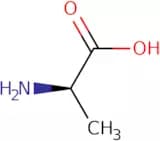
CAS:<p>D-Alanine is a small-molecule drug that inhibits the hepatitis B virus. It has been shown to decrease the levels of HBV-DNA in chronic hepatitis patients. D-Alanine may be effective for reducing hepatic steatosis and improving liver function, which may be due to its ability to reduce the expression of δ receptors. D-Alanine can inhibit viral replication by interfering with the polymerase chain reaction and inhibiting human serum albumin from binding to HBV-DNA. D-alanine also has an antioxidant effect and can scavenge anion radicals.</p>Formula:C3H7NO2Purity:Min. 98 Area-%Color and Shape:White PowderMolecular weight:89.09 g/mol4-Formyl-N-methylbenzenesulfonamide
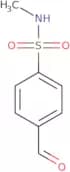
CAS:<p>4-Formyl-N-methylbenzenesulfonamide is a fine chemical that is used as a versatile building block in the synthesis of complex compounds, research chemicals, and reagents. It is highly useful as a reagent or speciality chemical in laboratory experiments involving many different reactions. 4-Formyl-N-methylbenzenesulfonamide has been shown to be an excellent intermediate for the synthesis of high quality products. This product can also be used as a scaffold in complex organic syntheses.</p>Formula:C8H9NO3SPurity:Min. 95%Color and Shape:PowderMolecular weight:199.23 g/mol2-Aminopurine
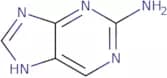
CAS:<p>Purine analog; fluorescent probe; kinase inhibitor; mutagenic</p>Formula:C5H5N5Purity:Min. 95%Color and Shape:White PowderMolecular weight:135.13 g/mol5-Bromoisothiazole
CAS:<p>5-Bromoisothiazole is a conformationally constrained isoform of isothiazole. It has significant antifungal activity and binds to a number of kinases. 5-Bromoisothiazole has been shown to have chemokine inhibitory effects in human breast carcinoma cells. This molecule also inhibits the production of cyclooxygenase-2, and may be used to treat inflammatory diseases such as rheumatoid arthritis. 5-Bromoisothiazole also inhibits the synthesis of nitric oxide by inhibiting the enzyme nitrosylating reductase, which is involved in the conversion of nitrate to nitrite. The biological function of this molecule is not yet well understood, but it may play a role in cellular metabolism or cell signaling.</p>Formula:C3H2BrNSPurity:Min. 95%Color and Shape:Brown Liquid.Molecular weight:164.02 g/mol3-Bromoadamantane-1-carboxylic acid
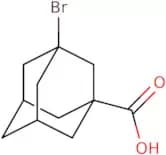
CAS:<p>3-Bromoadamantane-1-carboxylic acid is a potent inhibitor of sphingosine kinase. It is a synthetic compound that was developed to inhibit the activity of sphingosine kinase and thus reduce the levels of sphingosines in cells. 3-Bromoadamantane-1-carboxylic acid has been shown to be effective against multikinases, including caspases and protein kinases. The drug is also able to inhibit tumor growth in animals. The mechanism by which 3-bromoadamantane-1-carboxylic acid inhibits tumor growth is unknown but may involve its ability to bind to the ATP binding site on the enzyme complex or its ability to form a noncompetitive inhibitor with ATP.</p>Formula:C11H15BrO2Purity:Min. 95%Color and Shape:White Off-White PowderMolecular weight:259.14 g/molBenzophenone imine
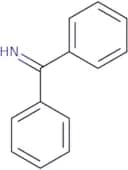
CAS:<p>Benzophenone imine is a metabolite that is produced during the metabolism of benzophenones. It was first synthesized in 1887 by the reaction of copper chloride and benzene-1,2-diamine. The reaction solution was purified by fractional crystallization to give crystals of benzophenone imine hydrochloride (benzophenamine) as a white solid. The x-ray crystal structures were determined for two different forms, one with the 5-hydroxy group in the para position relative to the imine and one with it in the meta position. Benzophenone imine is an amide that has been shown to bind to 5-HT2 receptors, which are found primarily on neurons in the central nervous system. This binding leads to an increase in serotonin levels and an inhibition of glutamate release from nerve terminals. This inhibition can lead to infectious diseases such as herpes zoster.</p>Formula:C13H11NPurity:Min. 96.0 Area-%Color and Shape:Clear LiquidMolecular weight:181.23 g/mol2,2'-Bipyridine-5,5'-dicarboxylic acid
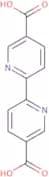
CAS:<p>2,2'-Bipyridine-5,5'-dicarboxylic acid is an algal metabolite that has been shown to have a glucose sensor function. It is synthesized by Chlorella and other green algae in response to light and high concentrations of glucose. This compound can be used as a linker for the immobilization of fluorescent probes or luminescent probes. It also has a catalytic subunit that can be used in oxidation reactions at low temperatures with chloride as the oxidant. 2,2'-Bipyridine-5,5'-dicarboxylic acid is chemically stable and does not react with chloride or ligands. It can also be used as an oxidation catalyst for reactions at high temperatures.</p>Formula:C12H8N2O4Color and Shape:White PowderMolecular weight:244.2 g/mol5-Bromo-2,4-dichloropyrimidine
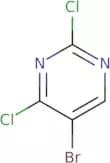
CAS:<p>5-Bromo-2,4-dichloropyrimidine is an aryl halide compound that is synthesized from 2,4-dichloropyrimidine and bromine. It has been shown to have inhibitory activities against cancer cells in vitro. 5-Bromo-2,4-dichloropyrimidine is used in the synthesis of the drug palbociclib (also known as PLX4720), which prevents mitotic progression by binding to the mitotic checkpoint protein (e.g., cyclin B). The reaction yield for this compound is low and its absorption enhancer properties are not well understood. 5-Bromo-2,4-dichloropyrimidine has also been used in conjunction with crotonic acid as a potential anticancer agent.</p>Formula:C4HBrCl2N2Purity:Min. 95%Color and Shape:Off-White Clear LiquidMolecular weight:227.87 g/mol5-Bromo-7-azaindole
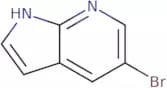
CAS:<p>5-Bromo-7-azaindole is a nitrogen heterocycle that has shown promising anti-cancer properties. This compound is synthesized by the reaction of sodium azide and 5-bromo-2,4,6-trinitrobenzene in anhydrous conditions. 5-Bromo-7-azaindole displays significant cytotoxicity against human ovarian carcinoma cells in vivo and inhibits the proliferation of cancer cells by binding to ATP synthase. The anticancer activity of this compound is due to its ability to inhibit the synthesis of DNA and RNA, which are vital for cell division. 5-Bromo-7-azaindole also shows an increase in hydrogen bonding, which can be used to explain its structural analysis.</p>Formula:C7H5BrN2Purity:Min. 98 Area-%Color and Shape:PowderMolecular weight:197.03 g/molBenzaldehyde dimethyl acetal
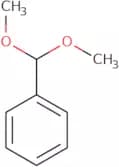
CAS:<p>Vegetable, nutty and floral flavour/fragrance</p>Formula:C9H12O2Purity:Min. 95%Color and Shape:Clear LiquidMolecular weight:152.19 g/molFurosine dihydrochloride
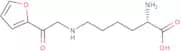
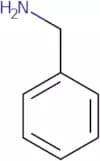
CAS:<p>Reference material for food analysis</p>Formula:C12H18N2O4•2HClPurity:Min. 98 Area-%Color and Shape:PowderMolecular weight:327.20 g/molBenzylamine
CAS:<p>Substrate of benzylamine oxidase and monoamine oxidase B</p>Formula:C7H9NPurity:Min. 98.0 Area-%Color and Shape:Colorless Slightly Yellow Clear LiquidMolecular weight:107.15 g/mol