Building Blocks
This section contains fundamental products for the synthesis of organic and biological compounds. Building blocks are the essential starting materials used to construct complex molecules through various chemical reactions. They play a critical role in drug discovery, material science, and chemical research. At CymitQuimica, we offer a diverse range of high-quality building blocks to support your innovative research and industrial projects, ensuring you have the essential components for successful synthesis.
Subcategories of "Building Blocks"
- Boronic Acids & Boronic Acid Derivatives(5,756 products)
- Chiral Building Blocks(1,242 products)
- Hydrocarbon Building Blocks(6,095 products)
- Organic Building Blocks(61,038 products)
Found 196817 products of "Building Blocks"
Sort by
Purity (%)
0
100
|
0
|
50
|
90
|
95
|
100
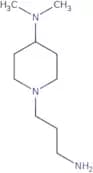
1-(3-Aminopropyl)-N,N-dimethylpiperidin-4-amine
CAS:<p>Versatile small molecule scaffold</p>Formula:C10H23N3Purity:Min. 95%Color and Shape:PowderMolecular weight:185.31 g/molL-Tryptophan
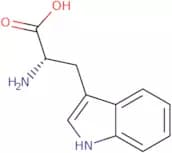
CAS:<p>L-tryptophan is a non-essential amino acid that is used as a building block in the synthesis of proteins. It has been used in research and as a starting material for the production of other chemicals. L-tryptophan has also been shown to have antidepressant effects, although it is not approved by the FDA for this use. L-tryptophan can be found in protein-rich foods such as meat, eggs, and soybeans.</p>Formula:C11H12N2O2Purity:Min. 98.0 Area-%Molecular weight:204.23 g/molRef: 3D-T-8320
1kgTo inquire100gTo inquire250gTo inquire500gTo inquire2500gTo inquire-Unit-kgkgTo inquireD-Tryptophan
CAS:<p>D-Tryptophan is a versatile building block that has many applications in the field of fine chemicals, research chemicals, and speciality chemicals. D-Tryptophan is a useful building block for complex compounds and can be used as a reagent or reaction component. It is also a useful scaffold in organic synthesis.</p>Formula:C11H12N2O2Purity:Min. 98.0 Area-%Molecular weight:204.23 g/mol5-Methoxy-D-tryptophan
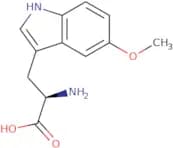
CAS:<p>5-Methoxy-D-tryptophan is a biaryl amino acid derivative that belongs to the class of alkaloids. It is a chiral monomeric building block derived from D-tryptophan. 5-Methoxy-D-tryptophan is commonly used in research chemicals and has been found in natural products such as lochnerine and indole. This compound exhibits unique properties and can be utilized for various applications in the field of chemistry and biochemistry. Its versatility makes it an essential component for researchers and scientists looking to explore new avenues in their studies.</p>Formula:C12H14N2O3Purity:Min. 95%Color and Shape:PowderMolecular weight:234.25 g/mol(1S)-3-(Methylsulfanyl)-1-(2H-1,2,3,4-tetrazol-5-yl)propan-1-amine
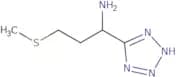
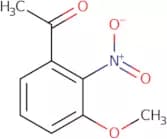
CAS:<p>Versatile small molecule scaffold</p>Formula:C5H11N5SPurity:Min. 95%Color and Shape:PowderMolecular weight:173.24 g/mol3-Methoxy-2-nitroacetophenone
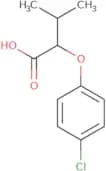
CAS:<p>3-Methoxy-2-nitroacetophenone is a crystalline solid that is soluble in organic solvents. It is catalytic and reductive, forming enamines by reacting with aldehydes or ketones. 3-Methoxy-2-nitroacetophenone can be used to reduce nitro groups to amines and also transfer hydrogen to alkenes. This compound can be also used for cyclization reactions and as a transfer hydrogenation catalyst.</p>Formula:C9H9NO4Purity:Min. 95%Color and Shape:PowderMolecular weight:195.17 g/mol2-(4-Chlorophenoxy)-3-methylbutanoic acid
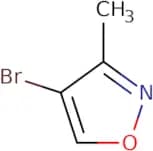
CAS:<p>Versatile small molecule scaffold</p>Formula:C11H13ClO3Purity:Min. 95%Color and Shape:PowderMolecular weight:228.67 g/mol4-Bromo-3-methyl-1,2-oxazole
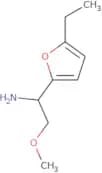
CAS:<p>4-Bromo-3-methyl-1,2-oxazole is a chemical compound that is used as a reaction component in organic synthesis. It is also used as a reagent for the synthesis of various pharmaceuticals. 4-Bromo-3-methyl-1,2-oxazole can be used to produce useful scaffolds and intermediates. This compound has been shown to be useful in the production of complex compounds and fine chemicals. CAS No. 101084-19-9</p>Formula:C4H4BrNOPurity:Min. 90%Color and Shape:Clear LiquidMolecular weight:161.98 g/mol1-(5-Ethylfuran-2-yl)-2-methoxyethan-1-amine
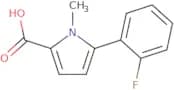
CAS:<p>Versatile small molecule scaffold</p>Formula:C9H15NO2Purity:(%) Min. 85%Color and Shape:Clear LiquidMolecular weight:169.22 g/mol5-(2-Fluorophenyl)-1-methyl-1H-pyrrole-2-carboxylic acid
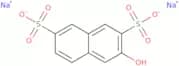
CAS:<p>Versatile small molecule scaffold</p>Formula:C12H10FNO2Purity:Min. 95%Color and Shape:PowderMolecular weight:219.21 g/molDisodium 2-naphthol-3,6-disulfonate
CAS:<p>Disodium 2-naphthol-3,6-disulfonate is a cationic surfactant that reacts with chloride ions to form a gel. It can be used as an inhibitor of corrosion and foaming in the oil industry. Disodium 2-naphthol-3,6-disulfonate has also been shown to have a linear response with fluorescence techniques when it interacts with metal ions. The kinetic data for this reaction is dependent on the concentration of chloride ions, which are generated by hydrochloric acid upon addition of water.</p>Formula:C10H6Na2O7S2Purity:Min. 97 Area-%Color and Shape:PowderMolecular weight:348.26 g/mol4-Methylfuran-2-carboxylic acid
CAS:<p>4-Methylfuran-2-carboxylic acid is a versatile building block that is used in the synthesis of complex compounds. It can be used as a research chemical, reagent, or speciality chemical. 4-Methylfuran-2-carboxylic acid can also be used as a useful intermediate for synthesizing products with high quality and as a reaction component for synthesizing scaffolds.</p>Formula:C6H6O3Purity:Min. 95%Molecular weight:126.11 g/mol4-Chlorothiophene-3-carboxylic acid
CAS:<p>4-Chlorothiophene-3-carboxylic acid is a chemical compound that can be used as a building block for other compounds. It has been used in the preparation of many complex compounds, including pharmaceuticals and fine chemicals. CAS No. 59337-81-4</p>Formula:C5H3ClO2SPurity:Min. 95%Color and Shape:PowderMolecular weight:162.59 g/mol2,5-Dichlorobenzoic acid methyl ester
CAS:<p>2,5-Dichlorobenzoic acid methyl ester is a synthetic chemical compound that belongs to the class of aryl chlorides. It is soluble in organic solvents and can be polymerized using the vibrational method. 2,5-Dichlorobenzoic acid methyl ester has been shown to inhibit the growth of various bacteria strains by binding to sulfhydryl groups on proteins and inhibiting protein synthesis. This chemical also inhibits the uptake of sulfate ions by inhibiting the enzyme sulfate adenylyltransferase.</p>Formula:C8H6Cl2O2Purity:Min. 95%Color and Shape:PowderMolecular weight:205.04 g/molBis(trifluoromethane)sulfonimide lithium salt
CAS:<p>Please enquire for more information about Bis(trifluoromethane)sulfonimide lithium salt including the price, delivery time and more detailed product information at the technical inquiry form on this page</p>Formula:C2F6LiNO4S2Molecular weight:287.09 g/molRef: 3D-Q-101273
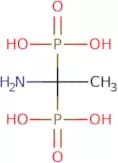
1kgTo inquire5kgTo inquire250gTo inquire500gTo inquire2500gTo inquire-Unit-kgkgTo inquire(1-Aminoethane-1,1-diyl)diphosphonic acid
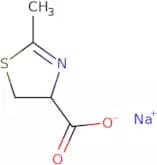
CAS:<p>(1-Aminoethane-1,1-diyl)diphosphonic acid (HEDPA) is a synthetic phosphonate that is soluble in water and organic solvents. HEDPA has been used in gravimetric analysis because it is stable to boiling point and can be easily dried on the surface of a glass plate. It also has been used as a reagent for the synthesis of hydroxy methyl phosphonates and other phosphonate compounds. In crystal x-ray diffraction, HEDPA shows strong hydrogen bonding interactions with counterions such as PO43-, SO42-, or NH4+. The coordination chemistry of HEDPA involves metal ions such as Fe3+, Cu2+, Co2+, Ni2+, Cr3+, Mn2+, Zn2+, Cd2+ and Al3+. Functional theory predicts that the architecture of HEDPA's supramolecular units are either tetrahedral or octahedral. Inf</p>Formula:C2H9NO6P2Purity:Min. 95%Color and Shape:PowderMolecular weight:205.04 g/molSodium 2-methyl-4,5-dihydro-1,3-thiazole-4-carboxylate
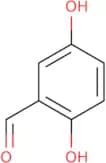
CAS:<p>Versatile small molecule scaffold</p>Formula:C5H6NNaO2SPurity:Min. 95%Color and Shape:PowderMolecular weight:167.16 g/mol2,5-Dihydroxybenzaldehyde
CAS:<p>2,5-Dihydroxybenzaldehyde is a compound that can be used as an antioxidant. It is also a precursor for the synthesis of benzalkonium chloride. 2,5-Dihydroxybenzaldehyde reacts with p-hydroxybenzoic acid to form 2,5-dihydroxyphenylacetic acid and benzoic acid. The reaction mechanism of 2,5-dihydroxybenzaldehyde has been studied in detail using hl-60 cells and has been shown to be significant cytotoxicity. The hydroxyl group in this molecule creates a hydrogen bond with the carbonyl group in p-hydroxybenzoic acid and the two react together to form products. This reaction is catalyzed by Michaelis–Menten kinetics and proceeds via an electrochemical detector. Nitrogen atoms are not present in this molecule but do exist in benzalkonium chloride, which is synthesized from 2</p>Formula:C7H6O3Purity:Min. 95%Color and Shape:Yellow PowderMolecular weight:138.12 g/mol5-Chloropentan-2-ol
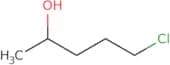
CAS:<p>5-Chloropentan-2-ol is a chemical compound that is found in the leaves of the tobacco plant, Nicotiana tabacum. It is an organic compound that belongs to the group of furans and has been classified as a dye sensitizer. 5-Chloropentan-2-ol is found in small quantities in the leaves of Nicotiana tabacum and has been shown to be responsible for some of the flavour and organoleptic properties of tobacco. The chemical structure of 5-chloropentan-2-ol consists of a 5 carbon chain with two hydroxyl groups on carbons 1 and 2. It has been shown to have high levels of mutagenicity when tested on bacteria, but does not affect animal cells.</p>Formula:C5H11ClOPurity:Min. 85%Molecular weight:122.59 g/mol4-Aminohippuric acid
CAS:<p>4-Aminohippuric acid (4-AHA) is a substance that is used as an analytical tool to measure the amount of inulin in the blood. It is injected intravenously, and the 4-aminohippuric acid enters cells via facilitated transport. In cells, 4-aminohippuric acid binds to pyrazinoic acid to form a fluorescent product that can be detected by a spectrophotometer. This test has been used to study the role of various compounds in the angiotensin system and their effect on renal function.</p>Formula:C9H10N2O3Color and Shape:PowderMolecular weight:194.19 g/mol