Building Blocks
This section contains fundamental products for the synthesis of organic and biological compounds. Building blocks are the essential starting materials used to construct complex molecules through various chemical reactions. They play a critical role in drug discovery, material science, and chemical research. At CymitQuimica, we offer a diverse range of high-quality building blocks to support your innovative research and industrial projects, ensuring you have the essential components for successful synthesis.
Subcategories of "Building Blocks"
- Boronic Acids & Boronic Acid Derivatives(5,756 products)
- Chiral Building Blocks(1,242 products)
- Hydrocarbon Building Blocks(6,095 products)
- Organic Building Blocks(61,038 products)
Found 196817 products of "Building Blocks"
Sort by
Purity (%)
0
100
|
0
|
50
|
90
|
95
|
100
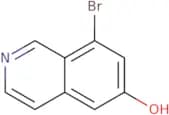
8-Bromoisoquinolin-6-ol
CAS:<p>Versatile small molecule scaffold</p>Formula:C9H6BrNOPurity:Min. 95%Color and Shape:PowderMolecular weight:224.05 g/mol1-[5-Bromo-2-(difluoromethoxy)phenyl]ethan-1-one
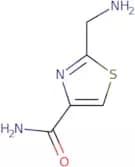
CAS:<p>1-[5-Bromo-2-(difluoromethoxy)phenyl]ethan-1-one is an organic chemical compound. It is a reaction component and a reagent. 1-[5-Bromo-2-(difluoromethoxy)phenyl]ethan-1-one has been used in research for the synthesis of complex compounds, fine chemicals, and speciality chemicals. This chemical may be used as a versatile building block, useful intermediate, or useful building block. 1-[5-Bromo-2-(difluoromethoxy)phenyl]ethan-1-one has also been shown to be a high quality product with high purity.</p>Formula:C9H7BrF2O2Purity:Min. 95%Color and Shape:PowderMolecular weight:265.05 g/mol2-(Aminomethyl)-1,3-thiazole-4-carboxamide
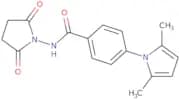
CAS:<p>2-(Aminomethyl)-1,3-thiazole-4-carboxamide is a chemical compound that can be used as a chemical reagent and as a reaction component. It is a versatile building block with many possible uses. 2-(Aminomethyl)-1,3-thiazole-4-carboxamide has been shown to be useful in the synthesis of complex compounds and fine chemicals. It is also an intermediate for the production of pharmaceuticals and other research chemicals.</p>Formula:C5H7N3OSPurity:Min. 95%Color and Shape:PowderMolecular weight:157.2 g/mol4-(2,5-Dimethyl-1H-pyrrol-1-yl)-N-(2,5-dioxopyrrolidin-1-yl)benzamide
CAS:<p>4-(2,5-Dimethyl-1H-pyrrol-1-yl)-N-(2,5-dioxopyrrolidin-1-yl)benzamide is a useful scaffold that can be used to synthesize high quality and versatile building blocks. This compound is also a useful intermediate in the synthesis of complex compounds. This chemical is not an approved pharmaceutical, but it has shown promising activity as an antihistamine.</p>Formula:C17H17N3O3Purity:Min. 95%Molecular weight:311.33 g/molO-2-Propynylhydroxylamine hydrochloride
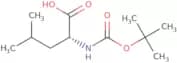
CAS:<p>O-2-Propynylhydroxylamine hydrochloride is a ribosome-inactivating molecule that is used in the treatment of cancer. It binds to the amines on the ribosome and inhibits protein synthesis, leading to cell death. The drug also has a favorable ph profile, which allows it to be administered intravenously. The glycosidic bond makes this drug difficult to metabolize, increasing its half-life in the body. O-2-Propynylhydroxylamine hydrochloride can be easily conjugated with other molecules for targeted delivery, making it an ideal candidate for treating cancers that are resistant to traditional chemotherapy drugs.</p>Formula:C3H5NO•HClPurity:Min. 95%Molecular weight:107.54 g/molBoc-D-Leu-OH
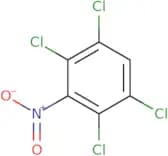
CAS:<p>Boc-D-Leu-OH is a cyclic peptide that has been shown to have antibacterial activity. It is a monomer with a hydroxy group and a cavity. Boc-D-Leu-OH was found to be able to transport hydrophobic compounds across membranes, which may be due to its hydrophobic nature. Boc-D-Leu-OH also induces apoptosis in cells, which can lead to cancer. This compound has been optimized by structural modifications and residue substitutions, which have led to improved properties such as enhanced stability and increased antimicrobial activity.</p>Formula:C11H21NO4Purity:Min. 95%Color and Shape:PowderMolecular weight:231.29 g/mol1,2,4,5-Tetrachloro-3-nitrobenzene
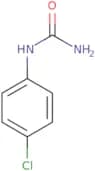
CAS:<p>1,2,4,5-Tetrachloro-3-nitrobenzene is a heterocyclic compound that has the chemical formula C6H2Cl4NO2. It is a yellow crystalline solid that is soluble in organic solvents. It has applications as a standard for quantitative analysis by nuclear magnetic resonance.</p>Formula:HC6Cl4NO2Purity:Min. 95%Color and Shape:PowderMolecular weight:260.89 g/mol4-Chlorophenylurea
CAS:<p>4-Chlorophenylurea is an urea derivative that has been shown to inhibit the activity of a number of enzymes. It has been used as a chemical intermediate and in the synthesis of other compounds. 4-Chlorophenylurea is stable in dry environments and does not react with air. The enzyme hydrolysis can be inhibited by adding piperonyl butoxide, which prevents the cleavage of the urea ring. The enzyme's activity can also be suppressed by adding acidic compounds such as hydrochloric acid, which increases its activation energy. The chemical structure of 4-Chlorophenylurea contains a carbonyl group and two chloro groups that are responsible for its inhibitory effect on tumour cells. This compound can also be analysed using liquid chromatography methods, which provide structural data about the product being tested.</p>Formula:C7H7ClN2OPurity:Min. 95%Color and Shape:PowderMolecular weight:170.6 g/molCyproheptadine Related Compound A
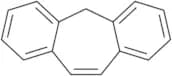
CAS:<p>Cyproheptadine Related Compound A is a molecule that binds to the histamine H2 receptor and can be used for the treatment of inflammatory bowel disease, chronic bronchitis, and diabetic neuropathy. It is metabolized by hydrolysis of the ester group by hydroxylases or oxidases in the liver. Cyproheptadine Related Compound A has been shown to have anti-inflammatory effects due to its ability to inhibit prostaglandin synthesis.</p>Formula:C15H12Purity:Min. 95%Molecular weight:192.26 g/mol3-Iodo-[1,2,3]triazolo[1,5-α]pyridine
CAS:<p>3-Iodo-[1,2,3]triazolo[1,5-α]pyridine is a fine chemical that is used as a versatile building block in the synthesis of complex compounds. It has been shown to be an intermediate for research chemicals and as a reaction component in reactions with other chemicals. 3-Iodo-[1,2,3]triazolo[1,5-α]pyridine is also a useful scaffold for the production of drugs. The compound can be synthesized from readily available starting materials and has the advantage of being easily purified. 3-Iodo-[1,2,3]triazolo[1,5-α]pyridine has CAS No. 916756-21-3 and a molecular weight of 219.27 g/mol.</p>Formula:C6H4IN3Purity:Min. 95%Color and Shape:PowderMolecular weight:245.02 g/mol2,2-Dichloro-N-(4-hydroxyphenyl)-N-methylacetamide
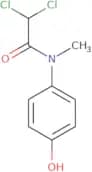
CAS:<p>2,2-Dichloro-N-(4-hydroxyphenyl)-N-methylacetamide (FUROATE) is a synthetic antimicrobial agent that is structurally related to the furoate class of antibiotics. FUROATE has been shown to be effective against urothelial carcinoma cells and minimal toxic in animals. It binds to the fatty acid component of bacterial cell membranes and causes rapid lysis. FUROATE is used as an analytical reagent for the determination of hydroxyl groups in organic solutes. The detection limit of this test is 0.1 ppm. Monoclonal antibodies can be generated against FUROATE for use as diagnostic or therapeutic agents for infectious diseases, such as HIV infection.</p>Formula:C9H9Cl2NO2Purity:Min. 95%Color and Shape:PowderMolecular weight:234.08 g/mol[1,1'-Biphenyl]-2,4,4'-triol
CAS:<p>Versatile small molecule scaffold</p>Formula:C12H10O3Purity:Min. 95%Color and Shape:PowderMolecular weight:202.21 g/mol3-(1-Methyl-1H-pyrazol-3-yl)benzoic acid
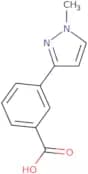
CAS:<p>3-(1-Methyl-1H-pyrazol-3-yl)benzoic acid is a chemical compound with the molecular formula C5H5NO2. It is a research chemical that has not yet been fully characterized and its potential uses have not yet been determined. 3-(1-Methyl-1H-pyrazol-3-yl)benzoic acid is used as an intermediate in the synthesis of other compounds, including pharmaceuticals and pesticides. This compound has the potential to be used as a building block for complex compounds, or as a reagent in various reactions.</p>Formula:C11H10N2O2Purity:Min. 95%Color and Shape:PowderMolecular weight:202.21 g/mol5H,6H,7H-Cyclopenta[b]pyridin-2-amine
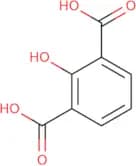
CAS:<p>5H,6H,7H-Cyclopenta[b]pyridin-2-amine is a fine chemical that can be used as a building block in organic synthesis. It is also useful as a reagent and speciality chemical. 5H,6H,7H-Cyclopenta[b]pyridin-2-amine has been shown to be an effective intermediate for the production of complex compounds with versatile scaffolds. This compound is also a useful reactant in organic reactions. 5H,6H,7H-Cyclopenta[b]pyridin-2-amine has a molecular weight of 200.28 g/mol and CAS number 146331-19-3.</p>Formula:C8H10N2Purity:Min. 95%Color and Shape:PowderMolecular weight:134.18 g/mol2-Hydroxyisophthalic acid
CAS:<p>2-Hydroxyisophthalic acid is a hydroxylated derivative of p-hydroxybenzoic acid. It is used in the manufacture of esters such as 2-ethoxyethanol and 2-ethoxyethyl acetate. It has also been shown to have a number of enzyme activities, including esterases, glycosidases, and lipases. The macrocyclic structure of 2-hydroxyisophthalic acid is responsible for its ability to interact with other molecules through hydrogen bonding and coordination chemistry. The carboxylate group on 2-hydroxyisophthalic acid interacts with the hydroxy group on the fatty acids found in soap, which leads to its use as an emulsifying agent. The carbonyl oxygens on 2-hydroxyisophthalic acid are responsible for its anti-inflammatory properties as they inhibit prostaglandin synthesis when they bind to the cyclooxygenase enzymes that catalyze</p>Formula:C8H6O5Purity:Min. 95 Area-%Color and Shape:PowderMolecular weight:182.13 g/mol3-Chloro-4-fluoroaniline
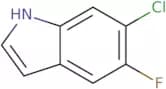
CAS:<p>3-Chloro-4-fluoroaniline is a versatile building block that can be used in the synthesis of many different compounds. It is a reagent that is used in research, where it can be used as a reactant or an intermediate. This chemical has been shown to have high quality and can be used as a starting material for the synthesis of other chemicals. 3-Chloro-4-fluoroaniline has been shown to react with various functional groups such as amines and acid chlorides. It is also useful for the construction of scaffolds, which are three dimensional structures that are built from small molecules and organic compounds. 3-Chloro-4-fluoroaniline is classified as a speciality chemical and its CAS number is 367-21-5.</p>Formula:C6H5ClFNMolecular weight:145.56 g/mol6-Chloro-5-fluoroindole
CAS:<p>6-Chloro-5-fluoroindole is a chemical compound that belongs to the class of fine chemicals. It can be used as a versatile building block for the synthesis of complex compounds.</p>Formula:C8H5ClFNMolecular weight:169.59 g/mol2-(1-Ethyl-1H-pyrazol-4-yl)acetic acid
CAS:<p>Versatile small molecule scaffold</p>Formula:C7H10N2O2Purity:Min. 95%Color and Shape:PowderMolecular weight:154.17 g/mol4-Chloroindole
CAS:<p>Please enquire for more information about 4-Chloroindole including the price, delivery time and more detailed product information at the technical inquiry form on this page</p>Formula:C8H6ClNPurity:Min. 99.0 Area-%Molecular weight:151.60 g/mol6-Chloroindole
CAS:<p>6-Chloroindole is a reagent that is used as a reaction component in the synthesis of organic compounds.</p>Formula:C8H6ClNMolecular weight:151.60 g/mol

![1-[5-Bromo-2-(difluoromethoxy)phenyl]ethan-1-one](/_next/image/?url=https%3A%2Fstatic.cymitquimica.com%2Fproducts%2F3D%2Fthumb-webp%2FQYB99475.webp&w=3840&q=75)

![3-Iodo-[1,2,3]triazolo[1,5-α]pyridine](/_next/image/?url=https%3A%2Fstatic.cymitquimica.com%2Fproducts%2F3D%2Fthumb-webp%2FRLB75621.webp&w=3840&q=75)
![[1,1'-Biphenyl]-2,4,4'-triol](/_next/image/?url=https%3A%2Fstatic.cymitquimica.com%2Fproducts%2F3D%2Fthumb-webp%2FRCA62411.webp&w=3840&q=75)
![5H,6H,7H-Cyclopenta[b]pyridin-2-amine](/_next/image/?url=https%3A%2Fstatic.cymitquimica.com%2Fproducts%2F3D%2Fthumb-webp%2FWFA33119.webp&w=3840&q=75)