Building Blocks
This section contains fundamental products for the synthesis of organic and biological compounds. Building blocks are the essential starting materials used to construct complex molecules through various chemical reactions. They play a critical role in drug discovery, material science, and chemical research. At CymitQuimica, we offer a diverse range of high-quality building blocks to support your innovative research and industrial projects, ensuring you have the essential components for successful synthesis.
Subcategories of "Building Blocks"
- Boronic Acids & Boronic Acid Derivatives(5,756 products)
- Chiral Building Blocks(1,242 products)
- Hydrocarbon Building Blocks(6,095 products)
- Organic Building Blocks(61,038 products)
Found 196817 products of "Building Blocks"
Sort by
Purity (%)
0
100
|
0
|
50
|
90
|
95
|
100
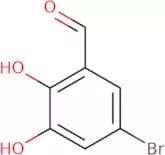
5-Bromo-2,3-dihydroxybenzaldehyde
CAS:<p>5-Bromo-2,3-dihydroxybenzaldehyde is a chemical compound that is used as a reaction component. It has been used in the synthesis of high quality research chemicals and speciality chemicals. This chemical has also been used as a useful scaffold for complex compounds and as a reagent for the synthesis of fine chemicals. 5-Bromo-2,3-dihydroxybenzaldehyde is soluble in water and can be stored at room temperature.</p>Formula:C7H5BrO3Purity:Min. 95%Color and Shape:PowderMolecular weight:217.02 g/mol3-Methylbutane-1,2-diamine dihydrochloride
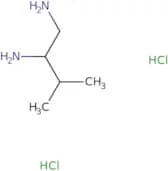
CAS:<p>3-Methylbutane-1,2-diamine dihydrochloride is a reagent that is used as a building block in organic synthesis. It can be used as an intermediate or reactant in the preparation of compounds with other functional groups. 3-Methylbutane-1,2-diamine dihydrochloride is also known to have applications in polymer chemistry and pharmaceuticals. This chemical has been assigned CAS No. 54750-81-1 and is available for purchase through various chemical suppliers.</p>Formula:C5H16Cl2N2Purity:Min. 95 Area-%Color and Shape:PowderMolecular weight:175.1 g/mol8α-Phenyl-octahydropyrrolo[1,2-a]pyrimidin-6-one
CAS:<p>Versatile small molecule scaffold</p>Formula:C13H16N2OPurity:Min. 95%Color and Shape:PowderMolecular weight:216.3 g/mol6-Bromo-3h-imidazo[4,5-β]pyridine-5-carboxylic acid
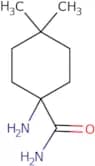
CAS:<p>Versatile small molecule scaffold</p>Formula:C7H4BrN3O2Purity:Min. 95%Color and Shape:PowderMolecular weight:242.03 g/mol1-Amino-4,4-dimethylcyclohexane-1-carboxamide
CAS:<p>Versatile small molecule scaffold</p>Formula:C9H18N2OPurity:Min. 95%Color and Shape:PowderMolecular weight:170.25 g/mol1-(Aminooxy)propane hydrochloride
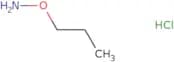
CAS:<p>1-Aminooxypropane hydrochloride is an alkylthio group with a phenoxy group and an antibacterial activity. It is used as a precursor for the synthesis of many organic compounds. 1-Aminooxypropane hydrochloride is produced by the reaction of ethyl bromoacetate and ammonia in liquid ammonia, or by the reaction of propylene oxide with methylamine to produce 1-aminooxypropane. It has been shown to exhibit antimicrobial activity against certain strains of Escherichia coli and Salmonella enterica serovar Typhimurium, but not against Staphylococcus aureus. This compound is also used as a building block for metal ion catalysts such as copper complexes, amines, trifluoromethylated heterocyclic compounds, and others.</p>Formula:C3H10ClNOPurity:Min. 95%Color and Shape:PowderMolecular weight:111.57 g/molPyridine-2-sulfonamide
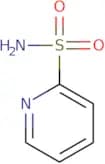
CAS:<p>Pyridine-2-sulfonamide is a synthetic drug that has been shown to inhibit the growth of cancer cells. It binds to the endothelin-A receptor, which is found in many tissues including the heart, brain, and skin. This binding inhibits the binding of epidermal growth factor to its receptor. Pyridine-2-sulfonamide also inhibits pancreatitis by inhibiting the production of hydrogen ions from hydrochloric acid and reducing inflammation. This drug has been shown to be effective against HIV infection.</p>Formula:C5H6N2O2SPurity:Min. 95%Color and Shape:PowderMolecular weight:158.18 g/mol3-azido-4,5-dihydro-1H-benzo[b]azepin-2(3H)-one
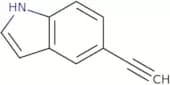
CAS:<p>Versatile small molecule scaffold</p>Formula:C10H10N4OPurity:Min. 95%Color and Shape:PowderMolecular weight:202.21 g/mol5-Ethynyl-1H-indole
CAS:<p>5-Ethynyl-1H-indole is a synthetic compound that has been shown to inhibit the enzyme p450, which is involved in the metabolism of dopamine. Dopamine is a neurotransmitter and hormone that regulates many functions including movement, emotional response, motivation, and sexual desire. It also plays an important role in the development of Parkinson's disease. 5-Ethynyl-1H-indole has also been shown to bind to nicotinic acetylcholine receptors (nAChR) at α7 nicotinic acetylcholine receptors. 5-Ethynyl-1H-indole is being studied as a potential cancer drug due to its antitumour activity. The anti-cancer effect may be related to its ability to inhibit enzymatic reactions involving acetylcholine or its ability to block acetylcholine from binding with its receptor on muscle cells.</p>Formula:C10H7NPurity:Min. 95%Molecular weight:141.17 g/mol2,2'-Methylenedianiline
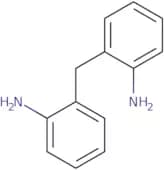
CAS:<p>2,2'-Methylenedianiline is a quinoline derivative that is used in the synthesis of herbicides and insecticides. It is classified as a biodegradable substance and has been shown to be rapidly mineralized by arthropods. 2,2'-Methylenedianiline is also water soluble and can be degraded by microorganisms in wastewater treatment plants. 2,2'-Methylenedianiline has been shown to inhibit the growth of bacteria and fungi, but it does not have any effect on algae or protozoa. The degradation of 2,2'-methylenedianiline occurs mainly through hydrolysis with amines reacting with the methyl group to form methyl amides.</p>Formula:C13H14N2Purity:Min. 95 Area-%Color and Shape:Off-White PowderMolecular weight:198.26 g/molα-Me-D-Leu-OH
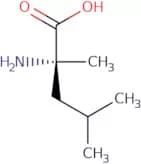
CAS:<p>a-Me-D-Leu-OH is a versatile building block that is used as a reagent in the synthesis of complex compounds, research chemicals, and speciality chemicals. It is also a useful scaffold for drug design. This chemical is also widely used as an intermediate in organic syntheses.</p>Formula:C7H15NO2Purity:Min. 95%Color and Shape:PowderMolecular weight:145.2 g/mol2-Methyl-6-(phenylethynyl)pyridine HCl
CAS:<p>2-Methyl-6-(phenylethynyl)pyridine (MPEP) is a drug that is used in the treatment of Parkinson's disease. This drug inhibits the synthesis of proteins, including glutamate and dopamine, which are involved in Parkinson's disease. MPEP has been shown to be effective against Parkinson's disease by blocking protein synthesis in the caudate putamen and other brain regions. It also lowers locomotor activity and improves motor skills in rats. MPEP binds to response element-binding protein (RBP), which is involved in the regulation of gene expression. The binding of MPEP to RBP leads to an increase in levels of endogenous adenosine, which blocks the effects of dopamine and serotonin on postsynaptic neurons.</p>Formula:C14H11N·HClPurity:Min. 98 Area-%Color and Shape:White PowderMolecular weight:229.7 g/mol4-Methoxybenzoic acid hydrazide
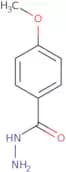
CAS:<p>4-Methoxybenzoic acid hydrazide is a copper complex that binds to the DNA of bacteria, inhibiting the production of proteins. It has been shown to have antimicrobial activity against gram-positive and gram-negative bacteria. 4-Methoxybenzoic acid hydrazide has also been shown to inhibit colorectal carcinoma cells in vitro and in vivo. This compound inhibits the growth of cells by binding to them and disrupting hydrogen bonds. 4-Methoxybenzoic acid hydrazide causes cell death by inhibiting protein synthesis.</p>Formula:C8H10N2O2Purity:Min. 95%Color and Shape:White PowderMolecular weight:166.18 g/molMethyl 3,4-diaminobenzoate
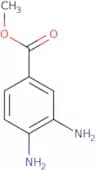
CAS:<p>Methyl 3,4-diaminobenzoate is a molecule that has been shown to inhibit nitrite reductase. It also binds to the receptor binding domain of the growth factor and to quinoxalines, which are antimicrobial peptides. In vitro assays have revealed that methyl 3,4-diaminobenzoate has antimicrobial properties against bacteria such as Enterococcus faecalis, Pseudomonas aeruginosa, Staphylococcus aureus, and Bacillus cereus. The mechanism of action for these activities is not well understood. Methyl 3,4-diaminobenzoate has been shown to be an inhibitor of tryptophan fluorescence in vitro and may act as a competitive inhibitor of the enzyme tryptophan fluorescence decarboxylase.</p>Formula:C8H10N2O2Purity:Min. 95%Color and Shape:White PowderMolecular weight:166.18 g/molMethyl-3-Formylindole-5-carboxylate
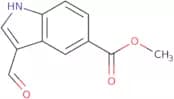
CAS:<p>Please enquire for more information about Methyl-3-Formylindole-5-carboxylate including the price, delivery time and more detailed product information at the technical inquiry form on this page</p>Formula:C11H9NO3Purity:Min. 95%Molecular weight:203.19 g/molMono(2-ethylhexyl) terephthalate
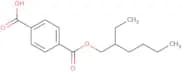
CAS:<p>Please enquire for more information about Mono(2-ethylhexyl) terephthalate including the price, delivery time and more detailed product information at the technical inquiry form on this page</p>Formula:C16H22O4Purity:Min. 95%Color and Shape:PowderMolecular weight:278.34 g/mol2-Methoxy-1-((2-(trimethylsilyl)ethoxy)methyl)-1H-imidazole-5-carbaldehyde
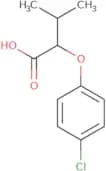
<p>Please enquire for more information about 2-Methoxy-1-((2-(trimethylsilyl)ethoxy)methyl)-1H-imidazole-5-carbaldehyde including the price, delivery time and more detailed product information at the technical inquiry form on this page</p>Formula:C11H20N2O3SiPurity:Min. 95%Color and Shape:PowderMolecular weight:256.37 g/mol2-(4-Chlorophenoxy)-3-methylbutanoic acid
CAS:<p>Versatile small molecule scaffold</p>Formula:C11H13ClO3Purity:Min. 95%Color and Shape:PowderMolecular weight:228.67 g/molN-Methyl-1-quinolin-2-ylmethanamine dihydrochloride
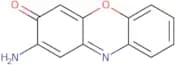
CAS:<p>Please enquire for more information about N-Methyl-1-quinolin-2-ylmethanamine dihydrochloride including the price, delivery time and more detailed product information at the technical inquiry form on this page</p>Formula:C11H12N2•(HCl)2Purity:Min. 95%Color and Shape:PowderMolecular weight:245.15 g/molQuestiomycin A
CAS:<p>Questiomycin A is a sesquiterpene lactone that is an antimicrobial agent. It has been shown to modulate the immune system by inhibiting the production of cytokines and altering the expression of genes related to autoimmune diseases. Questiomycin A also inhibits cell growth in myeloma cells, which is due to its ability to inhibit dinucleotide phosphate (NADPH) reductase, an enzyme required for mitochondrial membrane potential maintenance and other cellular functions. In addition, questiomycin A has been shown to induce apoptosis in liver cells as well as carcinoma cell lines. This drug can also be used for body formation, as it stimulates bone growth and inhibits osteoclast activity.</p>Formula:C12H8N2O2Purity:Min. 95 Area-%Color and Shape:PowderMolecular weight:212.2 g/mol

![8α-Phenyl-octahydropyrrolo[1,2-a]pyrimidin-6-one](/_next/image/?url=https%3A%2Fstatic.cymitquimica.com%2Fproducts%2F3D%2Fthumb-webp%2FGAA02925.webp&w=3840&q=75)
![6-Bromo-3h-imidazo[4,5-β]pyridine-5-carboxylic acid](/_next/image/?url=https%3A%2Fstatic.cymitquimica.com%2Fproducts%2F3D%2Fthumb-webp%2FPKB93941.webp&w=3840&q=75)
![3-azido-4,5-dihydro-1H-benzo[b]azepin-2(3H)-one](/_next/image/?url=https%3A%2Fstatic.cymitquimica.com%2Fproducts%2F3D%2Fthumb-webp%2FLDA49924.webp&w=3840&q=75)