Building Blocks
This section contains fundamental products for the synthesis of organic and biological compounds. Building blocks are the essential starting materials used to construct complex molecules through various chemical reactions. They play a critical role in drug discovery, material science, and chemical research. At CymitQuimica, we offer a diverse range of high-quality building blocks to support your innovative research and industrial projects, ensuring you have the essential components for successful synthesis.
Subcategories of "Building Blocks"
- Boronic Acids & Boronic Acid Derivatives(5,756 products)
- Chiral Building Blocks(1,242 products)
- Hydrocarbon Building Blocks(6,095 products)
- Organic Building Blocks(61,038 products)
Found 196817 products of "Building Blocks"
Sort by
Purity (%)
0
100
|
0
|
50
|
90
|
95
|
100
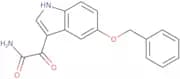
5-Benzyloxyindole-3-glyoxylamide
CAS:<p>5-Benzyloxyindole-3-glyoxylamide is a versatile building block that can be used in the synthesis of complex compounds. It has been shown to have a high quality and is useful as a reagent for research purposes. 5-Benzyloxyindole-3-glyoxylamide can be used as a reaction component and is useful as an intermediate in organic synthesis. 5BIGA has CAS number 22424-62-0 and is also known as 3-(benzyloxy)-5-(2,2,2-trifluoroethoxy)indole glyoxamide.</p>Formula:C17H14N2O3Purity:Min. 95%Molecular weight:294.3 g/mol3-Bromo-4-methoxybenzoic acid
CAS:<p>3-Bromo-4-methoxybenzoic acid is a methyl ester of 3-bromo-4-methoxybenzoic acid. It is used as a reagent in organic synthesis, including the hydrolysis of esters and nitriles to acids and amines respectively. The compound is also used in the synthesis of 3-bromo-4-methoxybenzamide and other bromomethyl benzoates. The trifluoroacetic acid reacts with cuprous cyanide to form ethyl formate and methoxybenzoate, which reacts with thionyl chloride to form the chloride 3-bromo-4-methoxybenzoic acid. This compound can be demethylated by acetaldehyde or alkali metal hydroxides to give methyl formate and methanol. It can also react with acetonitrile to produce 3,3′,3″</p>Formula:C8H7BrO3Purity:Min. 95%Color and Shape:PowderMolecular weight:231.04 g/mol5-Bromo-2-methoxybenzaldehyde
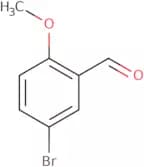
CAS:<p>5-Bromo-2-methoxybenzaldehyde is a benzodiazepine receptor ligand that has been shown to have antiviral, antibacterial and anticancer properties. 5-Bromo-2-methoxybenzaldehyde is an inhibitor of the enzyme benzyl alcohol dehydrogenase (BAHD). BAHD plays an important role in the production of reactive oxygen species (ROS) by converting benzoic acid to benzoate, which is then converted to ROS. The inhibitory concentration values for 5-bromo-2-methoxybenzaldehyde are not yet known.</p>Formula:C8H7BrO2Purity:Min. 95%Color and Shape:PowderMolecular weight:215.04 g/mol6-Bromoveratraldehyde
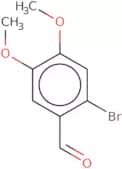
CAS:<p>6-Bromoveratraldehyde (6BrA) is a synthetic compound that has been shown to be an effective agent for inducing apoptosis in leukemia cells. It is an efficient method for synthesizing the compound and has been used as a model study for biphenyl and naphthalene. 6BrA induces cell death by topoisomerase-mediated DNA cleavage, which results in chromosomal fragmentation and high levels of reactive oxygen species in the cell.</p>Formula:C9H9BrO3Purity:Min. 95%Color and Shape:White PowderMolecular weight:245.07 g/molN-b-Boc-L-2,3-diaminopropionic acid
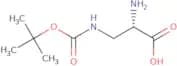
CAS:<p>N-Boc-L-2,3-diaminopropionic acid is an antimicrobial agent that has been shown to be active against Listeria monocytogenes. It inhibits the growth of bacteria by binding to cell walls and interfering with their functions. This compound has been shown to inhibit the growth of bacterial strains such as Camembert and lactobacillus at a concentration of 10mg/mL. N-Boc-L-2,3-diaminopropionic acid also has a high heat transfer coefficient, which makes it suitable for use in cooling systems for food processing plants.</p>Formula:C8H16N2O4Purity:Min. 95%Color and Shape:White PowderMolecular weight:204.22 g/mol4-(Bromomethyl)benzylamine HBr
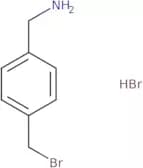
CAS:<p>4-(Bromomethyl)benzylamine HBr is a fine chemical that can be used as a building block for organic synthesis. This compound is also a useful research chemical, reagent, and specialty chemical. 4-(Bromomethyl)benzylamine HBr has been used as a reaction component in the synthesis of various pharmaceuticals, such as theophylline and ampicillin. It has also been used as an intermediate in the production of other compounds, such as 4-hydroxybutyric acid and 3-methylthiopropionic acid. This complex compound can be purchased at high quality and is versatile enough to act as a scaffold for many reactions.</p>Formula:C8H11Br2NPurity:Min. 95%Color and Shape:PowderMolecular weight:280.99 g/mol4-tert-Butylaniline
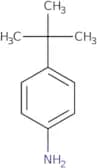
CAS:<p>4-tert-Butylaniline is a chemical compound with the molecular formula C6H7N. It is an organic base that has acidic properties and can be used as an amine. 4-tert-Butylaniline is used in the manufacture of other chemicals, such as herbicides, pesticides, and pharmaceuticals. 4-tert-Butylaniline binds to metal ions such as palladium by hydrogen bonding. This binding increases the reactivity of the metal ion and allows it to catalyze reactions that would otherwise not occur. 4-tert-Butylaniline also has transport properties and binds to replicon cells through adsorption mechanisms.</p>Formula:C10H15NPurity:Min. 95%Color and Shape:Colorless Clear LiquidMolecular weight:149.23 g/mol2-Bromo-5-iodopyridine
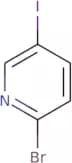
CAS:<p>2-Bromo-5-iodopyridine is a compound that has been studied for its potential use in the treatment of neurodegenerative diseases. It inhibits nicotinic acetylcholine receptors, which are involved in the transmission of nerve impulses to the muscles. 2-Bromo-5-iodopyridine binds to acetylcholine receptors, blocking the uptake of acetylcholine and preventing it from binding with the receptor. This leads to an increase in acetylcholine levels, which increases muscle contraction and improves brain function. The crystal structure of 2-bromo-5-iodopyridine has been determined by x-ray diffraction studies. The molecule contains two bromine atoms and five iodine atoms, which are arranged such that they form a square planar geometry around a central metal ion (hydrochloric acid). Nitrogen atoms are found on opposite corners of this square plane. These nitrogen atoms can be substituted with chloride</p>Formula:C5H3BrINPurity:Min. 95%Color and Shape:Off-White PowderMolecular weight:283.89 g/molBetonicine
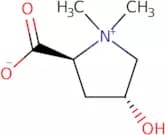
CAS:<p>Betonicine is a natural compound that has been shown to have therapeutic effects in autoimmune diseases. It has been used as a model system for studying plant physiology and to determine the transport properties of hydroxyl groups. Betonicine has also been shown to have receptor activity, which is responsible for its disease-modifying effects in autoimmune diseases. Betonicine is an inorganic acid that can be synthesized from the reaction between ammonia and nitric acid. It can also be extracted from plants such as cress seeds, which are rich in nitrogen atoms. The titration calorimetry method was used to measure the concentration of betonicine in coli K-12 cells.</p>Formula:C7H13NO3Purity:Min. 95%Color and Shape:PowderMolecular weight:159.18 g/mol3'-Bromoacetophenone
CAS:<p>3'-Bromoacetophenone is a synthetic chemical that has been synthesized for the purpose of studying molecular orbitals and vibrational spectra. It is an enantiopure compound with a formyl group and an ethyl bromoacetate. The molecule has four nitrogen atoms and two methyl ketones, which are bonded to each other in the form of a ring. 3'-Bromoacetophenone can be used as a starting material in the synthesis of other compounds. It can also be used as a reagent to make carbon-carbon bonds in organic molecules. 3'-Bromoacetophenone has been shown to have optical properties that can be used for detection of light and fluorescence microscopy.</p>Formula:C8H7BrOPurity:Min. 98.5 Area-%Color and Shape:Slightly Yellow Clear LiquidMolecular weight:199.04 g/mol2-Benzoylpyridine
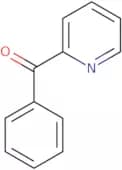
CAS:<p>2-Benzoylpyridine is a novel, potent antimicrobial compound that kills bacteria by targeting the bacterial membrane. 2-Benzoylpyridine binds to the bacterial membrane and causes leakage of ions and other molecules that disrupts the cell's redox potential. It has been shown to be active against human colon adenocarcinoma cells in vitro, with significant cytotoxicity observed. 2-Benzoylpyridine also has a coordination geometry that allows for intermolecular hydrogen bonding, which may contribute to its high potency as an antimicrobial agent.</p>Formula:C12H9NOPurity:Min. 99.0 Area-%Color and Shape:Slightly Yellow PowderMolecular weight:183.21 g/mol3'-Bromo-4'-methylacetophenone
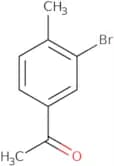
CAS:<p>3'-Bromo-4'-methylacetophenone is a reactive methyl ester that binds to the receptor in the central nervous system. It has been found to be an effective anti-cancer drug, and also inhibits serotonin release in the brain. 3'-Bromo-4'-methylacetophenone is chiral, meaning it can exist as two different forms, or enantiomers. These two forms have different pharmacological profiles, with one being more potent than the other. 3'-Bromo-4'-methylacetophenone is synthesized from methylamine and acetaldehyde using diethyl ether as a solvent. The reaction product is then hydrolyzed by acetonitrile to produce the final product. This drug is used for the treatment of Parkinson's disease and schizophrenia.</p>Formula:C9H9BrOPurity:Min. 95%Color and Shape:PowderMolecular weight:213.07 g/mol3-Bromo-5-hydroxybenzoic acid
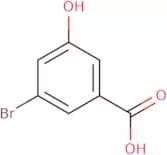
CAS:<p>3-Bromo-5-hydroxybenzoic acid is a metabolite of 3,5-dihydroxybenzoic acid (DHB) in the metabolism of benzoic acid. It has been shown to be an antibacterial agent and has been used to treat metabolic disorders in hamsters. Symptoms of 3-bromo-5-hydroxybenzoic acid include dyslipidemia, which can lead to metabolic disorders such as diabetes mellitus and atherosclerosis. The compound may also have a role in tuberculosis and cancer due to its ability to induce apoptosis.</p>Formula:C7H5O3BrPurity:Min. 95%Color and Shape:White PowderMolecular weight:217.02 g/moltert-Butyl 2-(furan-2-yl)-1H-indole-1-carboxylate
CAS:<p>Please enquire for more information about tert-Butyl 2-(furan-2-yl)-1H-indole-1-carboxylate including the price, delivery time and more detailed product information at the technical inquiry form on this page</p>Formula:C17H17NO3Purity:Min. 95%Color and Shape:Clear LiquidMolecular weight:283.32 g/mol2-Bromo-4-hydroxyacetophenone
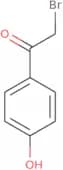
CAS:<p>2-Bromo-4-hydroxyacetophenone is a membrane permeable inhibitor of monoamine oxidase (MAO) that has been shown to inhibit the enzyme's activity with an IC50 of 10 μM. It is used as a research tool in biological studies and has been shown to be active against MAO A, MAO B, and MAO C. 2-Bromo-4-hydroxyacetophenone has also been shown to inhibit the growth of carcinoma cells in vitro. This molecule is also a β-unsaturated ketone that binds to catalytic domains and forms covalent bonds with chloride ions. 2-Bromo-4-hydroxyacetophenone can be used as an industrial process catalyst for chemical reactions involving chloride.<br>2-Bromo-4-hydroxyacetophenone synergistically inhibits the growth of cancer cells when combined with other compounds such as trifluoroacetic acid or dichloromet</p>Formula:C8H7BrO2Purity:(%) Min. 85%Color and Shape:PowderMolecular weight:215.04 g/mol3-Buten-3-ethyl-1-ol
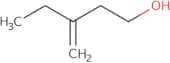
CAS:<p>3-Buten-3-ethyl-1-ol is a versatile building block that can be used as a reagent for chemical synthesis. It is a complex compound that can be used as a reaction component or intermediate in organic synthesis. 3-Buten-3-ethyl-1-ol has been shown to have antiinflammatory properties, which may be due to the inhibition of prostaglandin synthesis.</p>Formula:C6H12OPurity:Min. 95%Color and Shape:Clear LiquidMolecular weight:100.16 g/mol4'-Bromo-2'-methylacetophenone
CAS:<p>4'-Bromo-2'-methylacetophenone is a reagent and a useful intermediate that can be used in the synthesis of a variety of organic compounds. It is supplied as a fine chemical and is currently not commercially available. It has been found to be an effective building block for the synthesis of speciality chemicals, such as research chemicals and versatile building blocks.</p>Formula:C9H9BrOPurity:Min. 95%Color and Shape:Slightly Yellow Clear LiquidMolecular weight:213.07 g/mol2,2'-Bipyridine-4,4'-dicarboxamide
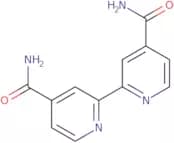
CAS:<p>2,2'-Bipyridine-4,4'-dicarboxamide is a catalyst that can be used in a variety of reactions. It has been used as an additive to increase yields and to accelerate catalytic reactions. The compound also has the ability to oxidize picolinic acid and form formic acid. This product can be used in glycerol synthesis or hydrogen peroxide production. 2,2'-Bipyridine-4,4'-dicarboxamide is a ligand that binds to picolinic acid and peroxide ions, forming an ion pair with the peroxide ion. This complex increases the efficiency of hydrogen peroxide evolution from water by up to 100%.</p>Formula:C12H10N4O2Purity:Min. 95%Color and Shape:PowderMolecular weight:242.23 g/molN-Boc-D-proline
CAS:<p>N-Boc-D-proline is a lipase inhibitor that is used in the preparation of quinine, aldehyde, and carboxylate. N-Boc-D-proline has been shown to inhibit the activity of the sodium channels, which may be due to its ability to bind to the termini of these channels. The inhibition of sodium channels can lead to a decrease in nerve excitability and seizures. N-Boc-D-proline was synthesized by an organocatalytic method using sodium bicarbonate as the catalyst. It was found that this compound was stereoselective with respect to its activity on different enantiomers of chiral substrates. Preparative methods for N-Boc-D-proline include column chromatography or crystallization with diethyl ether or ethyl acetate. The isolated yield is about 99%.</p>Formula:C10H17NO4Purity:Min. 95%Color and Shape:PowderMolecular weight:215.25 g/mol5-Bromo-2-chloropyrimidine
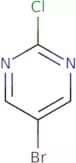
CAS:<p>Intermediate in the synthesis of macitentan; building block</p>Formula:C4H2BrClN2Purity:Min. 95%Color and Shape:White PowderMolecular weight:193.43 g/mol