Building Blocks
This section contains fundamental products for the synthesis of organic and biological compounds. Building blocks are the essential starting materials used to construct complex molecules through various chemical reactions. They play a critical role in drug discovery, material science, and chemical research. At CymitQuimica, we offer a diverse range of high-quality building blocks to support your innovative research and industrial projects, ensuring you have the essential components for successful synthesis.
Subcategories of "Building Blocks"
- Boronic Acids & Boronic Acid Derivatives(5,756 products)
- Chiral Building Blocks(1,242 products)
- Hydrocarbon Building Blocks(6,095 products)
- Organic Building Blocks(61,038 products)
Found 196817 products of "Building Blocks"
Sort by
Purity (%)
0
100
|
0
|
50
|
90
|
95
|
100
4-dibenzocyclooctynol
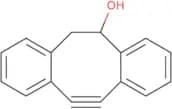
CAS:<p>4-Dibenzocyclooctynol (4DC) is a synthetic compound that has been shown to be an efficient crosslinker for proteins. It is a ring-opening polymerization agent that reacts with amines and thiols, which are chemical groups found on the side chains of amino acids in proteins. 4DC has been used for the histological analysis of cells, and it has also been used as a pharmacological treatment for Parkinson's disease. 4DC can bind to dopamine receptors, stabilizing them and preventing the degeneration of neurons in the brain. This drug also has potential applications in medical research as a tool for studying glycoconjugates and molecular modeling.</p>Formula:C16H12OPurity:Min. 95%Color and Shape:PowderMolecular weight:220.27 g/mol2-(Dimethylphosphoryl)-2-hydroxyacetic acid
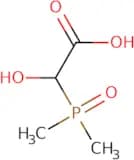
CAS:<p>2-(Dimethylphosphoryl)-2-hydroxyacetic acid (DMPPA) is a herbicide that inhibits acetaldehyde dehydrogenase, an enzyme in the biochemical pathway of acetaldehyde biosynthesis. DMPPA does not have any effect on glutamate and l-threonine metabolism or on the formation of diketones. The target enzyme is activated by the addition of glyphosate to the leaves. DMPPA is used for diagnosis of velvetleaf (Abutilon theophrasti), which is a weed found in corn fields in North America. The chemical can be applied as a foliar spray or as a soil application, with many different formulations available. The chemical has been shown to be effective against graminaceous weeds such as barnyardgrass (Echinochloa crusgalli) and crabgrass (Digitaria spp.).</p>Formula:C4H9O4PPurity:Min. 95%Molecular weight:152.09 g/mol3-Methoxy-2,4,5-trifluorobenzoic acid
CAS:<p>3-Methoxy-2,4,5-trifluorobenzoic acid (3MTBF) is a ligand that binds to the active site of bacterial dehydrogenases. It is used to inhibit the growth of bacteria in the environment and food products. 3MTBF inhibits the production of fluoroquinolones by methylating their chlorides with methoxy groups. This compound also has bifunctional properties, as it can act as both a methylating agent and an inhibitor of dehydrogenase enzymes. 3MTBF inhibits the production of cancer cells by inhibiting transcription and translation, preventing cell division and proliferation. 3MTBF is thermostable, meaning it does not break down in high temperatures or at pH extremes.</p>Formula:C8H5F3O3Purity:Min. 95%Color and Shape:White to off-white solid.Molecular weight:206.12 g/mol2-Mercaptopyridine N-oxide
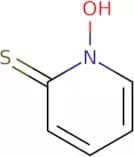
CAS:<p>2-Mercaptopyridine N-oxide is a radical that has been shown to have antifungal activity in vitro. It also inhibits the synthesis of peptide hormones by binding to copper ions, which are required for this process. 2-Mercaptopyridine N-oxide has been shown to chelate metal ions such as iron, which can lead to oxidative injury. This compound has been shown to be toxic in vivo, but it is not currently known if it is toxic in vitro.</p>Formula:C5H5NOSPurity:Min 97%Color and Shape:Off-White PowderMolecular weight:127.17 g/molMethyl 4-amino-2-methyl benzoate
CAS:Methyl 4-amino-2-methyl benzoate is a fine chemical that can be used as a building block for research chemicals, pharmaceuticals, and speciality chemicals. Methyl 4-amino-2-methyl benzoate is a versatile building block in organic synthesis because it can be used as a reaction component and intermediate to synthesize other compounds. This compound is also an excellent scaffold for the synthesis of complex compounds, making it a useful intermediate for organic chemistry. Methyl 4-amino-2-methyl benzoate has CAS No. 6933-47-7 and is soluble in organic solvents such as dichloromethane, chloroform, ether, or acetone.Formula:C9H11NO2Purity:Min. 95%Color and Shape:PowderMolecular weight:165.19 g/mol(3-Aminopropyl)trimethylazanium chloride
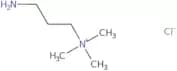
CAS:<p>(3-Aminopropyl)trimethylazanium chloride is a fine chemical that is used as a building block and reagent in the synthesis of various organic compounds. It has been shown to be useful for reactions involving nucleophilic aromatic substitution, radical addition, and cycloaddition reactions. (3-Aminopropyl)trimethylazanium chloride has also been shown to be an effective intermediate in the synthesis of various pharmaceuticals. The CAS number is 19223-69-9.</p>Formula:C6H17ClN2Purity:Min. 95%Color and Shape:PowderMolecular weight:152.66 g/molMethanesulfonamide
CAS:<p>Methanesulfonamide is a drug that is used to treat infectious diseases and in the treatment of HIV. It is a non-steroidal anti-inflammatory drug that inhibits prostaglandin synthesis by blocking the activity of cyclooxygenase (COX) enzymes, COX-1 and COX-2. Methanesulfonamide has been shown to have chemoprotective effects against HIV infection and may reduce the risk of opportunistic infections associated with AIDS. Methanesulfonamide may also inhibit the production of inflammatory cytokines such as tumor necrosis factor alpha (TNFα) and interleukin-1β (IL-1β).</p>Formula:CH5NO2SPurity:Min. 95%Color and Shape:PowderMolecular weight:95.12 g/mol5-Methylindole
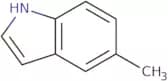
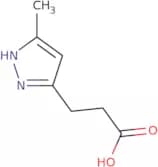
CAS:<p>5-Methylindole is a molecule that has been found to be active against Staphylococcus aureus. This drug interferes with the synthesis of glycogen, which is an important energy storage molecule in animals. 5-Methylindole inhibits glycogen synthase kinase 3 (GSK-3) activity and thereby reduces the production of proinflammatory cytokines. This drug has also been shown to have cardiac effects, such as tachycardia and arrhythmias in mice. The optical properties of 5-methylindole are characterized by fluorescence and absorbance spectra, as well as its chemical reactions. 5-Methylindole is detectable at concentrations of 10 µg/mL and reacts with aminoglycosides by forming an adduct that can be detected using chromatographic methods.</p>Formula:C9H9NPurity:Min. 95%Color and Shape:PowderMolecular weight:131.17 g/mol3-(3-Methyl-1H-pyrazol-5-yl)propanoic acid
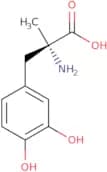
CAS:<p>Versatile small molecule scaffold</p>Formula:C7H10N2O2Purity:Min. 95%Color and Shape:PowderMolecular weight:154.17 g/mol3-(3,4-Dihydroxyphenyl)-2-methyl-L-alanine sesquihydrate
CAS:<p>3-(3,4-Dihydroxyphenyl)-2-methyl-L-alanine sesquihydrate is a biological sample that is an active inhibitor of the enzyme methyldopa. This compound has been shown to reduce blood pressure in rats and humans by blocking the α7 nicotinic acetylcholine receptor. 3-(3,4-Dihydroxyphenyl)-2-methyl-L-alanine sesquihydrate is also a polymer composition that has been shown to be toxic in animal studies. The toxicity of 3-(3,4-dihydroxyphenyl)-2-methyl-L-alanine sesquihydrate can be attributed to its structural similarity to methyldopa or its ability to act as a receptor agonist.</p>Formula:C10H13NO4•(H2O)1Purity:Min. 95%Molecular weight:238.24 g/molMethyl 4-chlorobenzoate
CAS:<p>Methyl 4-chlorobenzoate is a synthetic chemical that belongs to the group of phenyl compounds. It is a solvent for organic solvents and has been shown to be toxic to humans. Methyl 4-chlorobenzoate is used in various industrial applications, such as in the production of pesticides, herbicides, and pharmaceuticals. Methyl 4-chlorobenzoate can also be used as an intermediate for the synthesis of other chemicals, such as chlorinated hydrocarbons. This chemical has been reported to cause environmental pollution and has been classified as a carcinogen by the International Agency for Research on Cancer (IARC).</p>Formula:C8H7ClO2Purity:Min. 98.5%Color and Shape:White PowderMolecular weight:170.59 g/molHexahydropyrrolo[1,2-a]pyrazine-1,4-dione
CAS:<p>Hexahydropyrrolo[1,2-a]pyrazine-1,4-dione is a neuroprotective compound that is structurally related to the well-known anti-inflammatory drug ketoprofen. It has been shown to inhibit the production of pro-inflammatory cytokines and reactive oxygen species in vitro by a mechanism involving inhibition of mitochondrial membrane permeability. Hexahydropyrrolo[1,2-a]pyrazine-1,4-dione also inhibits bacterial growth and urea nitrogen excretion in mice. This compound has been found in cyanobacteria and some etoac extracts, as well as in bacteria from the genera Pseudomonas and Staphylococcus.</p>Formula:C7H10N2O2Purity:Min. 95%Molecular weight:154.17 g/mol2-Methoxybenzene-1,4-diamine sulfate
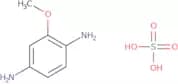
CAS:<p>2-Methoxybenzene-1,4-diamine sulfate (2MBDS) is a chemical that inhibits the synthesis of quinolines and dyes. 2MBDS is used as a control in animal experiments to maintain the level of sulfate in the blood. It is injected into animals and then measured using assays to measure the concentration of sulfate in the blood. 2MBDS has been shown to cause genetic damage and death in animals, as well as brittleness of muscle cells. The effects of 2MBDS on DNA replication and cell division have been studied by observing its effect on meiosis in mice. This chemical also simplifies chromosome structure and reduces chromosome number during meiosis, which may lead to chromosomal aberrations.</p>Formula:C7H10N2O·H2O4SPurity:Min. 95%Color and Shape:Off-White PowderMolecular weight:236.25 g/mol2,4-Dihydroxybenzoic acid
CAS:<p>2,4-Dihydroxybenzoic acid is a building block for the production of pharmaceuticals and other chemicals. It is a versatile chemical that can be used in the synthesis of complex compounds. 2,4-Dihydroxybenzoic acid is also a reaction component, reagent, and useful scaffold. This compound has been shown to have high quality and is a research chemical with speciality use.</p>Formula:C7H6O4Molecular weight:154.12 g/molMethyl indole-5-carboxylate
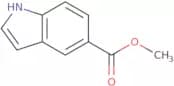
CAS:<p>Methyl indole-5-carboxylate is a hdac inhibitor that has been shown to have anticancer activity. It has been shown to inhibit the growth of hCT116 cells and xenograft tumors in mice. Methyl indole-5-carboxylate is also an active analog for other anticancer agents, such as 5-azacytidine and 5-aza-2'-deoxycytidine. The drug is cytotoxic to L6 cells and increases the expression of p21 protein, which inhibits tumor cell proliferation. This compound is metabolized by cytochrome P450 enzymes into methyl indole carboxylate, which can be further converted into a reactive intermediate that binds DNA.</p>Formula:C10H9NO2Color and Shape:PowderMolecular weight:175.18 g/mol2-Methoxyphenylacetic acid
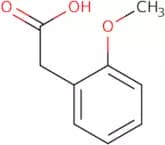
CAS:<p>2-Methoxyphenylacetic acid is a chromatographic and synthetic chemical that is used as an antisolvent. It is a carboxylic acid with a phosphate group, which can be used for sphingosine kinase reactions. 2-Methoxyphenylacetic acid has been shown to be catalysed by hydrochloric acid and naphthenic acids to produce reaction products that are insoluble in organic solvents. 2-Methoxyphenylacetic acid is stable at neutral pH, but it reacts with water to form hydrogen chloride gas at high temperatures. This chemical has been found in the plasma concentrations of cancer patients who have undergone chemotherapy treatment.</p>Formula:C9H10O3Purity:Min. 95%Color and Shape:White PowderMolecular weight:166.17 g/mol3-Butenoic acid, 2,5-dioxo-1-pyrrolidinyl ester
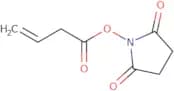
CAS:<p>3-Butenoic acid, 2,5-dioxo-1-pyrrolidinyl ester is a fine chemical that can be used as a scaffold for the synthesis of complex compounds. This chemical is also useful as an intermediate in the synthesis of chemicals and research chemicals. It has CAS number 388091-45-0 and a molecular weight of 220.3 g/mol. 3-Butenoic acid, 2,5-dioxo-1-pyrrolidinyl ester is soluble in organic solvents such as acetone or chloroform and is not toxic to humans at low doses.</p>Formula:C8H9NO4Purity:Min. 95%Color and Shape:PowderMolecular weight:183.16 g/mol2-Methoxy-4-aminobenzoic acid
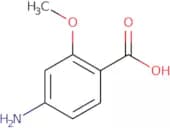
CAS:<p>2-Methoxy-4-aminobenzoic acid is a solute that can be used in the manufacture of pharmaceuticals. It has a high affinity for receptors and is potentially useful in the treatment of hypertension. 2-Methoxy-4-aminobenzoic acid has been shown to exhibit antihypertensive activity in animals by reducing cardiac output, systemic vascular resistance, and total peripheral resistance. The mechanism of action may be due to its ability to inhibit calcium ion influx into myocardial cells and block voltage-gated potassium channels. This drug also has an acidic pH, which makes it soluble in water. 2-Methoxy-4-aminobenzoic acid is insoluble in organic solvents such as hydrochloric acid or ether, which means it cannot be extracted from aqueous solutions by these solvents.</p>Formula:C8H9NO3Purity:Min. 95%Color and Shape:Off-White PowderMolecular weight:167.16 g/mol5-Methoxy-2-methylindole
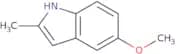
CAS:<p>5-Methoxy-2-methylindole is an organic solvent that has been shown to have a wide range of bioactive properties. It is used in the production of acetylcholine, which is an important neurotransmitter. 5-Methoxy-2-methylindole also reacts with chloride ions, which may be an important factor when considering the life cycles and bioactive substances of this molecule. The reaction yield depends on the pH of the solution. 5-Methoxy-2-methylindole can undergo chlorination reactions to form polychlorinated derivatives, which are used as petrochemicals. This molecule also has retinoid properties and can act as a proton donor or acceptor depending on whether it is protonated or deprotonated.</p>Formula:C10H11NOColor and Shape:PowderMolecular weight:161.2 g/mol3-Chloro-2-(piperidin-4-yl)pyridine
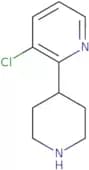
CAS:<p>Versatile small molecule scaffold</p>Formula:C10H13ClN2Purity:Min. 95%Color and Shape:PowderMolecular weight:196.67 g/mol





![Hexahydropyrrolo[1,2-a]pyrazine-1,4-dione](/_next/image/?url=https%3A%2Fstatic.cymitquimica.com%2Fproducts%2F3D%2Fthumb-webp%2FUAA17912.webp&w=3840&q=75)